Curling Leaves on Alocasia Polly: Moisture & Mite Checks
Quick answer
Curling leaves on Alocasia Polly usually trace to dry soil, low humidity at leaf edges, spider mites on new growth, or roots that cannot drink in a wet pot. First step: probe whether the top inch of mix is dry or wet and inspect the newest leaf undersides for stippling or webbing.
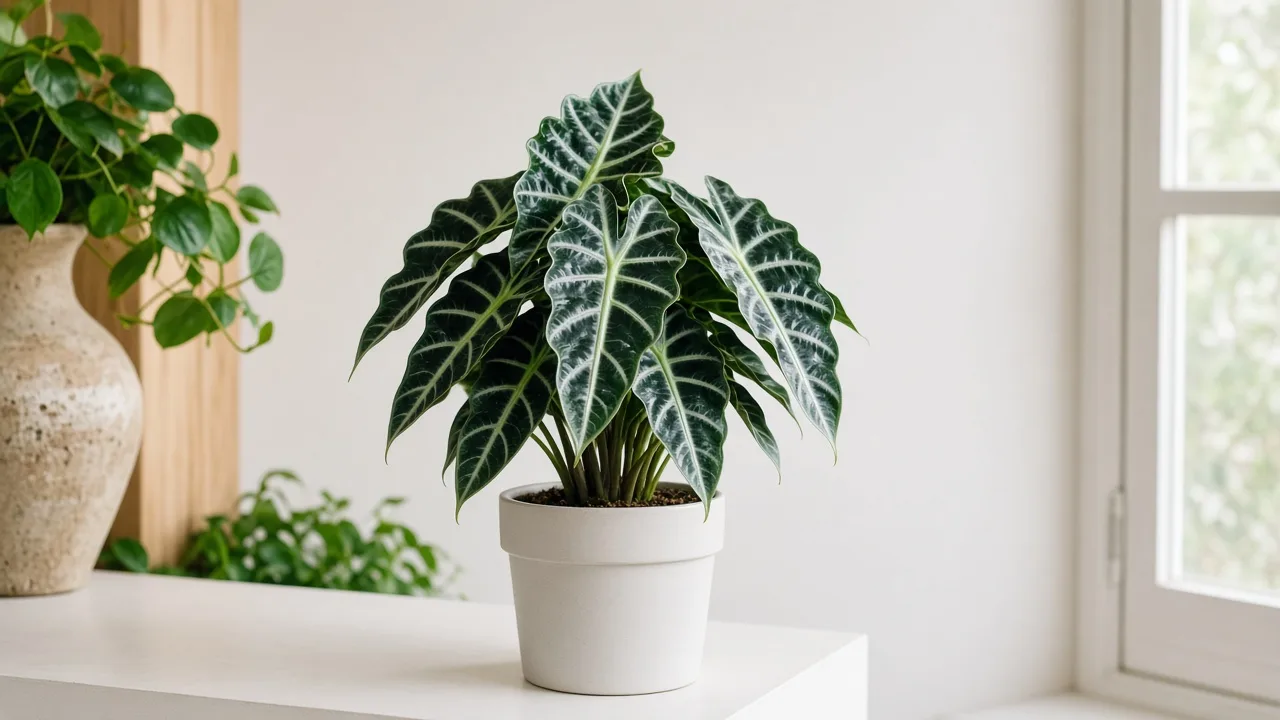
Curling Leaves on Alocasia Polly: Causes, Checks & Fixes
This guide covers curling leaves on Alocasia Polly. See also the general Curling Leaves guide, watering, and light pages for this plant.
Curling Leaves on Alocasia Polly: Causes, Checks & Fixes
Quick answer
Curled leaves on Alocasia Polly (Alocasia × amazonica ‘Polly’, African Mask Plant) mean the plant is losing turgor on large, thin-margined arrowhead blades—usually from dry soil, low humidity at leaf edges, spider mites in heated air, or roots that cannot drink in a wet pot. For universal curl mechanics, see our curling leaves guide. On Polly, top-inch moisture and new-growth inspection narrow the cause fast.
First step: probe the top inch of mix and inspect the newest leaf undersides for stippling or webbing.
When to use this page vs other Polly guides
| Pattern | Read next |
|---|---|
| Dry top inch, light pot | Underwatering |
| Webbing or stippling on new leaves | Spider mites |
| Wet heavy pot, sour smell | Overwatering |
| Crispy margins, low RH | Low humidity |
| New leaf stuck mid-unfurl | Distorted leaves |
| Soft limp collapse | Wilting |
What curling leaves look like on Alocasia Polly
Polly carries compact, upright arrowhead leaves with dark green blades and sharp silver veining—large relative to the pot, with thin margins that show stress before the corm does. Curl shows differently here than on broad succulents or prayer plants.
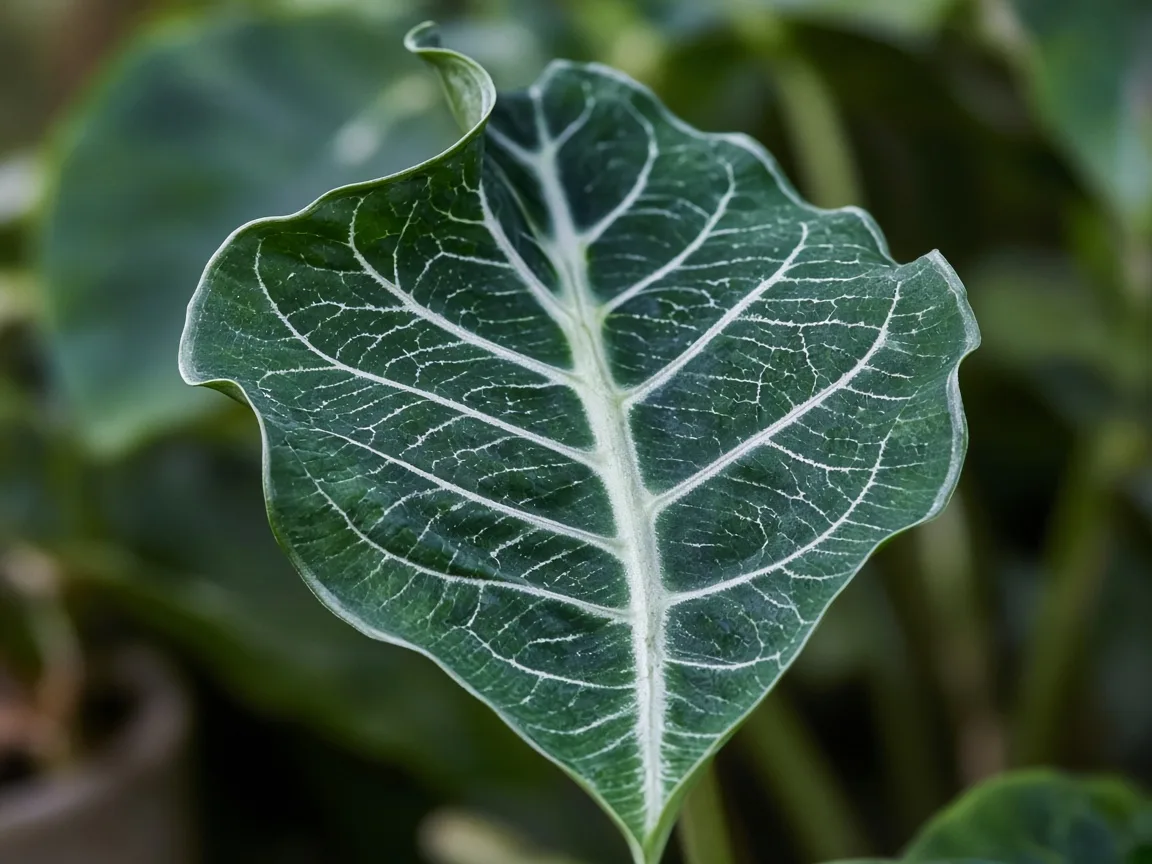
Cupped leaf tissue on Polly—compare turgor with firm lower leaves on the same petiole.
Drought curl:
- Lengthwise roll or inward cup when the top inch of mix is dry and the pot feels light
- Leaves feel thinner; edges may crisp before the whole blade curls
- Often appears on the outermost leaves first while the crown still pushes new growth
Low-humidity curl:
- Margins curl inward while soil moisture reads normal
- Damage concentrates on leaves nearest a heat vent, radiator, or south-facing window glass
- New leaves may stall mid-unfurl with brown tips on the emerging blade
Mite curl on new flush:
- Cupped tips with fine stippling on tender new growth in dry winter air
- Webbing tucked where arrow-shaped leaves overlap at the central rosette
- Pale pinpricks visible when you back-light a suspect blade against a window
Root-stress curl:
- Lower leaves curl while soil stays wet and the pot feels heavy
- Often follows weeks of watering on a calendar in bright indirect light
- Can look like thirst—adding water worsens it when roots are failing
Stuck unfurl curl:
- The newest arrowhead blade curls tightly instead of opening flat
- Common when RH drops below 40% during active spring growth
- Differs from pest curl: no stippling, no webbing, margins dry but undersides clean
Why Alocasia Polly gets curling leaves
Polly cups leaves before it droops. Alocasia stores reserves in a firm underground corm, but the large leaf surface loses water quickly in dry air—top-inch dry-down is the primary thirst check, not a calendar schedule.
Thin margins transpire fastest. Polly’s arrowhead blades have less tissue at the edge than at the midrib. Low humidity curls margins first, even when the root zone is moist. See low humidity on Alocasia Polly when a hygrometer reads below 40–45%.
Mites concentrate on new growth. Alocasia are prone to spider mites, and Polly’s dark glossy tops hide stippling until damage is advanced. Mites colonize dry microclimates at petiole bases and the crown center—room humidity can read fine while leaf-edge air stays parched.
Wet soil blocks uptake. In bright indirect light, Polly uses water steadily but not greedily. Chronic sogginess causes curl that mimics drought—damaged roots cannot move water upward even when mix feels wet. See root rot on Alocasia Polly if the corm softens.
Cold drafts shock new leaves. Polly prefers temperatures above 60°F (16°C). A winter window chill or AC blast can curl the newest unfurling blade while older leaves stay flat.
Polly does not nyctinastically fold like Calathea or Maranta. Persistent curl is always a stress signal, not a daily rhythm.
How to confirm the cause
- Weigh the pot or probe the top inch—dry vs wet splits thirst from root failure in one check.
- Measure RH at leaf height with a hygrometer if margins curl but soil is moist.
- Tap newest leaves over white paper for moving specks—green smear confirms mites.
- Check placement for vents, radiators, and window chill below 60°F (16°C).
- Inspect the corm at the soil line—firm tissue with dry soil supports underwatering; soft tissue with wet soil points to rot.
Work through one variable at a time. Changing water, humidity, and spray on the same day makes the response unreadable.
First fix for Alocasia Polly
If the top inch of mix is dry, water thoroughly and drain the saucer within 30 minutes. Use room-temperature water until excess runs from drainage holes—one deep drink beats repeated shallow sips that never reach a dry corm.
If mites are confirmed—isolate the plant and rinse every leaf underside with lukewarm water before any spray. See spider mites on Alocasia Polly for the full treatment sequence.
If the pot is heavy and wet—pause water per overwatering on Alocasia Polly. Do not mist or fertilize a stressed Polly hoping leaves will flatten.
If margins curl on moist soil with RH below 40%—run a cool-mist humidifier in the room, not on the foliage. Move the pot away from blow paths.
Recovery timeline
Mild drought curl on a firm corm often relaxes within hours to a day after one proper soak. Low-humidity margin curl stops spreading once RH stays above 50% for a week—old crispy edges do not green up.
Mite damage takes longer: expect two to three weeks of weekly rinses before new growth opens clean. Root-stress curl may persist until the corm recovers and a new leaf unfurls from the center—sometimes one to two months if rot was caught early.
Judge success by the next unfurling, not by old cupped blades. Polly sheds damaged outer leaves during recovery; that is normal if the corm stays firm and new growth looks healthy.
Mistakes to avoid
- Misting curled leaves—brief humidity spike, fungal risk, no mite control
- Watering a wet heavy pot because leaves look thirsty
- Fertilizing stressed Polly before confirming moisture, humidity, and root health
- Repotting on day one unless rot or pest pressure in the soil is confirmed
- Assuming night curl is normal—Polly does not fold like prayer plants
How to prevent curling next time
Align watering with how fast your pot dries in its actual light placement—top inch dry in summer, sharply reduced in winter dormancy per the watering guide. Keep RH at 60–80% through heating season with a humidifier, not mist alone.
Inspect new growth weekly when furnaces run. Quarantine new plants for two weeks. Group Polly with other tropicals to share transpiration, but leave air space so mites cannot bridge between crowns.
Related Alocasia Polly guides
| When you see… | Start here |
|---|---|
| Gradual hang, not cup | Drooping leaves |
| Yellow lower leaves on wet soil | Yellow leaves |
| Brown crispy tips only | Brown tips |
| Whole plant soft collapse | Wilting |
| Seasonal leaf drop, firm corm | Overview |
Related tool
Use the Plant Problem Diagnosis Tool to narrow causes for curling leaves on this plant before changing multiple variables at once.