How to Prune Alocasia Silver Dragon: When, Where, and What
How to Prune Alocasia Silver Dragon: When, Where, and What to Cut
How to Prune Alocasia Silver Dragon: When, Where, and What to Cut
First, inspect the central crown in good light and remove only a leaf that is fully yellow, brown, mushy, or clearly diseased — cut the petiole 1–2 cm above the crown with sterilized bypass pruners, never flush into the meristem. Silver Dragon (Alocasia baginda ‘Silver Dragon’) does not branch from stem cuts; every future leaf emerges from the tight growing point at the corm. If the leaf is only partly yellow while a new spear is unfurling, wait — the plant is still reclaiming nutrients from that aging blade.
What Makes Silver Dragon Pruning Different
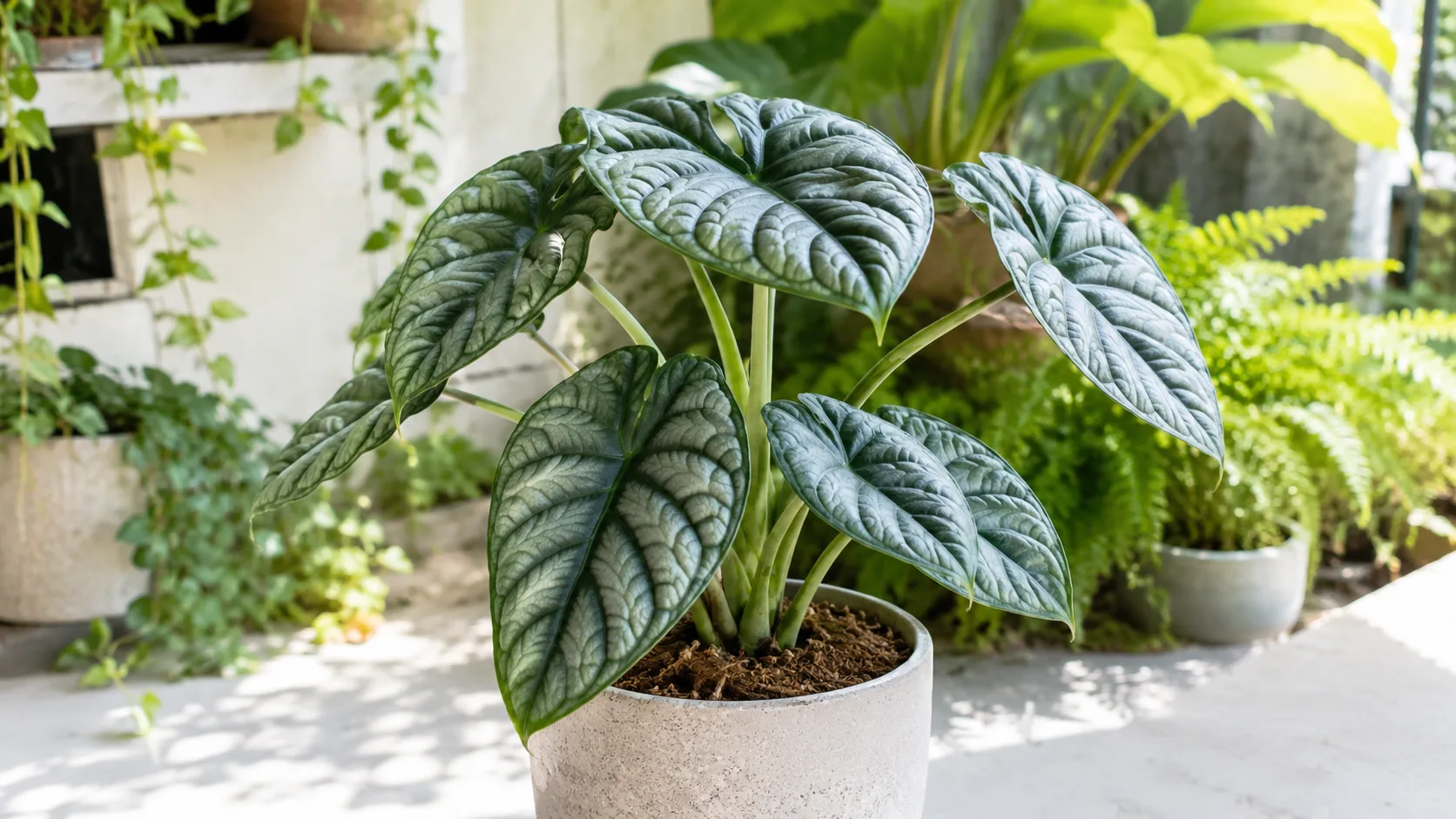
Alocasia Silver Dragon is a compact collector’s alocasia with thick, bullate (scale-like) leaf surfaces and silvery-green veining. NC State Extension lists Alocasia baginda ‘Silver Dragon’ as a rare variety with compact habit and textured, arrow-shaped foliage. Unlike many alocasias in the trade — the glossy Alocasia × amazonica ‘Polly’ hybrid, for instance — Silver Dragon belongs to the baginda group, a set of cultivars that share a slower growth rate, a smaller underground corm, and a heightened sensitivity to rot. The RHS notes that this cultivar reaches about 50 cm tall with broad, arrow-shaped silvery-green leaves emerging from stout stalks. That compact scale means every leaf matters more: removing one from a five-leaf plant costs the corm 20 percent of its photosynthetic surface, not the negligible fraction it would on a large Polly.
Corm-Based Growth and Rot Sensitivity
Alocasias belong to the Araceae family. NC State describes them as tuberous herbaceous perennials that grow from a subterranean corm and produce leaves on long petioles from a central crown. Unlike pothos or philodendron vines, Silver Dragon does not produce new shoots from pruned nodes. New growth comes only from the corm, which in this cultivar is notably smaller and slower than in the larger elephant-ear types. The Royal Horticultural Society’s Alocasia growing guide states that alocasias need “no pruning or training … other than removing fading or dead leaves, cutting them off at the base.” For Silver Dragon, that instruction carries extra weight. This plant’s crown is tight, and a careless cut that nicks the meristem can stop new growth for months — longer than on a faster-growing Polly or Alocasia Dragon Scale, whose larger corm stores more reserve energy.
Comparison to Stem-Based Alocasias
The difference matters for pruning technique. Stem-based alocasias like Alocasia zebrina grow on elongated stalks that produce leaves along their length, and a cut above a dormant node can occasionally wake a new shoot. Not so with Silver Dragon, where the entire plant is a tight rosette of petioles emerging from a single point. Every yellow leaf you remove is a finished petiole coming from the centre, not a side shoot you are trimming. That means there is no “shaping cut” that makes the plant denser — you are only removing what the plant has already decided to discard.
Why Silver Dragon Does Not Branch From Cuts
Each leaf is a temporary solar panel feeding the corm. When Silver Dragon pushes a new spear, the oldest outer leaf often yellows — planned nutrient withdrawal called senescence. Cutting that leaf too early removes food the plant was about to bank. Cutting a fully spent leaf frees the crown for the next spear and reduces hiding spots for spider mites, a common pest on this bullate-leaved cultivar. Because the plant does not branch from petioles, pruning cannot create side shoots; only the corm produces new leaves. This is the single most important fact for new Silver Dragon owners to absorb: what looks like a dense, bushy Polly vine is impossible on a baginda corm.
Inspect the Crown Before You Cut
Walk through this inspection every time you consider pruning:
- Crown condition — Look for the emerging spear. Firm pale tissue around the centre is healthy; mush, translucence, or foul odour means stop pruning and investigate roots and soil moisture.
- Leaf color pattern — One outer yellow leaf while a new spear unfurls is normal senescence. Multiple yellow leaves across different ages usually means root stress, cold, or pests.
- Petiole release test — Gently tug a yellow leaf. If it releases with almost no resistance, the plant has finished reclaiming mobile nutrients. If it stays firmly anchored, wait.
- Blade damage — Torn or chewed leaf edges can be trimmed cosmetically only after you confirm humidity, water quality, and mite pressure are addressed.
Do not stack pruning with repotting, fertilizing, or a major location change on the same day. Silver Dragon absorbs stress through leaf drop; give it one intervention at a time.
Normal Senescence vs Stress Yellowing
Senescence usually hits one old leaf at a time, often the lowest, while a fresh leaf unfurls above it. Yellowing progresses gradually from the edges inward, and the petiole eventually softens enough to release with a gentle tug. Stress yellowing arrives faster, may involve several leaves, and often pairs with drooping, crispy margins, or collapsed petioles. If only senescence is happening, patience is the correct tool. If stress signs dominate, correct watering, light, or humidity first, then remove leaves that do not recover.
Petiole Release Test
The petiole release test is the simplest senescence check for corm alocasias. A fully spent leaf detaches with light pressure because the plant has already withdrawn mobile nutrients back into the corm. Cutting before release wastes reserves; waiting too long after full yellowing invites pests to hide in dying tissue at the crown. On Silver Dragon, whose bullate leaf bases can trap moisture against the crown, a leaf left too long after full yellowing also risks bacterial soft rot.
When to Prune Alocasia Silver Dragon
Emergency removal of mushy, blackened, or clearly rotting petioles can happen immediately — soft tissue at the crown is an active threat and should not wait for spring. Routine yellow-leaf removal is best timed when the leaf is at least 90 percent yellow or brown, or when the petiole releases with a gentle tug. If the petiole still feels firmly anchored, wait. Cosmetic trimming of dry brown edges can occur any time, but address humidity (target 60–80% for Silver Dragon), watering, and spider mite pressure first — this cultivar browns quickly in dry indoor air. Schedule any multi-leaf cleanup for late spring through early summer when warmth and adequate light support new leaf production. The RHS recommends keeping alocasias above 16°C (60°F) during the growing season. Avoid removing several leaves in winter unless they are fully dead; the plant may sit leafless until conditions improve.
Emergency Removal Any Time
Remove immediately when a leaf is fully brown or black, the petiole is mushy, a tear exposes wet tissue, or pests have colonized a leaf base. Bag diseased material in household trash rather than composting it indoors. Re-sterilize blades before touching healthy tissue on the same plant or moving to another pot.
Routine Cleanup During Active Growth
In active growth, the corm seals petiole wounds quickly and redirects energy to the next leaf. A single fully spent leaf removed in spring is often replaced within one active-growth cycle — at minimum two to three weeks for the first spear to break the surface, then another week for the leaf to unfurl. This is the window for any planned multi-session cleanup spaced three to four weeks apart.
What to Leave Alone in Dormancy
The RHS notes that alocasias may lose foliage in winter dormancy but “produce plenty of fresh leaves once they come back into growth in spring.” During that cool, drier period, reduce watering and avoid stripping partially green leaves the corm is still feeding from. Remove only what is unmistakably dead, keep the corm barely moist above 10°C (50°F), and postpone multi-leaf cleanup until you see a new spear. The RHS Silver Dragon variety page notes that this cultivar should be kept above 15°C and is assigned to H1A hardiness — truly indoor-only in temperate climates.
Tools, Gloves, and Sterilization
Silver Dragon petioles are fleshy but fibrous. Use sharp bypass pruners or fine garden scissors. Crush wounds heal slowly and invite bacterial soft rot in a genus already prone to crown decay. Sterilize blades with 70% isopropyl alcohol before each session. University of Minnesota Extension recommends cleaning and disinfecting tools to prevent pathogen spread. Re-sterilize when moving from a diseased leaf to healthy tissue or between plants in a collection. Wear nitrile gloves. Silver Dragon sap contains calcium oxalate crystals; the ASPCA lists elephant’s ear as toxic to cats and dogs, causing oral irritation and GI upset. NC State Extension rates alocasia poison severity as medium, with contact dermatitis from oxalate crystals. Bag trimmings away from pets and children.
Step-by-Step Silver Dragon Leaf Removal
- Inspect the crown in good light. Identify fully yellow leaves, brown crispy blades, and any soft or foul-smelling petiole bases.
- Sterilize tools and put on gloves.
- Support the leaf with one hand while cutting with the other — never yank an attached petiole.
- Cut the petiole 1–2 cm above the crown, leaving a short stub that dries cleanly. Do not cut into the central meristem.
- Examine the stub and crown after each cut. Firm pale tissue is healthy; mush, translucence, or odor means stop and investigate roots and soil moisture.
- Remove debris from the pot surface. Do not compost suspicious rotting tissue indoors.
- Wash tools and hands when finished.
Keep fresh cuts dry for 24–48 hours. Avoid misting the crown or watering so heavily that moisture pools at the petiole base immediately after removal. Silver Dragon’s tight crown and bullate leaf bases make it especially prone to bacterial rot if a fresh stub stays wet.
What Not to Cut
Never slice through the central crown where new leaves emerge. Never remove partially green leaves during dormancy unless disease is confirmed — the corm depends on them. Do not attempt to top the plant or cut through leaf blades expecting regrowth from the cut edge; alocasia leaves do not branch. Missouri Botanical Garden notes alocasias are grown primarily for bold foliage indoors; propagation is typically by division of offsets or corms, not by leaf cuttings.
How Much Foliage Is Safe to Remove
The standard one-third foliage guideline is too aggressive for slow corm growers. Limit removal to 20–25 percent of live leaves per session. On a five-leaf Silver Dragon, that means one fully finished leaf — not three. If several leaves yellow simultaneously, that signals a care problem (overwatering on Alocasia Silver Dragon, cold, low light, spider mites) rather than a need for heavy pruning. Fix moisture and humidity before cutting more tissue. Spread multiple removals across three to four weeks during active growth so the corm always retains photosynthetic surface area. Kew POWO confirms that Alocasia baginda is a small robust herb with up to four leaves at once — a reminder that each leaf on a Silver Dragon represents a quarter of its total foliage capacity, not an expendable extra.
After Pruning Care and Recovery
Hold off on watering immediately after removing several leaves if soil was already moist — less transpiration means slower dry-down. Resume when the top 2–3 cm of mix is dry, Silver Dragon’s normal checkpoint. Maintain 60–80% humidity and bright indirect light without direct afternoon sun on the crown. Avoid fertilizing for two weeks after substantial removal; salts stress compromised roots. Watch for spider mites on new unfurling leaves — dry air after pruning stress makes mite flare-ups common on this bullate-leaved cultivar. The RHS notes that this cultivar may be susceptible to glasshouse red spider mite and mealybugs. New leaves may take four to eight weeks to emerge after a dormant or stressed period. A single yellow leaf removed in spring is often replaced within one active-growth cycle. Signs pruning worked: the cut stub dries tan and firm, decline stops, and a new spear appears without crown softening. Signs pruning was too aggressive or badly timed: continued yellowing across multiple leaves, crown mush, or a leafless plant that shows no new spear after eight warm weeks — investigate roots before cutting again.
What Pruning Cannot Fix
Pruning will not raise humidity, improve drainage, or kill spider mites. Brown tips trimmed cosmetically will return if tap water minerals or dry air persist. Yellowing that spreads up the plant while soil stays wet is root rot — unpot and inspect roots rather than removing leaves to hide the pattern. Silver Dragon, with its smaller corm and slower metabolism than hardier alocasia hybrids, recovers more slowly from root damage after heavy foliage removal. If you suspect rot, the root rot guide is a better next step than the pruning shears.
Common Silver Dragon Pruning Mistakes
- Cutting too close to the crown damages the meristem and can halt growth for months
- Removing green leaves during dormancy starves the corm
- Over-pruning after overwatering treats yellowing symptoms while roots remain saturated
- Using dirty tools spreads rot organisms between alocasias in a collection
- Expecting bushier growth from pruning — Silver Dragon does not branch; only new leaves from the corm increase fullness
- Ignoring toxicity — bag trimmings away from pets; oxalate sap persists in cut tissue
- Pulling attached petioles instead of cutting cleanly, tearing crown tissue
Conclusion
Alocasia Silver Dragon pruning is crown-aware sanitation, not creative shaping. The RHS guidance is the whole story in one line: remove fading or dead leaves at the base, wear gloves, and otherwise leave the plant alone. But this compact baginda cultivar demands more caution than the glossy Polly or the vigorous Dragon Scale. Its smaller corm, tighter crown, and bullate leaf bases that trap moisture mean every cut carries a slightly higher rot risk. Keep each session to a single fully finished leaf, protect the central meristem, and let the petiole release test be your guide — if the leaf does not come away with a gentle tug, the plant is not done with it. Pair every cut with correct watering, high humidity, and bright indirect light — the conditions that keep this remarkable silver-scaled aroid producing its best leaves. When in doubt, wait. Patience protects the corm that powers every future leaf.
When to use this page vs other Alocasia Silver Dragon guides
- Alocasia Silver Dragon overview — Start here for whole-plant context before deep-diving this topic.
- Alocasia Silver Dragon problems hub — Jump to symptom-specific fix guides when this care topic does not resolve the issue.
- Leggy Growth on Alocasia Silver Dragon — Escalate here when pruning adjustments are not enough.
- Slow Growth on Alocasia Silver Dragon — Escalate here when pruning adjustments are not enough.
- Brown Tips on Alocasia Silver Dragon — Escalate here when pruning adjustments are not enough.
Related Alocasia Silver Dragon guides
- Alocasia Silver Dragon overview
- Alocasia Silver Dragon watering
- Alocasia Silver Dragon light
- Alocasia Silver Dragon soil
- Alocasia Silver Dragon propagation
- Alocasia Silver Dragon fertilizer
- Alocasia Silver Dragon repotting
- Leggy Growth on Alocasia Silver Dragon
- Slow Growth on Alocasia Silver Dragon
- Brown Tips on Alocasia Silver Dragon
- Alocasia Silver Dragon problems
About the author: Sai Ananth is a horticultural content specialist and rare-aroid grower with over a decade of hands-on experience cultivating Alocasia, Monstera, Philodendron, and other Araceae species. This guide was reviewed by the LeafyPixels Review Board on 2026-06-15. Recommendations are based on published botanical references and practical indoor growing experience.