Caterpillars on Aloe Vera: Causes, Checks & Fixes
Quick answer
Caterpillars on Aloe Vera chew irregular notches from thick serrated leaves and leave dark pellet-like frass—usually after patio placement, nursery hitchhikers, or moth eggs near open windows. First step: isolate the rosette and inspect leaf bases and undersides at night with a flashlight, then hand-pick every larva before treating foliage.
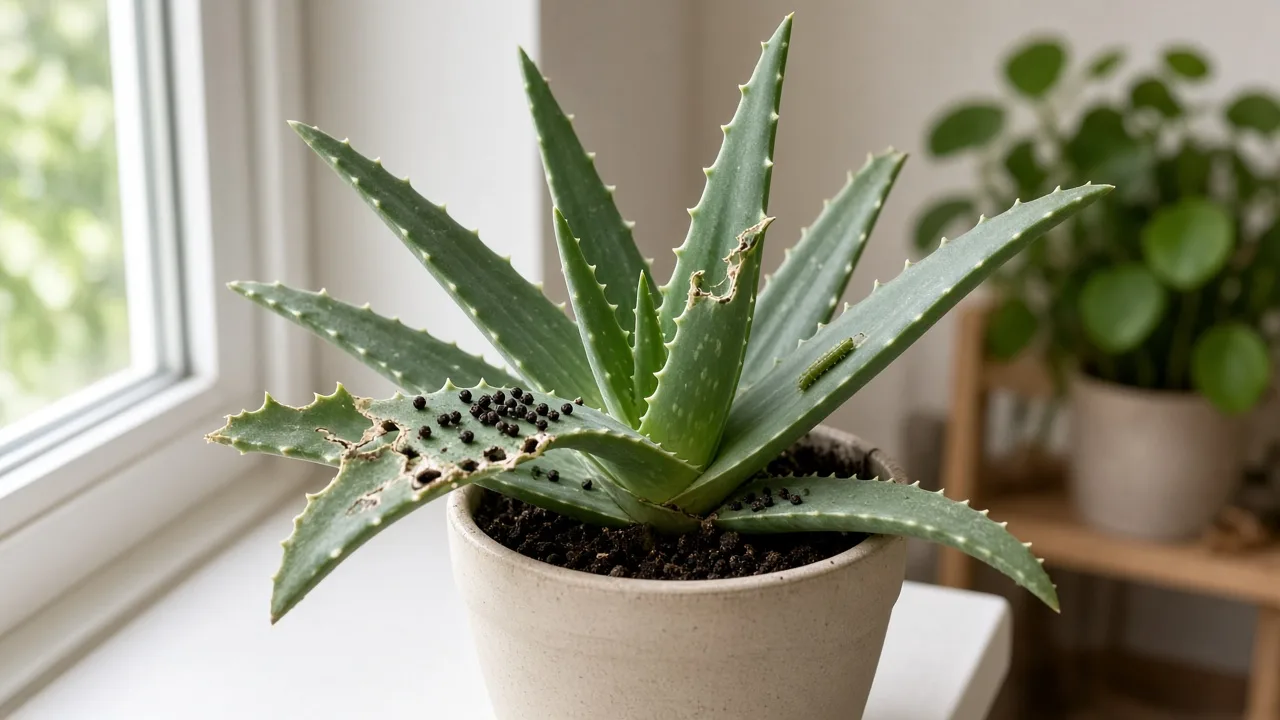
Caterpillars on Aloe Vera: Causes, Checks & Fixes
This guide covers caterpillars on Aloe Vera. See also the general Caterpillars guide, watering, and light pages for this plant.
Caterpillars on Aloe Vera: Causes, Checks & Fixes
Quick answer
Caterpillars on Aloe Vera (Aloe vera) chew irregular notches from thick, serrated succulent leaves in the rosette growth habit and leave dark pellet-like frass on leaves, the pot rim, or the shelf below. Indoor cases are uncommon compared with mealybugs and aphids on aloe, and usually trace to hitchhiking larvae after patio season, nursery stock, open windows, or moth eggs on outdoor pots.
For general caterpillar biology and control options, see our caterpillars guide. On Aloe Vera, larvae often hide along serrated leaf margins and in the tight overlap where thick leaves meet the stem—places a quick dry-soil weight check never reaches.
First step: isolate the rosette and inspect leaf bases and serrated margins at night with a flashlight, then hand-pick every caterpillar into soapy water before treating foliage.
Pet note: Aloe vera is toxic to cats and dogs if chewed. Keep treated plants, frass, and trimmed leaf pieces out of pet reach during recovery.
When to use this page vs other Aloe Vera guides
| Pattern | Read next |
|---|---|
| Ragged chew + frass pellets + visible larvae | This page |
| Clean tear, no frass, no spread after moving pot | Holes in leaves (mechanical) |
| Serpentine tunnels inside thick leaf, no through-holes | Leaf miners |
| White cottony clusters at leaf bases or on pups | Mealybugs |
| Pinhead stippling and fine webbing at rosette crown | Spider mites |
| Soft base, mushy leaves on wet soil | Overwatering or root rot |
What caterpillars look like on Aloe Vera
Caterpillar damage is easy to overlook on aloe because thick gray-green leaves look firm and healthy from a distance. When larvae are active, the signature is ragged missing tissue with pellet frass—not the clean snap of a bumped pot or the stippling of sap feeders.
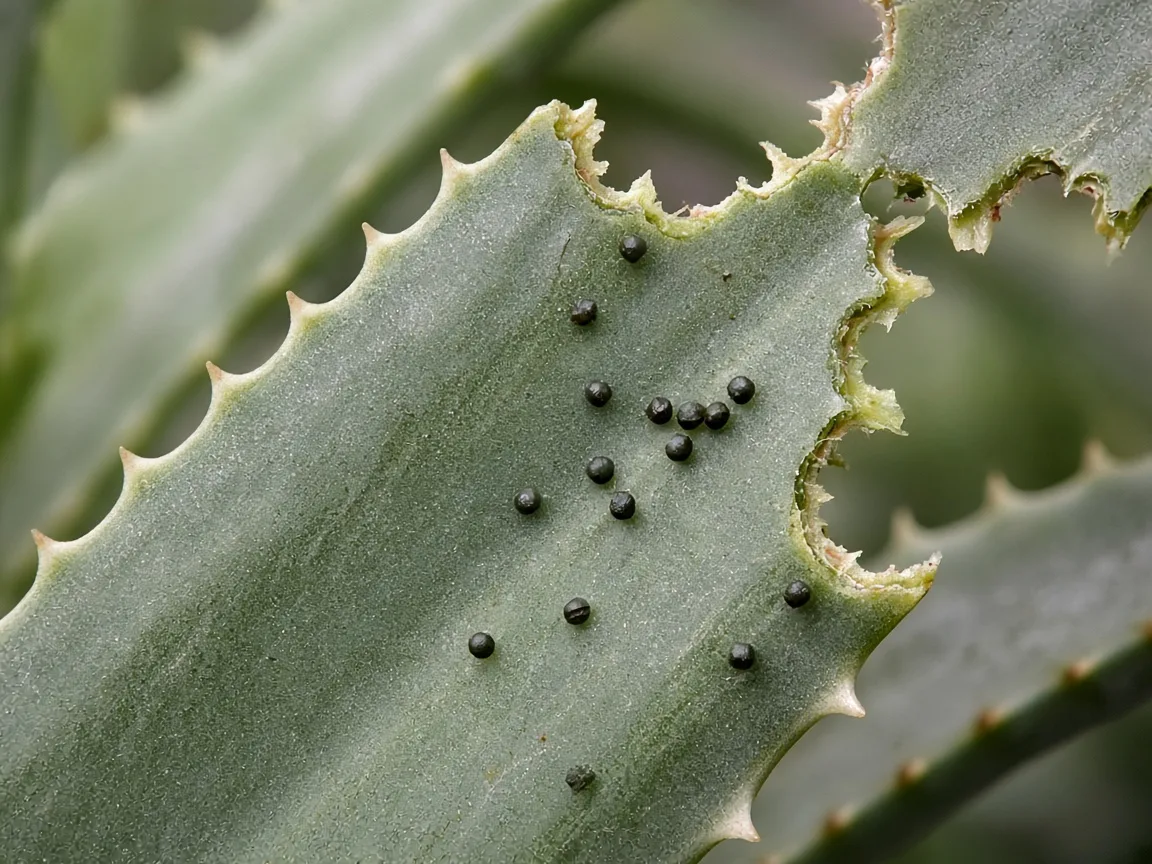
Irregular chew notches along a thick serrated aloe leaf margin with dark pellet-like frass—compare with an intact neighbor leaf on the same rosette.
Chewed notches and holes:
- Irregular sections missing from thick fleshy leaves with serrated margins along the outer edge or mid-leaf
- Ragged edges that look torn inward, not the straight crease of mechanical bending on a heavy succulent leaf
- Dark green or black pellet-like frass on leaf faces, at the rosette base, on the pot rim, or the floor below
Larva signs (when you can see them):
- Green, brown, or patterned caterpillars curled along a serrated margin or tucked at the soil line on outdoor pots
- Visible chewing on the newest center leaves before damage spreads to outer foliage
- Unlike leaf miners, damage goes through the thick leaf—not inside a bordered tunnel visible when backlit
Growth impact on Aloe Vera:
- Outer leaves are expendable; a few notches on a firm rosette are usually cosmetic
- A single larva can notch several outer leaves because aloe leaves are broad and overlap at the crown
- Chewed tissue does not regrow—track recovery by clean new center leaves or healthy pups, not by old leaves filling in
Unlike spider mites, caterpillars do not produce stippling or webbing. Unlike aphids, no sticky honeydew appears—only open chewing wounds and frass.
Why Aloe Vera gets caterpillars
Caterpillars are far less common indoors than sap-sucking pests like spider mites or mealybugs on succulents. On Aloe vera, when you see chew damage, suspect a recent introduction rather than chronic indoor pressure.
Outdoor patio hitchhikers. Aloes summered on a porch or near open windows can pick up moth or butterfly eggs on leaf margins and at the rosette base. Pests arrive on nursery stock and outdoor plants and continue feeding indoors where predators are absent.
Eggs in potting media. Ask Extension notes that caterpillar eggs can be present in soil or potting media used to pot the plant—hand-picking visible larvae may not finish the job if unhatched eggs remain at the crown.
Sheltered rosette overlap. Aloe vera grows as a tight rosette with thick leaves stacked at the crown. Larvae hide in the narrow gap where serrated margins meet the stem and along the soil line where spray coverage and daytime inspection both fail.
Open windows at night. A moth flying in during warm months can lay eggs on any upright foliage it reaches—including stiff succulent rosettes near a windowsill.
Indoor warmth without predators. Indoor plants lack natural enemies that control caterpillars outdoors. A single egg mass can hatch into larvae feeding along the same rosette for weeks before you notice frass on the floor.
Serrated margins vs rosette crown on succulent aloe
This is the Aloe Vera pattern generic caterpillar pages miss. Before you spray, confirm you are not treating mechanical snap, pet chew, or a separate water problem:
| Feature | Margin chew (this page) | Mechanical / pet damage |
|---|---|---|
| Location | Serrated outer edge or mid-leaf on thick tissue | Random tear from bumping pot or pet bite on lower leaf |
| Frass | Dark pellets on leaf or below plant | None |
| Leaf texture | Firm, plump tissue remains | Firm unless separate rot is present |
| Spread | New chew marks over days | One-time damage, no new pellets |
| Soil | Usually dry per watering guide | Varies |
If the stem base is soft on wet soil, stop pest treatment and assess root rot first.
How to confirm caterpillars on Aloe Vera
Work through these checks in order before reaching for spray:
- Frass shake test — Hold a chewed leaf over white paper and tap sharply. Dark barrel-shaped pellets confirm caterpillar feeding; no pellets points to holes in leaves from mechanical damage.
- Night flashlight pass — Inspect plants at night with a flashlight; caterpillars feed when you are not looking and hide along margins by day.
- Trace recent entry — Patio summer, new nursery pot, bouquet from the garden, or open window in the past month?
- Rule out leaf miners — Backlight a thick leaf. Serpentine tunnels inside tissue without through-holes match leaf miners, not caterpillars.
- Check neighbors — Inspect other succulents on the same shelf; hitchhikers often hit multiple pots from one outdoor batch.
First fix for Aloe Vera
Isolate the pot away from other plants and hand-pick every visible caterpillar into a bucket of soapy water.
Wear gloves in case you encounter a hairy or stinging larva. Support the heavy rosette with one hand while you lift each outer leaf to check the overlap at the stem and along serrated edges. Hand-picking is effective and avoids chemical residue on a plant you may harvest for gel later.
Why pick first? You get immediate feeding stop without flooding the succulent crown. One larva can notch several broad leaves overnight—removal beats waiting for a spray schedule.
After picking, shake the rosette over white paper to dislodge any smaller larvae you missed. Re-inspect at night for three consecutive evenings before assuming the job is done.
Crown-safe rinse after hand-picking
If you rinse to dislodge eggs or tiny hatchlings:
- Angle the pot so water runs down outer leaf surfaces, not into the rosette funnel
- Use lukewarm water; cold or hot water can mark succulent tissue
- Tilt and blot pooled moisture from the crown with a dry cloth
- Finish by mid-afternoon so leaves dry before cool night temperatures
- Skip heavy rinses if the base is already soft; fix overwatering first
Step-by-step recovery
- Isolate — Move to a separate room; wash hands and tools after handling.
- Night pick — Flashlight inspection; drop larvae into soapy water.
- Shake test — White paper under the rosette; confirm no new pellets next morning.
- Crown-safe rinse — Optional lukewarm shower on outer leaves only; let dry completely.
- Bt-k if needed — For persistent larvae, Bacillus thuringiensis kurstaki (Bt-k) labeled for caterpillars on foliage top and bottom; caterpillars stop feeding after ingesting treated tissue.
- Repeat scout — Nights 3, 7, and 14; one missed egg batch can restart damage.
- Watch new growth — Clean center leaves or firm pups mean you are winning.
Recovery timeline
Chewing stops spreading within one to two weeks of consistent hand-picking and night scouting. Frass should not reappear on the shelf after three clean nightly checks. Existing notched tissue does not fill in—track recovery by new unfurling center leaves and outer foliage without fresh chew marks.
Bad signs: new chew on multiple leaves daily despite picking, frass returns after Bt-k treatment, or the stem base softens on damp soil—stop rinsing and assess roots.
What not to do
- Do not flood the rosette crown when rinsing—trapped moisture on a succulent crown invites rot even when soil drains well.
- Do not spray Bt-k or soap at midday on a south window—heat-stressed aloe leaves spot easily in direct sun; treat at lights-out or move to bright shade until dry.
- Do not overwater “to help” a stressed plant—wet roots weaken aloe faster than caterpillar chew alone.
- Do not harvest gel from leaves treated with Bt-k or soap until you have rinsed thoroughly and residues are gone.
- Do not leave chewed leaf debris on the floor if you have pets—aloe is toxic to cats and dogs.
How to prevent caterpillars next time
Quarantine new aloes two to three weeks. During weekly care, inspect serrated margins and leaf bases—especially after moving pots from patio to indoors. Screen windows that stay open at night. Rinse and scout leaf overlaps after outdoor summer stays.
Keep the pot in bright light per the light guide without stacking new plants on top of the rosette where eggs hide unnoticed. A quick frass check on the shelf below catches problems when one night pick still finishes the job.
When to escalate — Bt-k, extension help, and pet safety
Escalate when fresh chew appears on multiple leaves daily after three nights of picking, or larvae show on several plants from the same outdoor batch. Bt-k is the next step for caterpillars that keep hatching from crown or soil eggs.
Contact your local cooperative extension office for identification help if pellets appear but no larva is found—lookalike mechanical damage can compound with real pest pressure.
Pets: Aloe vera is toxic to cats and dogs. Chewed leaves, frass near pet bowls, and pesticide residues all warrant keeping plants isolated during treatment. Call your veterinarian or ASPCA Animal Poison Control at 888-426-4435 if ingestion is suspected.
Discard heavily chewed mother plants and save only clean, pest-free pups if the crown is structurally compromised and larvae keep returning—sometimes a fresh start beats months of repeat hatching.
Related Aloe Vera guides
- Aloe Vera overview — baseline care for rosette watering and light
- Aloe Vera watering — dry-down rhythm; caterpillars are not caused by correct drought care
- Aloe Vera light — bright placement without afternoon scorch
- Holes in leaves — mechanical tears without frass or larvae
- Leaf miners — tunnels inside thick leaves, not edge chew
- Mealybugs — cottony clusters at leaf bases, not ragged holes
- Spider mites — stippling and webbing at the crown, not pellet frass
- Aloe Vera problems — browse all common issues on this species