Holes in Leaves on Aloe Vera: Causes, Checks & Fixes
Quick answer
Holes in Aloe vera leaves are almost never natural fenestration—thick gel-filled blades tear easily or get chewed. First step: inspect the hole edge for clean gel leakage (mechanical), ragged chew with frass (caterpillars), or white fluff tucked into serrated leaf axils (mealybugs).
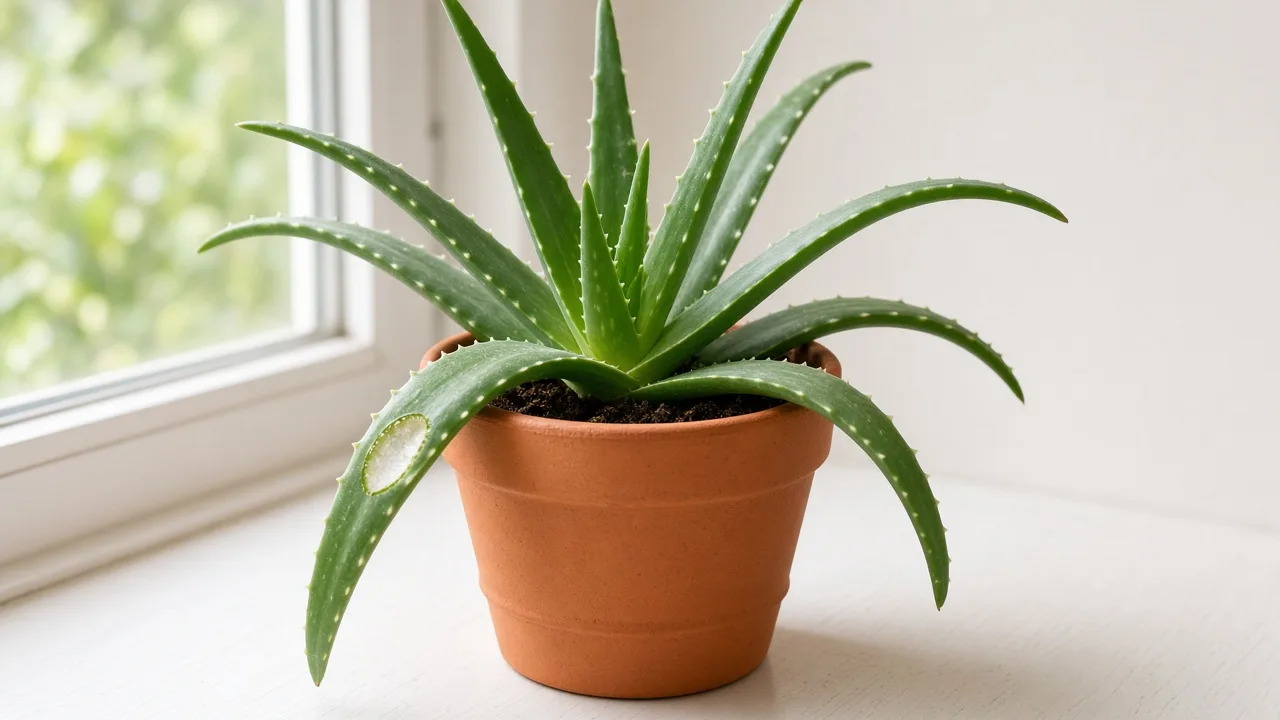
Holes in Leaves on Aloe Vera: Causes, Checks & Fixes
This guide covers holes in leaves on Aloe Vera. See also the general Holes in Leaves guide, watering, and light pages for this plant.
Holes in Leaves on Aloe Vera: Causes, Checks & Fixes
Quick answer
Holes in Aloe vera (Aloe vera) leaves are not normal architecture—unlike fenestrated monsteras, aloe blades should stay solid except for the small natural teeth along each margin. When you see a true hole, something punctured, chewed, or collapsed the thick gel-filled tissue.
For how chewing pests and mechanical tears work across houseplants, see our holes in leaves guide. On aloe, the edge tells the story fast: a clean snap with clear gel seeping from the wound is mechanical; ragged chew marks with dark pellets (frass) mean insects; white cottony fluff tucked into the serrated leaf bases points to mealybugs.
First step: look at the hole edge and press gently on the surrounding tissue. Firm green leaf with a dry clean break → mechanical damage only. Ragged missing sections after patio season → caterpillars. Sticky residue plus white fuzz in axils → mealybugs. Make one correction—isolate for pests, reroute for mechanical, elevate for pets—then watch new center growth for two weeks.
When to use this page vs other Aloe Vera guides
- Caterpillars — ragged outdoor chewing with frass
- Mealybugs — white fluff in leaf axils, sticky leaves
- Aphids — clustered soft-bodied insects on young growth
- Thrips — silver scars and distorted new leaves
- Spider mites — stippling before tissue collapses
- Leaf miners — internal trails (uncommon on thick aloe)
- Brown tips — margin burn without a through-hole
- Distorted leaves — twisting without perforation
What holes look like on Aloe Vera
Aloe holes stand out on thick, lance-shaped rosette leaves with serrated margins:
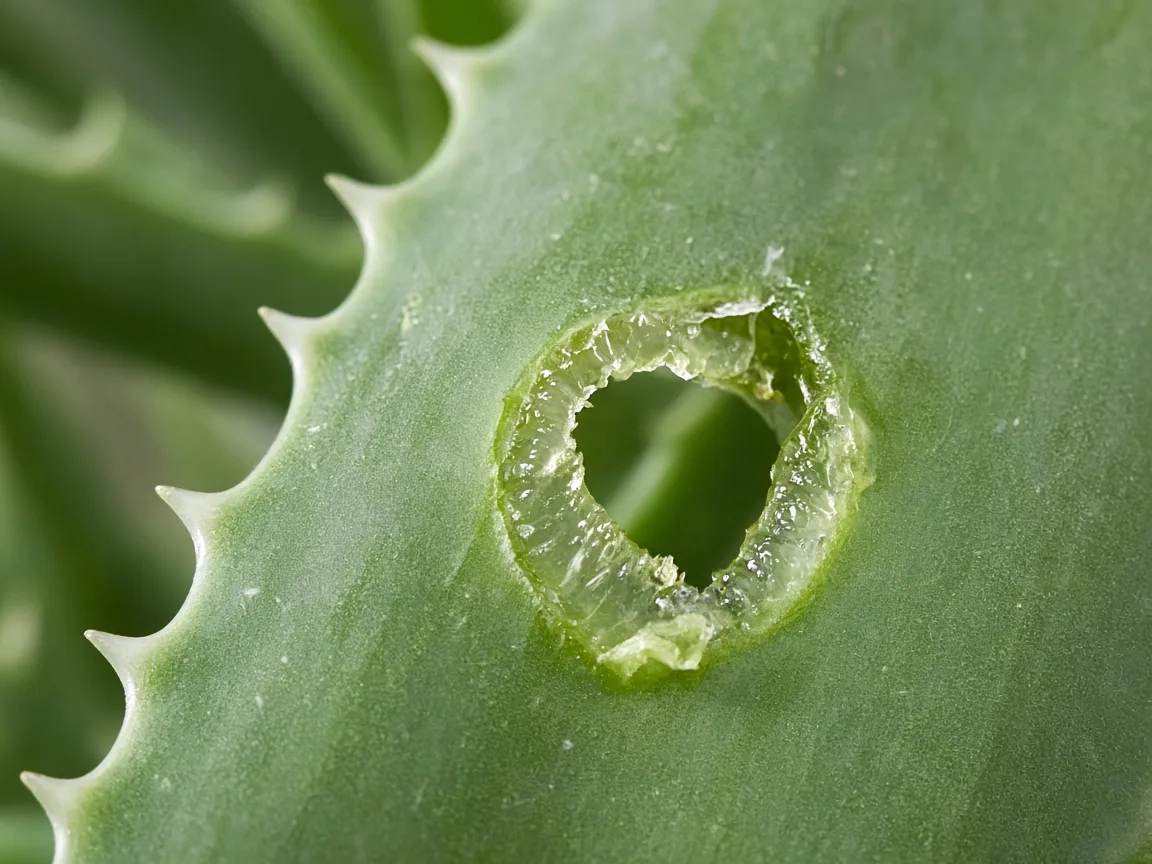
Holes in leaves on Aloe Vera - compare gel texture and hole edges with firm green tissue on the same rosette.
Mechanical punctures and splits:
- Clean tear or round puncture with clear gel visible at the wound
- Often mid-blade where a leaf was bent, brushed against a shelf, or crushed by a heavy pup
- No frass, no insects, no yellow halo spreading from the hole
- May appear after repotting when offsets are crowded at the rim
Chewing damage (caterpillars, slugs outdoors):
- Irregular missing sections along margins or mid-leaf
- Dark pellets (frass) on leaves or soil after the plant sat on a patio or balcony
- Damage can appear overnight after outdoor shade sessions
- Multiple leaves affected within days if the chewer is still present
Mealybug and aphid collapse:
- Small sunken spots that open into holes as tissue weakens
- White cottony clusters tucked between serrated teeth and the leaf base—mealybugs hide where blades overlap
- Sticky honeydew on nearby leaves or pot rim
- NC State Extension lists mealybugs and aphids as common aloe insect problems
Pet chewing:
- Irregular bite marks along leaf edges, sometimes several on one blade
- Gel may dry as a crust along the chewed margin
- Aloe is toxic to cats and dogs—oral irritation can follow ingestion; move the pot immediately
What aloe holes are not:
- Natural fenestration (aloe never develops decorative holes on mature leaves)
- Overwatering alone—wet roots cause mushy bases and brown collapse, not clean round holes through firm tissue
- Normal aging—outer leaves dry papery brown at the tip or base, they do not develop random perforations
Reading gel-leak edges—aloe’s fastest hole test
Aloe leaves are soft and easy to break, storing gel-like sap inside thick tissue. That anatomy makes edge inspection decisive:
- Clean break, gel dried at the seam, firm surrounding tissue → mechanical. No spray needed; optional trim once the gel stops oozing.
- Ragged chew, frass pellets, damage on multiple blades → active chewer. Isolate and inspect after any outdoor time.
- Pinprick collapse with white fluff in the serrated axil → mealybugs. Mealybugs on aloe often hide deep along the spine of each leaf where the teeth meet the blade—easy to miss until tissue gives way.
- Curled new growth with silver scarring → thrips before holes fully open—check the species guide.
Unlike thin-leaved herbs, aloe does not wilt dramatically when damaged—it stays upright while gel leaks from punctures. Do not wait for drooping; read the hole edge and axils first.
Why Aloe Vera gets holes in leaves
Aloe evolved as a drought-tolerant rosette succulent from dry regions. Indoors, holes usually trace to fragile tissue handling, pets, or occasional pests—not chronic watering mistakes.
Mechanical snaps and crowding
Thick leaves overlap in a tight rosette. A heavy offset leaning on a lower blade, a door brushing the pot, or lifting the plant by its leaves during repotting can snap tissue cleanly. Missouri Botanical Garden notes aloe tolerates bright light and infrequent water—owners often underestimate how easily the gel-filled blades puncture when bumped in a bright window traffic lane.
Outdoor chewing insects
Aloe moved to a summer patio attracts caterpillars and slugs that rarely trouble purely indoor plants. Chewing insects leave ragged voids and frass—see caterpillars for follow-up. Bring plants indoors before holes multiply across the rosette.
Mealybugs and aphids in leaf axils
Sucking pests weaken localized tissue until it collapses into a hole. Mealybugs favor the protected pockets along serrated margins and between overlapping leaves—House Digest notes they hide deep in the spine of each leaf. Aphids cluster on young growth and soil surface; both are listed by NC State as common aloe pests.
Pet and child damage
Cats chew succulents out of curiosity. Because aloe is toxic to cats and dogs, bite marks are both a cosmetic and safety issue—elevate the pot and monitor pets.
How to confirm the cause
Work through this order—each step narrows treatment without stacking fixes:
- Edge type — Clean gel-leak snap vs ragged chew vs sunken collapse with fluff.
- Axil inspection — Spread overlapping leaves gently and check serrated bases with a flashlight for mealybugs or aphids.
- Timing — Did holes appear after patio season, repotting, or a new pet access route?
- Neighbor leaves — One isolated hole on one blade favors mechanical. Several blades in a week favors pests or pets.
- Soil and base — Soft mushy crown on wet soil is root rot, not an insect hole—squeeze the base separately from hole diagnosis.
- White paper test — Shake a suspected blade over paper; moving specks confirm mites (stippling more than holes).
| What you see | Underside / axil check | Likely cause |
|---|---|---|
| Clean snap, gel dried, one leaf | Clean axils | Mechanical |
| Ragged chew + frass | Caterpillar or slug visible | Caterpillars |
| White cotton in teeth bases | Sticky residue | Mealybugs |
| Clusters on new growth | Soft green insects | Aphids |
| Silver scars on young leaves | Thrips when disturbed | Thrips |
| Irregular edge bites, no insects | Tooth marks | Pet chewing |
RHS guidance on leaf damage stresses matching hole pattern to cause before spraying—aloe’s thick tissue makes that edge reading especially reliable.
First fix for Aloe Vera—inspect the hole edge and leaf axils
Before you soak, repot, or spray, spread the rosette gently and classify the hole.
Mechanical damage only: no treatment required. Blot fresh gel with a dry cloth if oozing; let the wound dry open. Trim the damaged outer leaf at the base with clean scissors once gel stops weeping if the hole is large and cosmetic. Reroute the pot away from door swings and crowded offset rims.
Active chewing pests: isolate the plant, hand-pick visible caterpillars, inspect all blades and soil surface, and keep the aloe indoors. Follow caterpillars if frass returns within a week.
Mealybugs or aphids confirmed: isolate, dab visible mealybugs with alcohol on a cotton swab at the axils first—one targeted pass before any broad spray. Then open the relevant pest guide (mealybugs or aphids) for repeat intervals. University of Minnesota Extension recommends confirming active pests before applying pesticides indoors.
Pet chewing: move the pot to a pet-inaccessible shelf immediately. Holes will not close; watch for new bite marks over 48 hours.
Do not apply fungicide for holes—aloe rust and leaf spot show as surface lesions, not clean perforations through firm gel tissue.
Step-by-step recovery
- Classify the hole using edge, axil, and frass checks.
- Mechanical only: optional trim; give rosette clearance from walls and neighboring pots.
- Chewing pests: isolate, hand-pick, rinse leaf bases outdoors with a gentle stream, keep inside.
- Mealybugs / aphids: isolate, swab axils, follow species pest guide on repeat schedule.
- Monitor two to four weeks—new center leaves should emerge firm and hole-free.
Recovery timeline
Holes are permanent on that blade—gel tissue does not regenerate a sealed patch. Success means no new holes on emerging center leaves.
- Mechanical: stable immediately once the cause is removed; trim optional after gel dries.
- Pests: expect 2–4 weeks of monitoring after treatment; frass or new chew marks mean the population is not controlled.
- Pet chewing: stops when access ends; existing bite marks remain visible.
Judge recovery by firm new rosette growth and clean pups, not by old perforated leaves re-greening.
What not to do
- Do not mist holes closed—trapped moisture in thick leaves invites rot at the wound.
- Do not soak after mechanical damage—follow normal watering dry-down; extra water does not heal tissue.
- Do not spray pesticides before confirming pests—clean gel snaps need rerouting, not chemicals.
- Do not ignore ragged holes after patio season—chewers work through multiple blades within days.
- Do not leave chewed aloe within pet reach—toxic to cats and dogs.
When to worry
Treat as urgent when multiple new holes appear within a week, frass shows after outdoor exposure, white mealybug clusters spread to several axils, or pets show vomiting or lethargy after chewing.
Lower urgency: one clean mechanical snap on a single outer leaf with firm center growth and dry soil on schedule.
How to prevent holes next time
Place aloe where rosette tips clear door frames and shelf edges—thick leaves break easily when bumped. During repotting, lift by the pot, not the blades. After summer outdoors, rinse leaf bases and quarantine before returning to a succulent collection.
Keep bright light and dry soil rhythm per the light and watering guides—Missouri Botanical Garden notes aloe needs excellent drainage and reduced winter water; stressed plants attract mealybugs on overwatered specimens.
Inspect serrated axils monthly with a flashlight. Elevate pots if cats browse low shelves. Review the full index on Aloe Vera problems when symptoms shift to spots, mush, or yellowing instead of holes.
Related Aloe Vera guides
- Overview — placement, size, and pup growth
- Problems hub — full symptom index
- Soil — fast drainage to keep blades firm
- Pruning — trim damaged outer leaves cleanly
- Propagation — divide pups without snapping parent leaves