Distorted Leaves on Aloe Vera: Causes, Checks & Fixes
Quick answer
Distorted leaves on Aloe vera usually show on the newest central blade still unfurling from the rosette—twisted, crinkled, narrow, or scarred tissue while older serrated outer leaves may look normal. First step: gently open the rolled central leaf and magnify the inside for silver thrips streaks or insects before changing water, light, or fertilizer.
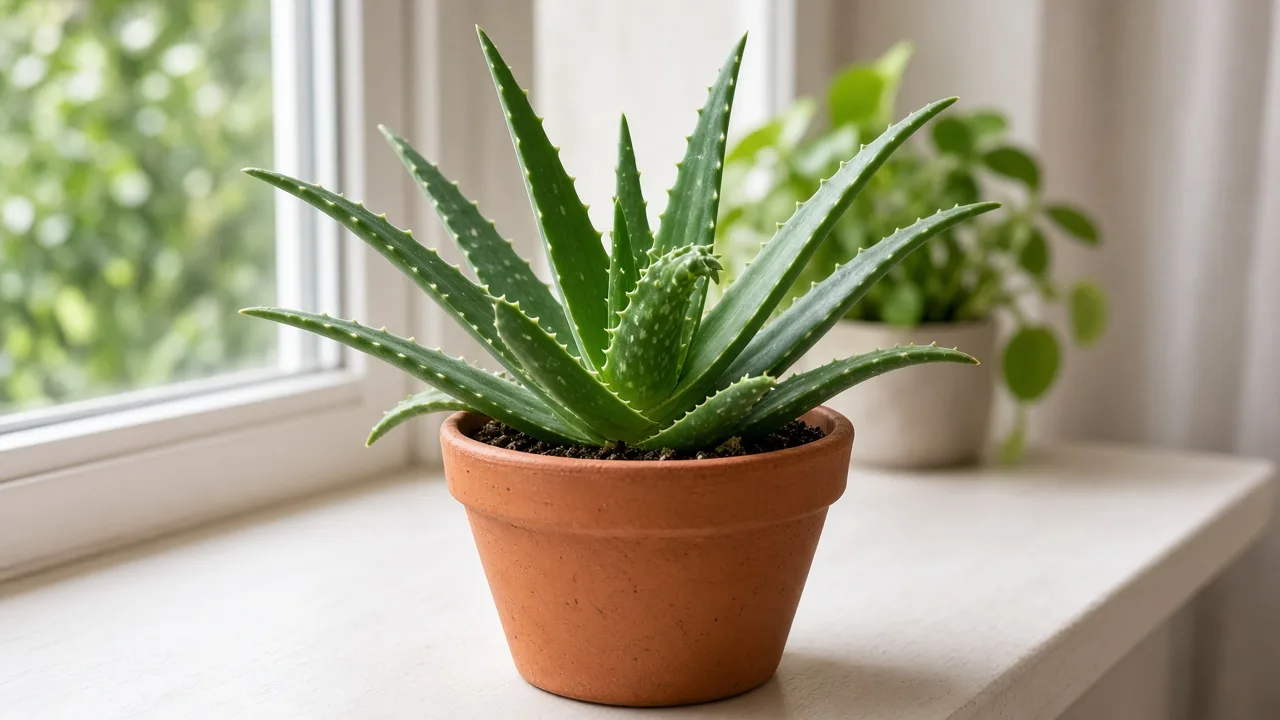
Distorted Leaves on Aloe Vera: Causes, Checks & Fixes
This guide covers distorted leaves on Aloe Vera. See also the general Distorted Leaves guide, watering, and light pages for this plant.
Distorted Leaves on Aloe Vera: Causes, Checks & Fixes
Quick answer
Distorted leaves on Aloe vera (Aloe vera, medicinal aloe) almost always hit the newest thick blade still opening from the rosette center—twisted, crinkled, narrow, scarred, or uneven while older serrated outer leaves may stay firm and green. That pattern matters because aloe stores water in gel-filled leaves that harden in place; warped tissue rarely straightens once mature.
For how new-leaf twisting works across houseplants, see our distorted leaves guide. On aloe, the rolled central leaf is the diagnostic stage—thrips scar the inside with silver streaks, calcium gaps cup the expanding margin, wet soil makes new tissue soft and lopsided, and dim light bends the whole rosette toward the window.
First step: gently part the newest central leaf and magnify the inside surface for thrips streaks, aphids, or mealybugs before you change watering, light, or fertilizer.
When to use this page vs other Aloe Vera guides
| Pattern | Read next |
|---|---|
| Twisted or scarred new central leaf still unfurling | Distorted leaves (this page) |
| Silver streaks, black specks inside rolled new leaf | Thrips |
| Cupped or margin-burned new leaf, firm base, no insects | Calcium deficiency |
| Leaves curling inward on firm blades, dry soil | Curling leaves or underwatering |
| Long bent leaves reaching toward a dim window | Leggy growth or not enough light |
| Soft mushy base, wet soil, translucent lower leaves | Overwatering or root rot |
| One old outer leaf kinked, firm center, stable care | Mechanical bump—trim when dry; no treatment needed |
What distorted leaves look like on Aloe vera
Healthy aloe pushes thick fleshy leaves in a rosette with soft teeth along the margin. Each new blade emerges from the center crown, unfurls over days, then hardens. Distortion shows while that central leaf is still expanding—or as permanent scarring after it opens.
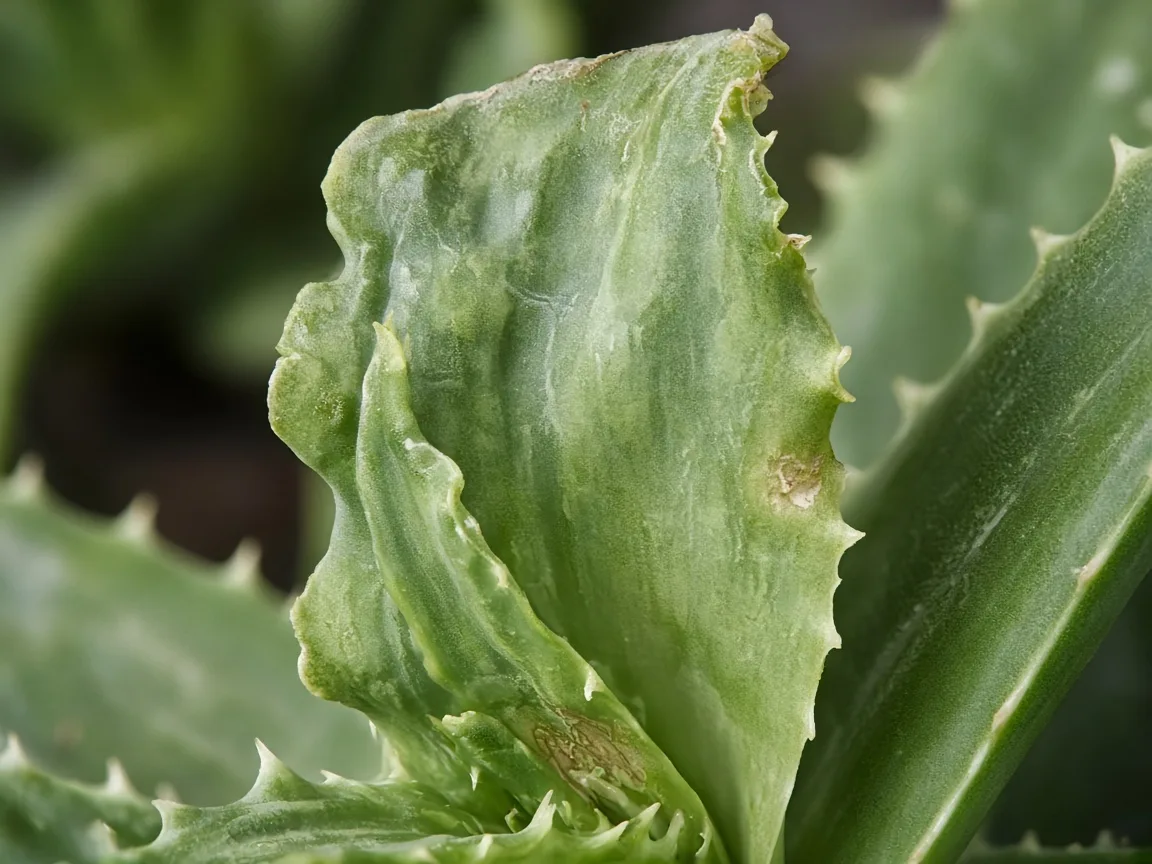
Twisted new Aloe vera leaf unfurling from the rosette center—compare width and symmetry with the previous fully opened serrated blade behind it.
Thrips and pest scarring pattern:
- Silver-gray streaks or speckling on the inside of the rolled central leaf
- Tiny black fecal specks in the streaks when magnified
- Crinkled, narrow, or corkscrew new blade that opens with permanent scars
- Older outer leaves may look untouched while each new central leaf gets worse
- Often follows bringing home a new plant or open windows in warm weather
Calcium or nutrient distortion pattern:
- Cupped, hood-like, or uneven margins on the newest central leaf only
- New expanding tissue shows damage first while older serrated leaves stay normal
- Firm rosette base if roots are healthy; no silver streaks inside the roll
- Common on plants fed rarely or watered with very soft water only
Wet-soil and root-stress pattern:
- New leaves look soft, swollen, or lopsided rather than crisply scarred
- Rosette may feel less firm at the base; pot stays heavy for days
- Distortion may pair with yellow translucent tissue on lower leaves
- Follows calendar watering in winter or dense peat mix in a dim room
Low-light stretch pattern:
- Entire rosette leans; new blades grow long, thin, and bent toward the brightest side
- Leaves lose the compact upright habit; spacing between blades widens
- Differs from a single twisted central leaf on an otherwise compact plant
Mechanical damage pattern:
- One kinked outer leaf after a bump, pet, or repotting squeeze
- Firm tissue with a sharp bend; center growth continues clean
- No streaks inside newer leaves; soil and pests check normal
Cold-shock pattern:
- Water-soaked dark patches that warp tissue within days of a chill
- May follow a plant against a cold window or outdoor night below ~40°F (4°C)
A single scarred old leaf on a firm rosette with clean new center growth is often past mechanical damage, not an active crisis. Worry when each successive central leaf emerges more twisted, pests are confirmed, or the base softens on wet soil.
Reading the rosette crown—aloe’s unfurling-leaf inspection
Aloe does not produce delicate fiddleheads like a fern—it grows a tight succulent crown where the next thick blade stays rolled until it opens. That roll is where thrips feed unseen and where calcium stress shows first.
How to inspect without tearing tissue:
- Look straight down into the rosette center for a rolled spike or folded new leaf.
- Gently spread the roll with your fingers—do not peel it backward forcefully.
- Hold a phone magnifier or 10× loupe to the inner surface of that leaf.
- Tap-test if you suspect mites: shake a blade over white paper; thrips look like tiny pale slivers that move.
Silver streaks with black specks inside the roll point to thrips before you assume nutrient trouble. Clean inner tissue with an asymmetric cupped margin points to calcium deficiency. Soft, wet-feeling new tissue on damp soil points to overwatering—not a spray schedule.
This crown check is plant-specific: you would not perform it on a trailing pothos node or a bird’s-nest fern frond crown the same way.
Why Aloe vera gets distorted leaves
Aloe evolved as a drought-tolerant rosette succulent storing water in thick leaves. New blades demand steady cell expansion; anything that interrupts feeding, water balance, or light during that short unfurling window leaves permanent warp once the gel-filled tissue hardens.
Thrips on the unfurling central leaf
Thrips scar new growth on houseplants by rasping tender tissue as leaves expand. On aloe, they concentrate in the rolled central blade where serrated margins are still soft. Each feeding session leaves silver trails that harden into crinkles as the leaf opens—outer mature leaves often escape damage because they were already firm when insects arrived.
Calcium and micronutrient gaps on new tissue
Calcium is immobile in the plant, so deficiency hits the newest expanding leaf with cupped margins or uneven width while older outer blades look fine. Indoor aloes fed rarely, watered with distilled water without complete fertilizer, or growing in depleted gritty mix during spring push are vulnerable. See the dedicated calcium deficiency page if cupping dominates without pest signs.
Overwatering during active growth
Overwatering should be avoided on aloe because wet soil limits root oxygen. When roots struggle, the crown cannot supply even expansion—new leaves may emerge soft, twisted, or stunted while lower tissue turns mushy. This overlaps root rot when the base stays wet for weeks.
Low light and directional stretch
Aloe wants bright light. In a dim room the whole rosette bends toward the window; new blades grow long and thin with a visible lean. That is etiolation distortion, not thrips scarring—see leggy growth and the light guide.
Aphids and mealybugs on tender tips
Soft-bodied pests cluster at the growing point and along the inner margin of new leaves, secreting honeydew that can stick adjacent blades together as they open. Distortion may look like fused or crinkled tips until you find cottony masses or green clusters under magnification.
Mechanical bumps and repot squeezes
Thick aloe leaves do not flex back after a sharp kink. One outer blade bent during repotting or knocked off a sill stays twisted permanently even when the plant is otherwise healthy. Judge by whether subsequent central leaves open clean.
How to confirm the cause
Work through this order—each step narrows the fix without stacking treatments:
- Crown magnifier check — Silver streaks and black specks inside the rolled leaf = thrips. Cottony tufts = mealybugs. Green clusters = aphids.
- Which leaves — New central only = pests, calcium, or wet-soil stress. Whole rosette leaning = light. One old outer leaf = mechanical.
- Gel squeeze on lowest outer leaf — Mushy on wet soil = root stress. Firm with dry soil = unlikely overwatering distortion.
- Soil moisture at depth — Push a skewer two inches down. Damp for a week with soft new growth = stop watering path. Dusty dry throughout = drought stress may cause curling more than twist.
- Light history — Recent move to a dim corner or sudden jump to harsh afternoon sun? Lean/stretch vs scorch differ from pest scarring.
- Successive leaves — Two or more new central blades increasingly warped = active cause still present. One scarred leaf then clean growth = past event.
Lookalike symptoms
| What you see | Likely cause | How to tell apart |
|---|---|---|
| Silver streaks inside rolled new leaf | Thrips | Magnifier shows specks; see thrips |
| Cupped new margin, firm base, no insects | Calcium deficiency | Older leaves normal; see calcium deficiency |
| Soft new tissue, wet soil, mushy base | Overwatering / rot | Squeeze fails on lower leaves; see overwatering |
| Long bent rosette toward window | Low light | Whole plant leans; see leggy growth |
| Inward curl on firm leaves, dry pot | Underwatering | Improves after one soak; see curling leaves |
| One kinked outer leaf, clean new center | Mechanical damage | No streaks; stable care |
| Sticky tips, cottony axils | Mealybugs | See mealybugs |
First fix for Aloe vera—open the newest central leaf and look for thrips
Before you fertilize, repot, soak, or spray everything, gently part the rolled central blade and magnify the inner surface for silver streaks and insects.
If thrips are present:
- Isolate the pot from other houseplants.
- Rinse the rosette crown and leaf axils with lukewarm water, directing flow into the rolled leaf without blasting soil out of the pot.
- Re-check with a loupe after the rinse—treatment continues only when you confirm active pests.
If the inner leaf is clean but cupped with burned margins on expanding tissue, switch to the calcium deficiency path—complete fertilizer on a firm plant, not more water.
If tissue is soft and soil is wet, stop watering and let the mix dry completely before any other step—see overwatering.
If the whole rosette leans with thin new blades, move to brighter light and acclimate gradually per the light guide—do not jump straight to full afternoon sun.
One correction today beats repotting, pruning, feeding, and spraying on the same afternoon.
Step-by-step recovery by cause
If thrips or sap-sucking pests are confirmed
- Keep the plant isolated until two clean central leaves unfurl.
- After the rinse, use insecticidal soap or horticultural oil on leaf surfaces and crown per label directions—aloe tolerates careful soap sprays better than daily oil in hot direct sun.
- Repeat at the interval the label specifies; thrips hide in crevices and rebound fast.
- Trim only fully dead scarred leaf tips if they snag or rot—living twisted tissue still photosynthesizes.
- Inspect neighboring plants that shared a windowsill.
If calcium or nutrient distortion is confirmed
- Confirm firm roots and soak-and-dry watering per the watering guide.
- Apply one measured dose of complete balanced fertilizer including calcium during spring or summer active growth—half strength on succulents.
- Do not stack heavy feeding with repotting on the same week.
- Judge the next central leaf—not the currently cupped one.
If overwatering or root stress is confirmed
- Stop watering until mix is dry two inches down—often two to four weeks in winter.
- If the base stays soft, unpot, trim mushy roots, callous, and repot into fast-draining mix per the soil guide.
- Resume watering only when new firm growth appears.
If low light stretch is confirmed
- Move to bright indirect light or morning sun.
- Rotate the pot weekly so new blades do not lean one direction.
- Expect older bent leaves to stay bent—watch the next two central leaves for compact upright form.
If mechanical damage only
- No treatment required when new center growth is clean.
- Trim the kinked outer leaf at the base once fully dry and papery for appearance.
Recovery timeline—what success looks like
Thrips (caught early): Silver streaks stop spreading on the next unfurling leaf within one to two pest-treatment cycles. Scarred blades remain twisted; three to six weeks of clean central growth means you broke the cycle.
Calcium correction: The currently cupped leaf rarely flattens. The following one or two central leaves should open wider within four to eight weeks after stable watering and one appropriate feed.
Overwatering (caught early): Soft distortion eases as soil dries; firm new center leaves may take three to six weeks. Persistent mush with sour soil needs rot protocol.
Light correction: New blades look shorter and thicker within three to five weeks in brighter placement. Old lean stays until shed naturally.
Mechanical: Immediate stability—only cosmetic trim needed.
When to worry: Each new central leaf more distorted than the last, crown softening on wet soil, or pests spreading to every plant on the sill—escalate before the rosette collapses.
What not to do
- Do not fertilize a warped aloe on day one hoping leaves straighten—salts stress roots already struggling with water or pests.
- Do not force-peel the central leaf backward; you can tear the growing point and create real distortion.
- Do not soak a plant with soft tissue on wet soil—allow soil to dry between waterings on succulents.
- Do not repot and spray and prune the same week—you will not know which step helped.
- Do not assume distortion means virus on a single leaf without streak patterns across the whole rosette and collection—pests and care stress are far more common indoors.
- Do not ignore thrips because outer leaves look fine—the next central blade will scar again.
How to prevent distorted leaves next time
- Quarantine new aloes two weeks and inspect the crown with a loupe before placing on a shared windowsill.
- Water by dry soil, not leaf appearance—reduce watering in winter when growth slows.
- Bright light with acclimation—prevents lean distortion and keeps tissue firm enough to resist pest damage.
- Complete fertilizer once or twice in active season if you use soft water—supports clean cell expansion in new leaves.
- Fast-draining gritty mix and terracotta per the soil guide—wet crowns warp new growth.
- Weekly crown peek during spring pup season—catch thrips before three leaves scar.
Related Aloe Vera guides
Distorted new leaves overlap with pest, nutrient, and water signals on the same rosette:
- Aloe Vera overview — full care hub
- Thrips on Aloe Vera — silver streaks inside rolled leaves
- Calcium deficiency on Aloe Vera — cupped new margins without insects
- Curling leaves on Aloe Vera — inward roll on firm drought-stressed blades
- Aloe Vera watering guide — soak-and-dry rhythm
- Aloe Vera problems hub — browse all common issues
Most aloes recover once the unfurling crown is pest-free, soil dries correctly, and light is strong enough for compact growth. Warped mature tissue is cosmetic; clean successive central leaves mean you fixed the right problem.
Related tool
Use the Plant Problem Diagnosis Tool to narrow causes for distorted leaves on this plant before changing multiple variables at once.