Curling Leaves on Aloe Vera: Causes, Checks & Fixes
Quick answer
Curling leaves on Aloe vera usually mean the thick gel-filled leaves are losing turgor—from drought, damaged roots on wet soil, intense sun, or cold—not a fertilizer shortage. First step: squeeze an outer leaf and push a skewer to the pot base; thin inward curl with bone-dry mix means one deep soak, while soft translucent curl on damp soil means stop watering and inspect roots.
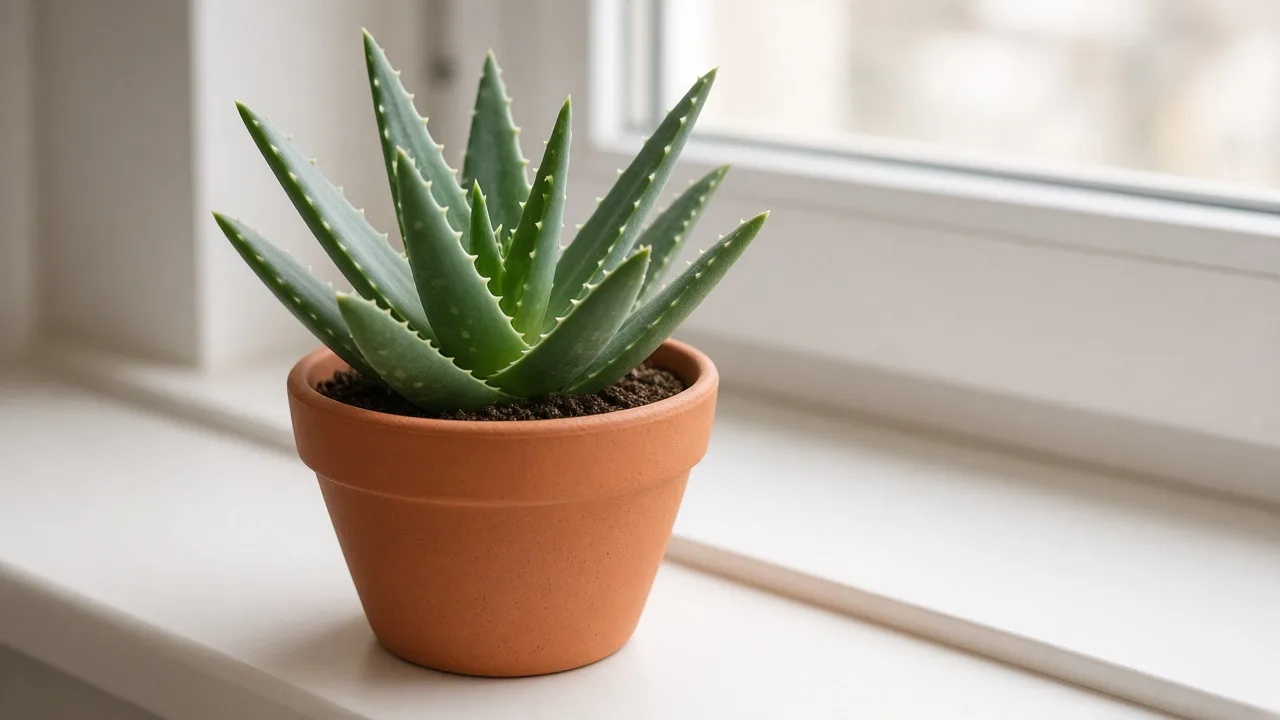
Curling Leaves on Aloe Vera: Causes, Checks & Fixes
This guide covers curling leaves on Aloe Vera. See also the general Curling Leaves guide, watering, and light pages for this plant.
Curling Leaves on Aloe Vera: Causes, Checks & Fixes
Quick answer
Curling leaves on Aloe Vera (Aloe vera) are a turgor and water-movement signal first—not a missing-nutrient problem. This succulent stores water in thick, gel-filled leaves with serrated margins; when roots cannot deliver enough moisture (or deliver none because they are rotting), those leaves cup inward to cut surface area and protect the crown.
First step: squeeze an outer leaf and push a wooden skewer to the pot base before you water, repot, or move windows. Thin, firm inward curl with bone-dry mix throughout → one deep soak, then resume soak-and-dry per the watering guide. Soft, translucent inward curl on damp soil for days → stop watering and inspect roots—see overwatering guidance. Red-tinged curl after a sudden sun move → pull back from harsh afternoon rays and soak once after the pot cools.
For how leaf curl works in general, see our curling leaves symptom guide. On aloe, the pattern usually shows up on the oldest outer rosette leaves first, while center pups stay upright—or on every leaf at once when rot or extreme drought hits the whole root ball.
Make one correction at a time so you can read the plant’s response over the next week. Severely damaged outer blades may never flatten perfectly; watch new center growth for proof the fix worked.
What curling leaves look like on Aloe Vera
Healthy aloe leaves are thick, lance-shaped, and stand at a slight outward angle from a tight rosette—NC State describes them as thick, succulent, pointed basal leaves with small marginal teeth. Stress curl breaks that stiff architecture in recognizable ways:
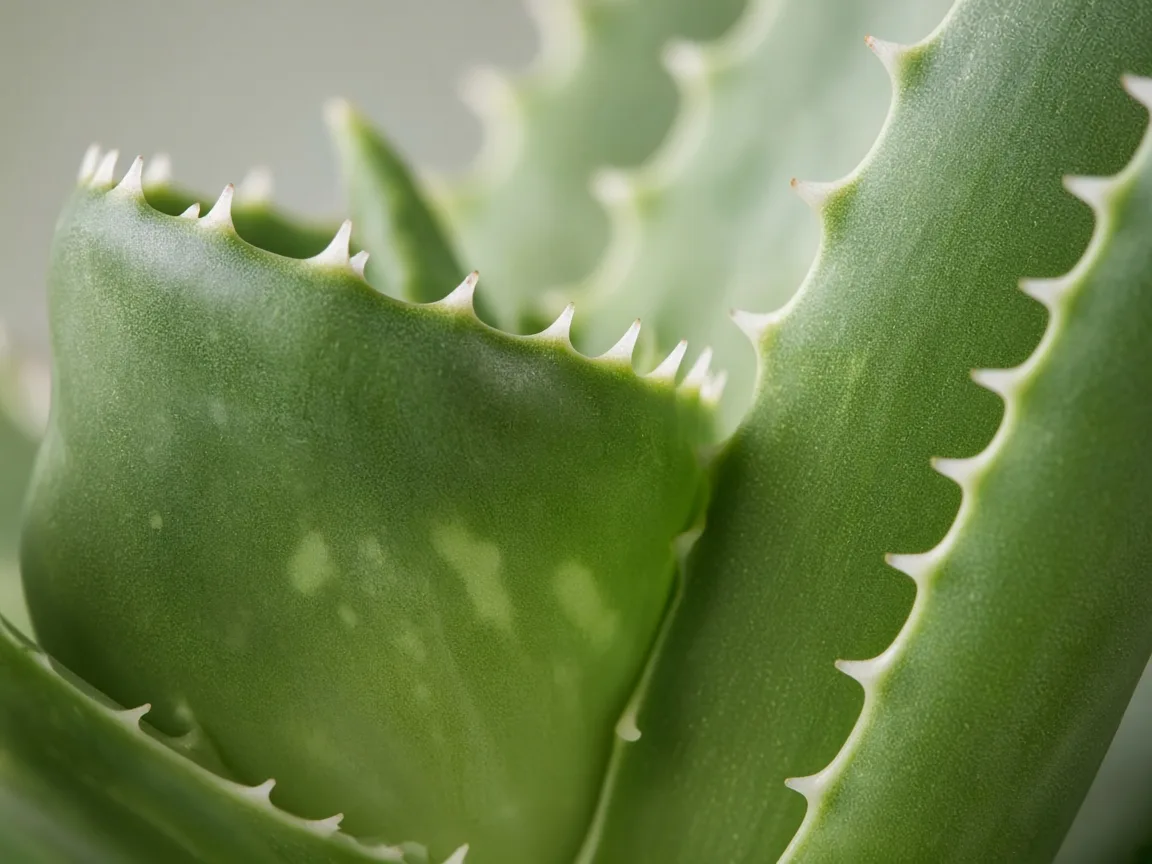
Inward cupping on outer aloe leaves—compare curled blades with firm upright center growth on the same rosette.
Drought-stress inward curl:
- Outer leaves roll inward toward the rosette center, like a closing funnel
- Blades feel thinner and slightly concave when squeezed—not mushy
- Very light pot when lifted; mix dusty dry two to three inches down and at the base
- Tips may brown before full curl appears; center pups often stay firmer longer
Overwatering / root-failure curl:
- Leaves curl inward or droop downward but feel soft, waterlogged, or translucent
- Pot stays heavy; soil damp at depth for more than a week
- Base of outer leaves yellows or turns mushy while you were still watering on schedule
- Classic trap: wet soil but curled leaves because damaged roots cannot move water—see root rot
Sun and heat stress curl:
- Inward curl with reddish, purple, or bleached patches on sun-exposed surfaces
- Follows a sudden move to a south-facing afternoon sill or outdoor full sun without acclimation
- Soil may be dry and leaves curl because transpiration outpaced root uptake in heat
Cold-stress curl:
- Outer leaves curl and darken after a cold draft, AC blast, or sub-50°F (10°C) exposure
- Tissue stays firm, not mushy; soil moisture may be normal
- Center growth stalls until temperatures stabilize
Low-light outward splay:
- Leaves bend outward or flatten horizontally, sometimes with pale yellow-green color
- Often on plants in dim corners for months; soil stays wet longer because the plant uses less water
- Pairs with leggy growth rather than tight drought cupping
One or two slightly cupped outer leaves on an otherwise firm rosette with correct dry-down may simply follow a hot week or a skipped drink. Concern rises when every leaf curls at once, the crown softens, or curl pairs with wet soil for weeks.
Inward curl vs outward curl on aloe rosettes
Direction matters on aloe because the same rosette stores water in every leaf—not in a separate stem like a fiddle-leaf fig.
| Signal | Inward curl (cup toward center) | Outward curl (splay away from center) |
|---|---|---|
| Typical cause | Drought, sun dehydration, failing roots on wet mix | Low light, weak growth, heat from vents |
| Leaf feel | Thin and concave but firm—or soft if rotting | Floppy or stretched; often still full of gel |
| Pot weight | Very light (drought) or heavy (rot) | Moderate; soil slow to dry in dim rooms |
| Center pups | Often firm while outers curl first | Whole rosette may lean toward window |
| First fix | Deep soak or stop water + inspect roots | Move to brighter light; fix wet slow-dry cycle |
Thirsty aloe conserves water by curling outer leaves inward—the opposite of prayer plants that fold at night. If your plant suddenly changed curl direction after a move, trust the direction plus soil probe over generic “curl means underwatering” advice.
Reading curl on offset-heavy rosettes and terracotta pots
Mature aloe spreads by offsets (pups) at the base. A single pot holding a mother plant plus several pups dries unevenly and drinks faster than a lone rosette—outer mix can be desert-dry while the center still holds moisture, or the crowded base traps humidity after watering.
Terracotta vs plastic: NC State notes that clay pots are best for aloe because they breathe. A plastic nursery pot inside a tight cachepot often shows curl on outer leaves while the skewer reads moist at the center—classic edge-dry, core-wet stress. Lift the inner pot and probe the bottom drainage layer, not just the surface.
Skewer-to-base check: Push a wooden skewer through the drainage hole or deep along the pot wall until it hits bottom. On aloe, surface-only dryness misleads because thick leaves mask root-zone thirst for weeks. Curl on outer leaves with a dry skewer at the base confirms drought; curl with a damp skewer after ten days without water suggests compacted or peat-heavy mix that never wets evenly—see the soil guide.
Why Aloe Vera gets curling leaves
Aloe evolved for dry Arabian Peninsula conditions, storing reserves in gel-filled leaves and tolerating long gaps between drinks. Curl appears when that storage–root balance breaks—not because the plant wants more fertilizer on day one.
Underwatering and shallow watering
The most common inward curl trigger indoors is simply dry soil too long. Owners fear overwatering—the leading aloe killer—and skip drinks until outer leaves thin and cup. Surface sprinkles that never reach the root ball cause the same stress: top inch looks damp while the base stays dry.
Missouri Botanical Garden recommends watering very moderately in spring through fall and reducing to the minimum in winter—but “minimum” still means fully dry between soaks, not months of neglect. Active growth in a bright summer window uses water faster than dormant winter rest.
Overwatering and root rot masquerading as thirst
When roots rot in soggy mix, they cannot absorb water. Leaves curl as if thirsty while soil stays wet—a pattern Iowa State Extension warns about when succulents yellow and stems soften in overly wet conditions. Adding more water worsens curl. Full rot protocol lives on root rot and overwatering pages.
Too much direct sun without acclimation
Aloe wants full sun to partial shade and bright light for healthy structure. A plant grown in moderate indoor light that jumps to harsh afternoon sun can lose water faster than roots replace it—leaves curl inward with red stress tint before brown tips or bleached patches form. Heat from radiators and closed car windows cause the same dehydration curl.
Cold exposure
MBG notes aloe tolerates 50°F to 60°F summer nights with a minimum around 40°F in winter. Cold windowsills and AC drafts chill gel-filled leaves; outer blades curl and darken while the plant stops active growth. Firm cold-curled tissue differs from mushy rot—warm the plant gradually, do not soak cold soil repeatedly.
Insufficient light and slow dry-down
Weak light reduces photosynthesis and water use, so soil stays damp longer. Leaves may splay outward or look limp without classic inward cupping. Maryland Extension notes that aloe needs bright light indoors—several hours of direct sun at a window—otherwise stored energy runs low and stress symptoms follow. See not enough light when curl pairs with pale, stretched growth.
Pests and physical damage
Spider mites and mealybugs in leaf axils can distort new growth and cause uneven curl. Fine stippling, webbing, or white cottony clusters distinguish pests from water stress. Mechanical breaks in soft aloe leaves also cause local curling along the wound—unrelated to watering.
How to confirm the cause
Work through this checklist in order. Each step narrows the list without stacking treatments:
- Leaf squeeze — Press an outer leaf. Thin and concave but firm = drought. Soft and squishy = wet roots. Firm with red sun patches = light/heat stress.
- Skewer to pot base — Bone dry throughout = underwatering. Damp after weeks without water = rot or poor drainage. Dry on schedule with outward splay = low light.
- Pot weight — Feather-light with inward curl = thirst. Heavy with limp curl = too much water.
- Curl direction — Inward cup = drought, sun dehydration, or root failure. Outward splay = weak light or wet slow-dry cycle.
- Which leaves first — Outer only while center firm = localized stress. Every leaf at once = systemic drought, rot, or extreme sun.
- Recent changes — Repot, window move, winter calendar watering, or pups crowding the pot? Timing that matches curl is diagnostic.
If the center rosette is firm, soil dries on your normal schedule, and only outer leaves cup slightly after a dry spell, one deep soak may be all you need.
Lookalike symptoms
| What you see | Likely cause | How to tell apart |
|---|---|---|
| Inward cup, thin firm leaves, light pot, dry base | Underwatering | Firms within 24–72 h after one soak; see underwatering |
| Inward curl, soft translucent leaves, wet soil, heavy pot | Overwatering / root rot | Base mushy; sour smell; see root rot |
| Inward curl, red or bleached sun-side patches | Sun / heat stress | Follows light increase; firm gel elsewhere |
| Outward splay, pale leaves, dim location | Low light | Soil slow to dry; stretched stems |
| Downward limp arch, wet soil | Advanced rot or severe overwatering | Crown softening; see wilting and drooping leaves |
| Fine stippling, webbing in axils | Spider mites | Tap test over white paper—not a watering issue |
| Firm outer curl after cold night | Cold stress | Warm location; no base mush |
First fix for Aloe Vera — squeeze the leaf and probe to the base
Before you fertilize, repot, mist, or soak, press an outer leaf and push a skewer to the pot base.
That single check prevents the two most common mistakes: soaking leaves that are already drowning, and withholding water from a plant whose outer leaves are thin from real drought. If tissue is thin and soil is bone dry, one thorough soak is the right move—not daily sprinkles. If tissue is soft and soil is wet, stop watering—do not add more water hoping leaves uncurl.
Only after this pause should you unpot for root inspection—when soil stayed wet for weeks, the base is softening, or curl spread to many leaves within days. One correction today beats repotting, pruning, feeding, and moving windows on the same afternoon.
Step-by-step recovery by cause
After the first check, follow the path that matches your diagnosis—one at a time:
If underwatering is the cause
- Give one thorough soak until water runs from drainage holes; let the pot drain fully and empty the saucer.
- Do not water again until the mix is completely dry two inches down and at the base—usually one to three weeks indoors.
- Remove fully dried, papery outer leaves at the base for cosmetic cleanup if needed.
- Expect outer leaves to firm within 24–72 hours; severely thinned blades may stay slightly cupped.
If overwatering or root rot is the cause
- Stop watering until the mix is completely dry throughout—may take two to four weeks in winter.
- Empty saucers; confirm drainage holes are open; never let the pot sit in runoff.
- If the base stays mushy after the mix dries, unpot, trim dark slimy roots with a sterile blade, and air-dry the plant two to five days.
- Repot into fresh fast-draining cactus mix in a pot with drainage—slightly undersized terracotta dries faster than oversized plastic.
- Resume watering only when new growth appears and soil dries fully between drinks.
If sun or heat stress is the cause
- Move the pot to bright indirect light or morning sun—pull back from harsh afternoon rays.
- After the pot and room cool, give one deep soak if the skewer reads dry at the base.
- Acclimate over one to two weeks if you need more light—do not jump from shade to full afternoon sun in one day.
- Trim severely bleached leaf sections only after the plant stabilizes; gel stores in remaining tissue help recovery.
If cold stress is the cause
- Move the plant away from cold windows, AC vents, and drafty doors.
- Keep temperatures above 50°F (10°C) for active recovery; MBG lists 40°F as winter minimum but growth stalls near that floor.
- Hold water until soil at the base is dry; cold wet mix invites rot.
- Watch for new center growth over three to six weeks once warmth returns.
If low light is the cause
- Move to the brightest spot available—east or south window with several hours of direct sun, or a grow light.
- Adjust watering downward if brighter light also warms the pot and speeds dry-down.
- Do not fertilize until new growth looks normal; light is the fix.
Recovery timeline — what success looks like
Underwatering (caught early): Outer leaves often firm within 24–72 hours after a proper soak. Mild cup may remain on old blades; expect upright new center leaves within two to four weeks.
Overwatering (caught early): Curl may persist two to four weeks after soil dries. Firm new pups or center leaves within four to eight weeks once roots recover—old curled tissue rarely flattens fully.
Sun stress: New growth after relocation should look darker and more upright within three to six weeks. Red tint fades on older leaves; bleached patches are permanent on that tissue.
Cold stress: Growth resumes when temperatures stabilize; new leaves over four to eight weeks in cool winter light.
When to worry: Crown softening, black mushy roots, sour smell, or curl spreading to every new leaf while soil stays wet—treat as urgent rot per root rot guidance.
What not to do
- Do not increase watering when leaves curl inward on soil that is already damp—overwatering should be avoided on aloe and worsens root failure curl.
- Do not withhold water from thin, concave outer leaves on bone-dry soil— that is active drought, not “aloe likes dry.”
- Do not fertilize a curling aloe on day one; salts stress weak roots and feed pests on soft tissue.
- Do not mist leaves hoping to fix curl—aloe tolerates dry indoor air and wet crowns in cool rooms invite rot.
- Do not repot on day one unless roots are mushy or soil has failed—many curl cases resolve with one watering or light correction.
- Do not stack repotting, heavy pruning, fertilizer, and a new window position the same week.
How to prevent curling leaves next time
- Water by soil probe, not calendar — Allow soil to completely dry between waterings, then soak deeply; roughly every two to four weeks in summer and every four to eight weeks in winter for most indoor pots, per the watering guide.
- Probe to the base on offset-heavy pots—surface dryness misleads on crowded rosettes.
- Use terracotta or breathable pots with open drainage; avoid cachepots that trap runoff.
- Match winter to summer rhythm — Reduce watering to the minimum in winter when growth slows; summer habits become slow drowning by December.
- Acclimate light changes — Move gradually toward brighter windows; pull back from harsh afternoon sun in summer.
- Keep above cold drafts — Especially on winter windowsills above radiators that cycle hot and cold.
- Divide crowded pups in spring when offsets choke the pot—reduces uneven dry-down stress.
Related Aloe vera care
Curling leaves overlap with several other stress signals on the same plant:
- Aloe Vera watering guide — soak-and-dry method and winter slowdown
- Underwatering on Aloe Vera — thin concave leaves, bone-dry soil
- Overwatering on Aloe Vera — soft base, wet mix, sour soil
- Root rot on Aloe Vera — trim, callous, and repot protocol
- Aloe Vera light requirements — bright light without scorch
- Aloe Vera overview — full care hub
Most aloes recover from curl once water, light, and drainage match this succulent’s rhythm. Old outer blades may stay slightly cupped; firm center growth and green new pups mean you corrected the right problem.
When to use this page vs other Aloe Vera guides
- Aloe Vera watering guide — Use for routine moisture checks before assuming curl is the main issue.
- Aloe Vera problems hub — Browse all common issues on this species.
- Underwatering on Aloe Vera — Different entry point when thin leaves and dry soil dominate over visible cupping.
- Overwatering on Aloe Vera — Use when soft translucent curl pairs with wet soil, not firm drought cupping.
- Not Enough Light on Aloe Vera — Use when outward splay and pale stretch precede curl.