Thrips on Aloe Vera: Rosette Checks & Fixes
Quick answer
Thrips on Aloe Vera rasp tender leaf tissue and leave silvery streaks, black frass specks, and rippled new center leaves—often while the pot is correctly dry. First step: isolate the rosette and rinse leaf undersides and bases with lukewarm water without flooding the crown cup.
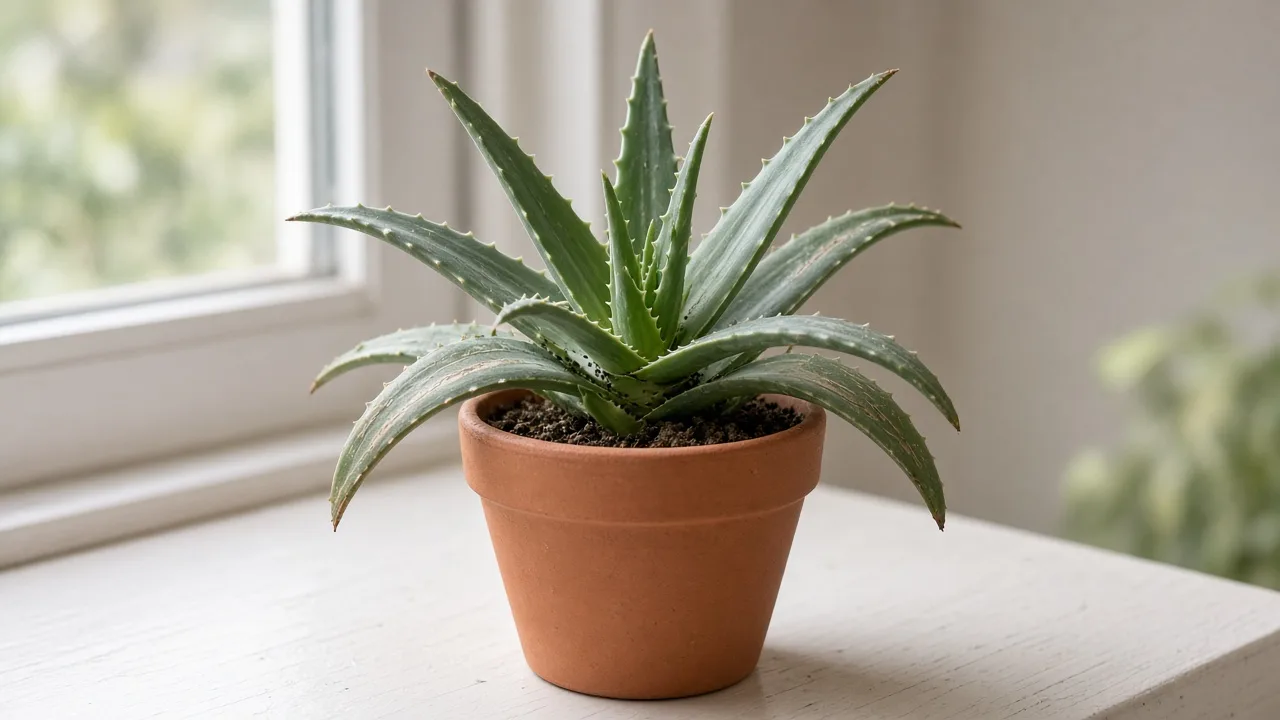
Thrips on Aloe Vera: Causes, Checks & Fixes
This guide covers thrips on Aloe Vera. See also the general Thrips guide, watering, and light pages for this plant.
Thrips on Aloe Vera: Causes, Checks & Fixes
Quick answer
Thrips on Aloe Vera (Aloe vera) are small, winged insects with rasping-sucking mouthparts that scar tender leaf tissue and leave silvery streaks, black frass specks, and rippled new center leaves on a firm succulent rosette. Indoor outbreaks usually trace to new plants, cut flowers, open windows, or shared shelves—not chronic overwatering.
For general thrips biology and control options, see our thrips guide. On aloe vera, damage concentrates where thick serrated leaves overlap at the rosette crown and on soft new flush from the center and pup offsets—places a quick glance at the outer leaf faces often misses.
First step: isolate the rosette and rinse leaf undersides and bases thoroughly in lukewarm water without flooding the crown cup.
Pet note: Aloe vera is toxic to cats and dogs if chewed. Keep treated plants and trimmed leaf pieces out of pet reach during recovery.
When to use this page vs other Aloe Vera guides
| Pattern | Read next |
|---|---|
| Silvery streaks, black frass, rippled new center leaves | This page |
| Fine webbing and yellow stippling on smooth leaf faces | Spider mites |
| Pale winding tunnels with dark frass inside leaves | Leaf miners |
| Rippled or narrow new leaves without silver streaks or insects | Distorted leaves |
| White cottony clusters in leaf bases and on pups | Mealybugs |
| Soft mushy base, wet mix, no silver above soil line | Root rot or overwatering |
What thrips look like on Aloe Vera
Thrips are generally less than one-eighth inch long with elongated bodies—more like a grain of rice than round aphids. UF/IFAS notes that thrips feeding causes leaves to dry out and develop a scarred or silver-flecked appearance, with small brownish specks of excrement on undersides.
On Aloe vera, the thick leaves grow in a rosette with serrated margins—exactly where thrips rasp before new tissue hardens.
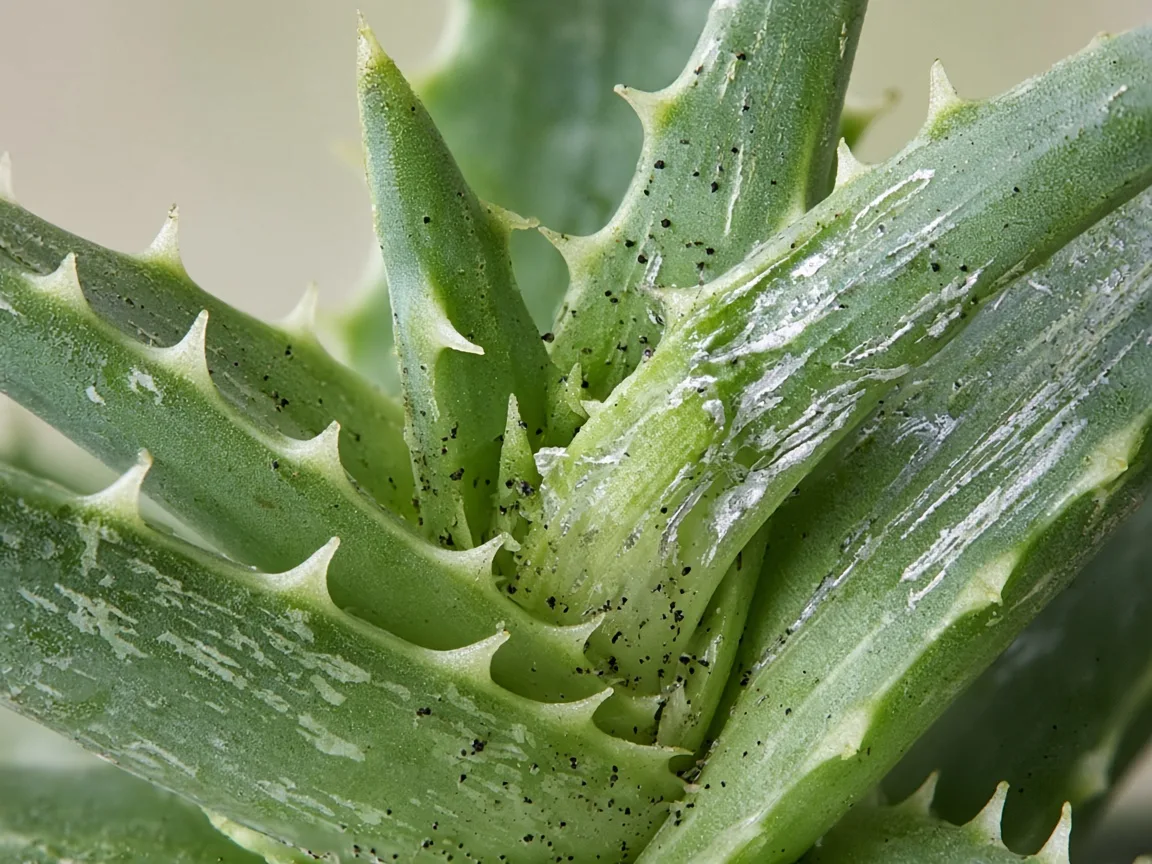
Silvery rasp marks and tiny black frass specks where serrated leaves overlap at the crown—compare with an intact outer leaf on the same rosette.
Early feeding on thick leaves:
- Pale silver or bronze streaks across smooth gray-green leaf faces
- Tiny black dots (frass) scattered where leaves overlap at the crown
- Slight dulling of green on affected tissue while the stem base stays firm
- Damage often starts on one new center leaf before spreading outward
Established infestation on the rosette:
- Rippled, narrow, or scarred new center leaves that fail to open flat
- Silvery patches that look like dust until viewed in angled side light
- Distorted unfurling leaves with rasp lines along serrated edges
- Slender yellow, brown, or black insects on a white-paper shake test
What aloe vera thrips damage is not:
- Fine yellow stippling with delicate webbing—spider mites on leaf faces, not thrips
- Pale winding tunnels with a dark frass line inside—leaf miners
- White cottony wax in leaf bases—mealybugs
- Whole rosette softening at the soil line while soil stays wet—root rot, not sap feeders
Damaged leaf tissue stays scarred permanently. New center leaves opening clean after treatment are your recovery signal.
Where thrips hide on thick rosette leaves and pup clusters
Aloe vera stores water in firm leaves and you let soil dry completely between waterings. Thrips follow the protected overlap where thick serrated leaves meet the stem, not the open flat faces owners see from across the room.
Work the rosette from center outward:
- Newest center flush — unfurling leaves are softest and show silver scarring first
- Leaf base overlap — lift outer leaves gently and check the crown zone for frass and live insects
- Serrated leaf margins — thrips rasp along tender edges before tissue hardens
- Pup offsets at the pot rim — small pups share the same tight leaf overlap and reinfest the mother rosette
- Lower outer leaves only after the crown is clean — populations move outward as center tissue hardens
Because aloe spreads by offsets, a clean mother rosette beside an infested pup will pick thrips up again within days unless you treat both at once.
Why Aloe Vera gets thrips
Aloe tolerates drought, bright light, and neglect better than most houseplants. That resilience does not repel thrips—it can hide early damage because the firm rosette keeps standing upright while individual leaves scar quietly.
Thrips prefer young leaves, buds, and tender growth—exactly where Aloe vera pushes new thick leaves from the center during warm active growth. Mature outer leaves resist some feeding, but unfurling center tissue is soft enough to rasp and distort before it hardens.
Warm, dry indoor air favors thrips, especially in winter when humidity drops and succulents sit close together on window sills. UF/IFAS recommends identification before treatment—important because silver flecking on smooth aloe leaves can look like mineral dust or dried rinse water until you find frass or live insects.
Thrips usually arrive on new plants, cut flowers, outdoor summer outings, or open windows during peak season. They are mobile and spread between pots on a shared bench within days. Because aloe grows slowly compared with vining houseplants, thrips scarring on a single new center leaf can make the whole rosette look sick for weeks even after pests are gone.
Overwatering on Aloe Vera does not attract thrips, but repeated crown rinses without dry-down discipline can invite crown rot—a separate problem from the insects themselves. Low light slows replacement of scarred foliage, so the plant looks damaged longer even after pests are controlled.
How to confirm the cause
Use a white-paper shake test: hold a suspect leaf over white paper and tap it sharply. Thrips fall as tiny moving specks. UF/IFAS suggests this method alongside visual inspection of young leaves and buds.
Work in this order:
- Newest center leaves — look for rippled, silvery, or narrow tissue still unfurling
- Leaf base overlap at the crown — scan where thick leaves meet the stem in angled light
- Serrated margins — check tender edges for black frass specks
- White-paper shake — confirm live thrips on damaged leaves
- Stem base firmness — press the rosette base; firm plump tissue supports a pest diagnosis, soft mush on damp mix means rot
- Pup offsets — inspect every offset at the pot rim, not only the main rosette
- Neighboring plants — inspect anything recently purchased or placed nearby
- Sticky traps — yellow traps near the pot catch adult thrips and monitor population trends
Rule out lookalikes. Mineral dust or hard-water dried spots wipe off; thrips scarring is embedded in tissue. Spider mites leave fine webbing and yellow stippling without silvery streaks or frass specks. Leaf miners leave pale tunnels with a dark line inside—distinct from surface silvering.
If streaks are present but no thrips appear on repeated shake tests, consider whether damage is old from a cleared infestation—monitor new center leaves for fresh scarring.
First fix for Aloe Vera
Isolate the rosette and rinse leaf undersides and bases thoroughly in lukewarm water without flooding the crown cup.
Move the pot away from other plants immediately. Thrips spread to nearby houseplants quickly, especially in warm rooms with shared air. In a sink or shower, support the rosette with one hand and angle the pot so water runs down outer leaf surfaces and out of drainage holes rather than pooling in the center cup.
This single step physically removes thrips and debris before any chemical treatment. Blot any water trapped where leaves meet the stem with a dry cloth. Let the rosette air-dry in bright indirect light for several hours before evening. Do not repot, fertilize, or prune heavily on day one—those add stress without addressing the pest.
Do not soak the root zone repeatedly trying to “wash thrips from soil.” Thrips primarily inhabit foliage, especially tender unfurling center leaves—not potting media.
Crown-safe rinse technique for succulent rosettes
- Rinse at the soil line and leaf undersides, not straight into the crown funnel
- Use lukewarm water; cold shocks and hot water can mark succulent tissue
- Tilt and blot—a dry cloth pressed gently into the crown removes pooled drops
- Finish by mid-afternoon so leaves dry before cool night temperatures
- Skip heavy rinses if the base is already soft; fix root rot first
Pause gel harvest during active treatment
Many owners keep aloe for the leaf gel. Do not slice leaves for gel until you have finished soap or oil cycles and rinsed residues away. Insecticidal soaps and plant oils kill pests by contact—they must wet thrips directly and leave little residual activity on tissue you might use later.
Step-by-step recovery
After the initial rinse:
- Repeat water rinses every five to seven days for at least three cycles. Thrips eggs hide inside plant tissue and hatch on staggered schedules; repeat applications are necessary.
- Apply insecticidal soap if live thrips persist after two thorough rinses. Spray leaf bases, crown overlap, and unfurling center leaves until runoff—soaps only kill on contact. Use products labeled for thrips; do not mix homemade soap, which can burn sensitive leaves.
- Treat neighboring plants and pups on the same shelf or in the same pot at the same time. Thrips reinfest from asymptomatic neighbors quickly in dry indoor collections.
- Place yellow sticky traps near the pot to monitor adult thrips and confirm populations are declining.
- Remove severely scarred outer leaves only if they are mostly dead tissue—trim with clean shears to reduce pest load. Leave green stippled leaves; they still photosynthesize.
- Wash hands and tools after handling infested plants. Keep trimmed pieces away from pets—aloe is toxic to cats and dogs.
Horticultural oil can work on thrips but test one outer leaf first—oils on heat-stressed succulent leaves in midday window light can cause spotting. Do not spray in full sun or above about 90 °F—treat at lights-out or move the pot to bright shade until foliage dries.
For severe persistent cases on valuable specimens, labeled spinosad products may be considered where indoor use is permitted—always read the label and re-entry intervals.
Recovery timeline
Silvery streaks on existing thick leaves are permanent. Expect to judge success by new center leaves opening clean over three to six weeks after consistent treatment.
Light infestations on one new flush often stop spreading within two weekly rinse cycles. Moderate cases coating several leaves and pups commonly need four to six weeks with rinses plus one or two soap cycles at five- to seven-day intervals. Heavy infestations on multiple plants can take two months of monitoring, especially if thrips re-enter from untreated neighbors or new purchases.
Because aloe is slow to moderate in growth rate, one clean new center leaf is meaningful progress—even when older scarred outer leaves remain visible for months.
Lookalike symptoms
| What you see | Likely cause | Quick check |
|---|---|---|
| Silvery streaks, black frass at crown overlap | Thrips (this page) | Shake test; insects on paper |
| Pale tunnels with dark line inside leaf | Leaf miners | Frass line inside tunnel |
| Fine webbing + yellow stippling | Spider mites | No silver streaks; mites on shake |
| Rippled center leaves, no frass or insects | Distorted leaves | Magnify crown overlap |
| White cottony tufts in leaf bases | Mealybugs | Wax smears pink on crush |
| Thin concave leaves, very dry mix | Underwatering | No silver streaks; pot very light |
Mistakes to avoid
Do not ignore silvery streaks because the rosette “looks fine” from across the room—damage on new center leaves persists for weeks on this slow grower.
Do not use household dish soap instead of labeled insecticidal soap; UF/IFAS warns against home soap mixtures that can burn leaves.
Do not increase watering to perk up scarred leaves. Aloe needs dry intervals between drinks—wet soil plus succulent crowns invites overwatering stress on top of pest damage.
Do not let rinse water pool in the rosette crown overnight—trapped moisture on a succulent crown invites root rot even when soil is gritty and fast-draining.
Do not assume one rinse clears a rosette with multiple pups. Hidden eggs in crown tissue restart colonies within days.
Do not increase fertilizer during an active infestation. Tender new center shoots attract the next generation of thrips.
Do not harvest gel from leaves treated with soap or oil until residues are fully rinsed away.
How to prevent thrips next time
Scout center leaves and pup bases weekly during active growth—before silver streaks reach every leaf in the rosette.
Quarantine new aloes and cut flowers for two to three weeks before placing them on a shared bench.
Use yellow sticky traps near collections as early warning during warm dry months.
Preserve beneficial insects when possible. Lady beetles, lacewings, and predatory mites help outdoors; indoors, avoid broad-spectrum sprays unless damage is severe.
Keep the plant in bright light with fast-draining gritty soil so new leaves mature quickly and firm up before thrips build large colonies in crown overlap.
Inspect plants thoroughly before bringing them indoors after summer outdoors or from a nursery bench.
When to worry
A few silvery streaks on one new center leaf during warm growth are common on vigorous aloe and rarely threaten a firm rosette if you rinse early. Escalate when fresh scarring spreads to multiple leaves and pups, new center leaves fail to open cleanly, or thrips appear on shake tests from several houseplants on the same shelf.
Consider discarding severely infested small pups rather than months of repeat sprays—when infestations blanket every offset on a shared bench, replacing the worst specimens may be more practical than endless treatment.
Act urgently if the stem softens at the soil line while pests are present—switch to root rot diagnosis rather than assuming insects alone are the problem.
Pets: Aloe vera is toxic to cats and dogs. Pesticide residues and chewed leaf pieces both warrant keeping plants isolated during treatment. Call your veterinarian or ASPCA Animal Poison Control at 888-426-4435 if ingestion is suspected.
Related Aloe Vera guides
- Overview — culture and pet safety
- Watering — avoid wet soil during rinse treatments
- Light — firm growth vs stretched pale leaves
- Soil — fast drainage during recovery
- Spider mites — webbing and stippling on smooth leaves
- Mealybugs — cottony clusters in leaf bases
- Distorted leaves — ripples without confirmed insects
- Problems hub — full symptom index
Conclusion
Thrips on aloe vera are a rosette-crown and pup-base problem in most homes—not a mysterious whole-plant collapse. Trace the center flush and every leaf overlap, rinse with crown-safe technique, and keep soil dry while you treat. Firm leaves and clean new center growth are the recovery signal; old scarred outer leaves can stay until you trim them for appearance.