Holes in Anubias Leaves: Turtle Tank & Aquarium Fixes
Quick answer
Holes in Anubias leaves usually mean tank-mate grazing (turtles, plecos, apple snails), potassium pinholes on older leaves, or acclimation melt on a newly attached rhizome—not houseplant pests or soil problems. First step: confirm the rhizome is exposed on rock or driftwood and watch who reaches the leaves at feeding time.
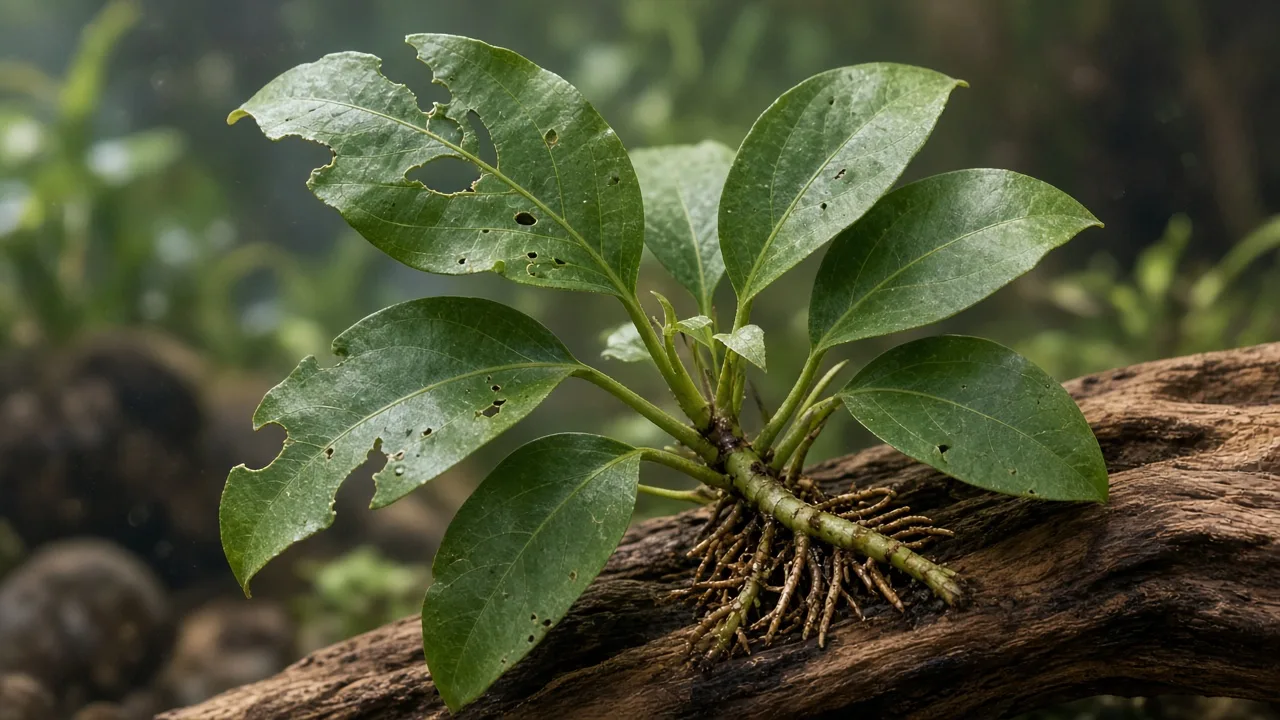
Holes in Leaves on Anubias: Causes, Checks & Fixes
This guide covers holes in leaves on Anubias. See also the general Holes in Leaves guide, watering, and light pages for this plant.
Holes in Leaves on Anubias: Causes, Checks & Fixes
Quick answer
Holes in Anubias (Anubias barteri and related species) almost always trace to aquarium grazers, potassium pinholes on older leaves, or acclimation melt on a newly mounted rhizome—not terrestrial slugs, fungus gnats, or potting-soil checks. For how holes form on houseplants in general, see our holes in leaves guide. On Anubias, the rhizome must stay exposed on rock or driftwood, and damage patterns differ from melt, nutrient shortage, and bite marks.
First step: confirm the rhizome is firm and green, then watch tank mates at feeding time for rasping, biting, or overnight notches.
This guide covers submerged aquarium, turtle tub, and pond culture only. Checking soil moisture, cachepot drainage, or bright indirect window light will not explain holes on an epiphytic aquatic aroid.
When to use this page vs other Anubias guides
| Pattern | Read next |
|---|---|
| Irregular bites, fish at the rhizome | This page |
| Small pinholes on older leaves, no grazers | Potassium deficiency |
| Translucent mush after a new purchase | Yellow leaves and melt section below |
| Soft rhizome, foul smell | Root rot |
| Fine stippling, no full holes | Thrips or spider mites |
What holes look like on Anubias
Anubias leaves are thick, dark green, and leathery, growing from a horizontal rhizome tied or glued to hardscape. Each leaf sits on a short petiole. That anatomy makes holes easy to spot: a small bite removes a visible chunk, and slow-growing plants hold damaged leaves for months.
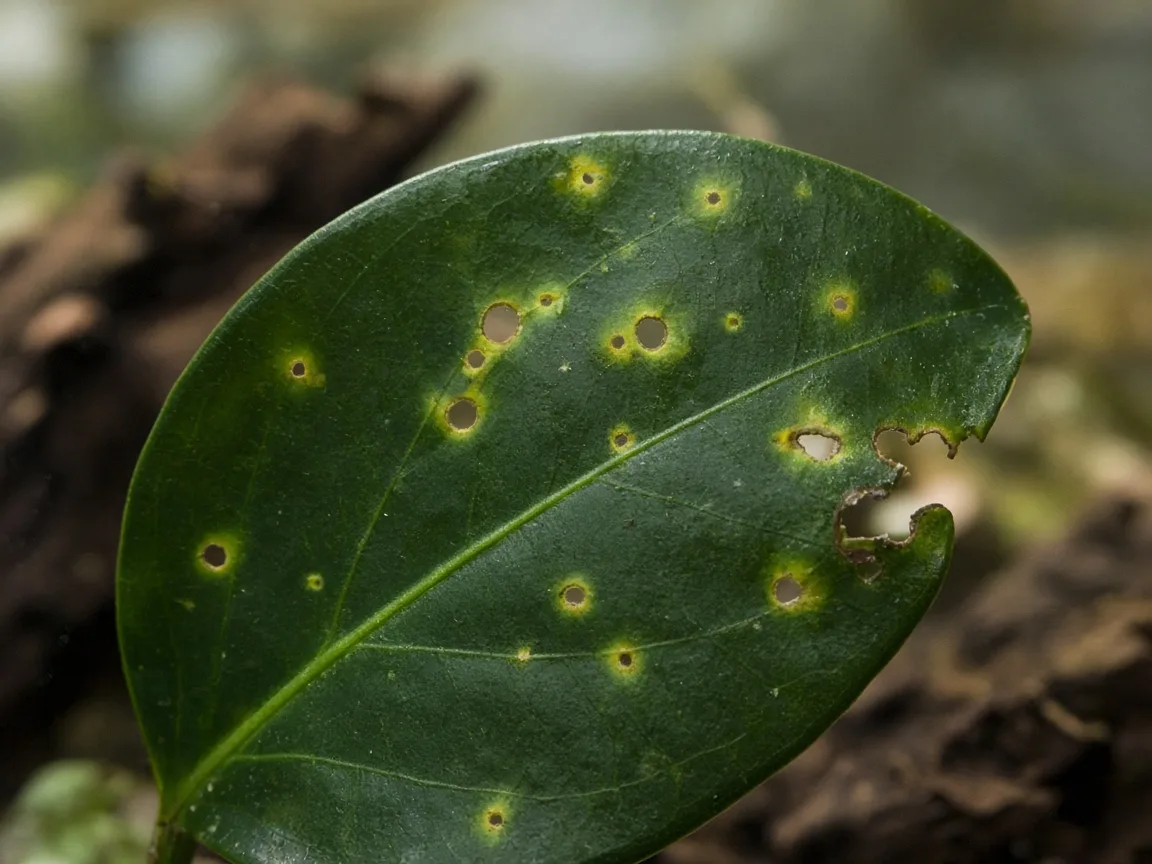
Compare pinhole clusters on older tissue with ragged grazer bites at leaf margins.
Grazer bite patterns
| Grazer | Typical damage on Anubias | Timing / clue |
|---|---|---|
| Aquatic turtles (red-eared slider, etc.) | Ragged notches, shredded petioles on reachable leaves | During or after feeding; damage at waterline on floating stems |
| Common pleco (Hypostomus plecostomus) | Rasped patches, holes near leaf edges | Night; pleco on driftwood near the rhizome |
| Goldfish, koi | Torn margins; rhizome yanked off wood in heavy cases | Day and night; fish hangs at the plant |
| Apple / mystery snails (large) | Crescent notches when underfed | Night; snail on the blade |
| Mbuna, oscars, plant-nipping cichlids | Shredded leaves; rhizome detached | After stocking changes |
Anubias produces raphides—calcium oxalate crystals that deter some nibblers—but goldfish and plecos still damage it. Turtles treat it as tougher fodder than soft stem plants but will still graze reachable leaves in understocked tubs.
Potassium pinholes vs grazing
Potassium deficiency on Anubias usually shows as tiny pinholes or yellow-edged spots on older leaves, often on several blades at once. Holes expand slowly over weeks. Grazing leaves irregular tears overnight with an animal on the plant. See the dedicated potassium deficiency on Anubias page if pinholes spread without grazers present.
Acclimation melt vs true holes
Newly purchased Anubias often loses sections of older leaves while the rhizome acclimates—similar to crypt melt but milder. Forum reports describe one or two holed areas per leaf that stabilize once the rhizome roots onto hardscape. Melt tissue looks translucent or brown at the margin before it falls away; grazer holes look clean-cut or rasped with firm green tissue around them.
Why Anubias gets holes in aquariums
Anubias is a slow epiphyte used in low-tech tanks, aquascapes, and turtle setups because it tolerates moderate light and attaches firmly to wood or rock. Those same traits put leaves in the grazer zone when turtles, plecos, or goldfish share the water.
Why damage shows up here first:
- Placement — Rhizomes on driftwood sit in the fish swimming lane; floating leaves drift into turtle feeding zones.
- Texture — Tougher than Anacharis or hornwort, so turtles and plecos target it when softer plants are gone—but still edible when hungry.
- Slow growth — Holed leaves persist for months, making old damage look like an active problem.
- Rhizome mistakes — Burying the rhizome causes rot that melts leaf bases and can mimic random holes; this is a culture error, not a pest.
This is not a houseplant pest page. Aphids, caterpillars, and fungus gnats on potting mix do not apply to submerged Anubias culture.
How to confirm the cause
Work through this checklist in order:
- Inspect the rhizome — Firm, green, and attached with roots in water only. Soft, yellow, or buried rhizome points to root rot, not grazing alone.
- Inventory grazers — List every species that can reach the leaves: turtles, plecos, goldfish, large snails, cichlids.
- Watch at feeding — Who swims to the Anubias when food sinks? Active interest confirms herbivory.
- Night check — Plecos and apple snails rasp after lights out; use a flashlight on glass and hardscape.
- Compare leaf age — Pinholes clustered on oldest leaves with yellow margins suggest potassium; new leaves holed overnight suggest grazers or melt on new stock.
- Rule out mechanical damage — Tight rubber bands, filter intake suction, or net crushing leave one-sided tears without animals on the plant.
- One change at a time — If you relocate the rhizome, do not also change fertilizer and rehome fish the same day.
If holes continue in a grazer-free quarantine tub with matched temperature, review light and fertilizer before assuming disease.
First fix for Anubias
First action: move the rhizome where grazers cannot reach the leaves today—higher on hardscape behind a divider, on the far end of a turtle basking area, or into a separate tub with matched water temperature.
Do not bury the rhizome to “stabilize” the plant. Trim badly shredded leaves at the petiole with clean scissors; the rhizome stores energy for slow replacement growth.
If no grazers touch the plant and older leaves develop spreading pinholes, add a complete aquarium fertilizer per label rates and see potassium deficiency—do not dump terrestrial plant food into turtle water.
Step-by-step recovery
- Day 1 — Relocate rhizome out of reach; confirm rhizome firmness; remove decaying leaf mush from the water column.
- Week 1 — Feed turtles and fish adequately so grazing drops; watch for new bites nightly.
- Week 2 — If pinhole pattern persists without grazers, adjust aquarium fertilizer; avoid copper-based fish medications on live plants.
- Weeks 3–6 — Judge by new leaf buds opening clean on the rhizome. Anubias may push one leaf every few weeks in low-tech tanks.
Old holed blades stay holed—success means no fresh damage and firm rhizome tissue.
Rhizome mounting and turtle-tub zones
Anubias survives turtle tanks when mounted above the substrate line on rock or driftwood with the rhizome fully exposed. In turtle tubs, leaves at the water surface and basking ramp get grazed first; rhizomes tucked under a dock or behind a filter baffle often keep one clean leaf cluster.
Use aquarium-safe gel or thread—not tight dry-ship rubber bands left for weeks. A crushed rhizome rots and melts leaves from the base upward, which can look like scattered holes before the whole plant fails.
Keep a backup rhizome on separate hardscape in a grazer-free tub. When display leaves are stripped, divide healthy rhizome sections per the propagation guide instead of rebuying every month.
Lookalike symptoms
| Pattern | Check | Likely cause |
|---|---|---|
| Ragged margin, animal on wood | Feeding-time watch | Turtle, pleco, or goldfish |
| Crescent notch, snail on blade | Night inspection | Underfed apple snail |
| Pinholes on oldest leaves | Several blades, slow spread | Potassium deficiency |
| Translucent patches on new purchase | Rhizome still firm | Acclimation melt |
| One clean tear, band mark on rhizome | No grazers | Mechanical / filter suction |
| Soft yellow rhizome | Smell, mush at base | Root rot |
Mistakes to avoid
- Burying the rhizome in gravel or “aquarium soil”
- Treating holes with terrestrial fungicides or houseplant sprays
- Dosing copper ich medication while diagnosing grazing—copper damages aquatic plants
- Removing every holed leaf when the rhizome is still firm and green
- Stacking rehome-fish, fertilizer, and hardscape moves on the same afternoon
Recovery timeline
| Phase | Timing | Good signs | Bad signs |
|---|---|---|---|
| Out of grazer reach | Days 1–3 | No new bites on protected leaves | Fresh holes nightly in quarantine—check for snails |
| Rhizome stable | Week 1–2 | Firm green rhizome; no foul water from decay | Yellow mushy rhizome spreading |
| New growth | Weeks 3–8 | Clean new leaf buds | No buds after two months with good water quality |
Anubias is slow—allow four to eight weeks after grazing stops before expecting a full new leaf.
Prevention
- Mount rhizomes out of turtle and pleco reach; use dividers in mixed tanks
- Feed grazers adequately—hungry plant-shredding fish increase Anubias damage
- Run a grazer-free backup tub for propagation stock
- Use complete aquarium fertilizer in planted tanks if pinholes appear on older leaves
- Quarantine new rhizomes two weeks before adding to display tanks
- Trim melting leaves promptly so debris does not foul turtle or aquarium water
Related Anubias guides
- Anubias overview
- Anubias watering / water quality
- Anubias light
- Anubias soil and rhizome mounting
- Anubias problems hub
- Potassium deficiency on Anubias
- Root rot on Anubias
Conclusion
Holes in Anubias are an aquarium diagnosis: match grazer bites, potassium pinholes on old leaves, or new-plant melt before reaching for houseplant fixes. Protect the exposed rhizome, relocate leaves out of turtle and pleco reach, and judge recovery by clean new buds on a firm rhizome—not repaired old tissue.