Potassium Deficiency on Anubias: Causes, Checks & Fixes
Quick answer
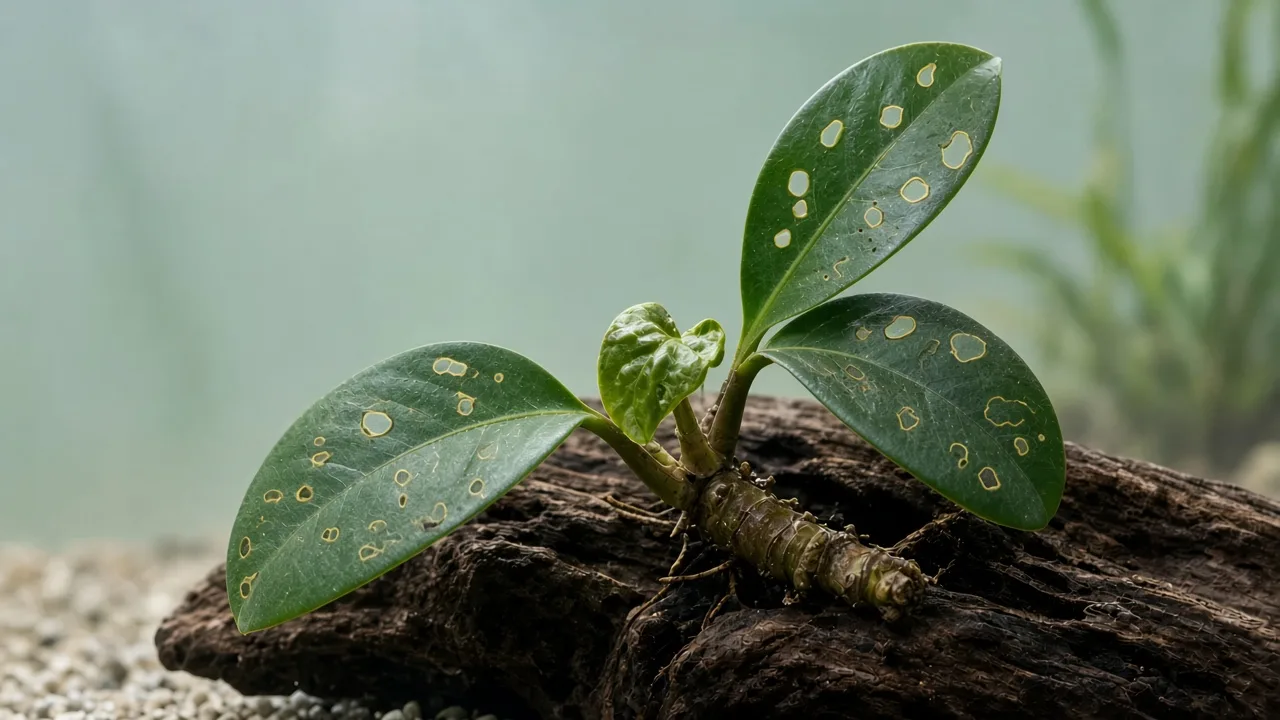
Potassium deficiency on Anubias shows as small pinholes, yellow-bordered perforations, or scorched margins on older tough leaves while newer blades at the rhizome tip stay dark green. First step: inspect the oldest leaves on the same rhizome for mid-blade pinholes with relatively clean margins, then dose a comprehensive aquarium fertilizer with potassium—or add a dedicated K supplement if your all-in-one formula omits it.
Potassium Deficiency on Anubias: Causes, Checks & Fixes
This guide covers potassium deficiency on Anubias. See also the general Potassium Deficiency guide, watering, and light pages for this plant.
Potassium Deficiency on Anubias: Causes, Checks & Fixes
Quick answer
Potassium deficiency on Anubias shows as small pinholes, yellow-bordered perforations, or scorched margins on older tough leaves while newer dark green blades at the rhizome tip usually stay healthy. Potassium is mobile within plants—when dissolved K in the water column runs low, Anubias strips potassium from mature leathery leaves to fund slow new growth at the rhizome meristem.
See our potassium deficiency guide for general mobile-nutrient mechanics. On Anubias, inspect the oldest leaves still attached to the same horizontal rhizome—pinholes and marginal burn on old tissue with a firm green tip above is the classic column-fed epiphyte pattern, not a buried-root problem.
First step: scan the oldest blades on each rhizome for mid-leaf pinholes with relatively clean margins, then dose potassium through a comprehensive aquarium fertilizer or dedicated K supplement. Anubias pulls minerals through its water-column leaves and exposed rhizome, not potting mix. Shrimp-only, betta-only, or high-light planted tanks often outpace all-in-one formulas that omit adequate potassium.
This guide covers submerged aquarium culture only. For baseline feeding cadence, see the Anubias fertilizer guide. For pale new tips with green veins, see iron deficiency. For yellow oldest leaves with green tips, see nitrogen deficiency.
When to use this page vs other Anubias guides
| Pattern | Read next |
|---|---|
| Pinholes or scorched margins on older leaves, green rhizome tip | Potassium deficiency (this page) |
| Pale new leaf with dark green veins, normal thick shape | Iron deficiency |
| Yellow oldest leaves first, green rhizome tips | Nitrogen deficiency |
| Interveinal yellow on older blades, no pinholes | Magnesium deficiency |
| Twisted or cupped new leaf at rhizome tip | Calcium deficiency |
| Ragged edge tears from tank mates | Holes in leaves from grazing |
| Whole-plant fade within 7–14 days after purchase | Yellow leaves or acclimation melt |
| Mushy black rhizome buried in gravel | Root rot |
What potassium deficiency looks like on Anubias
Healthy Anubias leaves are thick, dark green, and leathery, emerging slowly from a firm horizontal rhizome attached to rock or driftwood. Potassium shortage targets older tissue first because the plant mobilizes potassium from mature leaves to keep new blades growing when dissolved K in the water column is limited.
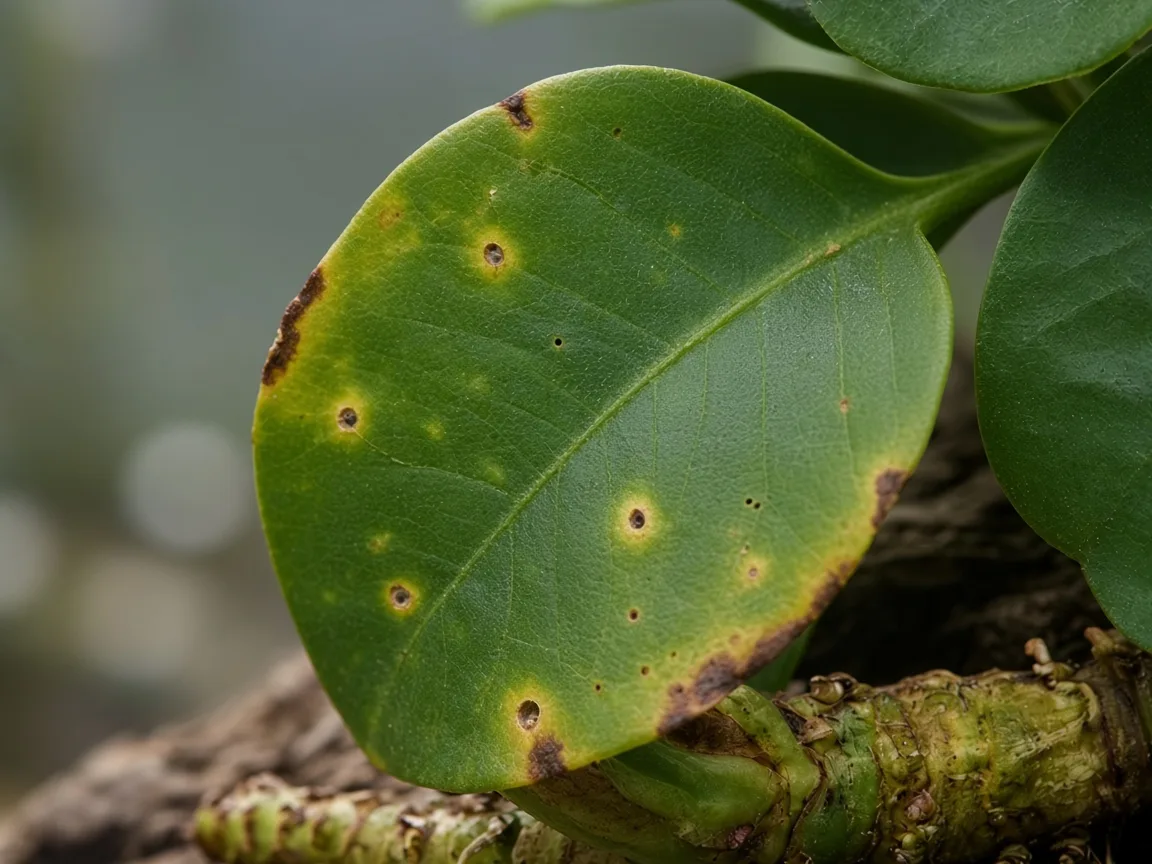
Small pinholes with yellow or tan margins on an older Anubias blade—compare with normal dark green tissue on the newest leaf at the rhizome tip.
Classic potassium pattern (confirm this before dosing):
- Oldest leaves on the rhizome develop small pinholes, dark specks, or perforated tissue—often in the leaf blade center
- Yellow, tan, or brown margins appear on mature leathery blades before tips collapse
- Newest leaf at the rhizome tip stays dark green for weeks while only older blades look sick
- Multiple leaves on the same plant show similar lower-age damage, not one random chewed blade
- Rhizome stays firm and green—not the translucent mush of melt or buried-crown rot
What it is not:
- Pale new leaf with green veins, normal thick shape → iron deficiency, not potassium
- Yellow bottom leaves turning translucent, green tips → nitrogen deficiency
- Cupped or crinkled new leaf at the apex → calcium deficiency
- Ragged edge tears with obvious bite marks → turtle, goldfish, or snail grazing—see holes in leaves
- Whole-plant washout after shipping in the first 7–14 days → yellow leaves or acclimation melt
- One old leaf only while a new blade opens cleanly above → often normal aging on a slow grower
Anubias is expressive in a slow way: which leaf age on the rhizome shows damage matters more than the word “holes” in a forum title.
Why Anubias runs short on potassium
Anubias is a slow rhizomatous epiphyte in the Araceae family. Its tough submerged leaves absorb potassium directly from the water. That design works well when macros match growth speed—but lean shrimp tanks, quarantine setups, and high-light planted displays can strip dissolved K faster than fish waste or a weak all-in-one replaces it.
Common potassium-deficiency triggers on Anubias:
- All-in-one liquid without adequate potassium — Many comprehensive formulas cover nitrogen and iron well but leave K short for demanding planted tanks; check the label for potassium (K).
- Shrimp-only or betta-only planted tanks — Minimal bioload plus attached Anubias on hardscape; weekly comprehensive liquid with macros is usually required per the Anubias fertilizer guide.
- High-light or CO₂-driven growth — Even slow Anubias accelerates uptake when PAR rises; K demand climbs with algae-free leaf maintenance.
- Large weekly water changes on soft tap — Dilutes accumulated macros; redose after changes rather than assuming residual K remains.
- Turtle tanks with sparse feeding — Moderate turtle bioload on tap water often supplies some nutrients, but heavily grazed, frequently cleaned tanks with little dissolved organic input can still run low on macros if regrowth continues on ungrazed stems.
- Over-reliance on root tabs — Anubias is a column feeder tied to hardscape; buried tabs help rooted stems marginally but do not replace water-column K for rhizome plants per the soil guide.
Many community tanks on moderate fish stocking and tap water show adequate potassium without dedicated K bottles. Potassium deficiency is more common in shrimp display tanks, new high-tech planted setups, and tanks dosed with iron-heavy micro blends but weak macro packages.
Rhizome-position diagnosis on exposed hardscape
Anubias does not have a soil root zone to inspect. Your field test is which leaf age on the same rhizome shows damage.
Work plant by plant:
- Start at the oldest leaf still attached — The blade that has been on the rhizome longest, not the freshest tip.
- Look for pinholes mid-blade — Small perforated spots with relatively clean edges fit potassium shortage better than edge-first grazing.
- Check margins for yellow or brown scorch — Older leaves show chlorosis with browning of tips, scorching of margins, and brown spots near the margins in classic K stress.
- Compare to the rhizome tip leaf — If the newest blade stays dark green while only older leaves perforate, mobile-nutrient logic supports potassium over iron or calcium.
- Scan multiple plants on the same driftwood — One damaged leaf from mechanical scraping differs from several Anubias clumps with the same old-leaf pattern after a fertilizer routine change.
This rhizome-position check is wrong for terrestrial houseplants and wrong for fast whorled stems like Anacharis—it is specific to slow rhizome epiphytes that hold old leathery blades for months.
Pinhole vs turtle, snail, and goldfish grazing
Anubias in turtle tanks and goldfish setups gets chewed often. Grazing damage and potassium pinholes both leave holes—but the pattern and tank context differ.
| Clue | Potassium deficiency | Herbivore grazing |
|---|---|---|
| Damage location | Mid-leaf pinholes; marginal scorch on older blades | Ragged tears from leaf margin inward |
| Leaf position | Oldest leaves on rhizome; tip often green | Any blade turtles can reach; random on grazed plants |
| Margin shape | Relatively clean edge around each hole | Uneven shredded edge, bite marks |
| Tank mates | Shrimp-only or planted display | Turtles, goldfish, large apple snails |
| Spread | Similar pattern on multiple old leaves over 1–2 weeks | New damage daily where animals feed |
| Rhizome feel | Firm green tissue | Firm unless rot follows uneaten debris |
If turtles are actively grazing, float backup rhizome sections in a separate tub or accept some edge damage while you confirm whether ungrazed old leaves still develop mid-leaf pinholes. Pinholes on blades out of reach of tank mates strongly support potassium—not bites.
Rule out overfertilization confusion and algae under harsh light before broad K dosing—black beard algae on old Anubias edges can look like necrotic margins but scrapes off with a fingernail.
Nitrate, potassium, and all-in-one fertilizer gaps
Macros interact. Before you buy a potassium-only bottle, read what you already dose.
| Setup | K risk | First check |
|---|---|---|
| Shrimp-only planted tank on RO water | High | All-in-one label; dose after every change |
| Moderate community tank on tap water | Low to moderate | Pattern on old leaves only |
| Turtle tank, frequent water changes | Moderate | Whether ungrazed plants still pinhole |
| High-light + CO₂ with lean EI macros | Moderate to high | Whether comprehensive product includes K |
| Iron-only or trace-only dosing | High | Add macros before more iron |
Java Fern and Anubias are broad-leaved epiphytes where pinholes on older leaves show clearly because old blades remain visible for months. A fast stem plant sheds damaged lower leaves quickly; Anubias holds perforated tissue long enough for the problem to be noticed.
If nitrate reads zero and oldest leaves yellow uniformly without holes, pivot to nitrogen deficiency before potassium. If the softest new leaf is pale with green veins, see iron deficiency first.
How to confirm potassium deficiency
Run this checklist before changing multiple variables:
- Pattern check — Are pinholes or marginal scorch limited to older blades with a normal dark green rhizome tip? If yes, potassium stays on the list. If the newest leaf cups or crinkles, pivot to calcium deficiency.
- Fertilizer label review — Confirm you dose a comprehensive liquid with potassium listed, not iron-only products. Compare against Tropica Specialised Nutrition or similar macro-complete formulas.
- Water change history — Large weekly changes on soft tap dilute K; note whether you redose after changes per the watering guide.
- Rhizome firmness — Green, firm rhizome with perforated old leaves supports nutrient diagnosis. Soft black tissue means root rot first—especially if the crown was buried.
- Tankmates and pests — Snail grazing and turtle nibbling create irregular holes without the mid-blade pinhole pattern. Magnify old leaf undersides for thrips before assuming minerals.
- Light cross-check — One shaded old leaf with marginal yellow may be not enough light on that blade, not a tank-wide K crisis—compare multiple plants at the same PAR level.
The first fix to try
Dose a comprehensive aquarium fertilizer with potassium at label strength after your next partial water change—before stacking iron, root tabs, or GH changes.
That single step addresses the most common Anubias potassium trigger without overdosing a slow grower. Use half label dose the first week if the tank is shrimp-only or turtle-stocked, then adjust to full label rate if old leaves keep pinholing and new tips stay green.
Do not bury the rhizome deeper to “feed” the plant. Do not double comprehensive fertilizer and add dedicated potassium on the same day. Do not treat shipping melt in the first week as a potassium emergency—see yellow leaves first.
If your all-in-one product lists little or no potassium, add a dedicated aquarium K supplement at manufacturer rates rather than guessing with garden products.
Step-by-step recovery
After the first macro dose:
- Resume weekly comprehensive feeding — Label dose once weekly after water changes per the Anubias fertilizer guide. Anubias is a light feeder overall, but lean tanks still need complete macros.
- Keep the rhizome exposed — Re-tie or wedge the crown above substrate if any section was buried. Trim only fully melted leaves at the petiole; leave firm perforated blades until replacements harden.
- Stabilize light — Six to eight hours of moderate aquarium light per the light guide supports steady growth without pushing algae on slow leaves.
- Wait one to two leaf cycles — Judge the next rhizome leaf and the next oldest blade below it, not the currently holed one. Recovery means no new pinholes within four to eight weeks in low-tech tanks.
- Escalate only if old leaves keep pinholing — With label macro dosing, firm rhizome, and stable light, persistent perforation may indicate magnesium shortage or CO₂ swings—post photos showing old vs new leaves before mineral chasing.
Recovery timeline
| Stage | What you should see |
|---|---|
| Week 1–2 | No new pinholes on additional old blades; marginal burn stops spreading |
| Week 3–6 | Next rhizome leaf opens dark green; oldest damaged blade unchanged |
| Week 6–10 | Second clean new leaf confirms the fix in low-tech tanks |
| Ongoing | Holed old leaves remain as-is; trim cosmetically once replacements look firm |
Damaged tissue does not fill in retroactively. Success means new blades open with normal thick Anubias shape and the rhizome stays firm—not perfect old leaves.
Mistakes to avoid
- Dosing iron for mid-blade pinholes on old leaves — Old-leaf holes are potassium-shaped; pale new tips with veins are iron-shaped. Read the iron deficiency page before grabbing trace supplements.
- Burying the rhizome to “feed” the plant — Invites root rot and does not deliver potassium to old blade tissue.
- Assuming fish waste covers macros in every tank — Shrimp-only, turtle, and quarantine setups often run lean.
- Large water changes without redosing — Stripping dissolved K weekly overwhelms attached Anubias even when fertilizer sits in the cabinet.
- Treating shipping melt as potassium on day three — Whole-plant yellowing after arrival is acclimation, not a macro problem.
- Stacking K supplement, double fertilizer, and CO₂ changes same day — You cannot read which fix worked.
How to prevent potassium deficiency next time
- Confirm your all-in-one includes potassium in shrimp-only, RO, or high-light tanks
- Dose after water changes per the Anubias fertilizer and watering guides
- Keep the rhizome exposed on hardscape—not buried in gravel
- Match fertilizer to bioload — Lean tanks need complete macros; well-stocked tap-water tanks may need less
- Review trimmings and debris — Decaying Anubias leaves in filter intakes do not replace dissolved K
When to worry
Escalate if old leaves keep pinholing after four weeks of label macro dosing with confirmed adequate light and non-zero nitrate—consult a local fish store or planted-tank forum with photos of old vs new blades on the same rhizome. Chronic perforation despite good NPK can indicate magnesium shortage, CO₂ swings, or repeated mechanical damage from filter flow.
If the rhizome turns black and mushy—not merely perforated old leaves—rule out root rot before adding more potassium.
Related Anubias guides
- Anubias overview
- Anubias watering
- Anubias light
- Anubias fertilizer
- Anubias problems
- Calcium deficiency on Anubias
- Iron deficiency on Anubias
- Magnesium deficiency on Anubias
- Nitrogen deficiency on Anubias
- Holes in leaves on Anubias
Related tool
Use the Fertilizer Dilution Calculator to check dose rates for comprehensive aquarium fertilizers and potassium supplements—without stacking multiple nutrient changes on the same day.