Brown Leaves on Aparajita: Causes, Checks & Fixes
Quick answer
Brown leaves on Aparajita (butterfly pea) are dead tissue that will not re-green. First step: touch the brown area and probe soil at 3 cm depth. Crispy brown on a light dry pot points to underwatering or sun scorch; soft dark brown on cool wet mix points to overwatering or root stress.
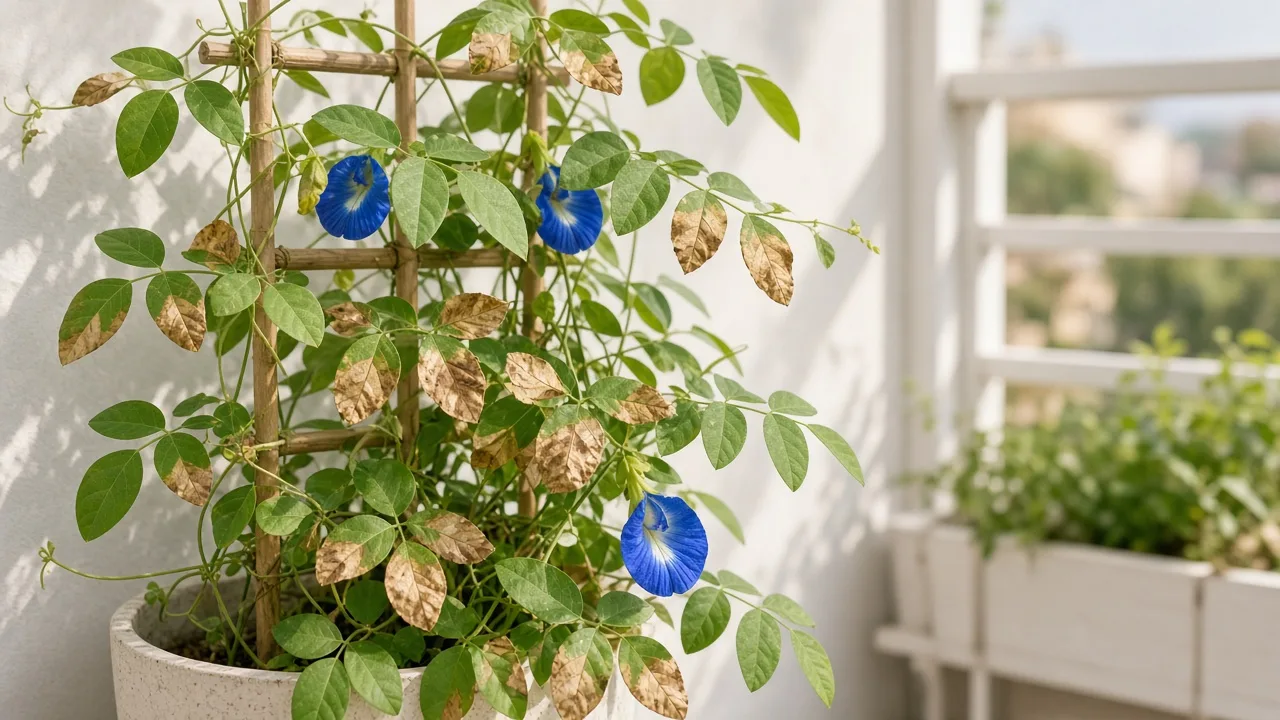
Brown Leaves on Aparajita: Causes, Checks & Fixes
This guide covers brown leaves on Aparajita. See also the general Brown Leaves guide, watering, and light pages for this plant.
Brown Leaves on Aparajita: Causes, Checks & Fixes
Quick answer
Brown leaves on Aparajita (Clitoria ternatea, butterfly pea) mean tissue has died—whether from drought, root failure, sun scorch, disease lesions, pest bronzing, or normal aging before drop. For how whole-leaf browning works in general, see our brown leaves guide. On butterfly pea, texture and soil moisture at 3 cm depth tell the story faster than color alone: crispy brown on a light dry pot differs completely from soft brown on cool wet mix.
First step: touch the brown tissue and probe soil at 3 cm depth. Crispy, papery brown with a light pot and firm stems points to underwatering or direct sun scorch. Soft dark brown on cool wet mix with limp lower leaflet pairs points to overwatering or advancing root rot.
When to use this page vs other Aparajita guides
| What you see | Read next |
|---|---|
| Brown only at leaflet tips, rest green | Brown tips |
| Yellow before brown on wet mix | Yellow leaves |
| Wet mix + soft stems at base | Overwatering |
| Dry mix + limp thin tendrils | Underwatering |
| Tan patches on sun-facing side only | Light guide — sun scorch |
| Brown spots with yellow halos | Black spots — anthracnose |
| Fine stippling + bronzing | Spider mites |
What brown leaves look like on Aparajita
Healthy butterfly pea holds compound odd-pinnate leaves with 5 to 9 elliptic rich green leaflets along twining stems. Browning breaks that pattern in distinct ways:
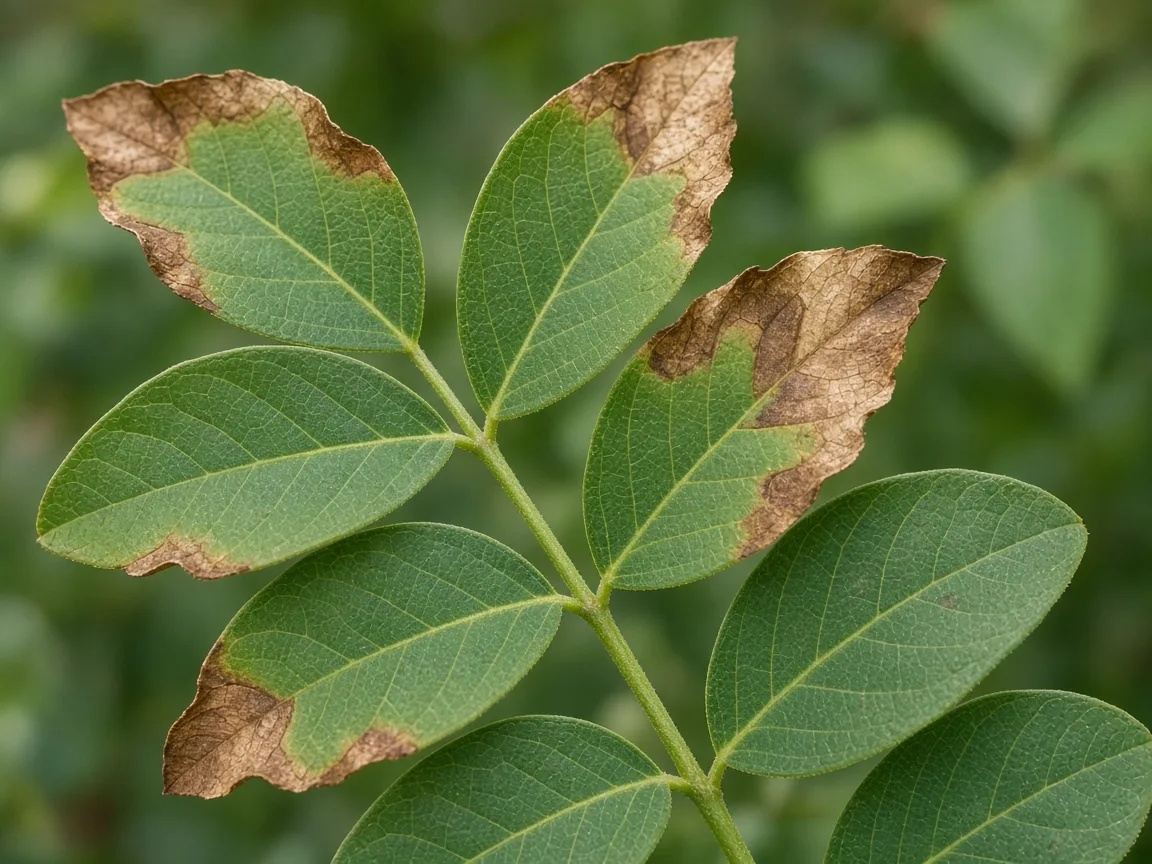
Brown leaf symptoms on Aparajita — compare crispy drought necrosis with soft wet-root failure.
- Crispy brown whole leaflets, light dry pot — Individual elliptic leaflets within a compound leaf turn tan to dark brown and feel like paper. Tendrils may wilt slightly. Severe thirst on a fast-growing vine in full summer sun.
- Soft dark brown lower leaflet pairs, wet heavy soil — Limp petioles; yellowing often appears below the brown on the oldest stems. Root oxygen loss from chronic wet mix.
- Tan patches on the balcony-facing side only — Bleached or papery brown where harsh afternoon rays hit unacclimated foliage. Stems stay firm; mix may be dry.
- Brown spots enlarging into necrotic patches — Irregular lesions that advance into dead tissue. Anthracnose and bacterial soft rot are listed problems on this species.
- Bronze stippling across leaflet blades — Fine pale dots progressing to overall bronzing. Spider mites thrive in dry indoor air on butterfly pea.
- Single oldest compound leaf browning slowly at the vine base — Often normal senescence while new tendrils and cobalt buds stay healthy.
Always check newest growth at the growing tips. Brown on fresh compound leaves is more urgent than one aging lower leaflet pair fading out.
Reading compound leaflet browning on a twining vine
This diagnostic step does not apply to rosette succulents or single-blade houseplants. Each Aparajita leaf is a rachis carrying multiple elliptic leaflets. Brown can hit:
- One leaflet in a pair — Often sun scorch or localized pest damage on the exposed blade
- All leaflets on one compound leaf — Whole-leaf death from drought, rot, or disease advancing through the petiole
- Lower pairs climbing the stem — Classic overwatering or root stress pattern before upper growth fails
- Random scattered pairs along the trellis — Pest bronzing, anthracnose spots, or uneven watering on a large balcony pot
Note whether cobalt flower buds abort at the same time. Butterfly pea drops buds when roots cannot support bloom demand—a useful clue that brown leaflets are not cosmetic tip burn alone.
Monsoon saucers vs summer balcony drought
Indian balcony culture creates two opposite brown-leaf triggers on the same plant:
Monsoon saturation. Cachepots and full saucers keep bottom mix wet for days during rainy stretches. Lower leaflet pairs turn soft dark brown even when you skip manual watering. Butterfly pea will not tolerate flooding or waterlogging. Pair with mold on soil when the surface stays damp.
Pre-monsoon heat spikes. Fast-growing vines in small pots on west-facing railings transpire heavily in April–June dry heat. Missed watering during a hot weekend crisps entire leaflet pairs at once. The species has a reputation for drought tolerance but does best with consistent watering—extended dryness still kills tissue.
Match your correction to season, not habit alone.
Why Aparajita gets brown leaves
Clitoria ternatea is a tropical twining legume evolved for full sun and evenly moist well-drained soil. Brief dry spells are survivable; chronic mistakes at either extreme brown leaflets.
Severe dehydration. Container vines on trellises dry faster than ground plantings. A light pot with crispy brown leaflets means roots could not supply water to the full compound leaf surface.
Root injury from overwatering. Damaged roots fail to deliver water evenly. When soil stays wet and lower leaflet pairs turn soft dark brown, root stress drives the symptom—not thirst. See root rot when stems soften at the base.
Sun scorch on unacclimated vines. Butterfly pea wants full sun when established but appreciates light afternoon shade in hot climates. Indoor vines moved abruptly to harsh midday glass without acclimation bake exposed elliptic leaflets.
Pest bronzing. NC State lists butterfly pea as susceptible to spider mites and whiteflies. Piercing damage bronzes leaflet tissue before full necrosis. Dry winter rooms accelerate mite outbreaks—often overlapping with brown tips on the same vine.
Anthracnose and soft rot. MOBOT notes susceptibility to anthracnose and bacterial soft rot. Brown lesions on wet foliage or crowded trellis growth can expand into dead patches distinct from uniform drought crisping.
Cold damage. Frost kills tropical butterfly pea outright. Cool wet soil in winter on north-facing balconies can brown leaflet margins before full dormancy—not a signal to soak the pot.
How to confirm the cause
- Texture — Crispy papery = dry stress, sun, or salts. Soft limp = rot, disease, or wet-root failure.
- Soil moisture at 3 cm — Bone dry throughout with light pot = thirst. Cool damp five or more days after one drink = pause watering per the watering guide.
- Leaflet position — Lower pairs first on wet mix vs. sun-facing patches only vs. isolated oldest compound leaf at vine base.
- Stem base — Firm green or brown stems early; soft dark base means escalate to root inspection.
- Flower buds — Aborted cobalt buds with browning leaflets suggest root-zone failure, not cosmetic aging.
- Pest check — Hold white paper under a leaflet and tap; stippling plus moving specks confirm mites.
- New growth — Active tendrils with clean leaflets = lower urgency. New compound leaves opening brown = escalate.
First fix for Aparajita
Touch the brown tissue, probe soil at 3 cm depth, and match one correction to crispy-dry versus soft-wet—not panic over one browned leaflet pair.
- Crispy brown + dry mix + light pot — Water thoroughly until excess runs from drainage holes, then return to the 3 cm dry rule. See underwatering.
- Soft brown + wet mix + limp lower leaflets — Stop watering immediately. Empty saucers. See overwatering.
- Tan sun-facing patches only — Move to filtered afternoon light or provide temporary shade; acclimate per the light guide. Do not compensate with extra water.
- Stippling and bronzing — Rinse leaflet undersides and confirm active pests before any spray. See spider mites.
- Expanding brown spots on wet foliage — Improve trellis airflow, remove infected leaflet pairs, and avoid overhead watering on crowded growth.
Do not fertilize stressed butterfly pea. Do not repot on day one unless sour wet mix and soft stems confirm rot.
Step-by-step recovery
- Stabilize moisture — Either dry cycle on wet mix or one deep soak on genuinely dry mix. Wait for top 3 cm dry before every subsequent drink.
- Relocate or shade — Filter harsh afternoon sun on scorched vines; maximize bright light on rot-recovering plants once mix dries.
- Remove dead tissue — Snip fully brown or mushy leaflet pairs at the petiole base. Keep partially green compound leaves.
- Address pests — Isolate and treat confirmed mite or whitefly outbreaks before they re-bronze new growth.
- Improve drainage — Repot into perlite-amended airy mix per the soil guide only if mix smells sour or stays wet a week after one drink.
- Hold fertilizer — Wait for new tendrils with clean leaflets before light balanced feed.
Recovery timeline
| Stage | What to expect |
|---|---|
| 3–7 days | Browning should stop spreading once moisture or shade matches the cause |
| 2–3 weeks | New tendrils and firm green leaflets — primary success marker |
| 4–6 weeks | Cobalt buds may return on recovered vines in warm bright conditions |
Brown leaflet tissue does not re-green. Old necrotic blades drop; judge recovery by clean new compound leaves along the twining stem.
Lookalike symptoms
| Pattern | What you see | Likely cause |
|---|---|---|
| Crispy brown + light dry pot | Whole leaflet necrosis, slight wilt | Underwatering |
| Soft brown + wet mix | Lower pairs first, limp stems | Overwatering |
| Tips only, midrib green | Sharp brown at leaflet apex | Brown tips |
| Yellow then brown on wet soil | Spread from vine base | Yellow leaves stage |
| Sun-facing tan patches | One-sided on balcony rail | Sun scorch — light guide |
| Stippling + webbing | Bronze before full brown | Spider mites |
| Oldest compound leaf only | Slow brown at base | Normal senescence |
Mistakes to avoid
- Watering a vine on wet sour mix because leaflets look dry on the surface
- Moving indoor butterfly pea to harsh midday sun without acclimation
- Stripping every brown leaflet before fixing moisture or light
- Fertilizing to “green up” necrotic tissue on stressed roots
- Treating all brown as underwatering during monsoon saucer saturation
When to worry
Escalate when browning climbs the vine on sour wet soil, stems soften at the base, or the entire plant wilts despite moisture. Unpot, trim mushy roots, and repot into fresh airy mix. Established Clitoria ternatea rarely dies from one browned compound leaf alone—death follows untreated wet roots or repeated scorch on new growth.
How to prevent brown leaves next time
Maintain the 3 cm dry-down rhythm year-round. Grow in well-drained, dry to slightly moist soil with full sun to bright light. Empty monsoon saucers. Acclimate balcony vines to stronger light over one to two weeks. Harvest and pinch tendrils for trellis airflow. Respect that butterfly pea cannot tolerate waterlogging—brown leaflets are often the warning before buds abort and roots fail.
Related Aparajita guides
- Aparajita overview
- Aparajita watering
- Aparajita light
- Aparajita soil
- Brown tips on Aparajita
- Yellow leaves on Aparajita
- Overwatering on Aparajita
- Root rot on Aparajita
- Aparajita problems
Conclusion
Brown leaves on Aparajita will not turn green again—focus on stopping spread and growing clean new compound foliage. Touch the brown tissue, probe soil at 3 cm, note sun exposure and bud health, then fix the matching cause. Prevention comes from predictable dry-down, acclimated full sun, and empty saucers through monsoon season.