Black Spots on Aparajita: Causes, Checks & Fixes
Quick answer
Black spots on Aparajita (butterfly pea) are usually fungal leaf lesions on wet compound leaflets, sooty mold from sap feeders, or anthracnose—not normal aging. First step: stop overhead watering and misting, then decide whether spots are wet with yellow halos, wipe off with a cloth, or sit on sun-scorched leaflet tips.
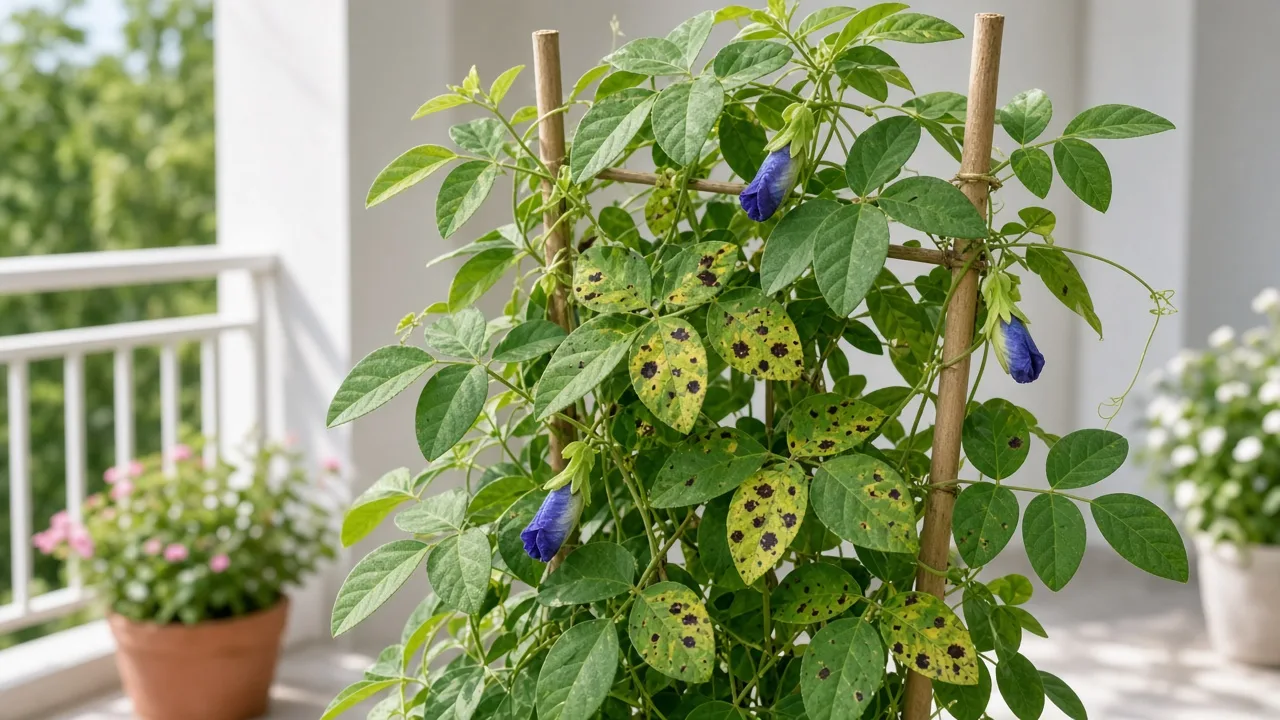
Black Spots on Aparajita: Causes, Checks & Fixes
This guide covers black spots on Aparajita. See also the general Black Spots guide, watering, and light pages for this plant.
Black Spots on Aparajita: Causes, Checks & Fixes
Quick answer
Black spots on Aparajita (Clitoria ternatea, butterfly pea) are localized tissue death or surface mold on compound leaves—not a single mystery blight. On this twining tropical legume, the pattern usually splits three ways: small dark circles with yellow halos on individual elliptic leaflets after monsoon splash or overhead watering point to fungal leaf spot or anthracnose; black coating that wipes off tracks honeydew from whiteflies or aphids; and crisp black patches on sun-exposed leaflet tips after a heat spike overlap scorch on a vine that wants full sun but not sudden midday burn through dry glass.
For general spot-disease mechanics, see our black spots guide. On butterfly pea, compound odd-pinnate leaves with five to nine leaflets mean spots often hit one leaflet while neighbors stay green—and lower trellis strands sit in the soil splash zone during Indian monsoon weeks.
A few isolated dry black marks from harvest cuts or trellis rubbing are cosmetic. Spreading wet-looking spots on multiple leaflets along one climbing stem need action the same week—not extra nitrogen fertilizer.
First step: stop overhead watering, misting, and evening foliage sprays. Water at soil level only, empty saucers, and give the trellised vine room to breathe. Then decide whether you are dealing with leaf-surface pathogens, pest-related sooty mold, or overwatering margin stress.
When to use this page vs other Aparajita guides
| Your question | Best page |
|---|---|
| Dark spots on individual leaflets | This page |
| Uniform brown or yellow whole leaflets on wet soil | Yellow leaves or brown leaves |
| Sticky residue, ants, fine webbing on vine tips | Aphids, whiteflies, or spider mites |
| Mushy roots, sour smell, wilt on wet mix | Root rot |
| Chewed holes with green frass | Caterpillars or holes in leaves |
| Crisp tan patches after moving to harsh south glass | Not enough light (inverse—too much sudden sun) |
What black spots look like on Aparajita
Healthy butterfly pea leaflets are smooth, rich green, and elliptic, arranged in compound leaves along twining stems. Black spotting breaks that pattern in recognizable ways:
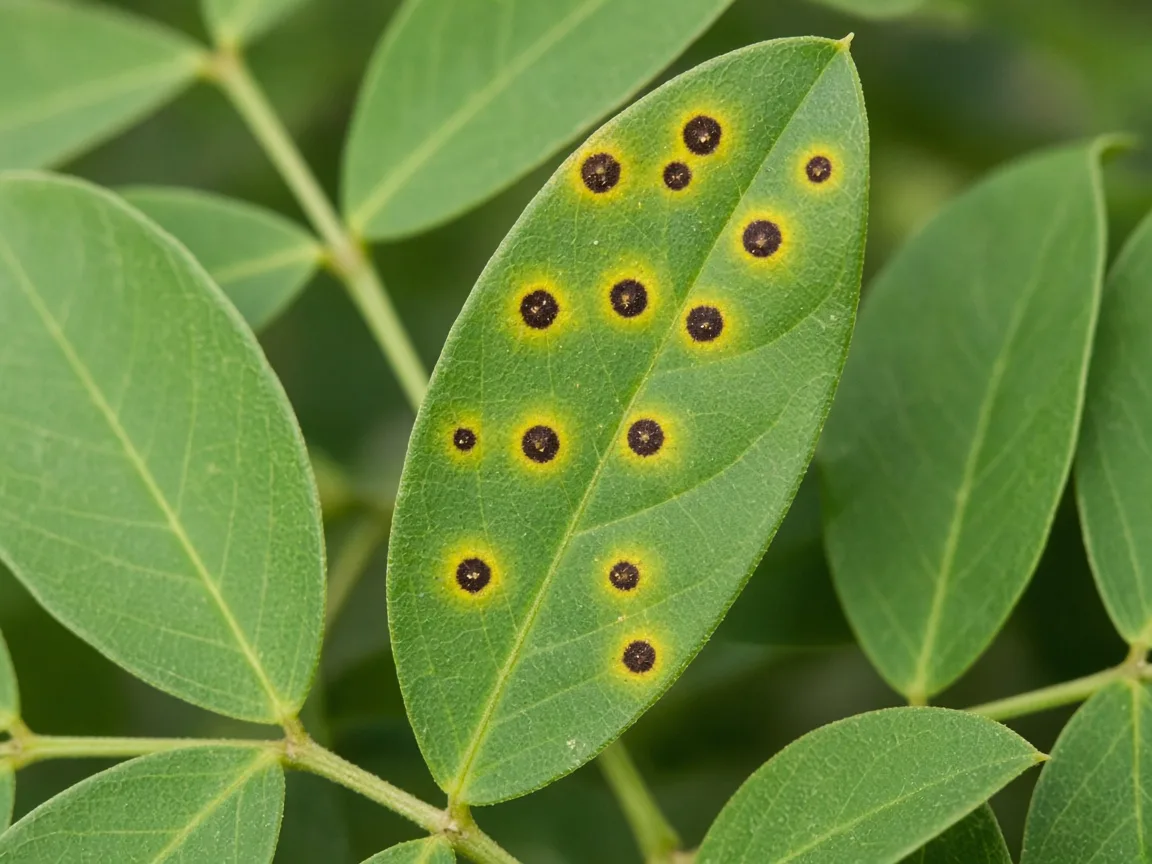
Black spot lesions on one elliptic leaflet of a butterfly pea compound leaf—neighboring leaflets may still look healthy.
- Small dark brown to black circles with yellow halos — Often start water-soaked on one leaflet, then crisp at center. Classic fungal leaf spot after foliage stays wet overnight on a balcony vine.
- Angular dark lesions following leaflet veins — Anthracnose infections on legumes often show limited, vein-bound patches that enlarge and merge on heavily infected leaflets. NC State lists butterfly pea as susceptible to anthracnose.
- Uniform black dust that rubs off on your finger — Sooty mold growing on dried honeydew from sap feeders, not dead leaf tissue. Check vine tips and flower buds for whiteflies or aphids first.
- Single dry black mark, no halo, no spread — Trellis string abrasion, harvest snip, or a healed mechanical wound on one leaflet. Stable for months.
- Blackening from the leaflet margin inward on lower stems — Often tracks chronically wet mix and weak roots rather than airborne spores. See overwatering when the pot stays heavy and the top 3 cm never dries.
- Tiny dark freckles with fine webbing on leaflet undersides — Spider mites in dry winter rooms—not classic leaf spot.
Spots on new leaflets opening at the vine tip are more urgent than one old mark on the lowest trellis strand.
Why compound leaflets on a trellised vine spot differently
Butterfly pea is grown as a climbing legume on balcony trellises, strings, or garden arches—not as a compact rosette. That habit changes where black spots start:
One leaflet can fail while the rest of the compound leaf stays green. Each compound leaf carries five to nine elliptic leaflets. Fungal spores landing on a single wet leaflet create a dark lesion there without immediately yellowing the whole leaf—owners sometimes think the problem is minor until several compound leaves along one stem show matching spots.
Lower trellis strands sit in the splash zone. Vines trained downward or allowed to drape near the pot rim catch soil splash, mold on soil debris, and overflow from cachepots during monsoon downpours. Spores travel upward on the next rain event.
Cobalt flower season overlaps humid growth. Active summer flowering pushes soft new shoots that hold dew longer than mature foliage. Overhead watering to “cool” the vine in afternoon heat keeps those tender leaflets wet into evening—the window when leaf-spot fungi germinate.
Full-sun vines scorch differently than shade plants. Aparajita wants bright direct light for blooms, but a vine moved suddenly from a dim room to harsh west glass can show fixed black-tan patches on exposed leaflet tips without yellow halos. That is sun injury, not anthracnose.
Why Aparajita gets black spots
Anthracnose and fungal leaf spot
Anthracnose is a group of fungal diseases that produce limited lesions on leaves and stems. On bean-family vines, infections often start as small dark spots that follow vein angles, then merge when humidity stays high. NC State notes butterfly pea is susceptible to anthracnose alongside spider mites and whiteflies.
Spores overwinter in fallen leaflets and infected debris at the pot base. Splash from rain, shared watering cans, or wet pruning tools spreads them to healthy leaflets on the same trellis.
Sooty mold from sap feeders
Butterfly pea attracts whiteflies and aphids on tender growth. Their sticky honeydew supports a black fungal coating on leaf surfaces. The mold is cosmetic on its own but signals active feeding that can curl new shoots and abort cobalt buds if ignored.
Wet foliage and poor airflow on balcony vines
Butterfly pea prefers well-drained soil and consistent watering in full sun—not constantly wet leaflets. Misting compound leaves in humid monsoon weeks, showering the whole vine indoors, or packing several pots against a wall keeps foliage damp long enough for secondary fungal spots even when roots are healthy.
Overwatering and bacterial soft rot (stem base)
NC State also lists bacterial soft rot on butterfly pea. That is not the same as superficial leaflet spots—it shows as soft, dark, water-soaked tissue at the stem base on saturated mix. If blackening is at the crown rather than on individual leaflets, pivot to root rot triage.
How to confirm the cause
Work through this order on a trellised vine:
- Wipe test — Rub one dark patch with a damp cloth. If black dust comes off and the green leaflet underneath looks intact, treat pests before fungicide.
- Halo check — Yellow ring around a water-soaked center suggests fungal or bacterial leaf spot. Dry black patch with no halo on one leaflet suggests mechanical damage or scorch.
- Underside inspection — Fine webbing, whitefly clouds, or aphid clusters on new tendrils explain sooty mold. See spider mites for stippling without classic round spots.
- Soil and pot weight — Heavy pot, sour smell, or soft stem base with margin blackening routes to overwatering and possible root rot—not leaflet fungicide alone.
- New growth watch — Spots only on lowest leaflets near the pot may be splash or senescence. Spots on opening leaflets at the vine tip need faster action.
The first fix to try
Stop all overhead watering and improve airflow around the trellis.
That single change addresses the most common preventable trigger on butterfly pea: wet compound leaflets in humid air. Switch to soil-level watering per the watering guide, empty saucers within thirty minutes, and space pots so monsoon breeze can move between stems.
If the wipe test shows sooty mold, rinse leaflets with a firm water stream and treat the underlying aphids or whiteflies before any fungicide.
Step-by-step recovery
For fungal leaf spot or anthracnose
- Remove the worst-spotted leaflets with clean shears. Bag and discard infected debris—do not compost it on the same balcony.
- Sanitize blades between cuts with rubbing alcohol when moving to another stem.
- Keep foliage dry for two weeks. Water when the top 3 cm of mix are dry, not on a calendar.
- If spots keep appearing on new leaflets after dry-down and pest checks, a labeled copper or sulfur fungicide applied per product directions may help on outdoor vines—test one stem first and avoid spraying open flower buds you plan to harvest for tea.
For sooty mold
- Rinse honeydew and mold from leaflets and trellis strings.
- Treat live aphids, whiteflies, or spider mites with the method matched to pest type.
- Re-rinse after three to five days if mold returns but insects are gone—residual honeydew can regrow mold once.
For overwatering-related margin blackening
- Stop watering until the top 3 cm of mix feel dry.
- Confirm drainage holes are open and saucers empty.
- If stems soften or roots smell sour, follow the root rot protocol before cosmetic leaf trimming.
Recovery timeline
- Sooty mold after pest control — Coating often flakes away within one to two weeks once honeydew stops; new leaflets should open clean.
- Mild fungal leaf spot — New spots should stop forming on emerging leaflets within two to three weeks of dry foliage and debris removal.
- Anthracnose on heavily infected summer vines — Recovery may take the rest of the season; expect some leaflet drop on lower stems while upper tendrils stay firm.
- Sun scorch — Damaged leaflet tips do not heal; new growth after stable light placement should show uniform green.
Judge success by clean new tendrils and cobalt buds, not by old black tissue disappearing.
Mistakes to avoid
- Misting or showering the vine daily while spots are active—this extends leaf wetness on compound leaflets.
- Spraying fungicide before confirming pests—sooty mold returns if aphids or whiteflies remain.
- Feeding high-nitrogen fertilizer on wet roots to “push blooms”—soft growth is more vulnerable to spotting and overlaps nitrogen toxicity yellowing.
- Composting infected leaflets at the base of the same trellis—spores reinfect on the next splash.
- Pruning half the vine and repotting the same day—make one correction, watch new growth for ten days, then escalate.
How to prevent black spots next season
- Water at soil level when the top 3 cm of mix are dry; use airy well-drained soil in pots with open drainage.
- Train vines with airflow in mind—avoid letting lower leaflets rest on wet balcony floors.
- Scout vine tips weekly during monsoon for whiteflies and aphids before sooty mold coats leaflets.
- Harvest tea leaflets with clean snips; remove yellowing lower leaflets so they do not harbor spores.
- Quarantine new butterfly pea seedlings before tying them to an established trellis.
Related tool
Use the Black Spots on Leaves Checker to narrow causes for black spots on this plant before changing multiple variables at once.
When to use this page vs other Aparajita guides
- Aparajita watering guide — Routine dry-down checks before assuming leaf spot is the main issue.
- Aparajita problems hub — Browse all common issues on this species.
- Overwatering on Aparajita — When margin blackening tracks wet mix, not round leaflet lesions.
- Yellow leaves on Aparajita — When whole leaflets yellow on wet soil without distinct dark spots.