Whiteflies on Aparajita (Butterfly Pea): Causes, Checks &
Quick answer
Whiteflies on Aparajita show up as tiny white insects on the undersides of elliptic leaflets and soft vine tips, often with a white cloud when you brush the plant. First step: isolate the vine and rinse every reachable leaflet underside and flower bud with a strong stream of water before applying any spray.
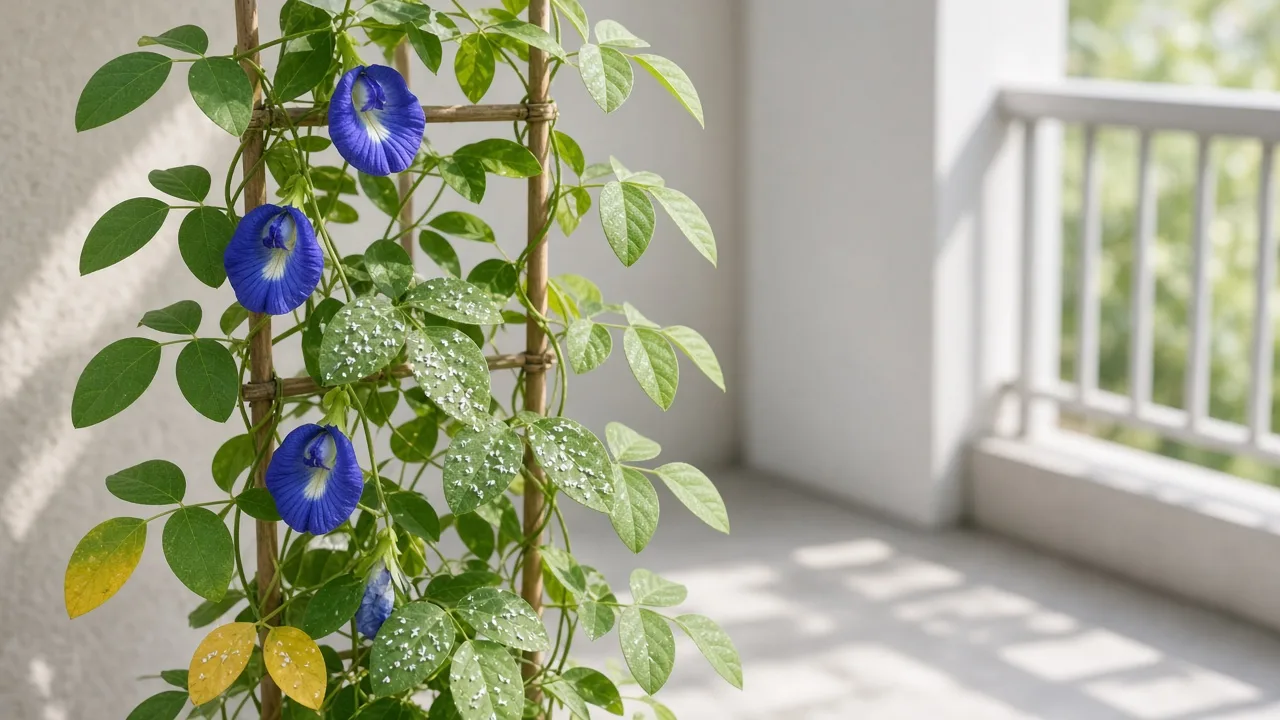
Whiteflies on Aparajita (Butterfly Pea): Causes, Checks & Fixes
This guide covers whiteflies on Aparajita. See also the general Whiteflies guide, watering, and light pages for this plant.
Whiteflies on Aparajita (Butterfly Pea): Causes, Checks & Fixes
Quick answer
Whiteflies are piercing-sucking insects that feed on leaf undersides. On Aparajita (Clitoria ternatea, butterfly pea), adults look like tiny white moths tucked under elliptic leaflets and along soft climbing shoots. Disturb the foliage and a white cloud of insects rises before they resettle. Immobile nymphs look like flat pale disks glued to the same surfaces.
For general whitefly biology and life cycle, see our whiteflies guide. On Aparajita, pests concentrate on the undersides of compound leaflets, inside opening blue flower buds, and on soft new shoots at the trellis tip—places a quick glance at older lower leaves alone will miss.
First step: isolate the vine and rinse every reachable leaflet underside and flower bud with a strong stream of water.
What whiteflies look like on Aparajita
Healthy butterfly pea carries twining stems, compound leaves with paired elliptic leaflets, and indigo-blue pea flowers from summer through warm months. Whiteflies exploit the flat undersides of those thin leaflets and the sugar-rich tissue in new shoots and buds—exactly where you want blooms for tea or garden colour.
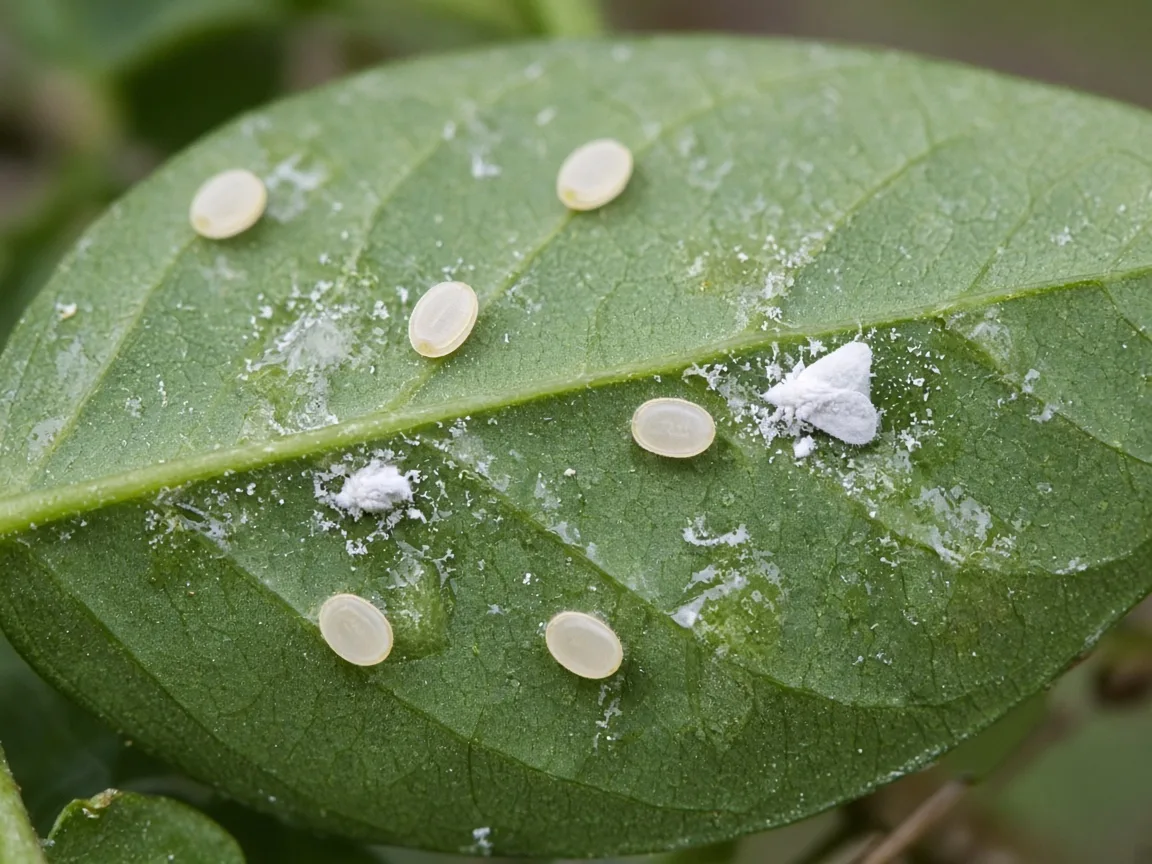
Whitefly nymph disks on a butterfly pea leaflet underside—flat pale ovals distinct from the green tissue above.
Typical signs:
- A sudden white cloud when you water, move, or brush vine tips
- Tiny moth-like adults resting on leaflet undersides and stem joints
- Flat, oval, pale nymphs glued to the same surfaces after crawlers settle
- Sticky, shiny honeydew on leaflets, buds, trellis strings, or balcony rails below
- Black sooty mold growing on honeydew-coated foliage—often overlapping black spots misread as fungal leaf spot
- Yellowing, silvering, or wilted leaflet tips when feeding is heavy on fast summer growth
NC State Extension lists butterfly pea as susceptible to whiteflies alongside spider mites. The vine’s thin leaflets show damage faster than thick succulent leaves, so sticky upper surfaces and ant trails often appear before you notice insects flying.
Whiteflies differ from aphids on Aparajita, which form soft pear-shaped clusters on tender shoots without a flying cloud. They differ from mealybugs, which leave cottony wax in leaf axils rather than flat disks across leaflet backs. Spider mites leave stippling and fine webbing in dry air, not a white flying cloud. Thrips scar buds with silvery streaks rather than coating them in honeydew.
Why this twining legume vine gets whiteflies
Whiteflies are not unique to butterfly pea, but Aparajita’s growth rhythm, balcony culture, and compound-leaf architecture make infestations easy to overlook until buds and new tips are already coated.
Constant soft new growth on the trellis. A fast tropical legume pushing tips toward a trellis creates fresh tender shoots continuously through spring and monsoon season. Whiteflies develop rapidly in warm weather and colonize the youngest tissue first—often the same shoots that should carry your next blue flowers.
Sheltered balcony corners trap humidity. Aparajita wants full sun but grouped pots on sheltered rails create stagnant warm pockets where colonies build unnoticed. Stagnant air also slows leaflet drying after overhead rain or misting—conditions that favour sap feeders and overlap with curling leaves from poor airflow.
Shared trellises with other legumes. Butterfly pea sits in Fabaceae with beans, peas, and other climbers. Whiteflies have a wide host range on herbaceous ornamentals and vegetables. A colony on a neighbouring bean pot can walk or fly to your Aparajita within days.
Nursery imports and propagation jars. New vines and water-rooted cuttings often arrive with eggs on leaflet undersides. One infested cutting on a propagation shelf can spread pests to every jar before nymphs are visible.
Excess nitrogen during peak growth. Aparajita partially fixes its own nitrogen, yet heavy fertilizer during active vine growth still produces lush soft shoots that sap feeders prefer—and excess nitrogen already reduces flowering on this legume.
Indoor overwintering with no predators. Warm rooms let whiteflies reproduce year-round. Outdoor lacewings and parasitic wasps that help control whiteflies naturally rarely reach indoor specimens on a windowsill.
How to confirm the cause
Work through these checks in order:
- Disturbance test — Brush a vine tip or compound leaf over white paper. Adults fly up and resettle on undersides. That cloud is the fastest whitefly confirmation on butterfly pea.
- Leaflet underside inspection — Flip the newest compound leaves with bright sidelight. Look for flat pale nymph disks and powdery white adults along each elliptic leaflet’s midrib.
- Bud and tip check — Examine forming indigo buds and the two nodes below the topmost growing point. Colonies often start on flower tissue before spreading to mature leaflets lower on the stem.
- Honeydew and ants — Sticky residue on buds or ant trails on trellis strings strongly support sap-feeder diagnosis. Black coating that wipes off points to sooty mold from honeydew, not dead leaf tissue—see black spots for the wipe test.
- Shake vs. stipple rule-out — Gently tap an infested tip. Whiteflies fly. Spider mites leave stippling and webbing without flight. Aphids drop as slow-moving specks without a cloud.
- Soil cross-check — Yellow lower leaflets on wet mix without insects on tips point to overwatering or yellow leaves from root stress—not whiteflies alone.
| What you see | Likely cause | Next step |
|---|---|---|
| White cloud + flat nymph disks + stickiness | Whiteflies | Isolate and rinse first |
| Pear-shaped clusters on soft tips, no cloud | Aphids | Rinse growing shoots |
| Fine webbing + bronzing in dry air | Spider mites | Rinse undersides; improve airflow |
| White cotton in leaf axils | Mealybugs | Alcohol dab on visible insects |
| Yellow lower leaflets only, wet soil, no insects on tips | Overwatering | Check soil moisture before spraying |
If you see flying white adults plus nymphs on undersides with honeydew, whiteflies are confirmed. Treat before populations overlap multiple life stages across bud clusters and trellis tips.
First fix for Aparajita
Isolate the vine the same day you see flying white insects, then rinse every reachable leaflet underside and flower bud with a strong stream of water.
Isolate infested plants away from other pots immediately—whiteflies fly short distances and hitchhike on hands, trellis strings, and touching leaflets on crowded balcony displays.
Wash undersides systematically:
- Take outdoor Aparajita to the hose early morning, or hold the pot over a sink indoors
- Direct water upward into leaflet undersides, leaf axils, and along vine tips where colonies hide
- Work from the top growing point downward so dislodged insects do not resettle on clean tissue below
- Let foliage dry in full sun the same day—Aparajita tolerates a firm rinse better than many delicate houseplants
Do not reach for insecticide on day one if you have not confirmed live insects. Do not fertilize a pest-hit vine hoping to push new growth—that produces more tender tissue whiteflies prefer. Do not repot unless soil pests are also confirmed; whiteflies on Aparajita foliage rarely require a soil change.
Protecting edible blooms during treatment
Many growers harvest Aparajita flowers for tea or natural food colouring. If buds are opening or you plan to steep blooms:
- Prefer repeated water rinses before any spray
- When colonies persist after three to four rinses, use insecticidal soap labeled for ornamentals; cover undersides thoroughly
- Good coverage on leaf undersides is essential, and repeat applications may be required every four to seven days through at least two cycles
- Avoid drenching open petals; rinse coated buds with plain water before harvest
- Apply early morning or evening—oils and soaps can injure foliage in direct hot sun
Do not use harsh dish soap instead of products labeled for plants. Homemade detergents burn thin Aparajita leaflets more easily than commercial insecticidal soap.
Yellow sticky traps and ant management
Hang yellow sticky traps near—but not touching—vine tips to monitor adults and reduce flying numbers on balcony displays. Traps alone will not clear nymphs glued to undersides.
If ants march on trellis strings, they may be protecting whiteflies from natural enemies. Sticky barriers on pot rims or ant bait placed away from the vine can help predators reach colonies.
Step-by-step recovery and timeline
After the initial rinse:
- Repeat water sprays every two to three days until live whiteflies are gone on tip inspection. Aparajita can take several firm rinses without lasting damage.
- Apply insecticidal soap if adults and nymphs persist after three to four rinses. Cover every leaflet underside and stem joint; repeat on label intervals.
- Prune heavily infested tips if insects hide inside curled leaflets soap cannot reach. Butterfly pea branches readily from nodes below a clean cut and pushes new vine growth within days in warm weather.
- Wash sooty mold off leaflets with plain water once honeydew production stops. Severely coated leaflets can be trimmed if light is blocked.
- Hold off on propagation until the parent vine stays clean for two weeks.
- Improve trellis spacing so leaflets dry after rain and airflow reaches both sides of climbing stems.
Isolate treated vines from mixed balcony displays until you see no new flying insects for at least seven days.
Timeline: Water knockdown shows results within two to three days when colonies are moderate. A full soap course may take one to two weeks with label-interval repeats. Aparajita grows fast in warm weather—expect clean new tips within one to two weeks once insects stay gone, even if older yellowed leaflets never fully recover.
Judge recovery by new growth quality and flowering, not old damage. Firm stems, normal colour on fresh leaflets, no fresh honeydew, and new buds forming mean the vine is winning. Stalled tips, spreading stickiness, or defoliation continuing despite treatment means escalation is needed.
Mistakes to avoid on climbing vines
Do not ignore ants. Controlling whiteflies alone is harder while ants defend colonies on trellis strings.
Do not assume one rinse solved the problem. Whiteflies develop rapidly in warm weather and nymphs remain glued in place—follow-up checks are mandatory.
Do not spray broad-spectrum insecticides on outdoor balcony vines unless infestation is severe—these kill lacewings, lady beetles, and parasitic wasps that otherwise control whiteflies.
Do not compost heavily infested clippings near garden beds. Adults can fly from discarded tissue briefly.
Do not increase watering to “wash away” pests. Chronic wet mix invites root problems that mimic pest stress on the same vine.
Aparajita care cross-check while treating
While treating whiteflies, keep baseline care steady—big swings in water, light, or pot size stress butterfly pea and slow recovery.
- Light — Full sun (5–6 hours of direct light) supports compact growth and flowering per the light guide. Weak light produces leggy soft shoots that are harder to inspect and easier for pests to hide in.
- Water — Allow the top 3 cm of mix to dry between waterings per the watering guide. Chronic drought stress weakens the vine even if whiteflies are controlled.
- Support — Keep the trellis or string in place so you can inspect both sides of climbing stems without crushing tips.
- Fertilizer — Hold feeding until new growth looks clean for two weeks, then resume balanced feeding at moderate strength during the growing season.
Prevent whiteflies on balcony and trellis vines
Scout new growth weekly from spring through warm months. Aparajita pushes constant soft shoots during this window—the tissue whiteflies prefer.
Quarantine new vines and stem cuttings for two weeks before placing them near existing pots or propagation jars.
Space trellis pots so leaflets do not touch—contact between neighbouring vines is a common spread route on crowded balconies.
Rinse outdoor Aparajita after dry spells when garden whitefly pressure rises on neighbouring legumes and flowering plants.
Avoid excess nitrogen during peak growth. Soft shoots from overfeeding attract sap feeders faster than firm mature foliage.
When to worry — sooty mold and reinfestation
Treat as urgent when honeydew and sooty mold spread across most of the vine within days, winged whiteflies appear on multiple pots, ants swarm every stem in a mixed display, or flower buds abort despite rinsing. Some whitefly species transmit viruses to vegetable crops; severely distorted mosaic-like new growth after heavy infestation may mean the plant will not fully recover.
Replace severely declining Aparajita rather than fighting endless reinfestation on a stressed specimen. Starting fresh from clean seed is often faster than repeated chemical cycles—and this vine germinates readily in warm soil.
Small clusters on one tip after a single missed scouting week are not urgent. Confirm insects, rinse first, and escalate only if they persist. For chronic reinfestation across multiple balcony pots, contact your local cooperative extension office for an integrated pest management plan.
Pet safety during treatment
Aparajita is toxic to cats and dogs per the plant profile. Keep treated vines out of reach until sprays have fully dried, wash hands after handling sap-heavy stems, and call your veterinarian if pets ingest significant plant material during or after treatment.
When to use this page vs other Aparajita guides
- Aparajita watering guide — Use for routine moisture checks before assuming whiteflies is the main issue.
- Aparajita problems hub — Browse all common issues on this species.
- Aphids on Aparajita — Different entry point when colonies are pear-shaped without a flying cloud.
- Spider mites on Aparajita — Different entry point when stippling and webbing dominate in dry air.
- Black spots on Aparajita — Different entry point when black coating wipes off as sooty mold from honeydew.