Thrips on Aparajita (Butterfly Pea): Causes, Checks & Fixes
Quick answer
Thrips on Aparajita scar soft vine tips, compound leaflets, and flower buds with silver streaks, black specks, or curled new growth. First step: isolate the plant and shake a suspect leaf cluster over white paper to confirm slender insects before rinsing buds and leaflet undersides.
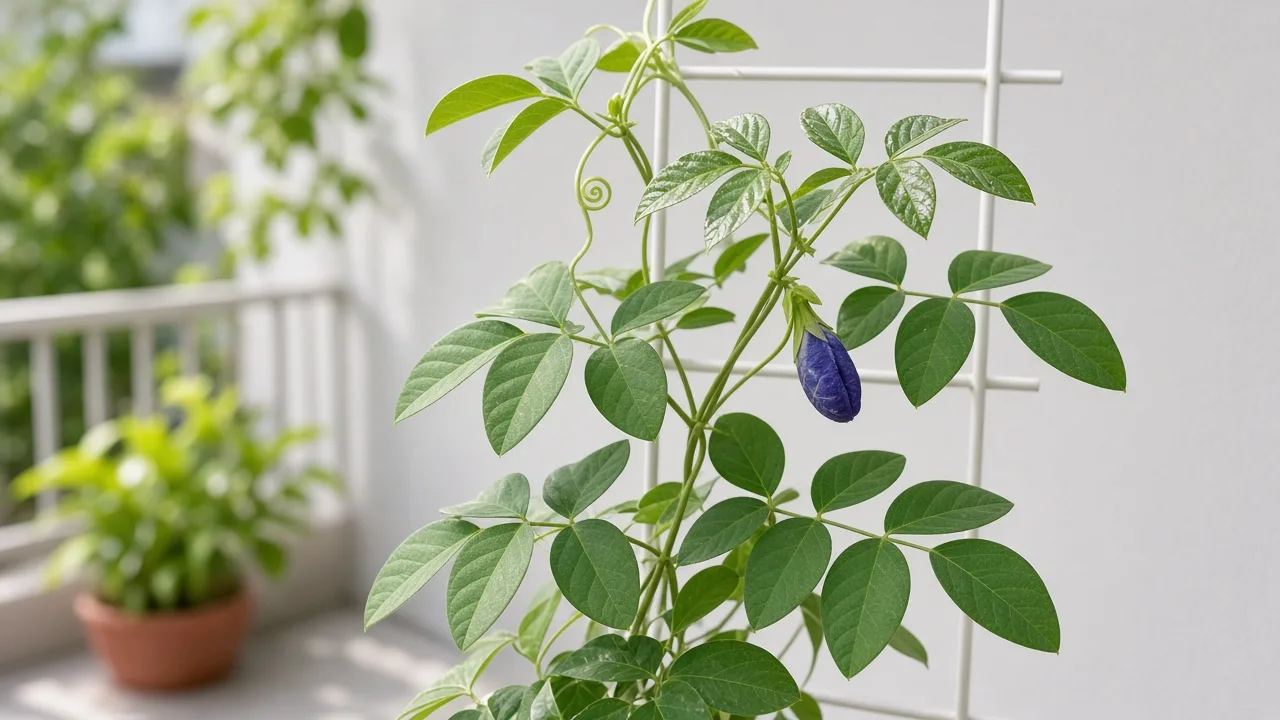
Thrips on Aparajita (Butterfly Pea): Causes, Checks & Fixes
This guide covers thrips on Aparajita. See also the general Thrips guide, watering, and light pages for this plant.
Thrips on Aparajita (Butterfly Pea): Causes, Checks & Fixes
Quick answer
Silvery streaks on individual leaflets, crinkled new shoots at the trellis tip, or pale scars on unopened indigo buds usually mean thrips—not a watering mistake. On Aparajita (Clitoria ternatea), these slender sucking insects pierce tender tissue on the fastest-growing parts of the vine: fresh climbing tips, compound leaf clusters, and flower stalks. They leave black varnish-like fecal specks on leaf undersides that are often easier to spot than the insects themselves.
First step: isolate the plant and shake a suspect leaf cluster over white paper to confirm slender insects before rinsing anything. Thrips spread quickly across crowded balcony rails and windowsill collections. Once you see moving specks plus silver scarring on new tissue, rinse bud clusters and compound leaf undersides with lukewarm water—then repeat on a schedule, because one shower rarely clears an active colony.
For how thrips feed and scar tissue in general, see our thrips pest guide. On butterfly pea, the pattern usually shows up on vine tips and buds first, while lower mature leaflets still look normal.
What thrips damage looks like on butterfly pea leaflets and buds
Aparajita carries compound leaves with 5 to 9 smooth elliptic leaflets per leaf—not thick succulent foliage. Thrips damage therefore shows on individual leaflets within a cluster, often starting at the vine tip while lower leaves on the same stem still look healthy.
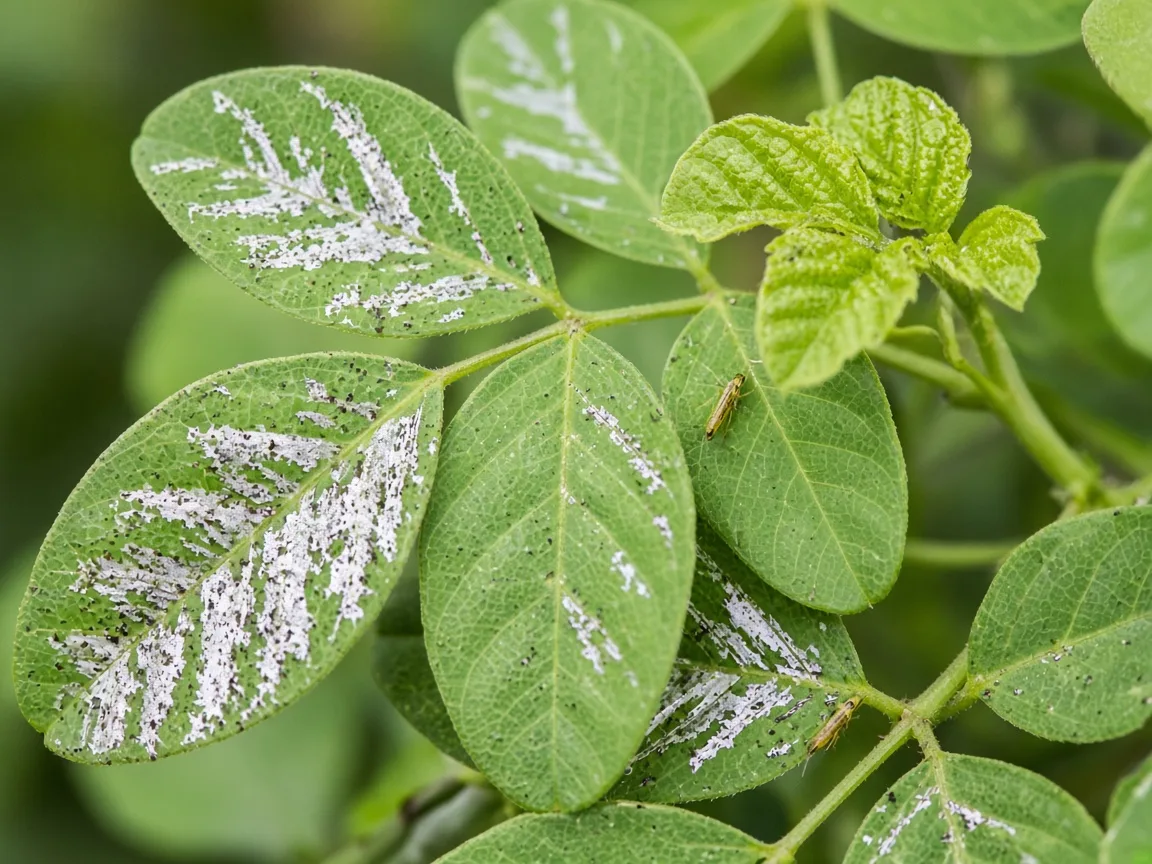
Thrips symptoms on Aparajita - compare silver streaks and black fecal specks with healthy tissue on the same plant.
Typical signs include:
- Silvery, bleached, or bronze streaks on leaflet surfaces—feeding scars that do not wipe off
- Tiny black fecal specks on leaflet undersides, petioles, and bud scales—the classic thrips calling card
- Distorted, crinkled, or stunted new shoots at the trellis tip while older stems appear fine
- Pale streaks or scarring on unopened flower buds; open blue petals may show “color break”—discolored patches where feeding killed tissue before the bud opened
- Scabby brown marks on developing pods if thrips move onto seed heads after bloom
- Slender yellow, brown, or black insects under 1/20 inch long, visible with a hand lens on bud interiors and leaflet axils
Because butterfly pea is a fast tropical legume, thrips often concentrate on actively extending shoots and bud clusters rather than evenly across the whole vine. That pattern differs from overwatering, which more often yellows lower leaflets when soil stays wet—see the watering guide before blaming pests alone.
Why this legume vine attracts thrips to soft tips and buds
Aparajita is not randomly unlucky—it produces exactly the tissue thrips prefer, especially when warm growth pushes constant new shoots toward a trellis.
Fast soft growth on climbing vines. A well-lit Aparajita in full sun extends tips continuously through spring and summer. Most pest thrips feed while hidden in buds and shoot tips or beneath sepals—you often notice scarring before you see the insects. The same tender tissue that draws aphids to soft shoots draws thrips, though thrips leave silver scars and black fecal specks rather than sticky honeydew.
Legume host risk. Bean thrips (Caliothrips fasciatus) feed on beans and other legumes, causing brown, distorted leaf and seedling terminals. Young butterfly pea seedlings and freshly rooted cuttings are especially vulnerable before stems toughen. Western flower thrips also attack many herbaceous ornamentals and can scar petals and distort terminals on flowering vines.
Bud-heavy flowering season. Aparajita sets indigo-blue blooms on short stalks from leaf axils during warm months. Thrips that move onto buds can scar petals before they open—reducing ornamental value and complicating harvest if you pick blooms for tea. NC State Extension lists butterfly pea as susceptible to whiteflies alongside spider mites; sheltered flowering vines on balconies often harbour multiple sap feeders when airflow is poor.
Crowded displays and overwintering moves. Butterfly pea grouped with herbs, beans, or other vines on a trellis limits airflow. Thrips float on air currents and walk between pots. Plants brought indoors for winter can carry hidden colonies inside tight bud clusters—damage appears weeks later when new growth expands and silver scarring becomes visible.
Excess nitrogen during active growth. Overwatering or applying nitrogen fertilizer can increase thrips populations on susceptible plants. Aparajita already fixes some nitrogen through root nodules; pushing fertilizer during an infestation produces more soft shoots thrips prefer.
How to confirm thrips vs. mites, aphids, and cultural stress
Work through these checks in order:
- Trellis-tip and bud inspection - Follow the vine to its highest growing point, unopened buds, and the two nodes below. Thrips scar here first on Aparajita.
- Shake test - Hold white paper under a suspect compound leaf cluster and tap sharply. Dislodged thrips appear as tiny moving specks on the paper.
- Fecal speck check - Look for black varnish-like dots on leaflet undersides and bud scales. This distinguishes thrips from dust or spray residue.
- Hand-lens scan - Inspect inside unopened buds and leaflet axils. Slender insects with fringed wings confirm thrips—not pear-shaped aphids or round scale bumps.
- Webbing rule-out - Fine silk between leaflets suggests spider mites, not thrips. Mites stipple without the heavy black fecal flecks thrips leave.
- Sticky residue rule-out - Glossy honeydew points to aphids or whiteflies rather than thrips.
- Soil cross-check - Yellow lower leaflets on wet soil without insects on tips suggests overwatering first.
Symptom lookalike table
| What you see | Likely cause | Key differentiator | Where to read more |
|---|---|---|---|
| Silver streaks + black fecal specks on new leaflets | Thrips | Slender insects on shake test; no webbing | This page |
| Stippling + fine webbing on leaflet undersides | Spider mites | Moving specks; dry indoor air | Spider mites |
| Pear-shaped insects + sticky honeydew on soft tips | Aphids | Tacky residue; no silver scarring pattern | Aphids |
| Insects fly in a cloud when disturbed | Whiteflies | White wings; honeydew common | Whiteflies |
| Winding trails inside leaf tissue | Leaf miners | Insect inside leaf, not on surface | Leaf miners |
| Crinkled new leaves with chewed margins | Caterpillars | Frass pellets; visible larvae | Caterpillars |
| Yellow lower leaflets only, wet soil, no insects | Overwatering | Soil stays damp; tips clean | Watering guide |
If silver scarring, black fecal specks, and shake-test insects align, thrips are confirmed. Distorted leaves alone without insects may still be thrips if damage is fresh—recheck buds before treating.
First fix for Aparajita
Move the pot away from other plants and rinse bud clusters and compound leaf undersides with lukewarm water.
Take indoor Aparajita to a sink or shower, or hose outdoor vines early in the morning. Angle the spray into unopened buds, leaflet undersides, petiole axils, and trellis strings where thrips hide. A forceful spray of water can remove some pests on contact on a sturdy vine that tolerates a firm rinse. Let foliage dry in bright light the same day.
Do not reach for insecticide on day one if you have not confirmed live thrips on the shake test. Do not fertilize a thrips-hit vine hoping to push new growth—that produces more soft tissue thrips prefer. Do not drench open blue flowers with soap if you plan to harvest petals for tea; treat surrounding leaflets and buds first.
Because Aparajita is toxic to cats and dogs, keep rinsed or treated plants out of pet reach and wash hands after handling sap-heavy stems.
Step-by-step recovery
After the initial isolation and rinse:
Light to moderate infestations
- Repeat water rinses every five to seven days until shake tests stay clean and fresh scarring stops appearing on new tips. Thrips eggs hatch on a staggered schedule—one rinse rarely ends an outbreak.
- Prune only heavily scarred bud clusters you cannot rinse effectively. Aparajita branches from nodes below a clean cut and pushes new vine within days in warm weather.
- Scout trellis tips twice weekly - Mark the newest node with a string so you can tell whether clean extension resumes.
- Improve airflow around crowded balcony vines without cutting sun below what the light guide recommends.
Moderate to heavy infestations
- Apply insecticidal soap or horticultural oil labeled for thrips if rinses alone fail after two cycles. Cover every leaflet underside, bud interior, and stem joint; soaps and oils work on contact with little residual.
- Repeat labeled applications every five to seven days through at least two complete cycles—most products miss eggs on the first pass.
- Consider spinosad for persistent colonies; UC IPM notes spinosad is generally more effective against thrips than soap alone, though avoid spraying open flowers visited by bees.
- Hang blue or yellow sticky traps near—but not touching—the vine to monitor flying adults without treating traps as a cure.
- Protect neighbouring pots - Thrips travel on clothing, tools, and breeze. Keep treated vines isolated until you see no new scarring for seven to ten days.
When to escalate or discard
If bud clusters abort en masse, silver scarring spreads up the entire trellis despite repeated treatment, or thrips reappear within days on every fresh tip, the vine may be cheaper to replace than to keep cycling chemicals—especially on a stressed overwintering specimen. Starting clean from seed or stem cuttings is often faster for butterfly pea than fighting a chronic greenhouse-style infestation on one crowded shelf.
Recovery timeline
Water knockdown shows results within three to five days when colonies are moderate. A full soap or oil course may take two to three weeks with interval repeats. Aparajita grows fast in warm weather—expect clean new leaflets on fresh tips within one to two weeks once thrips stay gone, even if older silver-scarred leaflets never fully re-green.
Judge recovery by new growth quality and flowering, not old damage. Firm stems, normal colour on fresh leaflets, no fresh black fecal specks on new tissue, and new buds forming mean the plant is winning. Spreading silver scarring up the trellis or renewed insects on every shake test means escalation is needed.
Pesticides will not restore the appearance of injured tissue—plants remain scarred until damaged leaflets drop or new unblemished growth replaces them.
Mistakes to avoid
Do not assume a general insecticide will kill thrips—many products miss hidden bud colonies while harming beneficial predators that might have helped.
Do not skip repeat treatments. Eggs may hatch up to two weeks after a contact spray, so a second wave is common if you stop after one application.
Do not blast wilted Aparajita with soap in direct hot midday sun—stressed leaflets burn more easily. Treat early morning or evening when leaves are turgid.
Do not confuse silver thrips scarring with mineral spray residue. Fecal specks on undersides confirm insects; residue wipes off.
Do not compost heavily infested clippings near garden beds without hot composting. Thrips can survive briefly on discarded tissue.
Do not stack repotting, heavy pruning, and pesticide on the same day—make one change, then read the plant’s response.
Aparajita care cross-check while treating
While fighting thrips, keep baseline care steady—big swings in water, light, or pot size stress the vine and slow recovery.
- Water - Maintain the top 3 cm dry-down rhythm from the watering guide. Chronic drought weakens the vine even if thrips are controlled.
- Light - Full sun supports compact growth that is easier to inspect. Weak light produces leggy soft shoots where thrips hide—see the light guide if stretch dominates.
- Support - Keep the trellis in place so you can inspect both sides of climbing stems and bud clusters without crushing tips.
- Fertilizer - Hold feeding until new growth looks clean for two weeks, then resume moderate balanced feeding during the growing season per the fertilizer guide.
- Soil - Ensure drainage stays good; waterlogged mix stresses roots while you focus on foliage pests—see the soil guide if pots stay heavy.
How to prevent thrips next time
Scout trellis tips and unopened buds weekly during peak flowering season and again when plants move indoors for winter—thrips often hide in buds until new tissue expands and scarring appears.
Quarantine new butterfly pea plants and stem cuttings for two weeks before placing them on a shared trellis or propagation shelf.
Improve airflow around crowded vine displays on sheltered balconies. Stagnant warm pockets let colonies build unnoticed alongside whiteflies and aphids.
Avoid excess nitrogen during active growth. Aparajita partially fixes its own nitrogen; lush soft shoots from overfeeding attract sap feeders.
When moving outdoor Aparajita inside, inspect every bud and compound leaf before the pot joins your indoor collection—thrips hitchhike unnoticed until damage shows on expanding growth.
When to worry
Treat as urgent when silver scarring spreads across most new growth within days, bud clusters abort en masse during peak bloom season, thrips appear on multiple pots in the same display, or shake tests stay positive after two full treatment cycles.
Replace severely declining vines rather than fighting endless reinfestation on a stressed specimen. Butterfly pea germinates readily in warm soil—a clean restart is often faster than repeated chemical cycles on one chronically infested pot.
Light silver streaks on one trellis tip after introducing a new cutting is not urgent. Confirm with a shake test, isolate, rinse first, and escalate only if specks and scarring persist through two treatment cycles.
Conclusion
Thrips on Aparajita concentrate on the same fast-growing tissue that drives flowering—climbing tips, compound leaflets, and indigo buds. Inspect those sites first, isolate before you rinse, and repeat treatment on a five-to-seven-day rhythm until new leaflets emerge clean. Pair mechanical knockdown with steady baseline care from the Aparajita overview and you stop outbreaks before they scar the whole trellis—keeping treatment proportionate to a vine that recovers quickly once thrips are gone.
When to use this page vs other Aparajita guides
- Aparajita watering guide - Use when yellow lower leaves and wet soil dominate without silver scarring or insects on vine tips.
- Distorted leaves on Aparajita - Overlapping symptom; use this thrips page when silver streaks, black fecal specks, or shake-test insects confirm sap feeders.
- Aparajita problems hub - Browse all common issues on this species when the pest type is still unclear.