Leaf Miners on Aparajita (Butterfly Pea): Causes, Checks &
Quick answer
Leaf miners on Aparajita leave winding pale tunnels inside individual elliptic leaflets on compound pinnate leaves along climbing vine tips. First step: backlight a fresh pale trail and pinch it firmly to crush the larva inside before removing heavily mined leaflets.
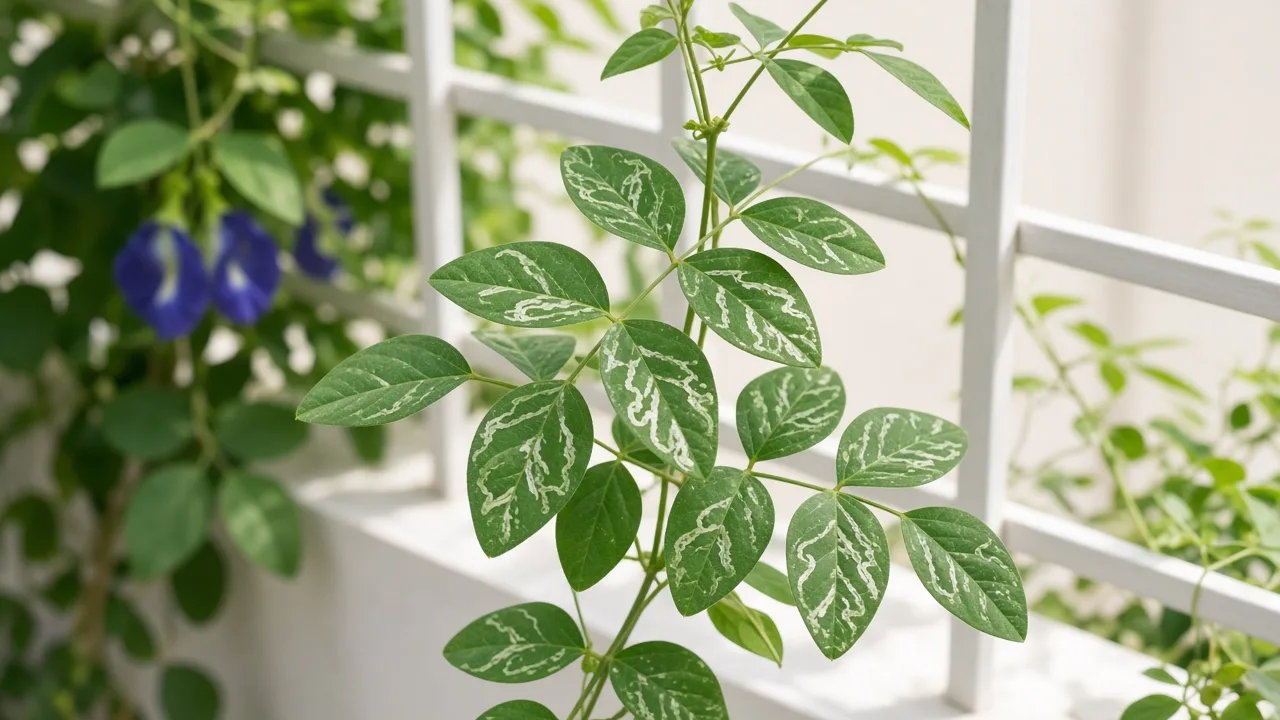
Leaf Miners on Aparajita (Butterfly Pea): Causes, Checks & Fixes
This guide covers leaf miners on Aparajita. See also the general Leaf Miners guide, watering, and light pages for this plant.
Leaf Miners on Aparajita (Butterfly Pea): Causes, Checks & Fixes
Quick answer
Pale serpentine trails winding inside individual leaflets—not through the whole compound leaf—usually mean leaf miners on Aparajita (Clitoria ternatea, butterfly pea). Fly larvae feed between the upper and lower leaf surfaces, leaving translucent tunnels on the thin, papery elliptic leaflets that make up each compound pinnate leaf along fast-climbing trellis stems.
For how leaf miner larvae tunnel inside foliage and why contact sprays underperform, see our leaf miners guide. On Aparajita, mines usually cluster on the softest leaflets at the topmost vine tips during monsoon growth flushes—often one leaflet mined while its neighbors on the same compound leaf stay clean.
First step: backlight a fresh pale trail on a suspect leaflet and pinch it firmly between thumb and finger to crush the larva inside.
When to use this page vs other Aparajita guides
| Pattern | Read next |
|---|---|
| Hollow serpentine tunnel inside a leaflet, no through-holes | This page |
| Ragged chew + pellet frass + visible caterpillar | Caterpillars |
| Clean tear, no tunnel when backlit | Holes in leaves (mechanical) |
| Sticky tips + pear-shaped insects | Aphids |
| Silvery surface scrapes + black specks, no internal tunnel | Thrips |
| Yellow lower leaves only, wet soil, no mines on tips | Overwatering |
What leaf miners look like on Aparajita
On butterfly pea, each leaf is compound and pinnate with five to seven small elliptic leaflets per stalk. Leaf miners attack individual leaflets, not the whole cluster—so you may see one mined leaflet beside three untouched neighbors on the same stem.
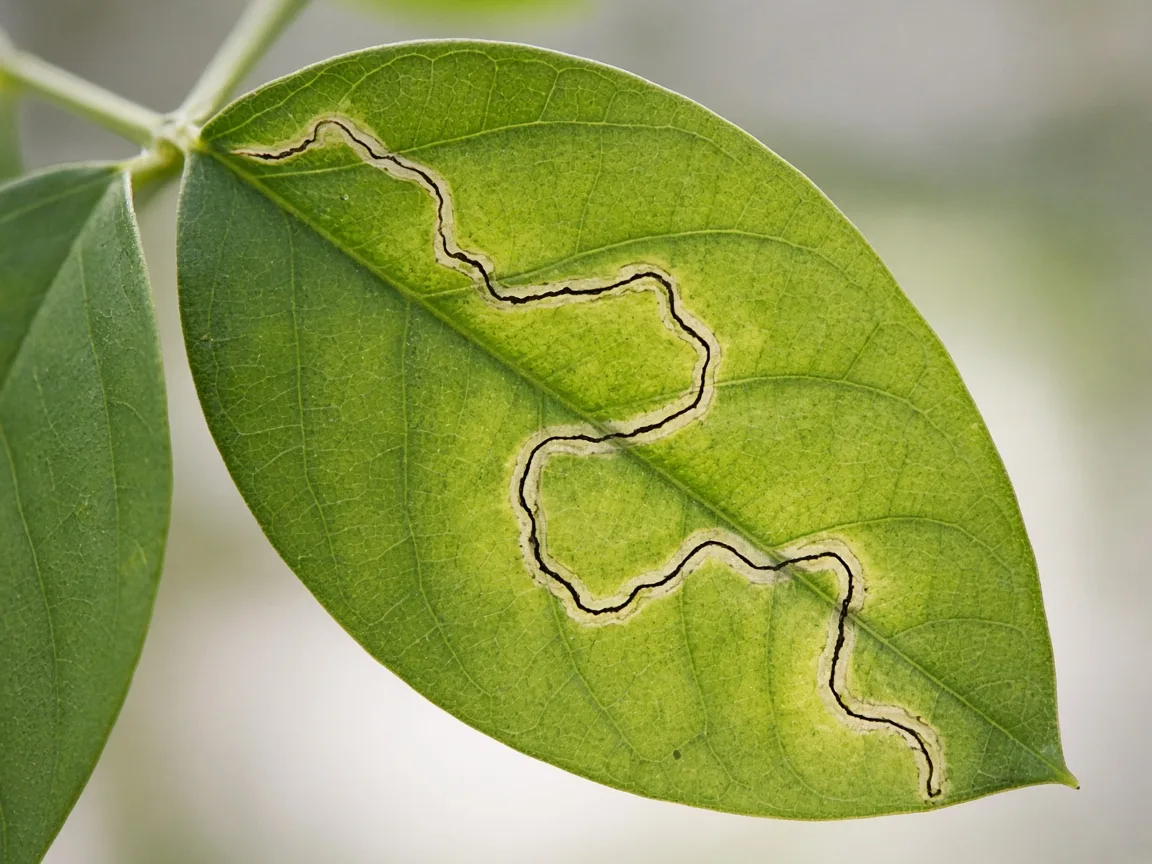
Pale winding tunnel inside a single elliptic leaflet—backlight to confirm the hollow channel and compare with an intact neighbor leaflet on the same compound leaf.
Typical signs include:
- Meandering serpentine trails that start narrow and widen as the larva grows, confined to one elliptic leaflet
- Fresh mines that look whitish or translucent against green tissue; old mines turn tan or brown and feel papery
- A dark speck or line visible inside a fresh trail when you hold the leaflet toward light
- Small white stippling on nearby leaflets from adult flies puncturing tissue to feed before laying eggs
- Leaves that feel slightly bumpy along the tunnel but smooth elsewhere—no ragged holes chewed from the outside
Miners do not produce sticky honeydew like aphids or pellet frass like caterpillars. The damage stays inside the leaflet until the adult fly emerges.
On a balcony trellis, mining often clusters on the topmost climbing shoots pushing toward full sun—the same soft tissue sap feeders target. Lower, hardened leaflets may show only old brown mines from earlier generations while new tips stay clean.
Why this butterfly pea vine gets leaf miners
Aparajita is a fast-growing tropical legume climber that pushes constant soft shoots through spring and monsoon season. Those tender elliptic leaflets are easy for agromyzid flies and other leaf-mining insects to colonize.
Constant soft new growth. Adult flies puncture leaflet surfaces, insert eggs just under the epidermis, and larvae tunnel for about two weeks in warm weather before pupating—with five to ten generations possible per year as flies move between host plants on a balcony or garden bed.
Thin papery leaflets. Compared with thick succulent foliage, Aparajita’s membranous compound leaflets mine clearly and show tunnels at a glance when backlit.
Balcony and nursery introduction. Pests hitchhike on nursery stock and outdoor plants. Skipping quarantine before training a new vine on an established trellis is a common entry route. Water-rooted cuttings can carry hidden eggs on nodes if the parent vine was infested.
Legume soft-shoot paradox. Aparajita partially fixes its own nitrogen, yet excess fertilizer during active growth still produces lush, soft shoots that flies prefer—and excess nitrogen already reduces flowering on this legume.
Indoor overwintering. Container vines brought inside for cool northern winters lack the parasitic wasps and predators that keep many outdoor leafminer populations in check. A few flies can trigger repeated indoor generations on new shoots.
Not a butterfly caterpillar. Some Clitoria cultivars are tagged as butterfly host plants, but leaf miner tunnels are internal—they do not match the ragged external chew and frass pellets described in the caterpillars guide. Do not treat serpentine mines with Bt meant for chewing larvae.
How to confirm leaf miners vs lookalikes
Work through these checks in order:
- Backlight the leaflet — Hold one elliptic leaflet toward a window. Hollow tunnels between layers confirm miners. Solid discoloration without a continuous winding channel suggests something else.
- Test a fresh trail — Pale, still-expanding mines are active. Pinch firmly along the trail; a wet spot or collapsed tissue confirms a live larva. Dry brown trails are old scars—note them, but prioritize fresh mines.
- Check one leaflet at a time — On compound leaves, miners usually hit a single leaflet. If every leaflet on the cluster shows identical external chew, suspect caterpillars instead.
- Inspect vine tips first — Follow the trellis to the topmost node and the two nodes below. Miners concentrate on newest tissue; old brown mines on lower stems alone may need only monitoring.
- Shake test for thrips — Tap a bud cluster over white paper. Slender crawling insects mean thrips, not miners.
- Frass rule-out — Dark pellet-like droppings on leaf surfaces or the balcony floor point to caterpillars, not internal miners.
| What you see | Likely cause | Next step |
|---|---|---|
| Winding hollow trail inside one elliptic leaflet | Leaf miners | Pinch active trail or remove mined leaflet |
| Ragged chew + pellet frass on leaflet surface | Caterpillars | Night inspection and hand-pick |
| Clean mechanical tear, no tunnel | Holes in leaves | No pesticide—check trellis placement |
| Sticky tips + pear-shaped insects | Aphids | Isolate and rinse shoots first |
| Yellow lower leaves, wet soil, clean tips | Overwatering | Watering guide before spraying |
If serpentine internal tunnels are confirmed on fresh tissue, move to mechanical control immediately.
First fix: crush active larvae inside fresh trails
Backlight a fresh pale mine on a suspect leaflet and pinch it firmly to crush the larva inside.
WSU Extension recommends pinching or picking and destroying infested leaves as a primary non-chemical control. On Aparajita’s small elliptic leaflets, pressing the trail between thumb and finger until the tissue collapses kills the feeding insect without touching open indigo-blue flower buds.
If one leaflet carries multiple active trails, or trails cover most of its surface, snip that leaflet off and discard it in the trash—not the compost pile. On a large outdoor trellis, removing the worst mined leaflets from the current flush is usually enough; do not strip every compound leaf on the vine.
After mechanical control:
- Set yellow sticky traps near indoor or balcony vines to catch adult flies. Traps reduce egg laying but do not replace crushing or removal.
- Monitor weekly through warm months when the life cycle can complete in about two weeks.
- Hold off on broad sprays while Aparajita is in bloom if you grow it for fragrance or tea flowers. Insecticides are not very effective for leafminer control because larvae feed where contact sprays cannot reach—and sprays on open petals are unacceptable for harvest use.
Do not reach for fungicide on trails. Miners are insects, not fungus.
Do not fertilize a miner-hit vine hoping to push new growth—that produces more soft shoots flies prefer. Follow the watering dry-down rhythm instead of increasing moisture because leaflets look blemished.
Protecting edible blooms during treatment
If you steep Aparajita flowers for tea, prefer repeated pinching and leaflet removal before any spray. When colonies persist on indoor vines and you must treat:
- Apply labeled products only when adult flies first appear, not after mines are widespread
- Keep spray off open petals; rinse any accidentally coated blooms thoroughly before steeping and follow label intervals
- Never use harsh dish soap on papery leaflets—burn risk is higher than on thick foliage
Step-by-step recovery
Once you have crushed or removed active mines:
- Mark the date and recheck the same shoots in five to seven days. New pale trails mean adults are still laying eggs—repeat pinching and leaflet removal.
- Inspect neighboring pots — Flies in the same balcony display may hit other soft-leaved ornamentals. Quarantine heavily mined container vines until two weeks pass with no new mines.
- Improve growing conditions — Confirm the vine gets full sun and well-draining soil. A vigorous climber outgrows cosmetic mining faster than a shaded, waterlogged one.
- Encourage predators outdoors — Parasitic wasps and other natural enemies reduce miner numbers on garden-grown butterfly pea. Avoid broad-spectrum insecticides that kill these helpers and can trigger secondary leafminer outbreaks.
- Consider spinosad only if needed — For persistent indoor infestations on high-value display vines, spinosad may help when applied to labeled plants before mines expand—follow the label and keep it off harvest blooms.
Repeat monitoring until new compound leaves emerge without fresh trails for at least two weeks.
Recovery timeline
Days 1–7: Crush or remove active mines on vine tips. You should see no new pale trails on cleaned shoots if you caught the generation early.
Weeks 2–4: Old brown mines remain visible on lower leaflets—they are scars, not active pests. Judge success by clean new elliptic leaflets at stem tips, not by old tissue greening up.
One month onward: On an established outdoor trellis, a single warm-season generation often causes a burst of trails, then tapers as leaflets harden and natural enemies catch up. Indoor balcony vines may need sticky traps and weekly checks through several fly generations.
Signs of improvement: Fresh compound leaves open without tunnels. Fewer adult flies on sticky traps. No widening pale trails on new flushes. Flowering resumes on unaffected buds.
Signs the problem is worsening: New mines appear on every fresh leaflet along a shoot. Buds and young leaves drop from heavy mining before blooms open. Multiple pots on the same shelf show fresh trails simultaneously.
Mistakes to avoid
- Spraying fungicide on serpentine trails — Miners are fly larvae, not fungus.
- Defoliating the entire vine — Removing every compound leaf shocks a flowering butterfly pea. Target active mined leaflets only.
- Treating miners like caterpillars — Bt and hand-picking caterpillars do not fix internal tunnels; use pinch-and-remove for miners.
- Assuming one treatment finishes the job — Several fly generations can occur per season on warm balconies. One pinching session is rarely enough on indoor plants.
- Composting mined leaflets — Pupae can survive and reinfest. Trash bag infested foliage.
- Ignoring quarantine — New nursery Aparajita is a common source. Two weeks apart from established trellis vines prevents spread.
- Increasing nitrogen during an infestation — Soft shoots attract more egg laying; hold fertilizer until new growth stays clean.
Prevention
- Inspect new growth weekly from spring through monsoon season, especially after bringing vines outdoors or when warm humid weather pushes soft shoots.
- Quarantine new plants for at least two weeks before training them on a shared trellis.
- Discard mined leaflets promptly — Do not let larvae complete their cycle on fallen foliage near the pot base.
- Use sticky traps early indoors — Set traps when you first see small black flies near windows or grow lights, before trails multiply on vine tips.
- Preserve natural enemies outdoors — Light mining on a vigorous garden trellis often needs no treatment once predators establish.
- Keep culture steady — Full sun, appropriate watering, and balanced feeding help the vine tolerate light cosmetic mining without serious harm.
Aparajita is toxic to cats and dogs—discard mined leaflets away from curious chewers even though the primary issue is cosmetic leaf damage, not ingestion risk from miners themselves.
When to worry
Leaf miners rarely kill an established Aparajita vine with firm roots. Worry when:
- Fresh mines cover most new leaflets on several vine tips during bud formation
- The vine stops producing clean new compound leaves for multiple weeks despite mechanical control
- You harvest flowers for tea and mining is spreading onto tissue you plan to steep—prioritize physical removal over sprays on petals
An outdoor butterfly pea with scattered old brown trails and vigorous clean shoots at the trellis top is usually a low-urgency cosmetic issue, not a rescue situation. Reassess for root rot or overwatering if stems soften and smell sour rather than showing only internal leaflet tunnels.
Conclusion
Leaf miners on Aparajita are diagnosed by hollow serpentine tunnels inside individual elliptic leaflets on compound pinnate leaves—confirmed by backlighting and crushing fresh pale trails. The first fix is mechanical: pinch active mines or remove heavily infested leaflets before considering sprays that could harm edible blooms or beneficial insects. Mined tissue does not heal, but clean new leaflets at climbing stem tips tell you the vine is recovering.
Related Aparajita guides
Related tool
Use the Plant Problem Diagnosis Tool to narrow causes for leaf miners on this plant before changing multiple variables at once.