Distorted Leaves on Aparajita: Causes, Checks & Fixes
Quick answer
Distorted leaves on Aparajita (butterfly pea) show up as wrinkled, puckered, blistered, or asymmetric leaflets on the newest compound leaves at tendril tips—often before older foliage looks wrong. First step: open the softest half-unfurled trifoliate leaf with a phone flashlight and look for silver streaks, black thrips specks, sticky aphids, or mottled mosaic before you water, feed, or spray.
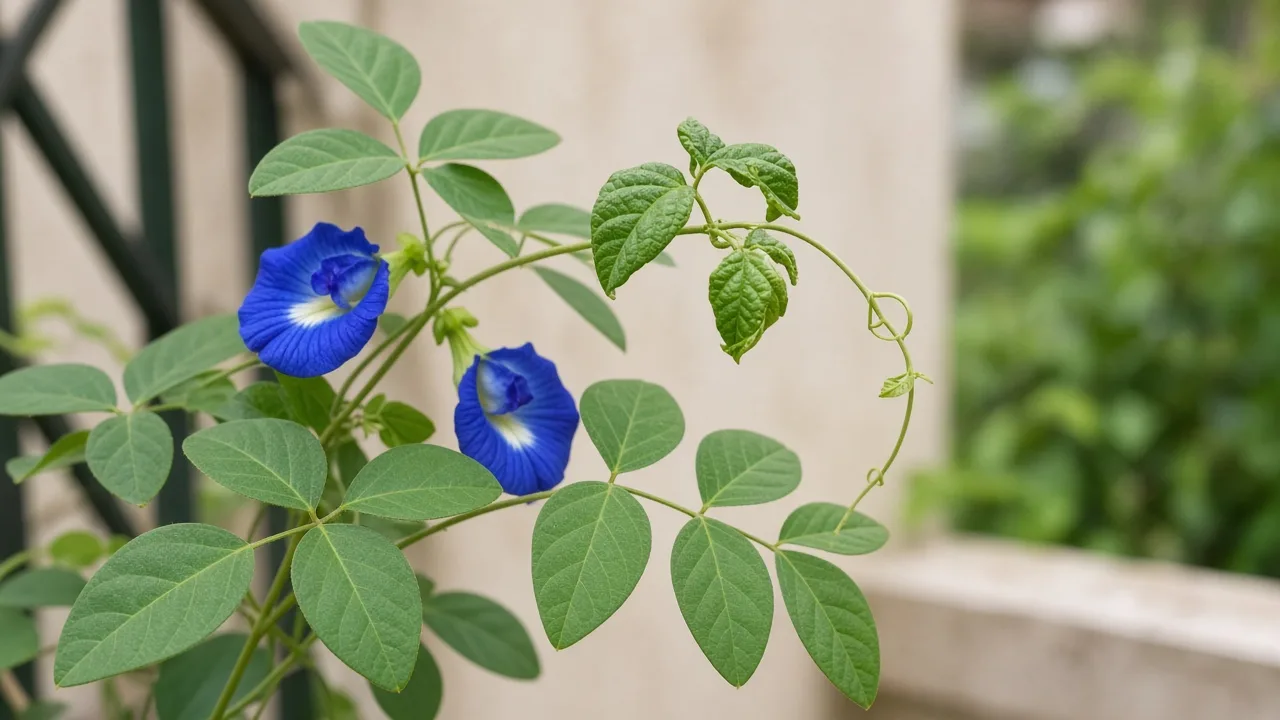
Distorted Leaves on Aparajita: Causes, Checks & Fixes
This guide covers distorted leaves on Aparajita. See also the general Distorted Leaves guide, watering, and light pages for this plant.
Distorted Leaves on Aparajita: Causes, Checks & Fixes
Quick answer
Distorted leaves on Aparajita (Clitoria ternatea, butterfly pea) show up as wrinkled, puckered, blistered, narrow, or asymmetric leaflets on the newest trifoliate compound leaves at active tendril tips—not as a random blemish on mature lower foliage. For how new leaves grow twisted or misshapen in general, see our distorted leaves guide. On butterfly pea, the diagnostic window is the soft leaflet still opening at each vine apex.
First step: open the softest half-unfurled trifoliate leaf at each tendril tip with a phone flashlight. Silver streaks and black specks point to thrips or whiteflies. Sticky puckering on tender shoots suggests aphids. Mottled green-yellow patches with blistered unfurling suggest virus—see below. Cupped margins without pests or mosaic may be calcium deficiency on expanding tissue.
What distorted leaves look like on butterfly pea
Butterfly pea carries pinnate compound leaves with five to seven elliptic leaflets on each petiole along twining stems. Distortion reads differently on that architecture than on a single broad houseplant leaf—watch each leaflet within the trifoliate cluster, not just the whole leaf stalk.
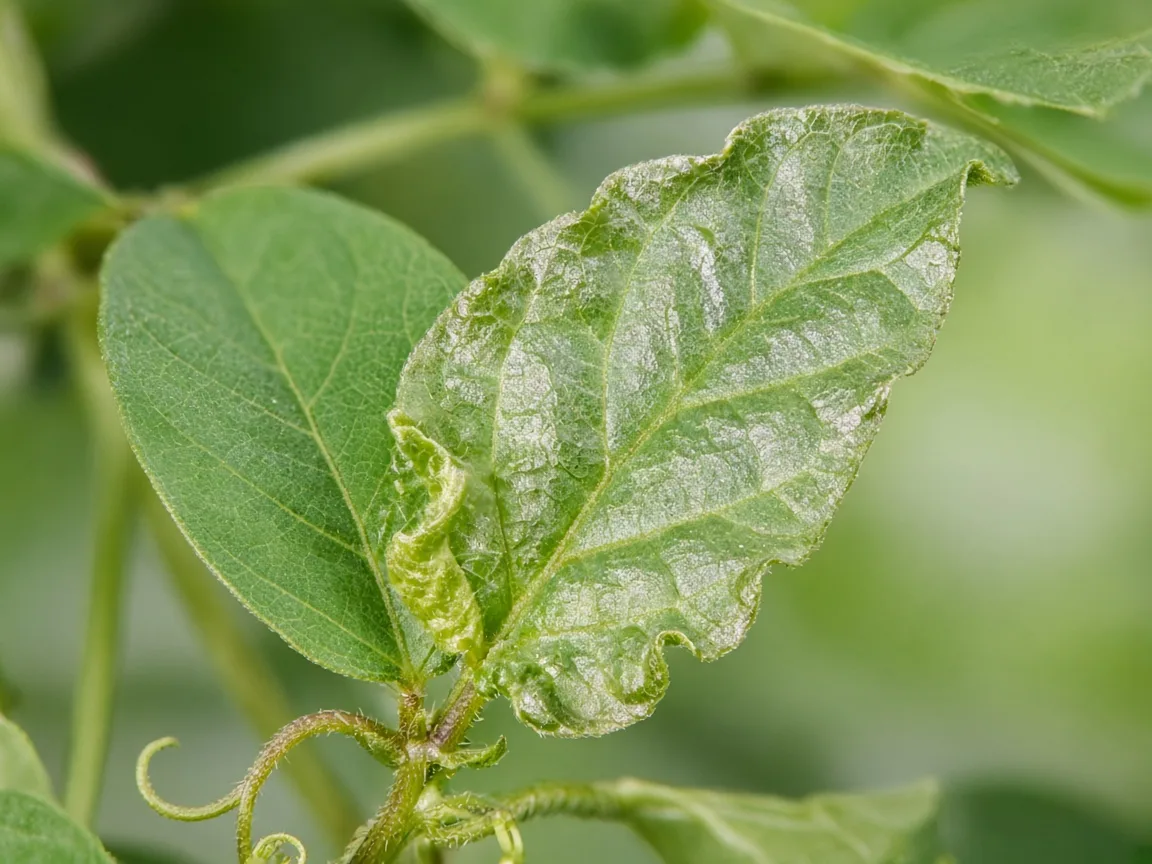
Distorted leaf symptoms on Aparajita—compare wrinkled or puckered leaflets on the newest compound leaf with flatter older trifoliate leaves lower on the same tendril.
Thrips scarring (most common distortion trigger on balcony vines)
- Silver or bronze streaks on soft leaflets still opening at the tendril tip
- Tiny black specks (thrips excrement) on the streaked surface
- Leaflets emerge narrow, crinkled, or twisted along one edge
- Cobalt buds may scar or fail to open cleanly when thrips feed on flower tissue
- Damage concentrates on new growth; lower trifoliate leaves often stay normal
Aphid puckering on tender shoots
- Downward-cupped or wrinkled leaflets only at the active tendril tip
- Sticky honeydew, ants on the pot rim, or soft green/black insects clustered on new shoots
- Distortion localized to one compound leaf while the rest of the vine looks fine
Virus-like mosaic and blistering
- Mottled light and dark green patches on expanding leaflets
- Blistered, wrinkled, or bumpy unfurling without a moisture explanation
- Stunted narrow leaflets on successive new trifoliate leaves along one tendril
- No response to corrected watering; may spread to neighboring shoots over weeks
- Legume viruses such as bean golden mosaic can show yellowing and mottled foliage transmitted by sap-sucking insects
Calcium-related cupping on expanding leaflets
- Hood-like or uneven margins on the newest trifoliate leaflet before it hardens
- Often no silver streaks, no mosaic, no sticky residue
- Cross to calcium deficiency on Aparajita when this pattern repeats on successive vine tips during fast summer growth
Powdery mildew distortion
- White or grayish patches on leaflets that later curl, distort, and yellow
- More common when vines crowd a trellis with poor airflow after monsoon humidity
- Distortion follows visible mildew, not isolated wrinkling alone
Why Aparajita leaflets distort
All new growth exits at tendril tips
Established butterfly pea grows mostly from apices of main axes and axillary branches, with very few new shoots from ground level. Every fresh trifoliate compound leaf opens at a twining tendril tip where sap is richest. Thrips, aphids, and virus symptoms hit that soft tissue first—which is why distortion looks tip-heavy while lower leaflets stay flat.
Thrips on flower buds and new leaflets
Thrips feed on flower buds and new growth, causing silvering of leaves and distortion of growing points. On Aparajita, that translates to scarred cobalt buds and crinkled leaflets on the same tendril. Hot dry balcony air and drought-stressed vines invite thrips faster—distortion from thrips and from curling leaves from thirst can overlap on one plant.
Aphids on soft legume shoots
After warm rain or a deep soak, butterfly pea pushes soft new shoots. Aphid infestations can lead to stunted growth and distorted plant structures on those tender tips. The distortion is localized and often accompanied by honeydew—not the streak-and-speck pattern thrips leave.
Virus on unfurling compound leaves
Research on butterfly pea documents multiple legume viruses; home growers may see mosaic mottling with blistering and wrinkling on unfurling leaflets after sharing tools with infected beans or introducing an infected cutting. Virus distortion does not uncurl with watering. Suspect virus when mosaic patterning spreads without a pest explanation—isolate the vine and do not propagate from it.
Fast growth outrunning calcium uptake
During peak summer flowering, rapid vine growth in full sun can outpace calcium delivery to expanding cell walls. The result is cupped or rippled margins on the newest trifoliate leaflet—not silver streaks or mosaic. See calcium deficiency when nutrient pattern fits.
Crowded trellis and mildew stress
Vines tied too densely on a balcony trellis hold moisture on leaflet surfaces. Powdery mildew can leave affected leaves distorted and yellow before they drop. Improve airflow before assuming a pest or virus.
Trifoliate unfurling check: distortion vs simple curl
On butterfly pea, wrinkled or blistered unfurling is not the same as lengthwise cupping from drought. Distortion means the leaflet surface is bumpy, asymmetric, streaked, mottled, or stuck partially open. Curl means intact leaflets roll inward to conserve moisture.
| Signal | Distortion page | Curling page |
|---|---|---|
| Silver streaks + black specks on soft leaflet | Yes — thrips | Unlikely |
| Mottled green-yellow blistering | Yes — virus suspect | No |
| Sticky puckering at tip only | Yes — aphids | Sometimes |
| Uniform cupping, dry 3 cm soil | Secondary | Curling leaves |
| Hood-like margin burn, no pests | Calcium deficiency | No |
This table is why Aparajita needs its own distortion guide—not a renamed generic symptom page.
How to confirm the cause
- Tendril-tip leaflet — Open the softest trifoliate leaf on each active shoot; note streaks, specks, stickiness, or mosaic.
- Wipe test — Drag a white paper towel on the underside; orange or green streaks confirm active sap feeders.
- Pattern along the vine — Tip-only distortion on one tendril suggests local pests; mosaic climbing multiple shoots suggests virus.
- Moisture at 3 cm — Dry soil rules out overwatering as the primary cause; wet sour mix points to stress, not thrips.
- Bud condition — Scarred or failed cobalt buds alongside distorted leaflets strengthens a thrips read.
- Successive new leaves — Two or more clean trifoliate openings after one fix confirms the right diagnosis.
The first fix to try
Open the softest half-unfurled trifoliate leaf at each tendril tip with a phone flashlight before you water, feed, or spray.
- If you find silver streaks and black specks: isolate the vine and rinse tendril tips and leaflet surfaces under lukewarm running water; confirm active thrips before insecticidal soap.
- If you find sticky aphid clusters: blast soft shoots with water, then monitor for return before spray.
- If you see mosaic mottling with blistered unfurling and no pest explanation: isolate immediately; do not propagate; remove the plant if distortion spreads to new tendrils weekly.
- If the leaflet is cupped with burned margins but no streaks, stickiness, or mosaic: review water source and fertilizer label per calcium deficiency before treating as pests.
Do not fertilize a distorted vine on day one. Do not repot unless roots are clearly failing in sour wet mix.
Step-by-step recovery
- Correct the primary trigger — Rinse for thrips/aphids; isolate for virus; adjust feed for calcium; open trellis spacing for mildew.
- Improve airflow — Separate twining stems so leaflets dry after rain. Stagnant humid corners worsen spider mites and mildew.
- Empty saucers — Saturated bottom mix stresses uptake and mimics nutrient distortion on new tips.
- Hold fertilizer — Wait for one or two clean trifoliate leaves before light balanced feed per our fertilizer guide.
- Trim only fully damaged tips — After the vine stabilizes, snip tendril tips where leaflets are permanently scarred; sterilize pruners between cuts if virus is suspected.
- Quarantine new vines — Two weeks on a separate trellis before tying to an existing butterfly pea reduces virus and pest carryover.
Recovery timeline
| Stage | What to expect |
|---|---|
| 3–7 days | Thrips-rinsed vines should show no fresh silver streaks on new openings |
| 2–3 weeks | One or two clean trifoliate compound leaves on active tendrils mark success |
| 4–6 weeks | Cobalt buds may reopen cleanly on recovered vines in warm bright conditions |
| Permanent | Virus-blistered or thrips-scarred hardened leaflets rarely flatten perfectly |
Judge recovery by new tendril tips, not old wrinkled tissue.
Lookalike symptoms
| Pattern | What you see | Likely cause |
|---|---|---|
| Silver streaks + black specks on soft leaflet | Crinkled tip leaflets | Thrips |
| Sticky puckered tip | Ants, aphid clusters | Aphids |
| Mottled blistered unfurling | Spreads along vine | Virus — isolate |
| Hood-like margin burn, no pests | New tip only | Calcium deficiency |
| White patches then curl | Crowded trellis | Powdery mildew |
| Uniform cupping, dry soil | Dull leaflets | Underwatering — see curling leaves |
Mistakes to avoid
- Spraying before inspecting tendril tips — Butterfly pea distortion is usually localized on new growth; blind spraying stresses the whole vine.
- Treating virus like a pest — Mosaic with blistering will not clear with neem oil; isolation and removal protect neighboring legumes.
- Confusing cupped calcium margins with thrips streaks — Silver streaks mean pests; clean cupping without specks means nutrients.
- Propagating from a distorted vine — Cuttings and seeds from virus-suspect plants spread the problem to next season’s trellis.
- Crowding the trellis — Dense stems trap humidity and invite mildew distortion after monsoon.
When to worry
Escalate when mosaic mottling reaches multiple tendrils within two weeks, thrips streaks return after two thorough rinses, or cobalt buds abort repeatedly while new leaflets stay twisted. Butterfly pea will not tolerate waterlogging; wet-soil stress plus distortion may mean root rot when stems soften at the base. Remove virus-suspect plants rather than waiting for a cure that does not exist.
How to prevent distorted leaves next time
Grow in full sun with well-drained soil per our light and soil guides. Maintain the 3 cm dry-down rhythm so vines stay vigorous without chronic wet roots. Rinse tendril tips weekly in hot dry weather. Space trellis stems for airflow. Use complete fertilizer during active growth. Clean pruners between legumes. Quarantine new butterfly pea before tying it beside an established vine.
When to use this page vs other Aparajita guides
- Curling leaves on Aparajita — Better entry when leaflets cup inward from drought, heat, or mites without wrinkled blistering.
- Thrips on Aparajita — Deep dive when silver streaks and black specks confirm thrips as the primary cause.
- Aphids on Aparajita — When sticky puckering and honeydew dominate.
- Calcium deficiency on Aparajita — When new tip leaflets cup with margin burn but no pests or mosaic.
- Pale leaves on Aparajita — When whole vine color fades rather than localized tip distortion.