Curling Leaves on Aparajita: Causes, Checks & Fixes
Quick answer
Curling leaves on Aparajita (butterfly pea) usually mean the vine is conserving moisture from dry soil, fighting spider mites on new growth, or recovering from midday heat stress. First step: check soil at 3 cm depth and inspect the undersides of the newest leaflets on the growing tendril before you water or spray.
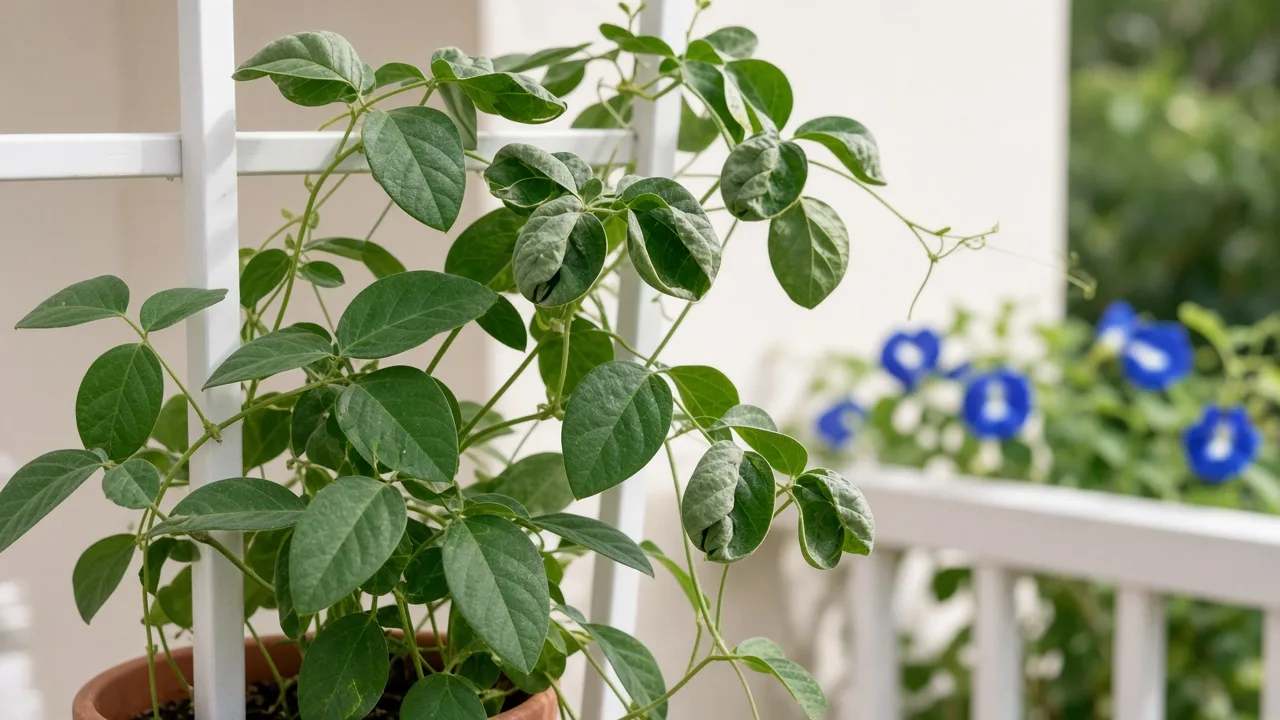
Curling Leaves on Aparajita: Causes, Checks & Fixes
This guide covers curling leaves on Aparajita. See also the general Curling Leaves guide, watering, and light pages for this plant.
Curling Leaves on Aparajita: Causes, Checks & Fixes
Quick answer
Curling leaves on Aparajita (Clitoria ternatea, butterfly pea) show up as cupped or rolled leaflets along twining stems—often before yellowing or full wilt. On this fast-growing tropical legume, curl is usually a moisture or pest signal, not a random leaf defect. For how leaf curl works as a general stress response, see our curling leaves guide. On butterfly pea, pair the 3 cm soil check with a tendril-tip pest scan before you change watering or reach for spray.
First step: check soil moisture at 3 cm depth, then inspect the undersides of the newest leaflets on the active growing tendril. Dry, light soil with dull cupped leaflets points to underwatering on Aparajita. Cool damp soil with stippling or webbing on tender tips points to spider mites or aphids. Curl that appears only in harsh afternoon sun on moist mix is often heat stress—wait for a morning soil read before soaking again.
What curling leaves look like on butterfly pea
Butterfly pea carries compound odd-pinnate leaves with five to nine elliptic leaflets on each leaf stalk—not a single broad blade like a peace lily. Curl patterns read differently on that architecture.
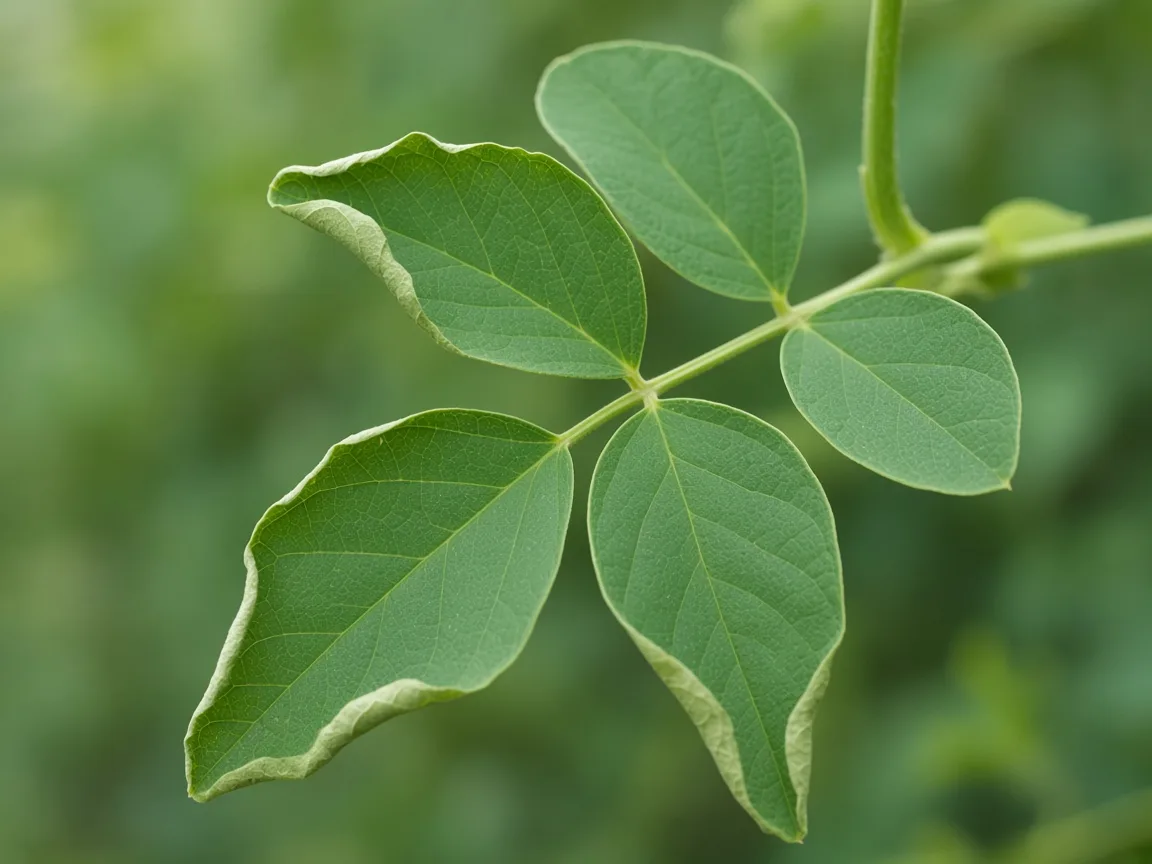
Curling leaf symptoms on Aparajita - compare cupped leaflets with healthy tissue on the same tendril.
Drought curl (most common on sunny balconies)
- Individual leaflets curl lengthwise or cup inward, often starting at the growing tips
- Leaf surface turns dull gray-green before full wilting appears
- Soil at 3 cm is dry; pot feels light
- Tendrils stay firm; curl eases within hours after a deep base soak
Spider mite curl
- Newest leaflets twist, bronze, or look sandblasted on the upper surface
- Fine webbing on leaflet undersides and between leaflet pairs
- Soil moisture looks normal; curl worsens in hot dry indoor air
- Often spreads from one tendril before climbing the trellis
Aphid curl on tender growth
- Young leaflets at the tendril tip pucker or curl downward
- Sticky honeydew, ants on the pot rim, or clusters of soft-bodied insects on new shoots
- Older lower leaflets may stay flat while only the tip curls
Heat-stress curl on moist soil
- Curl appears in midday sun on a well-watered balcony vine
- Leaflets partially flatten by evening when temperatures drop
- No stippling, webbing, or dry soil at 3 cm the next morning
Overwatering-related curl (less common, often paired with yellowing)
- Leaflets cup while soil stays wet five or more days after one drink
- Lower pairs may yellow; cobalt buds abort
- Sour smell or fungus gnats point to saturated mix—see overwatering on Aparajita
Why Aparajita leaflets curl
Fast dry-down in full sun
Aparajita wants full sun—six or more hours of direct light daily for heavy flowering. More light drives transpiration through many small leaflets on a twining vine. A sunny balcony pot can cross from moist to dry at 3 cm in a single hot afternoon, especially in small containers or during peak summer.
The species has a reputation for drought tolerance but performs best with consistent watering in well-drained, dry to slightly moist soil. Growers who water on a weekly calendar instead of the pot’s dry-down rhythm often see curl before obvious wilt.
Spider mites on new tendril growth
Butterfly pea is susceptible to spider mites and whiteflies. Mites colonize the tender leaflet pairs at tendril tips where sap is richest. Stippling disrupts cell function; leaflets curl as a secondary stress response. Dry air, heat, and drought-stressed vines invite mites faster—curl from thirst and curl from mites can overlap on the same plant.
Aphids on soft new shoots
Legume vines push soft new growth after warm rain or a good soak. Aphids cluster on those shoots and cause localized puckering. The rest of the vine may look fine while only the top compound leaf curls—easy to misread as thirst.
Midday heat on moist roots
On metal trellises and west-facing balcony rails, leaflets can temporarily cup when root-zone temperature and transpiration demand spike—even with adequate soil moisture. This is protective, not a call for another drink. Confirm with a morning finger test at 3 cm.
Wet roots and oxygen loss
Legume roots need air between soaks. Chronic saturation—cachepots, saucer water after monsoon, or heavy clay—stresses uptake. Leaflets may curl or dull while lower pairs yellow. This overlaps with root rot when stems soften at the base.
Virus-related distortion (rare in home pots)
Research in Thailand documented butterfly pea with mottling, vein banding, blistering, and wrinkling from yambean mosaic virus. Home growers in India and elsewhere may see similar distortion after sharing tools with infected beans. Suspect virus when curl is accompanied by mosaic patterning, blistered leaflets, and no moisture or pest explanation—isolate the vine and do not propagate from it.
Compound leaflet curl vs whole tendril collapse
On butterfly pea, partial leaflet curl with firm stems usually means thirst, mites, or heat—not immediate root death. Whole tendril collapse with limp petioles crosses into wilting territory and needs a wet-vs-dry diagnosis first.
Read the pattern along the vine:
- Tip-only curl on one tendril — aphids, mites, or local drought on that shoot
- Uniform curl on every leaflet along multiple stems — pot-wide dry-down or heat event
- Curl plus yellow lower pairs on wet soil — overwatering or poor drainage, not underwatering
This compound-leaf architecture is why generic “curling leaves” advice written for single-blade houseplants misleads on Aparajita.
Tendril-tip inspection: where pests hide
Butterfly pea grows by twining new tendrils toward light. The youngest compound leaf—often only half unfurled—is the first place aphids and mites settle.
Inspection order:
- Follow the active tendril to its tip
- Gently open the newest leaflet pair
- Check undersides with a phone flashlight for webbing, stippling, or insects
- Wipe a white paper towel on the underside; orange or green streaks confirm pests
If pests are present, isolate the vine and rinse tendril tips under lukewarm running water before any spray. Do not soak the whole pot to “help” a mite problem—that worsens wet-soil stress.
How to confirm the cause
- Moisture at 3 cm — Dry crumbly mix confirms drought per our watering guide. Cool clinging mix while leaflets curl points to pests, heat, or wet-root stress—not thirst.
- Pot weight — Light container plus curl equals dry-down. Heavy pot plus curl on wet soil equals drainage or root issue.
- Tendril-tip pests — Webbing, stippling, honeydew, or visible insects on new growth.
- Time of day — Afternoon-only curl on moist soil suggests heat; morning curl on dry soil suggests thirst.
- New growth direction — Active tendrils and cobalt buds mean the vine can still recover once the cause is fixed.
- Smell and saucers — Sour mix or standing water rules out underwatering as the primary cause.
The first fix to try
Check soil at 3 cm and inspect the newest tendril tips before you water or spray.
- If soil is dry and the pot is light: water deeply at the base until drainage runs clear, then return to the 3 cm dry rule.
- If soil is moist and you find webbing or stippling: isolate the vine and rinse tendril tips and leaflet undersides thoroughly; confirm active pests before applying insecticidal soap.
- If soil is moist, no pests, and curl appeared only yesterday afternoon: wait for a morning recheck—do not add water overnight.
Do not fertilize curled vines. Do not repot on day one unless roots are clearly failing in sour wet mix.
Step-by-step recovery
- Correct the primary stress — Soak for drought; dry cycle for wet soil; rinse for mites; shade during peak heat if needed.
- Improve airflow — Space trellis stems so leaflets dry after rain or misting. Legumes in stagnant humid corners curl and invite whiteflies.
- Empty saucers — Monsoon cachepots keep bottom mix saturated and mimic overwatering curl.
- Hold fertilizer — Wait for firm new tendrils before light balanced feed per our fertilizer guide.
- Trim only fully damaged tips — If mite webbing consumed a tendril tip, snip above the next healthy node after the plant stabilizes.
- Re-learn dry-down — After any move to a hotter balcony, track how fast 3 cm dries for two weeks.
Recovery timeline
| Stage | What to expect |
|---|---|
| 6–24 hours | Drought curl often eases after one correct soak; heat curl may flatten overnight |
| 3–7 days | Mite-rinsed vines should show cleaner new leaflets without fresh stippling |
| 2–3 weeks | Firm new tendrils and healthy leaflet color are the main success markers |
| 4–6 weeks | Cobalt buds may return on recovered vines in warm bright conditions |
Old cupped leaflet edges rarely flatten perfectly. Watch new growth, not damaged tissue.
Lookalike symptoms
| Pattern | What you see | Likely cause |
|---|---|---|
| Dry 3 cm + cupped leaflets | Dull tips, light pot | Underwatering |
| Stippling + webbing on new tips | Bronze leaflet pairs | Spider mites |
| Sticky tendril tips | Ants, puckered young leaflets | Aphids |
| Afternoon curl, moist soil | Evening partial recovery | Heat stress |
| Wet soil + yellow lower pairs | Bud abort | Overwatering |
| Mosaic + blistering | Distorted unfurling | Virus—see distorted leaves |
Mistakes to avoid
- Watering every curled vine without a soil check — Wet-root curl gets worse with more water.
- Misting leaflets in humid monsoon weather — Wet foliage invites rot and mites on butterfly pea.
- Treating Aparajita like a moisture-loving fern — It is a sun-loving legume that still needs dry-down discipline.
- Spraying pesticides before rinsing and confirming pests — Stresses an already cupped vine.
- Ignoring tendril tips — Lower leaflets can look fine while mites consume the growing point.
When to worry
Escalate when curl climbs the vine on sour wet soil, stems soften at the base, or fine webbing returns within a week after treatment. Unpot and inspect roots if wet-soil curl persists more than ten days despite dry-down. Established butterfly pea rarely dies from one dry afternoon—but untreated mites or waterlogged roots can stall the vine for a full season.
How to prevent curling leaves next time
Maintain the 3 cm dry-down rhythm year-round. Grow in well-drained soil with full sun per our light guide and soil guide. Empty saucers after heavy rain. Rinse tendril tips weekly in hot dry weather. Harvest flowers and pinch long stems for airflow through the trellis. Respect that butterfly pea cannot tolerate waterlogging—curl is often the first warning before buds abort and roots fail.
When to use this page vs other Aparajita guides
- Aparajita watering guide — Use for routine moisture checks before assuming curl is the main issue.
- Wilting on Aparajita — Better entry when whole tendrils collapse, not just cupped leaflets.
- Underwatering on Aparajita — When dry soil and light pot confirm thirst.
- Spider mites on Aparajita — When stippling and webbing dominate over moisture signs.
- Distorted leaves on Aparajita — When blistering, mosaic, or virus-like wrinkling appears.