Brown Leaves on Areca Palm: Causes, Checks & Fixes
Quick answer
Brown leaves on areca palm (Dypsis lutescens) are a late-stage stress signal on feather fronds—not one diagnosis. On this clustering palm, one or two fully brown lowest fronds over months is often normal senescence; widespread browning on wet soil points to root stress; crispy brown fronds on a light pot point to drought. First step: note which fronds browned and how fast, probe soil moisture at 1–2 inches, and check whether new spears at the crown stay green before you repot or fertilize.
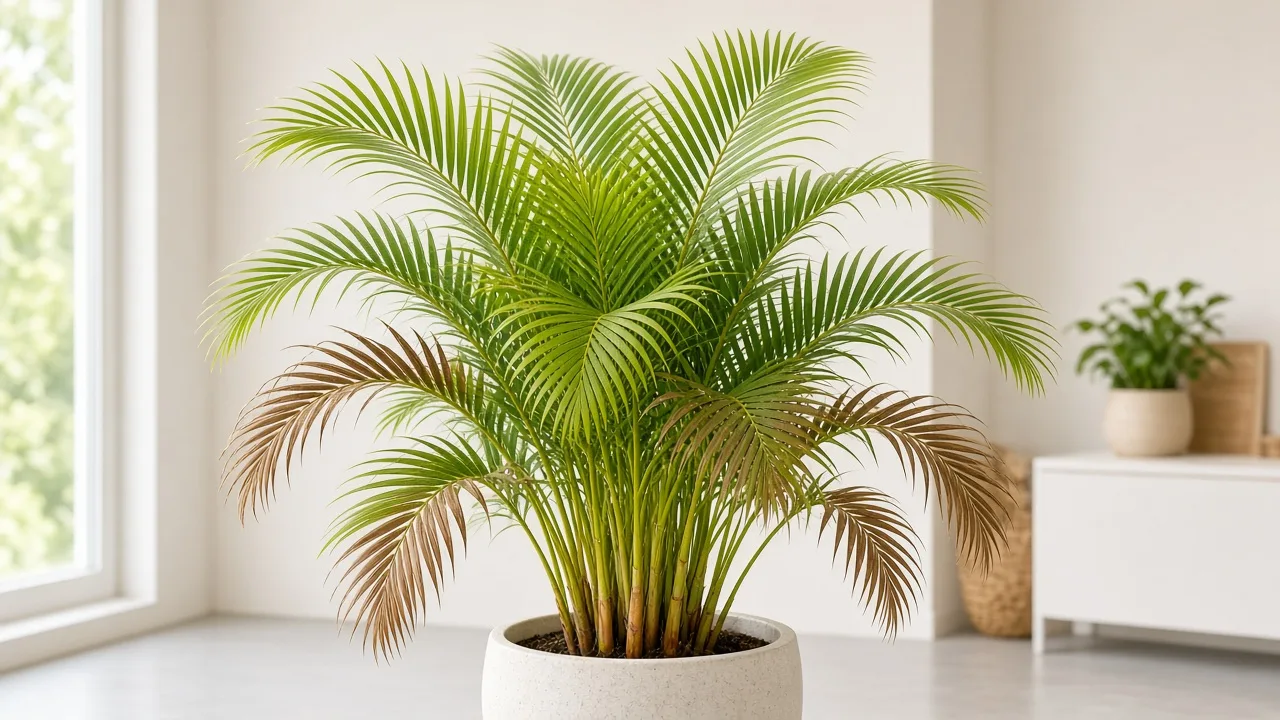
Brown Leaves on Areca Palm: Causes, Checks & Fixes
This guide covers brown leaves on Areca Palm. See also the general Brown Leaves guide, watering, and light pages for this plant.
Brown Leaves on Areca Palm: Causes, Checks & Fixes
Quick answer
Brown leaves on areca palm (Dypsis lutescens) mean dead or dying frond tissue—not a single diagnosis. Unlike small brown tips on leaflet margins, whole fronds or large brown sections usually mean stress has been building for weeks: chronic wet roots, severe drought, direct sun scorch, cold drafts, pest bronzing, or simply normal aging on the lowest stems.
First step: note which fronds browned and how fast, probe soil moisture at 1–2 inches, and check whether new spears at the crown stay green. If only the lowest one or two fronds turned fully brown over months while new growth above stays green, aging is the likely branch. If multiple fronds browned within two weeks on wet, heavy soil, suspect overwatering or root rot before you add fertilizer. Crispy brown fronds on a light pot with bone-dry mix point to underwatering. Brown patches on sun-facing leaflets point to light scorch—see the light guide.
For how broad brown patches differ from tip burn in general, see our brown leaves hub. On areca palm, the pattern usually shows up on arching pinnate fronds where water stress, root decline, or sun hits entire leaflet sections before the clump sheds them.
What brown leaves look like on areca palm
Areca palm grows as multiple yellow-green canes topped with arching pinnate fronds—each frond a central rachis lined with narrow leaflets. Browning shows up in distinct patterns:
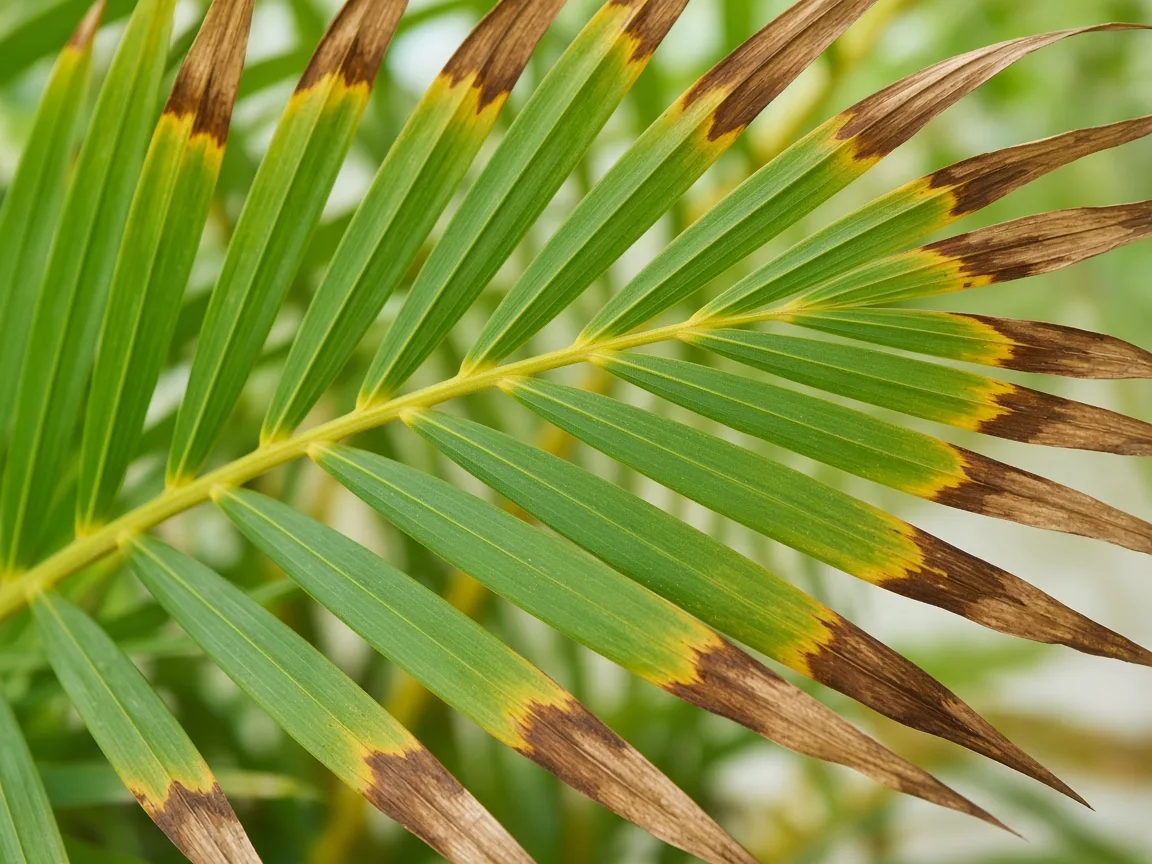
Brown Leaves symptoms on Areca Palm - compare with healthy tissue on the same plant.
- Normal lower-frond senescence - One to two lowest fronds turn fully brown from leaflet tips inward over weeks to months. Canes stay firm, soil dries on your normal schedule, and new spears above stay green. The clump sheds old solar panels as it produces fresh ones from the crown—brown fronds at the base are normal on an otherwise stable plant.
- Overwatering / root stress - Several lower and mid-canopy fronds brown or yellow-brown within days to two weeks, often with limp or soft texture while soil stays wet for many days. May pair with sour smell, algae on the mix surface, or softening at cane bases. Widespread brown leaves on cold, soggy compost is a classic overwatering signal on areca palms.
- Underwatering - Crispy brown or tan fronds on a lightweight pot with bone-dry top 1–2 inches of mix. Fronds may droop or fold between waterings. Damage often starts at leaflet edges and spreads inward on exposed fronds.
- Sun scorch - Bleached yellow patches or crispy brown patches on leaflets facing a window—not just the very tip. Areca palms want bright indirect light; direct sun scorches leaves on delicate arching fronds.
- Cold or draft damage - Brown or blackened frond sections after a cold snap, AC blast, or winter window chill. Dypsis lutescens dislikes temperatures below about 60°F (15°C); damage often hits outer fronds nearest glass or vents first.
- Spider mite bronzing - Fine stippling progressing to bronze or brown leaflet tissue on frond undersides, sometimes with delicate webbing at leaflet bases. Dry winter air encourages mites on indoor palms—see spider mites on areca palm when stippling is present.
- Salt / tap-water stress (advanced) - Browning that began as tip burn and spread down margins on newest fronds, sometimes with white crust on soil. Chronic fluoride and salt accumulation can progress beyond tips on sensitive palms.
Worry when browning hits most of the canopy, new spears brown before fully opening, or wet soil pairs with soft canes—not when a single old frond near the pot rim dies back on an otherwise stable clump.
Why areca palms brown whole fronds (not just tips)
Overwatering and root oxygen loss (most urgent pattern)
Areca palms prefer soil kept moist but not soggy during the growing season—a narrow band that is easy to overshoot indoors. When roots sit in cold, saturated mix for days, they lose oxygen. Overwatering deprives roots of air and the plant cannot move water to frond tips even when the soil feels wet.
On a multi-stem clump, lower fronds often brown first because they are oldest and furthest from active roots—but rapid spread up the canopy on heavy, wet pots is root stress, not aging. Winter watering on a cool schedule without reducing frequency is a common trigger; areca palms slow growth sharply when room temperatures drop.
Underwatering and drought stress on feather fronds
Each areca frond carries dozens of narrow leaflets along an arching rachis. When the root zone dries too far, the plant sacrifices outer leaflet tissue first—crispy brown sections that can engulf whole fronds if drought repeats. This differs from overwatering because the pot feels light, the top 1–2 inches are bone-dry, and canes usually stay firm.
Owners sometimes misread brown crispy fronds as “needs more water” when the real problem was an earlier drought cycle—or they add water to an already wet pot because brown tissue looks dry.
Sun scorch on arching canopy fronds
Areca palms evolved in tropical forest understory. Direct full sun indoors may scorch the foliage. South- or west-facing glass can bleach and brown the sun-exposed side of arching fronds while the shaded side stays green—a pattern that does not match root-zone failure.
Normal senescence on a clumping palm
Dypsis lutescens is a clustering palm that continuously produces new spears from the crown while the oldest lower fronds complete their life cycle. One or two fully brown fronds at the base over months, with green new spears above, is the plant recycling nutrients—not a care emergency.
Spider mites, cold, and less common triggers
Spider mites affect areca palms, especially in dry heated winter air. Stippling bronzes leaflet tissue before whole sections die. Cold drafts below the palm’s comfort zone brown fronds without wet soil. Severe magnesium deficiency can progress from yellow bands to brown necrosis on oldest fronds after months without feeding.
Reading brown patterns on a multi-stem clump
Areca palm diagnosis depends on where browning sits in the clump, not just that tissue is brown:
| Location in clump | Speed | Soil | Likely cause |
|---|---|---|---|
| Lowest 1–2 fronds only | Months | Normal dry-down | Normal senescence |
| Multiple lower + mid fronds | Days–2 weeks | Wet, heavy, sour smell | Overwatering / root stress |
| Outer fronds, crispy texture | Days | Bone-dry top 2 in. | Underwatering |
| Sun-facing leaflet patches | Days | Normal | Sun scorch |
| Fronds near window/vent | After cold night | Normal | Cold / draft damage |
| Stippled undersides, webbing | Weeks | Variable | Spider mites |
| Newest spears brown first | Days | Moist or wet | Crown stress, salts, or severe root failure |
This table is areca-specific because feather palms shed from the bottom up while pushing new spears centrally—unlike rosette succulents or single-stem ficuses where browning patterns follow different geometry.
Lookalike symptoms to rule out
Before repotting or switching water on every frond, rule out these common misreads:
| Pattern | Soil moisture | Placement / water | Likely cause | First direction |
|---|---|---|---|---|
| One–two lowest fronds fully brown | Normal | Stable room | Normal aging | Remove at petiole base |
| Many fronds brown/yellow, limp | Wet for days | Any | Overwatering / root stress | Dry down; inspect roots |
| Crispy brown, pot light, slight droop | Bone-dry top 2 in. | Away from vents | Underwatering | Deep soak; adjust rhythm |
| Bleached/brown patches sun-side | Normal | Direct window sun | Sun scorch | Filter light; shift back |
| Yellow lower fronds first, then brown | Wet | Cool room, winter water | Root decline | See root rot |
| Stippling, fine webbing | Variable | Dry winter air | Spider mites | Rinse; treat pests |
| Brown tips only, white crust | Moist | Municipal tap water | Salt / fluoride burn | See brown tips |
If whole fronds are brown and papery with firm canes on dry soil, drought usually fits. Wet soil with spreading brown-yellow fronds is a different emergency—probe roots that week.
How to confirm the cause
Work through this inspection in order:
- Which fronds browned and how fast - Single lowest frond over months = aging likely. Four or more fronds in two weeks = active stress.
- New spear color - Green unfolding spears above brown lower fronds support aging or resolved stress. Spears browning before fully opening = urgent crown or root problem.
- Soil moisture at 1–2 inches - Cool and damp deep down with a heavy pot = pause watering. Bone-dry with a light pot = drought. Heavy pot days after watering = slow dry-down or overwatering.
- Cane firmness - Soft bases with wet soil = root failure likely. Firm canes with one brown lower frond = low urgency.
- Light exposure - Direct sun on arching fronds? Brown patches on the window side support scorch.
- Air temperature and drafts - Fronds nearest cold glass or AC after a chill night? Cold damage fits without wet soil.
- Leaflet undersides - Stippling, webbing, or moving specks = spider mites before you assume watering error.
- Water and feed history - Months of tap water with margin burn progressing to section browning on new growth = salt stress. Heavy winter watering on cool soil = overwatering.
Confirmed aging shows one to two fully brown lowest fronds, firm canes, normal soil dry-down, and green new spears. Confirmed overwatering shows rapid multi-frond browning on wet, sour-smelling soil.
First fix for brown leaves on areca palm
Match the brown pattern to soil moisture and frond age before you change anything else.
That single diagnostic step prevents the two most common mistakes on areca palms: drowning a plant that already has wet roots because brown tissue “looks dry,” or ignoring saturated soil because only lower fronds browned first.
- If soil is wet for many days and multiple fronds browned quickly, stop scheduled watering, confirm drainage holes are open, and let the top 2 inches dry before the next soak—see overwatering for the full dry-down protocol.
- If soil is bone-dry and the pot is light with crispy brown fronds, water thoroughly once until runoff, then empty the saucer—then align with the watering guide.
- If only the lowest one or two fronds are fully brown over months with green new spears, remove spent fronds at the petiole base per the pruning guide—no emergency repot or fertilizer needed.
- If sun-facing patches browned on otherwise healthy fronds, shift to bright indirect light only.
Do not repot, fertilize, or treat for pests you have not confirmed on the same day you notice browning.
Step-by-step recovery
Normal senescence (one–two lowest fronds over months):
- Confirm new spears stay green and soil dries normally between waterings.
- Cut fully brown fronds at the petiole base with clean shears—do not pull.
- No other intervention required if the pattern stays limited to old lower fronds.
Overwatering / root stress (wet soil, rapid spread):
- Stop watering until the top 2 inches of mix feel dry to the touch.
- Confirm drainage holes are clear and empty any standing water in cachepots.
- If soil smells sour or canes soften, unpot and inspect roots the same week—trim mushy tissue and repot into fresh, well-draining palm mix only if roots are failing.
- Resume watering only when the top 1–2 inches dry—NC State’s moist-but-not-soggy target, not a rigid calendar.
Underwatering (dry mix, light pot, crispy fronds):
- Soak thoroughly until runoff appears, then empty the saucer.
- Check the top 1–2 inches before the next watering; winter often means less frequent soaks when growth slows.
- Watch for one to two new spears with intact green leaflets within two to three weeks.
Sun scorch:
- Move the clump 3–6 feet back from direct window rays or filter with a sheer curtain.
- Remove severely scorched leaflet sections only if mostly dead; new fronds should emerge unbleached in correct light.
Spider mites (stippling, bronzing, webbing):
- Rinse frond undersides with lukewarm water in the shower or with a gentle spray.
- Increase humidity and isolate the clump while you treat—see spider mites for full control steps.
Cold / draft damage:
- Move the pot off cold window glass and out of AC or heat vent paths.
- Hold steady room temperatures above about 65°F (18°C) while new spears recover.
How to remove brown fronds safely
Fully brown frond tissue does not re-green. For whole dead fronds, cut at the petiole base where the frond meets the cane—do not cut into green living tissue on partially damaged fronds until you know whether they can still photosynthesize. Cutting into green growth creates fresh wounds that brown again at the cut edge.
Recovery timeline
Recovery is measured by new growth—new spears and clean leaflet tissue, not by old brown fronds repairing themselves:
- Normal aging - Removing one spent lower frond is immediate cosmetic improvement; the next new spear confirms ongoing health within two to four weeks.
- Overwatering correction - Letting soil dry and stabilizing watering often stops spread within one to two weeks if roots are still firm. Root-damaged palms may need four to eight weeks before consecutive clean new spears.
- Underwatering - One deep soak and a corrected rhythm often halts spread within one to two watering cycles if roots are firm.
- Sun scorch - New fronds in filtered light typically show unbleached leaflets within two to three weeks after relocation.
- Spider mites - Stippling stops spreading within one to two weeks of rinsing and humidity improvement; full canopy recovery may take four to six weeks.
Signs of improvement: new spears with green leaflets, browning that does not climb the canopy, pot weight dropping on a normal schedule. Signs of worsening: sour smell from mix, soft cane bases, every new spear browning before opening, or soil that never dries—inspect roots that week.
What not to do
Do not water more because fronds look dry when soil is already wet—overwatering wet soil is a common mistake when leaves look tired and deepens root stress.
Do not remove every partially brown frond on day one unless pests or rot are confirmed—older fronds still feed the clump until fully senescent.
Do not fertilize a browning, stressed palm to force new fronds. Salt buildup from overfeeding worsens margin and section burn.
Do not repot into a larger pot unless roots are mushy, drainage has failed, or salt crust is severe. Extra soil volume slows drying and worsens wet-root stress.
Do not assume brown lower fronds always mean overwatering—one fully brown lowest frond on firm canes with green new growth is normal senescence on a clustering palm.
Do not ignore stippling on frond undersides while chasing watering fixes—spider mites bronze whole leaflet sections in dry winter air.
How to prevent brown leaves next time
Prevention comes down to moisture rhythm, light quality, stable temperatures, and reading the clump from the bottom up:
- Water on dryness, not calendar - Check the top 1–2 inches every time. Active growth may mean every 7–10 days; winter often means every 14–21 days—confirm with the watering guide.
- Moist but never soggy - Empty saucers after watering; avoid letting the clump sit in cold wet mix through winter.
- Bright indirect light - Filter direct sun; avoid dark corners that weaken new spears.
- Stable warmth - Keep room temperatures above about 65°F (18°C); protect from cold window glass and AC drafts.
- Humidity band - Target roughly 50–60% at canopy height in heated rooms—see low humidity when dry air is a factor.
- Clean water when tips and margins burn - Rainwater or filtered water if new growth repeatedly shows edge damage before whole sections brown.
- Pest watch in winter - Check frond undersides monthly when indoor air is dry; mites strike before you notice widespread bronzing.
- Remove spent lower fronds promptly - Keeps airflow around the cane bases and makes new problems easier to spot.
When to worry
Treat brown leaves as urgent when:
- Six or more fronds brown within two weeks across the canopy.
- Soil smells sour or cane bases feel soft while fronds brown.
- New spears brown before fully opening despite stable water and light—inspect roots the same week.
- The whole clump collapses despite moist soil—roots may be failing to absorb water. See wilting if the clump goes limp alongside browning.
One or two fully brown lowest fronds over months on firm canes with green new spears is cosmetic aging, not an emergency.
Areca palm care cross-check
If brown fronds keep appearing after you adjust watering, compare your routine to what Dypsis lutescens actually needs:
| Checkpoint | Healthy target | Brown-frond risk when wrong |
|---|---|---|
| Soil moisture | Moist but not soggy; top 1–2 in. dry before soak | Wet roots browning multiple fronds; drought crisping whole blades |
| Light | Bright indirect; no direct midday sun | Sun scorch patches on exposed leaflets |
| Temperature | 65–80°F (18–27°C); no cold glass contact | Draft and chill browning outer fronds |
| Canopy humidity | ~50–60%; act below ~40% | Dry winter air + spider mite bronzing |
| Frond age pattern | Oldest lowest fronds die first, slowly | Fast multi-frond browning = active stress, not aging |
| New spear health | Green unfolding spears | Brown spears = crown or root emergency |
Fix the condition that fails this check before repotting for size, adding fertilizer, or treating for pests you have not confirmed.
Related areca palm problems
- Areca palm overview - Baseline light, water, humidity, and frond diagnostics
- Brown tips - Margin burn before whole-frond browning
- Yellow leaves - Early stress signal before tissue dies
- Overwatering - Wet soil, rapid frond decline
- Underwatering - Dry mix and crispy brown fronds
- Root rot - Soft roots behind widespread browning
- Spider mites - Stippling and bronzing on frond undersides
- Areca palm pruning - Removing spent brown fronds safely
When to use this page vs other Areca Palm guides
- Brown tips on Areca Palm - Use when only leaflet margins are crispy, not whole fronds.
- Yellow leaves on Areca Palm - Use when fronds are yellowing but not yet fully brown.
- Areca Palm problems hub - Browse all common issues on this species.
- Overwatering on Areca Palm - Use when wet soil and rapid multi-frond decline are the main branch.
- Underwatering on Areca Palm - Use when drought and a light pot are the main branch.