Scale Insects on Areca Palm: Cane-Stem Checks & Fixes
Quick answer
Scale insects on Areca Palm look like flat tan or brown disks glued to yellow-green cane stems and frond rachises—often with sticky honeydew on arching leaflets below. First step: move the clump away from other plants and scrape every visible bump with a cotton swab dipped in 70% isopropyl alcohol.
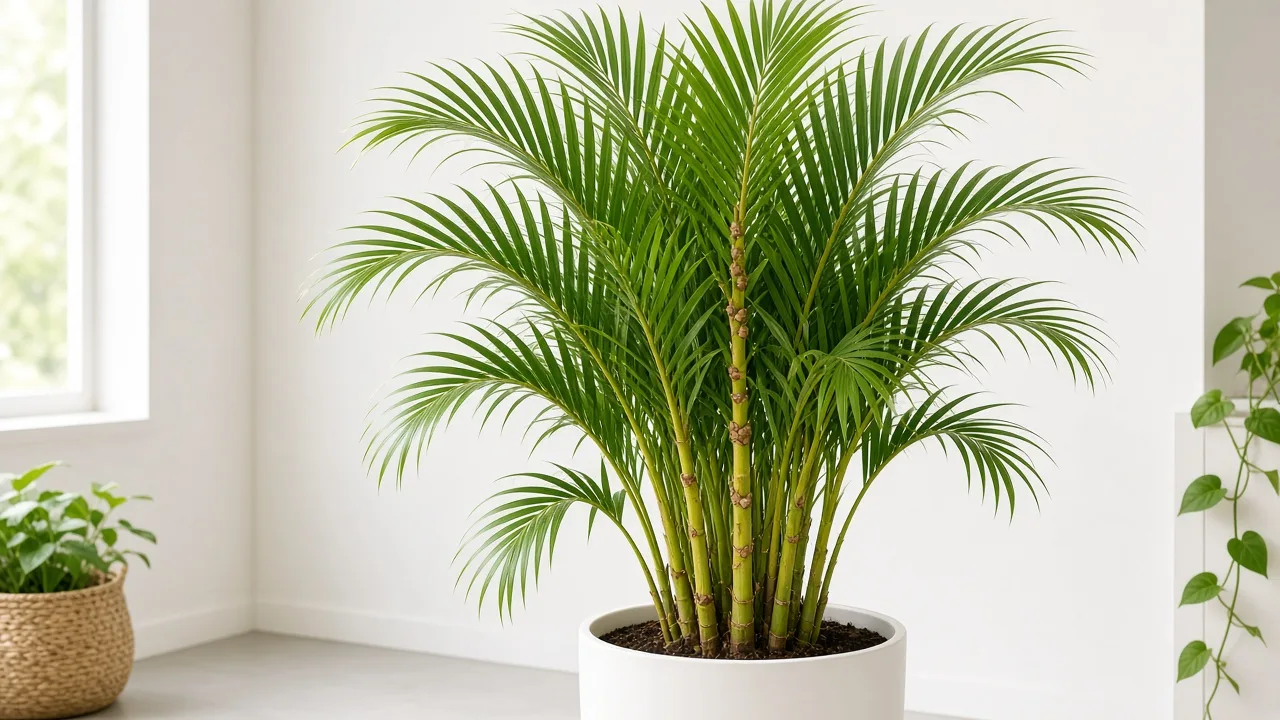
Scale Insects on Areca Palm: Causes, Checks & Fixes
This guide covers scale insects on Areca Palm. See also the general Scale Insects guide, watering, and light pages for this plant.
Scale Insects on Areca Palm: Causes, Checks & Fixes
Quick answer
Scale insects on Areca Palm (Dypsis lutescens) are small, immobile sap feeders protected by a waxy or shell-like cover that look like flat tan or brown bumps glued to yellow-green cane stems, frond rachises, and petiole bases. They pierce tissue, drain sap, and—on soft scale species—leave sticky honeydew that can feed sooty mold on the arching leaflets below.
For how scale life cycles work indoors in general, see our scale insects guide. On Areca Palm, the practical pattern is firm disks on bamboo-like cane stems and along pinnate rachises in a multi-cane clump, sticky shine on upper arching leaflets, and colonies that hide on inner stems a single outer frond check misses.
First step: move the clump away from other houseplants and scrape every visible bump with a cotton swab dipped in 70% isopropyl alcohol—then re-inspect every cane in three days before spraying anything.
When to use this page vs other Areca Palm guides
This page is the pest-first entry for immobile tan or brown bumps on cane stems and rachises.
| Pattern | Read next |
|---|---|
| White cottony clusters in petiole axils | Mealybugs |
| Fine stippling and webbing on lower fronds | Spider mites |
| Soft pear-shaped insects on unfolding spears | Aphids |
| Tiny flying white insects when disturbed | Whiteflies |
| Distorted new leaves without confirmed insects | Distorted leaves |
| Soft crown at soil line, no bumps above | Root rot or overwatering |
What scale insects look like on Areca Palm
Scale insects are protected by a shell-like waxy covering that makes adults essentially immobile once they settle. On Areca Palm they are easy to mistake for normal stem texture or dried sap until colonies build:
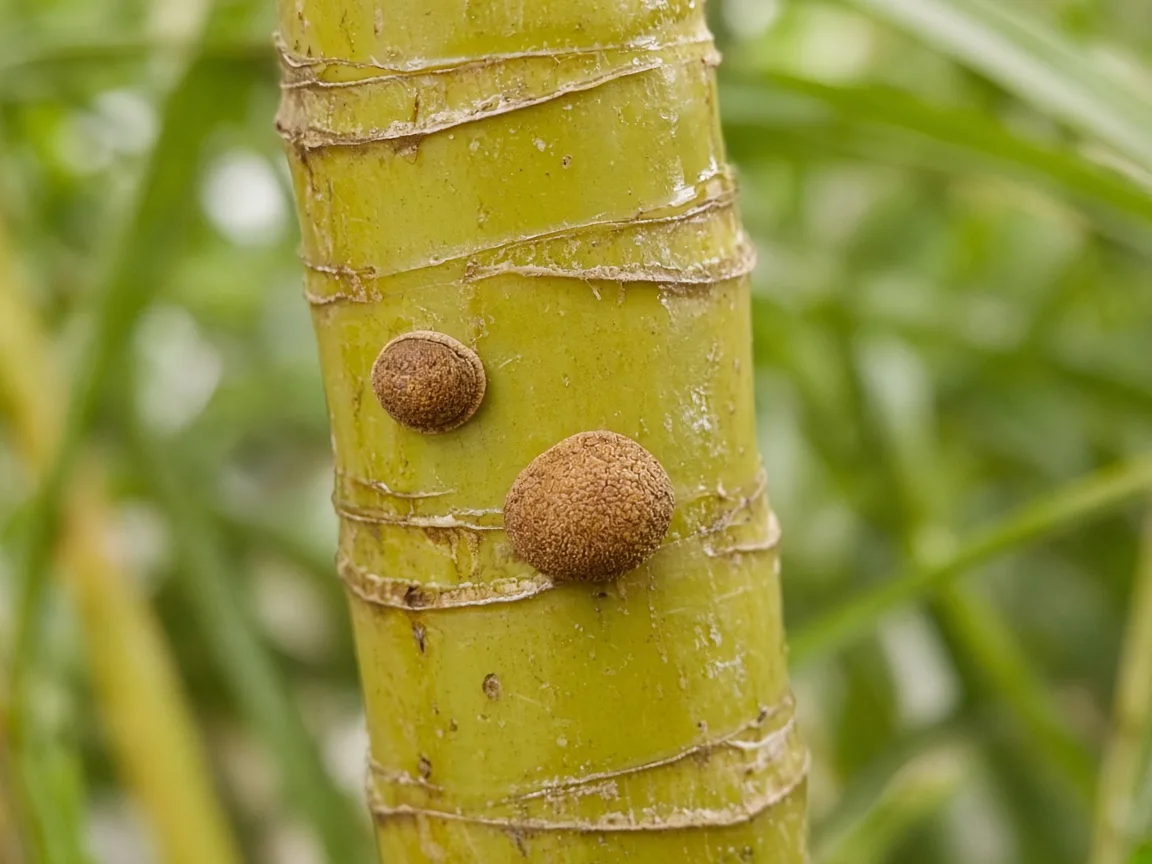
Flat tan scale shells on a cane stem face—compare with smooth yellow-green tissue on the same stem below.
- Flat or dome-shaped tan, brown, or bark-colored bumps on cane stems, frond rachises, petiole bases, and branch forks between canes
- Disks that do not wipe away with a dry cloth—unlike mineral dust on upper leaflets
- Sticky shine on arching leaflets below — Honeydew drips from scale feeding on stems and rachises above
- Black sooty coating on lower fronds — Fungus growing on dried honeydew, not leaflet rot
- Ant trails on the pot rim or floor — Ants harvest honeydew and protect scale colonies from natural enemies
- Yellowing or dropped leaflets on fronds with heavy feeding while canes stay firm
- Pale crawlers before shells harden — Mobile nymphs are tiny and orangish until they settle and grow armor
Healthy Areca fronds are arching, yellow-green, and pinnate with many narrow leaflets on each rachis in a clumping multi-stem habit. A few older lower fronds yellowing naturally is less urgent than fresh tan disks at every petiole base on upper canes.
Where scale hides on multi-cane stems and rachises
Dypsis lutescens grows as a clump of cane-like stems with radiating frond fans at each top. Scale follows the protected surfaces a room-wide glance misses:
Scale often concentrates in somewhat protected areas such as branch crotches, stem joints, and along leaf petioles. On Areca Palm, the equivalent hot zones are:
- Smooth cane stem faces — Between the ring scars where old fronds dropped; bumps blend with yellow-green bark
- Petiole bases — Where each arching frond meets its cane
- Frond rachises — The central spine beneath overlapping leaflets, especially on new growth
- Inner canes in the clump — Stems hidden behind outer arching fronds
- Crown spears and unfolding fronds — Soft tissue on the newest growth before leaflets fully expand
- Pot rim and bench surfaces — Crawlers travel slowly between nearby palms on the same shelf
This cane-and-rachis inspection pattern is plant-specific. A rubber plant guide tells you to search broad leaf undersides; on Areca Palm you are tracing every smooth stem face in a multi-cane clump with a swab or hand lens.
Why Areca Palm gets scale insects
Scale insects are common sap-sucking pests on houseplants that arrive on nursery stock, shared benches, or nearby infested specimens. NC State Extension lists scale among common insect problems on Chrysalidocarpus lutescens. What makes Areca Palm vulnerable is its geometry and clumping habit, not weak culture alone.
Cane stems hide armored shells. The same bamboo-like stems that give Areca its common name create flat feeding sites a frond rinse misses. Adult scales are relatively protected from contact sprays by their waxy covering, so disks on stem faces survive one casual wipe.
Multiple canes multiply inspection gaps. One infested inner stem can feed honeydew onto outer arching leaflets while the owner only checks visible frond tips during watering.
Palms host several scale species indoors. Brown soft scale and black scale list palms among their hosts; oleander scale also affects palms and dracaena in glasshouse settings. Soft scales excrete honeydew; armored scales do not—sticky leaflets below a cane strongly suggest soft scale or heavy honeydew producers.
Ant protection keeps colonies rebounding. Ants on pot rims defend honeydew sources on upper canes, blocking lady beetles and parasitic wasps that would otherwise control numbers.
Indoor stability favors overlapping generations. Where all life stages persist year-round on houseplants, populations can build without outdoor biological control.
Crowded plant shelves, dusty leaflets across dozens of narrow leaflets per frond, and warm stagnant air near a heat vent make weekly scouting harder. A palm recently moved or repotted may shed lower fronds from stress—that drop does not mean scale caused the problem, but the plant has less reserve while pests multiply on inner canes. Overwatering and yellow leaves from cultural stress can overlap visually with pest damage; confirm insects before treating.
How to confirm the cause
Work through these checks before treating:
- Scrape test — Pry a bump with a toothpick or alcohol swab. Scale should flake off as a firm dome; mealybugs smear pink beneath cottony wax
- Cane-and-rachis focus — Disks sit on stem faces and rachises, not evenly across every smooth upper leaflet
- No cottony wax — White tufts that smear pink when dabbed point to mealybugs, not scale
- No webbing — Fine silk with stippling on lower fronds points to spider mites, not scale
- Honeydew and ants — Sticky shine with ant trails supports sap feeders; wrinkled firm cane without stickiness fits underwatering
- 10× lens on petiole bases — Immobile domes versus soft pear-shaped aphids on new spear tips
- All canes in the clump — Inspect every stem, not only the outermost arching frond
- Crown firmness — Press the base of each cane. Firm wood with appropriate moisture suggests a foliage pest. Soft crown with sour soil is rot—see root rot, not scale alone
Scale vs. mealybug vs. mite decision table
| What you see | Likely cause | How to tell apart on Areca | Urgency |
|---|---|---|---|
| Hard tan or brown bumps on cane stems | Scale | Immobile shells; scraping lifts a disk; no pink smear | Treat within days |
| White cottony clusters in petiole axils | Mealybugs | Pink crush on alcohol swab; wax filaments | Treat this week |
| Fine stippling with webbing on lower fronds | Spider mites | Paper tap test; dry winter air; no hard shells | Treat within days |
| Even white crust on upper leaflet faces | Mineral deposits or dust | Flat, dry, not on stems; no honeydew or ants | Not pests |
| Lower frond yellowing only, firm canes, no insects | Cultural stress | Soggy soil or draft; see yellow leaves | Fix culture, not pesticides |
First fix for Areca Palm
Move the infested clump away from other houseplants and scrape every visible bump with a cotton swab dipped in 70% isopropyl alcohol.
Work cane by cane from soil line to crown. Adult scales and egg masses can be removed when seen, and alcohol dissolves the waxy cover on small houseplant colonies better than a dry cloth. Target stem faces, petiole bases, and rachises where disks are confirmed—do not spray the whole plant on day one.
Do not shower-rinse as the first step the way you would for spider mites or mealybugs. Scale shells stay glued to stems through a rinse; manual removal comes first. Do not fertilize a pest-hit palm hoping to push replacement growth. Do not repot on day one unless you also have root rot or fungus gnat larvae in soggy soil.
Areca Palm is listed as non-toxic to cats and dogs by the ASPCA, which makes scrape-first control safer in pet-aware homes—but still ventilate during alcohol treatment and keep pets away from wet residues if you later need sprays.
Step-by-step recovery
After the initial isolation and alcohol scrape:
- Re-inspect every cane in three days — Crawlers are mobile first instar nymphs that settle and grow new shells; catch them before armor hardens
- Repeat alcohol scrapes weekly for at least three to four weeks on confirmed bumps
- Shower-rinse frond undersides only after manual removal, tilting the pot so water runs through fronds and away from the crown. Let foliage dry in bright indirect light—not direct south-window sun—before the next treatment
- Apply insecticidal soap or horticultural oil if colonies persist after several scrape passes. Oils and soaps work best when crawlers are active and must contact the insect—cover rachises and stem faces thoroughly
- Spot-test soap or oil on one frond cluster first — Wait 48 hours and check for leaflet spotting before treating the whole palm
- Repeat labeled sprays every five to seven days through at least one full crawler generation; one pass rarely clears scale on dense palms
- Wipe sooty mold off arching leaflets with plain water once honeydew production stops
- Manage ants on pot rims or nearby surfaces if they return to protect colonies
- Hold fertilizer until new spears look clean and firm for two weeks — Resume at half strength during active growth per the fertilizer guide
Keep the plant isolated until you see no new bumps for at least two weeks after the last treatment.
Recovery timeline
Manual scrape and alcohol dabs show results within one to two weeks when colonies are moderate and confined to one or two canes. A full soap or oil course often takes three to four weeks with weekly repeats because crawlers hide in tight crevices and new generations hatch on a rolling schedule.
Honeydew dries up within days once feeding stops; sooty mold stops spreading and can be wiped away over one to three weeks. Mildly yellowed leaflets on a damaged frond often stay blemished—the next spear opening cleanly is the recovery signal worth watching. Judge success by firm upright canes and falling bump counts, not by restoring every older arching frond to perfection.
Lookalike symptoms to rule out
Mealybugs form white cottony clusters in petiole axils that crush pink—not hard immobile disks on cane stems. See the mealybugs guide if wax filaments appear without firm shells.
Spider mites cause fine stippling and webbing on lower frond undersides in dry winter air—not tan bumps on stems. See the spider mites guide if the paper tap test shows moving specks.
Mineral deposits and dust sit on upper leaflet surfaces without clustering on cane stems, do not scrape off as domes, and do not produce fresh honeydew or ants.
Normal lower frond yellowing happens with overwatering, cold drafts below 50°F, or natural senescence. Without insects on cane stems, that pattern is cultural stress.
Mistakes to avoid
Do not return an isolated palm to the plant corner after a single scrape pass. Indoor scale populations rarely decline without repeated intervention across every cane.
Do not shower the crown repeatedly without letting the spear dry—standing moisture invites rot unrelated to scale. Cross-check root rot if crown tissue softens.
Do not use dish detergent instead of products labeled for plants—harsh soaps can spot palm leaflets.
Do not ignore ants while treating only the fronds above them.
Do not stack repotting, heavy pruning, and chemical treatment the same week on a palm already stressed from a recent move.
Do not assume sticky leaflets alone mean active scale—confirm live bumps on stems before broad spraying.
Do not keep treating a heavily infested clump indefinitely. When infestations are severe, consider discarding the plant before neighboring palms become infested.
How to prevent scale insects next time
Isolate new plants before placing them near existing collections and inspect cane stems and rachises weekly during quarantine.
Scout every cane in the clump every week through spring and summer when the palm pushes active growth. Wipe dusty leaflets occasionally so bumps are visible on yellow-green stems.
Quarantine any palm that summered outdoors before it rejoins indoor groupings.
Preserve beneficial predators when possible. Lady beetles, lacewings, and parasitic wasps reduce scale numbers if broad-spectrum sprays have not eliminated them.
Keep ants off plant tables and maintain bright indirect light with watering when the top 1–2 inches of soil are dry per the watering guide.
When to worry
Treat as urgent when scale crusts multiple cane stems, ants swarm daily, sooty mold blocks light on most arching leaflets, or new spears stop opening while bumps multiply at petiole bases within a week.
Lower urgency fits a handful of shells on one upper cane if you isolate and scrape immediately. Areca rarely dies from scale alone on an otherwise healthy clump—but heavy sustained feeding weakens growth and invites secondary mold.
Salvaging clean canes: When part of a multi-stem clump shows no bumps after careful inspection, isolate infested canes and treat them separately, or divide the clump at repot—potting only canes with clean stem faces. Wait until after two weekly treatment cycles before dividing so crawlers do not hitchhike on salvage stems.
Related Areca Palm guides
- Areca palm overview — Baseline light, water, humidity, and pest risk
- Mealybugs — Cottony wax in petiole axils, not hard stem disks
- Spider mites — Winter stippling and webbing without stem bumps
- Aphids — Soft-bodied clusters on unfolding spears
- Root rot — Crown softness after repeated shower treatments
- Overwatering — Lower frond yellowing without insects on canes
- Yellow leaves — Cultural stress patterns that mimic pest damage
- Watering areca palm — Moist-but-not-soggy rhythm during recovery
When to use this page vs other Areca Palm guides
- Areca Palm watering guide — Use for routine moisture checks before assuming scale is the main issue
- Areca Palm problems hub — Browse all common issues on this species
- Low humidity on Areca Palm — Different entry point when dry air stress overlaps with pest damage
- Slow growth on Areca Palm — Different entry point when the canopy stalls without confirmed insects
Related tool
Use the Pest Identifier Tool to narrow causes for scale insects on this plant before changing multiple variables at once.