Distorted Leaves on Areca Palm: Causes, Checks & Fixes
Quick answer
Distorted leaves on areca palm (*Dypsis lutescens*) usually show as twisted, puckered, or hook-shaped leaflets on the newest unfurling spear while older fronds may look normal. First step: inspect the softest crown spear on each cane with a magnifier and a paper tap test before repotting or feeding.
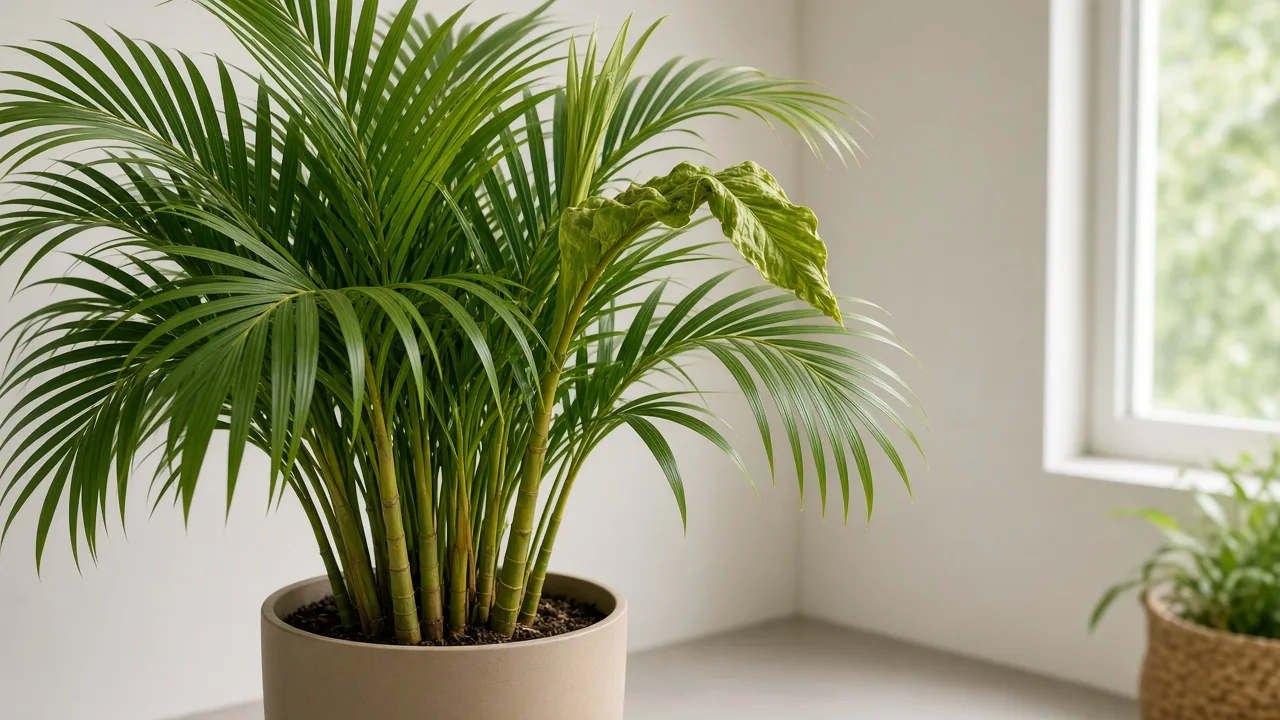
Distorted Leaves on Areca Palm: Causes, Checks & Fixes
This guide covers distorted leaves on Areca Palm. See also the general Distorted Leaves guide, watering, and light pages for this plant.
Distorted Leaves on Areca Palm: Causes, Checks & Fixes
Quick answer
Distorted leaves on areca palm (Dypsis lutescens—Butterfly Palm, Golden Cane Palm) are twisted, puckered, hook-shaped, or undersized leaflets on fronds still unfurling from cane spears—not the relaxed V-shaped pinnae rows healthy palms show along each arching rachis. This clustering palm carries 40–60 pairs of narrow leaflets per frond; distortion usually locks in while those pinnae are expanding, so the newest spear on each cane is your diagnostic zone.
For how expanding leaves warp on houseplants in general, see our distorted leaves guide. On areca palm, mature lower fronds can look perfect while only the crown spear crinkles—that pattern separates pest or calcium hits on new tissue from brown tips on old leaflets or potassium deficiency spotting on the oldest blades alone.
First step: part the center of the clump and inspect the softest unfurling spear on each cane with a 10× magnifier and a white paper tap test. Silver streaks, stippling, or moving specks point to thrips or spider mites. Hook-shaped spears with firm canes and no insects point to calcium deficiency or cold-draft damage during unfurling.
What distorted leaves look like on areca palm
Healthy areca fronds arch with pinnae spreading in opposite rows that form a distinct V along the gold-green rachis. Distortion breaks that symmetry on expanding tissue—most often the frond still rolled inside a bamboo-ringed cane spear.
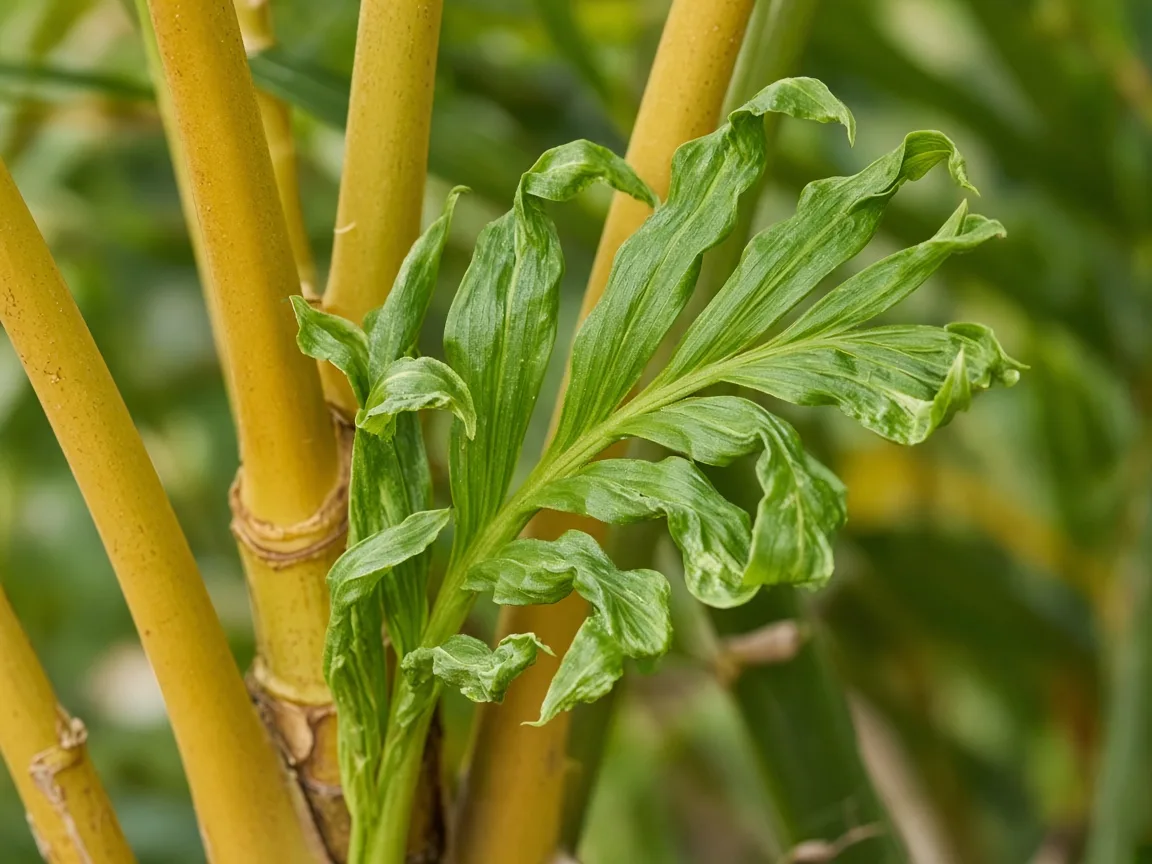
Hook-shaped and crinkled pinnae on an emerging areca palm spear—compare with flat mature leaflets on the same cane below.
Typical distortion patterns on Dypsis lutescens:
- Twisted, narrow, or hook-shaped leaflets on a frond mid-unfurl—not random warping on every mature blade at once
- Uneven pinnae spacing as the spear opens; some leaflets stay small or bent while neighbors on the same rachis look normal
- Crinkled or rippled leaflet tissue with silver scarring or black fecal specks when thrips feed on developing shoot tips
- Stippling plus fine webbing at frond bases when spider mites attack soft growth in warm dry rooms
- Margin burn or necrotic edges on the newest expanding frond while older fronds on the same cane stay relatively flat—classic overlap with calcium deficiency
- One-sided warp on the vent- or window-facing fronds when cold drafts or hot glass hit tissue during unfurling
Not true distortion:
- Inward leaflet roll on mature blades with a light dry pot—curling leaves from thirst or humidity
- Orange translucent spotting on oldest leaflets only—potassium deficiency
- Broad yellow bands on oldest frond margins—magnesium deficiency
- Limp whole-frond collapse with soggy mix—overwatering or root rot
Note where the warp appears: new spear tissue, one frond on one cane, or scattered mature leaflets. That locus narrows the cause faster than treating every symptom as the same problem.
Reading spear distortion on clumping golden cane palms
Areca palms grow as multi-stemmed clumps with bamboo-like ringed canes rising from one base. Each cane pushes feathery compound fronds from a central rolled spear before pinnae expand along the rachis. Distortion is diagnosed at that spear—not by glancing at the lowest yellowing frond in the canopy.
Walk the clump cane by cane:
| Spear observation | Likely cause on areca palm |
|---|---|
| Silver streaks, black specks, crinkled soft leaflets | Thrips on expanding tissue |
| Stippling, bronzing, webbing at leaflet bases | Spider mites |
| Hook-shaped spear, firm cane, no insects | Calcium transport or deficiency |
| Warp only on fronds beside a register or drafty door | Cold or heat during unfurl |
| Distorted spears on multiple canes, wet heavy pot | Root stress limiting uptake |
This inspection is areca-specific because each cane has its own growing point. A nursery pot with eight canes can show a clean spear on five stems and a twisted spear on three—pests or draft damage often cluster on the outer arching side while interior canes stay normal. A single-rosette houseplant does not split symptoms that way.
Do not force open a rolled spear. Palm spears tear easily; ripping the sheath to “see inside” creates permanent crinkles that look like pest damage afterward.
Mapping distortion across pinnate leaflet rows
Unlike broad-leaf houseplants where one blade warps as a unit, areca symptoms show on individual pinnae along a 3- to 6-foot rachis. A single arching frond can display half the leaflet rows flat and half twisted—the damaged section usually faced the driest air, the brightest glass, or the heaviest pest colony.
Compare leaflet angle and width on the same frond:
- Tips hook downward on new pinnae only while mid-frond leaflets already opened flat → spear-stage calcium or thrips scarring
- Random puckered mature leaflets with honeydew → scale insects or mealybugs on older tissue, not classic spear distortion
- Uniform crinkle across every new spear in the clump → systemic uptake failure from overwatering, heavy feed without flush, or prolonged drought stress—not a single missed watering
Photograph the same spear weekly with a ruler beside the rachis. Progress is easier to judge when you can see whether the next pinnae row opens cleaner—not whether old twisted leaflets suddenly flatten.
Why areca palm gets distorted leaves
Thrips and spider mites on soft spear tissue
When thrips feed on developing tissues at the shoot tip, they can cause distorted growth. Areca palms are susceptible to spider mites along with scale and whiteflies. Both pests target the softest unfolding pinnae because cell walls are thin and sap is easy to reach. Damage scars tissue as it expands, so the frond hardens twisted even after insects are gone.
Indoor areca clumps near heating vents create the warm, dry microclimate mites favor, while thrips often ride in on new purchases and hide in spear seams where rinse water does not reach.
Calcium shortage or transport failure on new fronds
Calcium is not very mobile within the plant, so deficiency appears on young, actively growing spear tissue first. On areca palm that means hook-shaped new fronds, necrotic leaflet margins on the emerging blade, or stunted spears while lower fronds look fine. UF/IFAS notes distinct nutrient patterns on container Dypsis lutescens—calcium and transport issues hit the newest frond, unlike potassium or magnesium on oldest leaflets.
Moisture swings interrupt calcium movement even when minerals sit in the mix. Alternating bone-dry spells and heavy soaking is a common indoor trigger on moisture-loving clumps kept in the same pot for years.
Cold drafts and rapid temperature swings during unfurl
Areca palms evolved in moist Madagascar forest and dislike cold air on expanding spears. Winter doors, single-pane glass, and AC blast zones can freeze-etch or crinkle soft leaflet tissue during the few days a spear unfurls. Warp often appears on outer fronds beside the exposure while interior canes stay clean—similar placement logic to low humidity curl but with crinkle rather than inward roll.
Root stress limiting uptake to the crown
Chronic wet soil damages roots until the spear—furthest from functioning uptake—shows twist or stunting even though mix feels moist. This overlaps root rot and looks like deficiency or pests until you slide the root ball out and find firm white roots versus brown mush. Do not fertilize or spray until you know roots can support new fronds.
Mechanical damage during unfurl
Tight placement beside walls, shelves, or other plants can catch a spear as it arches outward. One frond opens with a permanent crease or bent rachis while the rest of the clump stays normal. No insects, no pattern on other canes, and a visible scrape on the rachis sheath point to physical damage—not disease.
How to confirm the cause
Work through these checks in order. Stop when one diagnosis fits clearly.
- Locate the youngest spear on each cane. Distortion confined to expanding spears points to pests, calcium, drafts, or uptake failure—not old-leaf aging.
- Paper tap test and 10× magnification. Hold white paper under a soft leaflet and tap the frond. Moving specks confirm mites; black fecal grains and silver scarring confirm thrips.
- Soil at 1–2 inches and pot weight. Heavy wet pot with twisted new spears on multiple canes suggests root stress per areca palm watering. Light dry pot with crinkled outer fronds only may be underwatering or dry air—not pests.
- Trace vents, doors, and glass. Side-biased warp on outer fronds with firm canes and no insects implicates placement before supplements.
- Review feed and water history. Months without fertilizer in a bright actively growing clump, or filtered water without micronutrients, supports calcium transport failure when spears hook without pest signs.
Cane-by-cane inspection on multi-stem nursery clumps
Retail areca palms often pack six to twelve canes in one pot. Pests and draft damage frequently start on the outer arching stems where fronds brush glass or registers. Inspect every cane spear—not only the tallest frond visible from across the room.
Label canes temporarily with tape if needed: “twisted spear,” “clean spear,” “brown base.” Recovery tracking per cane prevents you from declaring success because one stem improved while others still push distorted spears.
First fix for distorted leaves on areca palm
Confirm insects before any spray
If magnification or the tap test shows thrips or mites, isolate the clump and rinse frond undersides and spear seams with lukewarm water in the sink or shower. That single step knocks down mobile pests without stacking chemicals on day one. Wait 48 hours, retest, then follow thrips or spider mites schedules only if insects return.
Do not apply horticultural oil or soap to a drought-stressed palm before soil moisture matches watering guidance.
Stabilize even moisture before feeding twisted spears
When spears hook without insects, match watering to top-1-to-2-inch dry-down and move the pot off draft paths for seven to ten days. Even substrate moisture supports calcium movement better than alternating flood and drought.
If the next spear still emerges distorted on firm canes after two weeks of stable care, apply one half-strength complete palm fertilizer with micronutrients during active growth—details on the calcium deficiency page and fertilizer guide. That is one measured feed, not weekly doubling.
Relocate before repotting
Side-biased warp beside a register or window often stabilizes after moving the pot 1–2 metres off the exposure while keeping bright indirect light. Repotting a clump with twisted spears on the same week you change watering and add feed stacks too many variables on a slow palm.
Reserve unpotting for sour wet mix, soft cane bases, or spears collapsing on multiple stems—see root rot before cutting roots.
Recovery timeline and what to expect
Distorted pinnae that already hardened rarely straighten fully. Success means:
- The next spear unfurls with even V-shaped leaflet rows
- Distortion stops spreading to additional canes
- New rachis length matches prior healthy fronds on the same stem
| Severity | Typical timeline after correct fix |
|---|---|
| Draft or placement warp on one outer frond | 1–2 spears (4–8 weeks) for clean new growth |
| Thrips or mite scarring on soft spears | 2–3 treatment cycles (5–7 days apart) before spears stay clean |
| Calcium transport after moisture fix | 4–8 weeks for visibly straighter spear on firm canes |
| Root stress with multiple twisted spears | 6–12 weeks; depends on firm root mass remaining |
Judge the clump by new crown spears, not by older blades you can prune later once the plant stabilizes.
Lookalike symptoms on areca palm
| What you see | Clue | Likely cause | Where to go next |
|---|---|---|---|
| Hook-shaped newest spear, no insects | Firm canes, uneven watering history | Calcium / transport | Calcium deficiency |
| Silver scars on soft spear leaflets | Black specks, tap-test insects | Thrips | Thrips |
| Crinkle + stippling at leaflet bases | Dry warm room, webbing | Spider mites | Spider mites |
| Inward roll on mature pinnae, dry pot | Light pot weight | Thirst / humidity | Curling leaves |
| Twist on multiple spears, soggy mix | Sour smell, soft base | Root failure | Root rot |
| One creased frond, rest normal | Rub mark on rachis | Mechanical damage | This page—adjust placement |
Mistakes to avoid
- Spraying pesticides before confirming pests on a palm that only needs stable moisture or calcium transport.
- Feeding a wet, stressed clump because new spears look stunted—roots must be firm first.
- Opening rolled spears by hand to inspect inside; torn spear tissue stays distorted permanently.
- Treating warp on old lower fronds while ignoring whether new spears are still twisting week over week.
- Repotting, pruning, and fertilizing the same week you change watering and start miticides—change one variable at a time on slow-declining palms.
How to prevent distorted leaves next time
- Inspect every cane spear monthly during heating season; rinse undersides before mites scar unfolding pinnae.
- Keep humidity near 50–60% and place clumps away from registers—see areca palm overview for placement targets.
- Water when the top 1–2 inches dry evenly; avoid drought-to-flood cycles that block calcium uptake.
- Quarantine new palms two weeks; thrips often arrive on clean-looking spears.
- Feed lightly with complete micronutrients during spring and summer if you use filtered water and actively produce fronds.
When to use this page vs other areca palm guides
Use this page when new fronds or spear leaflets emerge twisted, hook-shaped, or unevenly spaced and you need to separate pests, calcium transport, drafts, and root stress on a clumping palm.
| Symptom focus | Better page |
|---|---|
| Inward leaflet roll without spear crinkle | Curling leaves |
| Hook-shaped spear, margin burn, no insects | Calcium deficiency |
| Silver streaks, black frass on soft growth | Thrips |
| Stippling and webbing on leaflet undersides | Spider mites |
| Whole frond yellow on wet soil | Overwatering |
Browse all issues on the areca palm problems hub.
Related tool
Use the Plant Problem Diagnosis Tool to narrow causes for distorted leaves on this clumping palm before you stack repotting, feeding, and pesticide on the same week.
Related Areca Palm guides
- Areca palm overview — light, humidity, and seasonal watering baselines for Dypsis lutescens.
- Watering — dry-down checks that support even calcium uptake.
- Light — bright indirect placement without hot-glass warp during unfurl.
- Calcium deficiency — when only the newest spear hooks while older fronds look normal.
- Thrips — silver-scarred soft spears with confirmed insects.