Thrips on Areca Palm: Causes, Checks & Fixes
Quick answer
Thrips on areca palm (*Dypsis lutescens*) rasp tender leaflet tissue and scar unfurling crown spears with silvery streaks, black frass specks, and rippled pinnate rows—often after hitchhiking on new plants or cut flowers. First step: isolate the clump and rinse every frond underside along each yellow-green rachis before applying insecticidal soap.
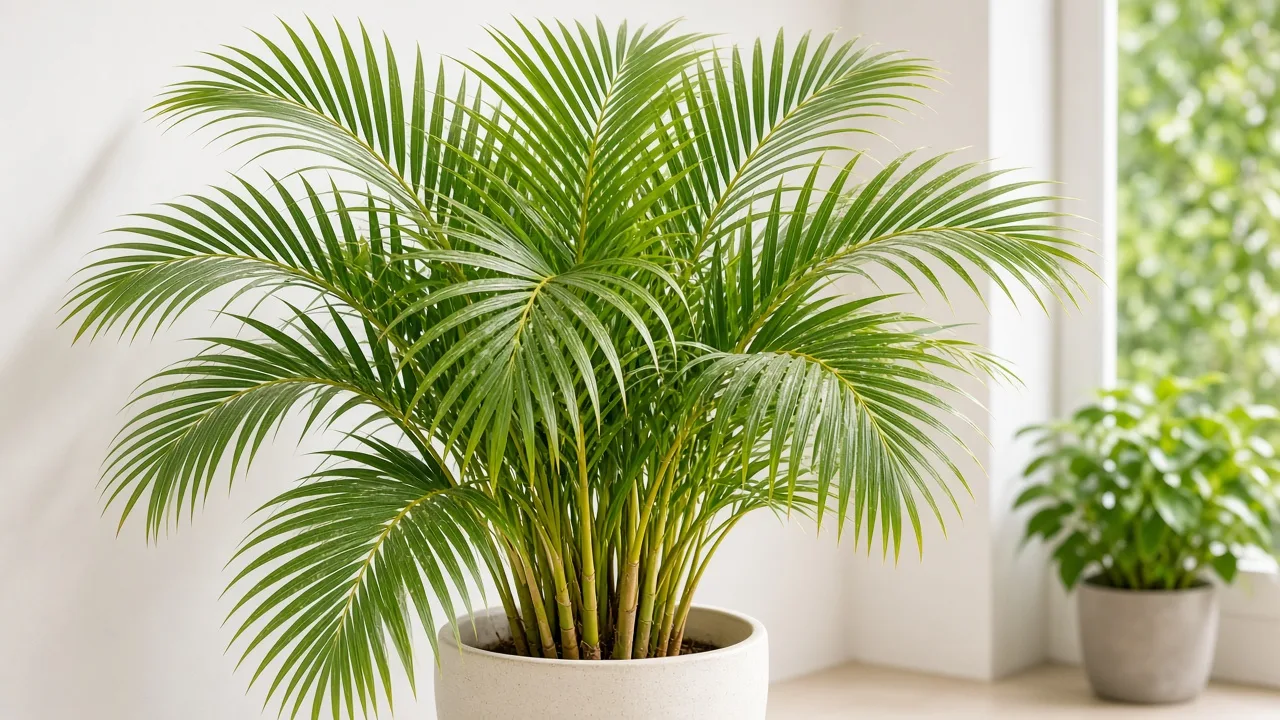
Thrips on Areca Palm: Causes, Checks & Fixes
This guide covers thrips on Areca Palm. See also the general Thrips guide, watering, and light pages for this plant.
Thrips on Areca Palm: Causes, Checks & Fixes
Quick answer
Thrips on areca palm (Dypsis lutescens) rasp the surface of pinnate fronds with 40–60 narrow leaflets per side and leave silvery streaks, black frass specks, and rippled new growth as crown spears unfurl. Indoor outbreaks usually trace to new plants, cut flowers, open windows, or shared shelves—not chronic palm weakness.
For general thrips biology and control options, see our thrips guide. On areca palm, damage concentrates on tender leaflets at the tip of the newest crown spear and in the overlapping rows where dozens of narrow pinnae hide along each yellow-green rachis—places a quick glance from across the room never catches.
First step: isolate the clump and rinse every frond underside along each arching rachis in lukewarm water before applying any spray.
When to use this page vs other Areca Palm guides
| Pattern | Read next |
|---|---|
| Silvery streaks, black frass specks, distorted unfurling crown spears | This page |
| Fine yellow stippling and silk webbing at frond bases | Spider mites |
| Inward-folded leaflets without silver scarring | Curling leaves |
| White cottony clusters in cane axils | Mealybugs |
| Rippled leaflets without silver streaks or insects | Distorted leaves |
| Whole fronds yellow with soft cane bases, wet soil | Overwatering / root rot |
What thrips look like on areca palm
Thrips are small, slender insects—generally less than one-eighth inch long—with rasping-sucking mouthparts. UF/IFAS notes that thrips feeding causes leaves to dry out and develop a scarred or silver-flecked appearance, with small brownish specks of excrement on undersides.
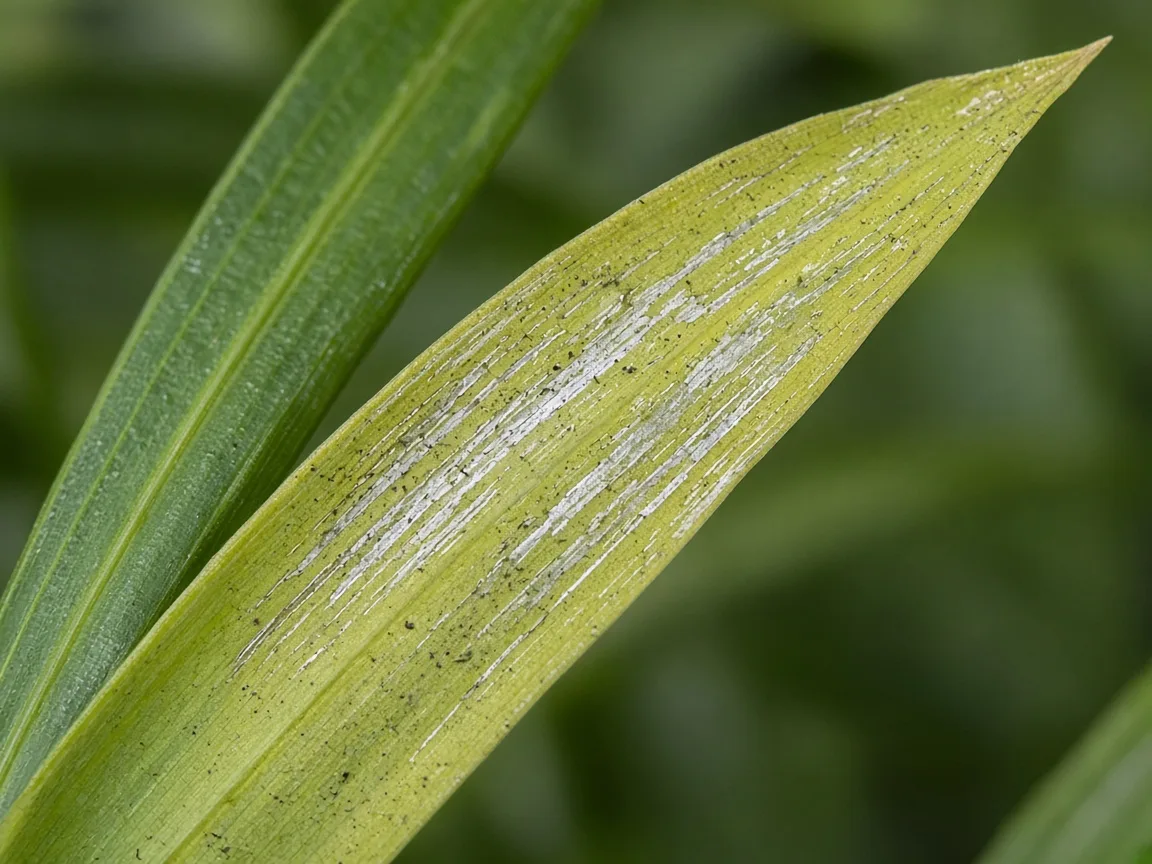
Silvery rasp marks and tiny black frass specks on a narrow areca leaflet—compare with an intact neighbor leaflet on the same pinnate frond.
Early feeding on pinnate leaflets:
- Pale silver or bronze streaks across individual narrow leaflets in the V-shaped rows along each rachis
- Tiny black dots (frass) scattered near streaked zones on leaflet backs
- Slight dulling of the yellow-green sheen on affected leaflet pairs
- Damage often starts on one outer arching frond before spreading toward the crown
Established infestation on a multi-cane clump:
- Rippled, narrow, or scarred leaflets at the tip of the newest crown spear
- Silvery patches that look like dust until viewed in angled side light
- Distorted unfurling leaflets that never open flat along the rachis
- Slender yellow, brown, or black insects on a white-paper shake test
What areca thrips damage is not:
- Fine yellow stippling with silk webbing at frond bases—that pattern fits spider mites, not thrips
- Crispy brown tips only at leaflet margins without upper-surface silver streaks—brown tips from tap water or low humidity
- Whole fronds turning yellow with soft cane bases while soil stays wet—overwatering and root rot, not sap feeders
- White cottony wax clusters—mealybugs
Damaged leaflets stay scarred permanently. New crown spears pushing clean V-shaped leaflet rows after treatment are your recovery signal.
Reading silvery scarring on pinnate leaflet rows
Unlike broad single leaves on pothos or peace lilies, areca palm symptoms show on dozens of small leaflets per frond. Each leaflet can scar independently while the rachis stays firm. That is why one arching frond can look half healthy and half silver—the damaged section usually faces the driest air or holds the newest unfurling tissue thrips prefer.
Walk the canopy slowly and compare leaflet surface on the same frond:
| Leaflet appearance | What it often means on areca palm |
|---|---|
| Silver streaks on upper leaflet face, black dots on back | Thrips feeding—this page |
| Fine yellow dots on upper surface, webbing at frond base | Spider mites |
| Crispy margins only, no silver flecking | Brown tips or dry air |
| Twisted new spear leaflets with silver scarring | Thrips on soft crown growth |
| Uniform yellowing on lowest frond, firm canes | Normal aging—not thrips |
This table is areca-specific because pinnate architecture and clustered bamboo-like canes change how pest damage displays. A succulent might show one scarred rosette; an areca shows partial silver streaking across a 4-foot frond with forty leaflets still intact.
Why areca palm gets thrips
Areca palm is a clustering Madagascar palm with multiple yellow-green canes in one pot and arching pinnate fronds that want bright indirect light and high humidity. That resilience does not repel thrips—it can hide early damage because the clump keeps upright fronds while individual leaflets scar quietly.
Thrips prefer young leaves, buds, and tender growth—exactly where areca pushes new leaflet pairs from crown spears. Mature leaflets along lower fronds resist some feeding, but unfurling tissue at the crown is soft enough for thrips to rasp and distort before each pinna hardens.
Dense multi-cane structure creates hiding spots. Several canes in one nursery pot mean dozens of fronds overlapping at the crown. Thrips feed in sheltered axils between overlapping leaflets that a casual glance misses—exactly why NC State lists banded greenhouse thrips and greenhouse thrips among pests to watch on Chrysalidocarpus lutescens / Dypsis lutescens.
Warm, dry indoor air favors thrips, especially in winter when humidity drops below the 50–60% band this palm prefers and plants sit close together on shelves. UC IPM notes that most pest thrips feed while hidden in buds and shoot tips—on areca, that means crown spears and frond bases, not the middle of the room where you look first.
Thrips usually arrive on new plants, cut flowers, outdoor summer outings, or open windows during peak season. They are mobile and spread between pots on a shared shelf within days. Because areca grows at a moderate pace indoors, thrips scarring on a single new spear can make the whole clump look sick for months even after pests are gone.
Overwatering on areca palm does not attract thrips, but stressed plants with weak new spears show damage more visibly. Low light slows replacement of scarred foliage, so the plant looks damaged longer even after pests are controlled.
How to confirm the cause
Use a white-paper shake test: hold a suspect frond over white paper and tap the rachis sharply. Thrips fall as tiny moving specks. UF/IFAS suggests this method alongside visual inspection of young leaves and buds.
Work in this order:
- Newest crown spear — look for rippled, silvery, or narrow leaflets still unfurling along the rachis.
- Pinnate leaflet faces — scan for metallic streaks in angled light across narrow pinnae in each V-shaped row.
- Leaflet undersides — lift arching fronds and check for black frass specks near streaked areas along the rachis.
- White-paper shake — confirm live thrips on damaged fronds; wait ten seconds because specks dislodged from 40–60 leaflets per side may appear slowly.
- Cane firmness — press cane bases; firm yellow-green stems support a pest diagnosis, soft mushy tissue means rot.
- Neighboring plants — inspect anything recently purchased or placed nearby.
- Sticky traps — yellow traps near the pot catch adult thrips and monitor population trends.
Rule out lookalikes. Mineral dust or hard-water dried spots wipe off; thrips scarring is embedded in tissue. Spider mites leave fine webbing and yellow stippling without silvery streaks or frass specks. Mechanical scratches from moving the pot are linear and do not include black dots.
If streaks are present but no thrips appear on repeated shake tests, consider whether damage is old from a cleared infestation—monitor new crown spears for fresh scarring.
First fix for areca palm
Isolate the clump and rinse every frond underside along each arching rachis thoroughly in lukewarm water.
Move the areca away from other plants immediately. Thrips spread to nearby houseplants quickly, especially in warm rooms with shared air. In a sink or shower, support the pot so soil does not waterlog—wrap the pot in plastic if needed to keep mix from flooding. Spray forcefully from below, targeting the backs of all leaflets along each pinnate rachis where thrips shelter between overlapping pinnae.
This single step physically removes thrips and debris before any chemical treatment. Let fronds air-dry the same day in bright indirect light—not direct south-window sun. Do not repot, fertilize, or prune heavily on day one—those add stress without addressing the pest.
Do not soak cane bases trying to “wash thrips from soil.” Thrips primarily inhabit foliage, especially tender unfurling crown spears—not potting media.
Shower-rinse technique for a multi-frond clump
Large indoor areca palms fit awkwardly in sinks, but a shower or bathtub works well:
- Cover or lightly wrap the pot so mix does not wash out; a plastic bag around the root ball with cane bases exposed is enough for most pots.
- Tilt the clump so water runs down and through fronds, not pooling at the crown where cane bases meet.
- Spray undersides of every frond until water runs clear—start with lowest fronds and work up so runoff does not re-contaminate cleaned leaflets.
- Let fronds dry in bright indirect light, not direct south-window sun. Soaps and oils applied later can mark heat-stressed foliage that sits in hot window light while wet.
- Empty saucers after the pot returns to its stand; do not leave the crown area soaked overnight.
Step-by-step recovery
After the initial rinse:
- Repeat water rinses every five to seven days for at least three cycles. Thrips eggs hide inside plant tissue and hatch on staggered schedules; repeat applications are necessary.
- Apply insecticidal soap if live thrips persist after two thorough rinses. Spray leaflet undersides and unfurling crown tips until runoff—soaps only kill on contact. Use products labeled for thrips; do not mix homemade soap mixtures that can burn foliage.
- Treat neighboring plants on the same shelf or in the same room at the same time. Thrips reinfest from asymptomatic neighbors quickly in dry indoor collections.
- Place yellow sticky traps near the pot to monitor adult thrips and confirm populations are declining.
- Remove severely scarred fronds only if they are mostly dead tissue—trim with clean shears to reduce pest load and improve spray coverage. Leave green stippled leaflets; they still photosynthesize on this multi-cane clump.
- Hold fertilizer until new crown spears emerge clean and you finish the treatment cycle.
Horticultural oil can work on thrips but test one frond first—soaps and oils can injure foliage on water-stressed plants or above about 90°F. Never spray in direct hot sun through a window.
For severe persistent cases on valuable specimens, labeled spinosad products may be considered where indoor use is permitted—always read the label and re-entry intervals. UC IPM notes that pesticides alone rarely provide good control on thrips; combine spraying with rinsing and cultural fixes.
Recovery timeline
Silvery streaks on existing areca leaflets are permanent. Expect to judge success by new crown spears pushing clean V-shaped leaflet rows over three to six weeks after consistent treatment.
Light infestations may stop spreading within two weekly rinse cycles. Moderate cases commonly need four to six weeks. Heavy infestations on multiple plants can take two months of monitoring, especially if thrips re-enter from untreated neighbors or new purchases.
Because areca grows at a moderate pace indoors, one clean new spear with relaxed leaflet rows is meaningful progress—even when older scarred fronds remain visible for a full growing season.
What not to do
Do not ignore silvery streaks because the clump “looks fine” from across the room—damage on new crown spears persists for months on this palm.
Do not use household dish soap instead of labeled insecticidal soap; UF/IFAS warns against home soap mixtures that can burn leaves.
Do not increase watering to perk up scarred leaflets. Areca needs consistent moisture without waterlogging—soggy mix at the cane base adds root stress without killing thrips.
Do not apply broad-spectrum insecticides labeled only for aphids before confirming thrips—persistent pesticides can kill predators and leave thrips unchecked.
Do not stop after one good-looking week. A single missed egg batch restarts the outbreak when warm dry air returns.
Do not leave the crown soaked overnight after shower-rinsing a multi-cane clump. Water pooling where canes cluster can invite fungal problems without reliably killing thrips.
Do not apply soap or oil to heat-stressed fronds in direct south-window sun while wet.
How to prevent thrips on areca palm
Prevention targets the conditions that let thrips spread unnoticed on dense pinnate canopies:
- Quarantine new plants and cut flowers for two to three weeks before placing them beside your areca collection.
- Hold humidity near 50–60% at canopy height—not just at the pot rim. A small humidifier on a humidistat beats occasional misting; see low humidity on areca palm when winter air drops below about 40%.
- Inspect crown spears weekly during heating season, especially on clumps near windows or vents.
- Rinse or wipe frond undersides monthly on lower arching fronds where thrips hide between overlapping leaflets.
- Space pots so fronds do not touch; thrips walk across contact points overnight.
- Use yellow sticky traps near the pot as early warning during peak indoor pest season.
Regular crown checks fit naturally into the same routine as confirming whether the top 1–2 inches of mix have dried per the watering guide.
When to worry
Treat as urgent when:
- Silvery scarring spreads across multiple arching fronds or climbs toward new crown spears.
- New spears stay pale, small, and twisted while fresh streaks appear on older fronds.
- Thrips appear on several plants from the same shelf—isolate the whole group and treat every pot on the same schedule.
- Most fronds show heavy silver scarring within two weeks despite rinsing—escalate to labeled sprays after confirming technique.
Consider discarding a severely defoliated, low-value plant in a shared indoor collection—bag it before moving so thrips do not scatter during disposal. Most healthy areca clumps recover with consistent washing and repeated contact sprays if canes stay firm.
Monitor pet safety during treatment. Areca palm is non-toxic to cats and dogs per the ASPCA, but spray residue is not food. Keep treated plants off floors where animals chew dropped leaflets; ventilate during application. This is general information, not veterinary advice.
If scarring persists after three weekly treatments with confirmed technique, inspect again for spider mites or environmental burn before switching to stronger pesticides.
Areca palm care cross-check
Thrips and brown tips can both mar feathery fronds, but the patterns differ. Thrips leave silvery upper-surface streaks and black frass while soil moisture may be normal. Fluoride or dry-air burn affects margins and tips without silver flecking or moving specks on paper.
A firm multi-cane clump with silvery leaflets means pests, not root rot. Fix the thrips cycle first; only reassess watering if soil stays soggy after you stop rinsing fronds in the shower.
For species context, humidity targets, and light placement, see the areca palm overview and light guide.
Related areca palm problems
- Areca palm overview - Baseline light, water, humidity, and pest risk
- Spider mites - Stippling and webbing without silvery streaks
- Curling leaves - Inward leaflet fold from moisture stress or pests
- Distorted leaves - Rippling without silver scarring or frass
- Low humidity - Dry winter air that favors pests and tip burn
- Watering areca palm - Moist-but-not-soggy rhythm during recovery
When to use this page vs other Areca Palm guides
- Areca Palm watering guide - Use for routine moisture checks before assuming thrips is the main issue.
- Areca Palm problems hub - Browse all common issues on this species.
- Spider Mites on Areca Palm - Different entry point when stippling and webbing overlap with silver streaks.
- Curling Leaves on Areca Palm - Different entry point when inward leaflet curl appears without frass.