Calcium Deficiency on Areca Palm: Causes, Checks & Fixes
Quick answer
Calcium deficiency on areca palm shows as distorted, hook-shaped, or margin-burned new fronds emerging from cane spears while older lower fronds may look normal. First step: confirm damage is on the newest unfurling spear—not potassium or magnesium patterns on old leaflets alone—and match watering to even top-1-to-2-inch dry-down before feeding.
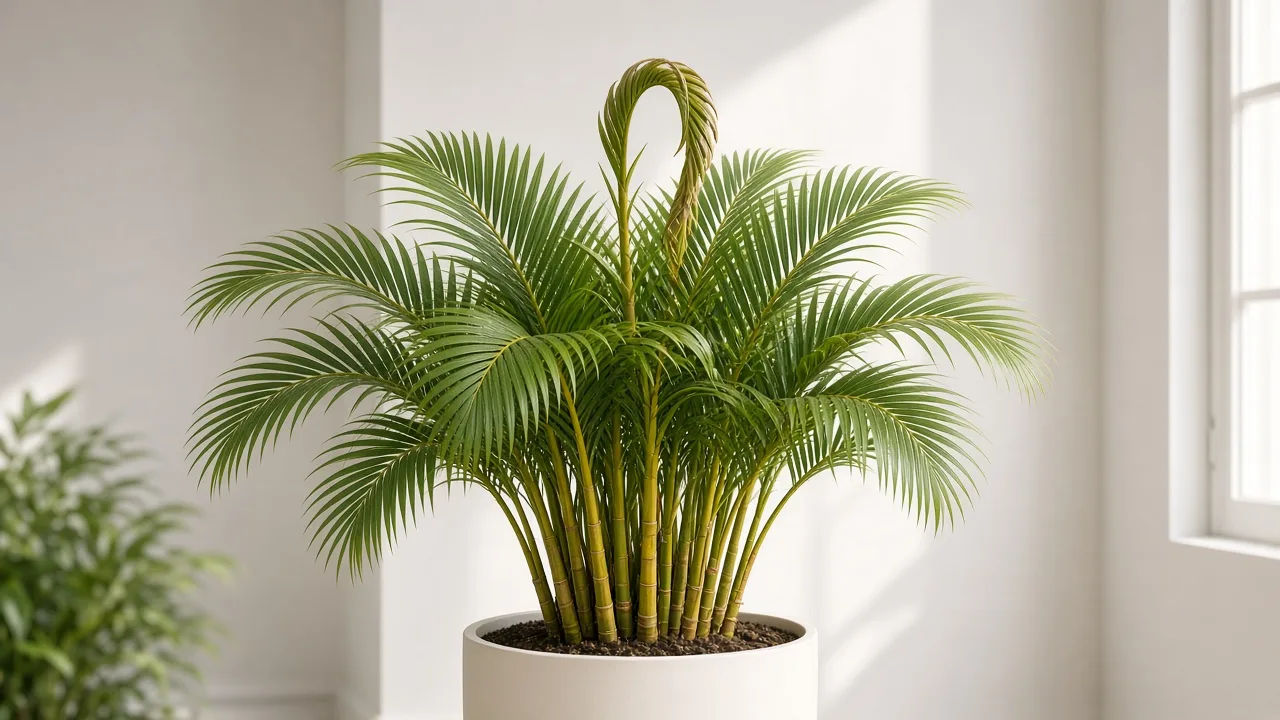
Calcium Deficiency on Areca Palm: Causes, Checks & Fixes
This guide covers calcium deficiency on Areca Palm. See also the general Calcium Deficiency guide, watering, and light pages for this plant.
Calcium Deficiency on Areca Palm: Causes, Checks & Fixes
Quick answer
Calcium deficiency on areca palm (Dypsis lutescens—Butterfly Palm, Golden Cane Palm) shows as distorted, hook-shaped, or margin-burned new fronds unfurling from cane spears while older lower fronds on the same stem may remain normal. Calcium is not very mobile within the plant, so deficiency appears on young, actively growing tissue first.
For how calcium shortage works on houseplants in general, see our calcium deficiency guide. On clumping areca palms, inspect the newest spear on each cane—twisted leaflets, uneven unfurling, or necrotic margins on the emerging frond point to calcium or transport failure before magnesium deficiency on old leaflets alone.
First step: stabilize even moisture—let the top 1–2 inches of mix dry per the areca palm watering guide before adding any fertilizer. Confirm the damage is on the newest unfurling spear, not brown tips on mature leaflets or potassium deficiency spotting on the oldest fronds.
What calcium deficiency looks like on areca palm
New growth at each cane spear tells the story. Areca palms grow as a clumping palm with many bamboo-ringed stems from one base. Each cane pushes feathery compound fronds from a central spear. Calcium shortage or transport failure shows on the youngest frond still opening, not the lowest canopy first.
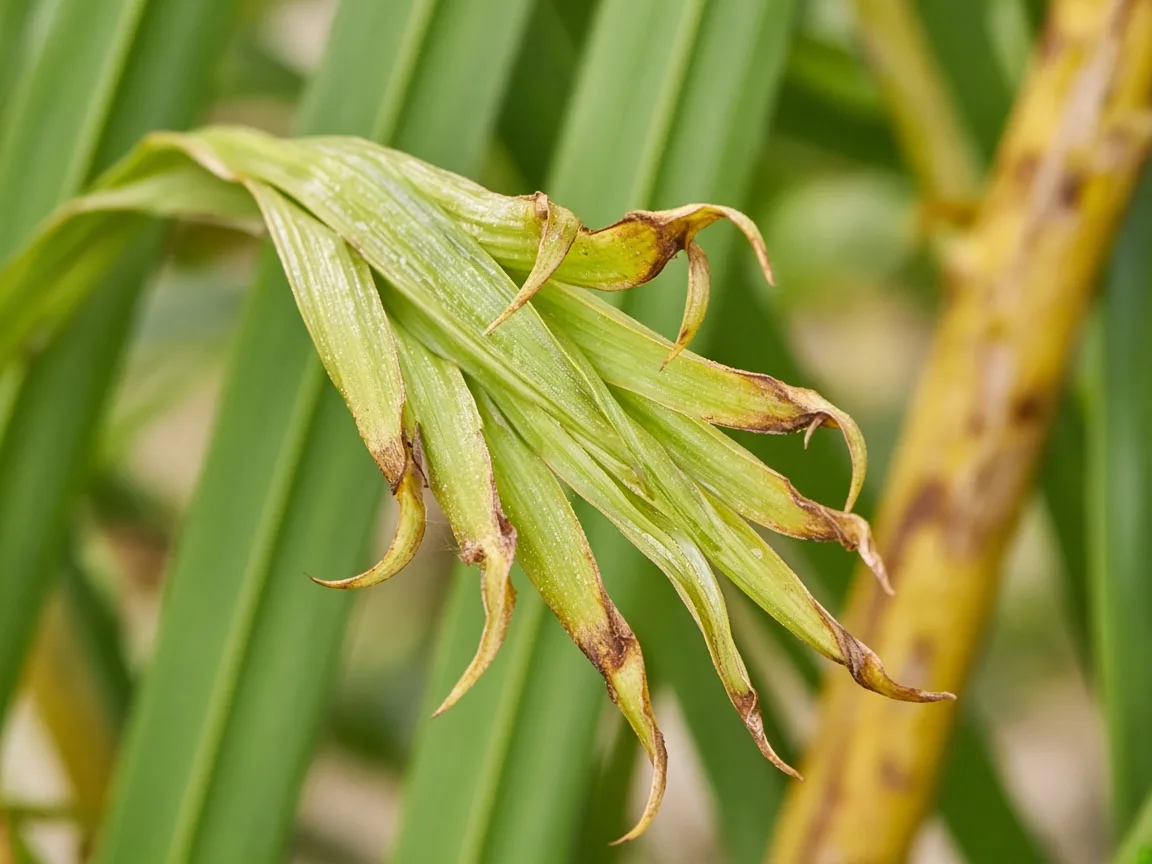
Hook-shaped or crinkled new leaflet on an emerging areca palm spear—compare the distorted unfurling frond with normal older leaflets on the same cane.
Typical signs:
- Distorted, twisted, or hook-shaped new fronds emerging from a cane spear
- Brown or necrotic tips and margins on the newest expanding leaflets, often after marginal chlorosis
- Stunted or uneven frond length compared with prior spears on the same cane
- Irregular leaflet spacing as the frond unfurls—some pinnae smaller or bent
- Older lower fronds may look normal—a key calcium pattern
- Firm cane at the soil line if roots are healthy and mix is not waterlogged
Not calcium deficiency:
- Orange translucent spotting and tip necrosis on oldest leaflets only—potassium deficiency
- Broad yellow bands along oldest frond margins with green centers—magnesium deficiency
- Uniform pale canopy including golden petioles on many fronds—nitrogen deficiency (golden cane color is also normal on healthy Dypsis lutescens)
- Crispy brown tips on mature leaflets without new-spear distortion—brown tips from fluoride or dry air
- New fronds fully chlorotic with green veins—iron deficiency
- Soft cane base, sour wet mix—overwatering or root rot
Why areca palm gets calcium deficiency
Dypsis lutescens is a clustering palm that prefers evenly moist, well-drained soil and steady frond production in bright indirect light. Calcium supports cell walls in expanding spear tissue. On indoor clumps kept in the same pot for years, problems usually trace to uptake failure, depleted feeding, or moisture swings—not missing garden lime in a bag of palm mix.
Moisture swings on a moisture-loving clump
Areca palms tolerate brief dryness poorly compared with succulents, yet they also hate soggy roots. Alternating bone-dry mix and heavy soaking interrupts calcium movement in the xylem. Irregular watering or fluctuating substrate moisture can worsen calcium deficiency even when minerals sit in the soil. The spear—furthest from functioning roots during drought stress—shows damage first.
This is transport failure, not empty soil. Fixing moisture rhythm per the watering guide often matters more than dumping supplements on wet or drought-shocked roots.
Filtered water without calcium in the feed
Many areca owners switch to filtered or reverse-osmosis water to avoid brown tips from fluoride or salts. That can help mature leaflet margins but does not supply calcium. If spear distortion persists on low-fluoride water with firm canes and appropriate dry-down, the plant likely needs complete balanced feeding during active growth—not more water changes alone.
Years without repotting or feeding
True calcium depletion in container areca palms usually follows months to years without fertilizer in a bright spot where the clump actively produces fronds. UF/IFAS notes that nitrogen is the most limiting element in container palm production, but continuous frond replacement also draws potassium, magnesium, and micronutrients from a finite pot. Peat-based mix depletes over time; water alone does not replace structural minerals new cell walls need.
Confusion with golden cane color and old-leaf deficiencies
Golden-colored petioles on container-grown Dypsis lutescens can indicate nitrogen deficiency—but the same golden-yellow cane color is also a normal species characteristic. Do not treat healthy golden stems as proof of calcium lack. Potassium deficiency on areca palm hits oldest leaflets with translucent spotting and marginal necrosis. Magnesium deficiency shows broad chlorotic bands on oldest fronds while the center stays green. Calcium hits the newest spear while older fronds may look fine.
Spear distortion on clumping golden cane palms
An areca palm is not a single trunk. It grows as a clump of many canes, each ringed like bamboo and capable of producing arching fronds. On a mature indoor specimen, check every spear—one cane may show distortion while others look fine if roots on that section dry faster or that stem is younger and pushing growth harder.
Calcium deficiency distorts the newest frond on a cane while lower fronds from prior years look normal. That pattern differs from potassium tip burn on the oldest leaflets and from magnesium banding on old frond margins. Areca palms in the same pot for years with irregular watering often show spear distortion before lower leaves show any nutrient sign—inspect the central unfurling leaf on each cane first, not the lowest yellowing leaflet.
Physical damage during unfurling
A single pinna may show a sharp crease where it rested against a pot rim or neighboring frond during unfurling. That damage stays on one contacted leaflet and does not repeat on every subsequent spear from the same cane. Calcium stress, by contrast, affects successive new fronds from the same spear until you correct water and feed.
How to confirm
Work through this checklist in order:
- New spear fronds only—distortion on the newest unfurling frond on one or more canes.
- Watering consistency—dry spells followed by heavy soak vs even top-1-to-2-inch dry-down.
- Fertilizer completeness—calcium or complete micronutrients on label; months without any feed during growth.
- Old-leaf patterns ruled out—no broad Mg bands or K spotting confined to oldest leaflets only.
- Cane firmness—firm vs soft at soil line; sour wet mix means rot, not deficiency.
- Physical creasing ruled out—not one overlapped pinna only from contact damage.
- Successive spears—distortion repeats on the next frond from the same cane, not a one-time crease.
Old-leaf deficiency vs new-spear calcium distortion
| Pattern | Leaf age affected | Leaf shape | Water history | First direction | Urgency |
|---|---|---|---|---|---|
| Potassium deficiency | Oldest leaflets first | Translucent spotting, tip necrosis on old fronds | Variable | Potassium deficiency | Medium |
| Magnesium deficiency | Oldest fronds | Broad yellow bands, green center | Long time in same pot | Magnesium deficiency | Medium |
| Calcium transport failure | Emerging spear frond | Whole new frond twisted or hooked | Dry-then-flood cycles | Fix dry-down; complete feed if needed | Medium |
| True calcium depletion | New spear; older fronds green | Thin weak new pinnae | Months un-fed in active growth | Half-strength palm feed after water fix | Medium |
| Root rot | Yellowing spreads; spears may stall | Soft cane, not just twisted | Wet sour mix | Stop water; inspect roots | High (same day) |
| Brown tips on mature leaflets | Old pinnae tips | Crispy margins, flat blades | Fluoride or low humidity | Brown tips | Low |
First fix
Stabilize even moisture—let the top 1–2 inches of mix dry before a thorough drink—before adding any fertilizer.
- Lift the pot. If it feels heavy and soil stays wet below the surface, skip the next scheduled watering until the top 1–2 inches dry per the watering guide.
- Water thoroughly once with room-temperature water—rainwater or filtered if you use it for fluoride-sensitive tips—but empty the saucer so the clump is not standing in runoff.
- Hold fertilizer, repotting, and heavy pruning for at least one week.
When to apply half-strength complete feed
After seven to ten days of appropriate moisture and firm cane tissue, apply one half-strength dose of complete balanced liquid fertilizer or palm-specific formula with micronutrients during spring or summer active growth. Use the areca palm fertilizer guide for schedule context. Gardening Know How recommends dilute micronutrient foliar sprays in summer only when a product is labeled safe for foliage—liquid root feeding with complete micronutrients is the usual first correction indoors.
Do not add garden lime, gypsum, or crushed eggshells without a soil test. Indoor palm mix rarely lacks calcium; pH shifts from lime can block other nutrients. Do not feed a dry, stressed, or newly repotted clump.
Step-by-step recovery
- Match watering to light so the top 1–2 inches dry evenly—not calendar watering on every cane in the clump.
- Switch permanently to low-fluoride water if mature tips still brown; filtered water alone does not fix depletion.
- Wait one week after the first corrected watering cycle on firm canes.
- Apply half-strength complete fertilizer once if spear distortion persists and roots are firm.
- Move slightly brighter if the plant sits in deep shade—slow photosynthesis limits nutrient use for new fronds per the light guide.
- Monitor the next two spears on each affected cane. Each should unfurl cleaner than the last.
- Repot into fresh well-drained palm mix if roots are compacted and distortion persists after two corrected feeds in active growth.
Recovery timeline
Expect cleaner new spears within four to eight weeks after water rhythm stabilizes and appropriate half-strength feeding begins in moderate light. Areca palms grow at a moderate pace—give each cane a full month before deciding the fix failed.
The currently distorted frond will not straighten or re-green. Judge success only by the next spear flush. Old tissue stays cosmetic; trim only dead pinnae if more than half a leaflet is necrotic.
Lookalike symptoms
| Pattern | Likely cause |
|---|---|
| New spear frond twisted, margin-burned | Calcium deficiency (this page) |
| Oldest leaflet tips orange or necrotic | Potassium deficiency |
| Oldest frond margins yellow, center green | Magnesium deficiency |
| Whole canopy pale, slow growth | Nitrogen deficiency |
| New frond chlorotic with green veins | Iron deficiency |
| Mature pinnae tips brown only | Brown tips |
| Soft cane, wet soil | Overwatering or root rot |
| General distortion with pests | Distorted leaves |
What not to do
Do not pour full-strength fertilizer on bone-dry or waterlogged soil. Do not repot, prune heavily, and feed on the same day on a stressed clump. Do not confuse golden cane petioles with deficiency without checking the newest spear. Do not add lime or gypsum to indoor pots without a soil test. Areca palm is pet safe, but keep fertilizer away from pets and children.
How to prevent calcium problems next time
Feed lightly and consistently during spring and summer active growth rather than rare heavy doses. Use complete fertilizer or palm-specific formula with micronutrients at half strength every two to four weeks when fronds are actively unfurling.
Match watering to light so the top 1–2 inches dry predictably. Repot every two to three years when roots circle or mix depletes in bright homes. If you use filtered water year-round, ensure your feed supplies calcium—water quality fixes fluoride tips, not structural minerals in new spears.
When to worry
Escalate if yellowing spreads through the clump while you increase fertilizer—that may be salt burn or hidden rot. If new spears stay distorted after two months of correct dry-down, appropriate feeding, and moderate light, repot into fresh mix before adding calcium supplements.
Soft cane at the base, sour-smelling soil, or spreading yellow on a heavy wet pot needs same-day root assessment—that is likely root rot, not calcium lack.
When to use this page vs other Areca Palm guides
Use this page when the newest spear frond emerges distorted, hook-shaped, or margin-burned while older lower fronds look relatively normal on firm canes. Use potassium deficiency when oldest leaflets show translucent spotting and tip necrosis. Use magnesium deficiency when oldest frond margins yellow in broad bands. Use brown tips when mature pinnae tips brown but new spears unfurl flat. Use distorted leaves when pests, cold, or mechanical damage overlap and you need a broader differential.
Related Areca Palm guides
- Areca palm overview—species care hub
- Areca palm watering—top-1-to-2-inch dry-down check
- Areca palm fertilizer—half-strength palm feed schedule
- Brown tips—fluoride and humidity differential
- Areca palm problems hub—full problem index
Related tool
Use the Fertilizer Dilution Calculator to dial in half-strength complete feed for calcium deficiency on this plant before changing multiple variables at once.