Nitrogen Deficiency on Areca Palm: Causes, Checks & Fixes
Quick answer
Nitrogen deficiency on areca palm (*Dypsis lutescens*) shows as uniform pale yellow-green on the oldest pinnate fronds and can deepen golden petiole color beyond normal cane tone, with smaller new spears and slow growth while canes stay firm. First step: confirm the pattern on lower fronds during active growth—not wet-root failure or iron chlorosis on new spears—then apply one half-strength complete fertilizer to already-moist soil.
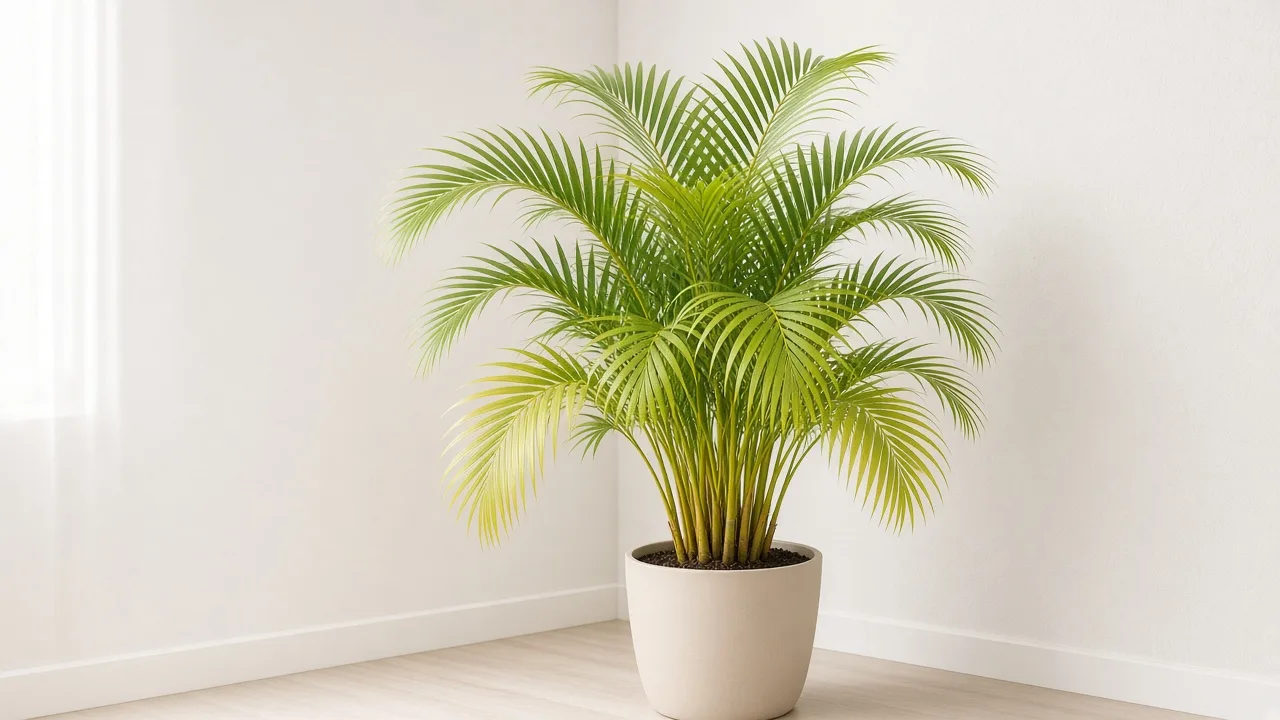
Nitrogen Deficiency on Areca Palm: Causes, Checks & Fixes
This guide covers nitrogen deficiency on Areca Palm. See also the general Nitrogen Deficiency guide, watering, and light pages for this plant.
Nitrogen Deficiency on Areca Palm: Causes, Checks & Fixes
Quick answer
Nitrogen deficiency on areca palm (Dypsis lutescens) shows as uniform pale yellow-green on the oldest pinnate fronds, often with washed-out golden petioles and leaf bases beyond the species’ normal cane color, smaller new crown spears, and slow frond production while canes stay firm. Nitrogen is mobile in plants, so deficiency symptoms appear first on the oldest leaves as a general yellowing—veins and tissue fade together, unlike magnesium deficiency (broad yellow bands with green centers on old fronds) or iron deficiency (pale new spears with greener veins).
See our nitrogen deficiency guide for general mobile-nutrient mechanics. On areca palm, inspect the lowest mature fronds on each cane during active growth—uniform washout there, with the spear leaf still relatively green but new spears undersized, is classic nitrogen starvation before wet-root failure or low-light pale leaves.
First step: confirm uniform pale color on the oldest lower fronds—not interveinal banding, new-tip green veins, or soggy root stress—then apply one half-strength complete balanced fertilizer to already-moist soil during spring or summer active growth.
When to use this page vs other Areca Palm guides
| Pattern | Read next |
|---|---|
| Uniform pale oldest lower fronds, smaller crown spears | Nitrogen deficiency (this page) |
| Yellow between veins on oldest fronds, green center | Magnesium deficiency |
| Pale new spears with green veins | Iron deficiency |
| Translucent yellow-orange spots, tip necrosis on old leaflets | Potassium deficiency |
| Washed-out green across whole clump, dim room | Pale leaves or not enough light |
| Yellow lower fronds on persistently wet soil | Overwatering or yellow leaves |
| Stalled growth but fronds look green | Slow growth — check light before feeding |
| Pale after heavy feed or white soil crust | Fertilizer guide — salt injury, not hunger |
What nitrogen deficiency looks like on areca palm
Healthy areca palm holds deep green pinnate fronds arching from multiple yellow-green canes in a clumping cluster. Nitrogen stress breaks that pattern on mature foliage on the lower and outer canopy, not with a vein-retained banding pattern.
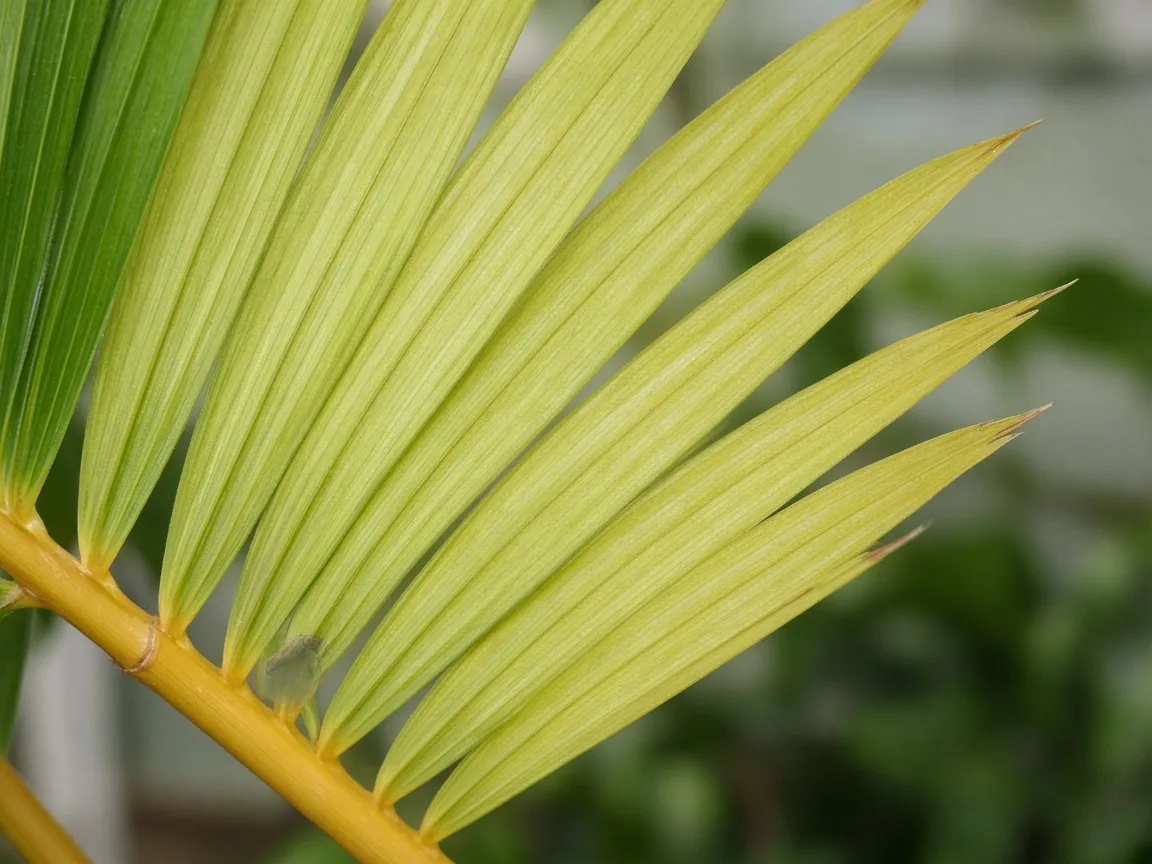
Oldest lower areca palm frond with uniform pale yellow-green chlorosis—veins and tissue faded together, unlike interveinal magnesium banding.
Typical signs:
- Uniform pale yellow-green on the oldest lower fronds along each cane—veins and tissue lose color together
- Progressive washout upward over months as the plant strips nitrogen from old pinnate fronds to fund crown spears
- Smaller or lighter new spears and slower frond extension during spring and summer active growth
- Golden petioles and leaf bases that look more washed out than normal across much of the clump—UF/IFAS documents golden-colored petioles on container-grown Dypsis lutescens as a nitrogen deficiency signal
- Firm canes and normal soil dry-down when roots are healthy; soft mushy bases on wet mix suggest overwatered areca palm instead
- Spear leaf still relatively green in early stages—advanced cases leave the entire canopy except the spear uniformly chlorotic with sharply reduced growth
Worry when pale chlorosis climbs through most lower and mid-canopy fronds during active growth, not when only one spent lowest frond looks slightly lighter on an otherwise deep-green clump.
Golden cane petioles: normal color vs nitrogen washout
Areca palm is sold as Golden Cane Palm and Butterfly Palm partly because canes and petiole bases are naturally yellow-green to golden—that color alone is not a deficiency diagnosis. The trap is treating every golden base as hunger when the plant is otherwise vigorous.
Use this areca-specific read:
| What you see | Likely meaning |
|---|---|
| Golden bases, deep green frond blades, normal new spears | Normal species coloration |
| Golden bases plus uniform pale oldest fronds | Early nitrogen deficiency |
| Whole clump washed out yellow-green, small spears, slow output | Chronic nitrogen deficiency |
| Golden bases plus interveinal yellow bands on old fronds | Magnesium deficiency |
| Newest spears pale with green veins | Iron deficiency |
UF/IFAS research on container palms notes that the golden petiole color on Dypsis lutescens can indicate nitrogen deficiency—but the same coloration is also a normal characteristic of the species. Context from oldest frond washout and new spear size separates the two.
Reading oldest pinnate fronds vs the crown spear
Unlike rosette houseplants where one leaf yellows at a time, areca palm symptoms show on whole pinnate fronds—dozens of narrow leaflets along an arching rachis—on a multi-cane clump. Nitrogen is mobile, so the plant sacrifices oldest solar panels first.
Walk the clump from the bottom up:
- Lowest fully expanded fronds on outer canes - Uniform pale yellow-green here with greener mid-canopy fronds above fits nitrogen deficiency.
- Spear leaf (newest unfolding frond) - Still relatively green in early deficiency; if the spear itself is uniformly pale or white, deficiency is advanced or overlaps with other stresses.
- Crown spears behind the spear leaf - Undersized, thin, or slow to unfurl while older fronds wash out confirms ongoing nitrogen hunger during active growth.
- Leaflet pattern - Uniform fade across each leaflet row differs from potassium deficiency spotting or tip necrosis concentrated at leaflet tips on old blades.
This bottom-up, multi-cane read is areca-specific because clustering palms shed from the oldest fronds while pushing new spears centrally—the geometry differs from single-stem ficuses or succulents.
Why areca palm runs out of nitrogen indoors
Container leaching on a moderate feeder
Areca palms push new fronds from multiple canes all season when light and humidity cooperate. Each frond is a large investment in leaf tissue, and every watering leaches minerals from finite container mix. After several months of regular watering without feeding, pale new growth and slowed frond output are common on indoor clumps—see the areca palm fertilizer guide for baseline feeding rhythm.
Potting mix microbes competing for nitrogen
Most indoor palm mixes are high in bark or peat with a high carbon-to-nitrogen ratio. Soil microbes breaking down organic components compete with plant roots for available nitrogen—which is why nitrogen is the most important limiting element in container palm production, not a rare edge case.
Years in the same pot without replenishment
Areca palms prefer to be slightly root-bound and often stay in the same container two to three years. Starter nursery nutrients exhaust faster than owners expect. A clump that looked perfect at purchase can slide into chronic pale lower fronds by the second growing season if feeding never started.
Root stress blocking uptake (lookalike)
Nitrogen deficiency symptoms may be confused with conditions that restrict root growth and reduce nutrient uptake—including poor drainage, compaction, and chronic overwatering. Pale fronds on soggy, sour-smelling soil with soft cane bases are uptake failure, not hunger alone—slow growth and uniform yellowing of older leaves can mimic deficiency when roots cannot absorb nutrients. Fix the root zone before repeated fertilizer.
Low light masking as deficiency
Dim rooms produce overall pale, stretched fronds that mimic nitrogen washout. If the clump is in a dark corner and soil has not dried normally for weeks, improve light placement before assuming the pot is empty of nitrogen.
How to confirm the cause
Work through this inspection in order. Stop when one branch fits clearly.
- Frond age and pattern - Uniform pale color on oldest lower fronds with greener tissue higher up = nitrogen likely. Interveinal banding = magnesium. Pale new spears = iron.
- Growth season - Active spring or summer frond production makes deficiency plausible. Winter slowdown with slightly lighter lower fronds may be seasonal, not urgent hunger.
- New spear size - Undersized or slow-unfurling spears during active growth support nitrogen deficiency; normal spear size with one pale lower frond may be normal aging.
- Cane firmness and soil moisture - Firm canes, normal dry-down, moist-but-not-soggy mix = hunger plausible. Soft bases, wet mix for days = overwatering first.
- Feed history - Months of plain water on a bright, actively growing clump in the same pot strongly supports depletion.
- Light level - Bright indirect light with pale washout fits deficiency after leaching. Deep shade with leggy pale growth fits low light.
- Potassium and magnesium cross-check - Orange translucent spots or frizzled leaflet tips on old fronds = potassium. Broad margin yellow bands with green centers = magnesium.
Confirmed nitrogen deficiency shows uniform oldest-frond chlorosis, firm canes, reasonable soil moisture, undersized new spears during active growth, and months without complete fertilizer in a leached container.
First fix for nitrogen deficiency on areca palm
Apply one half-strength dose of complete balanced liquid fertilizer to already-moist potting mix during active growth—and wait four weeks before judging the response.
That single measured feed replaces the common mistake of stacking full-strength fertilizer, repotting, and pruning on the same weekend.
Steps:
- Confirm the plant is not drought-stressed or waterlogged. Probe the top 1–2 inches; soil should be kept moist but not soggy like areca palms prefer. If bone-dry, water thoroughly first and wait 24 hours. If wet for a week, pause feeding and address drainage—see watering guide.
- Use a complete balanced houseplant fertilizer (such as 10-10-10 or 20-20-20) at half the label’s indoor dilution, or follow the areca palm fertilizer guide palm-specific schedule at reduced strength.
- Apply to moist mix only—never concentrate fertilizer on dry roots.
- Water until a little drains, discard saucer runoff, and do not feed again for three to four weeks unless new spears still emerge undersized and pale.
- Hold off if the plant was repotted within the last two to four weeks or is visibly wilted from root stress—wait until new spears resume normal unfurling.
Do not use nitrogen-only products unless you have ruled out potassium and magnesium needs on a palm that has not received complete nutrition in over a year.
Step-by-step recovery
Mild deficiency (pale oldest fronds, normal spear unfurling):
- One half-strength complete feed on moist soil.
- Resume a modest feeding rhythm through the rest of the growing season per the fertilizer guide.
- Remove fully spent lower fronds at the petiole base only after new spears look greener—see pruning guide.
Moderate deficiency (most lower fronds pale, small spears):
- Half-strength complete feed as above.
- After four weeks, if new spears are still undersized, repeat at half strength—do not jump to full label rate.
- Consider top-dressing with palm-appropriate slow-release granules at reduced home rates if you prefer fewer liquid applications.
Chronic deficiency (whole canopy washed out except spear, growth stalled):
- Confirm canes are firm and roots are not mushy.
- Half-strength complete feed; evaluate spear response over four to six weeks.
- If mix is more than two years old and leaches instantly, plan a spring repot into fresh palm mix after one feeding cycle shows the plant can use nutrients—do not repot and feed heavily the same day.
If pale fronds persist on wet soil:
- Stop fertilizer entirely.
- Inspect drainage and root firmness that week—uptake failure from root rot will not respond to nitrogen until the root zone stabilizes.
Recovery timeline
Already pale lower leaflets rarely return to deep green. Success means:
- New crown spears unfurl larger and brighter green.
- Chlorosis stops climbing into mid-canopy fronds.
- Frond production resumes at the clump’s normal pace for your light level.
| Severity | Typical timeline after correct feeding |
|---|---|
| Mild pale oldest fronds | 4–6 weeks for noticeably greener new spears |
| Moderate washout across lower canopy | 6–8 weeks for two consecutive clean spears |
| Chronic whole-canopy chlorosis | 8–12 weeks; may need repot plus feeding rhythm reset |
Signs of improvement: deeper green on the newest fully expanded frond, normal spear size, stable pot dry-down. Signs of worsening: pale climbing to the spear leaf on firm canes despite feeding—retest for iron or magnesium co-deficiencies; pale on wet soil with soft canes—root stress, not hunger.
Lookalike symptoms on areca palm
| What you see | Soil / growth clue | Likely cause | First direction |
|---|---|---|---|
| Uniform pale oldest fronds | Firm canes, months without feed | Nitrogen deficiency | Half-strength complete feed |
| Yellow bands, green frond center | Old fronds worst | Magnesium deficiency | Palm formula with Mg |
| Pale new spears, green veins | Wet or degraded mix | Iron deficiency | Aeration, root health |
| Orange spots, tip necrosis on old leaflets | Variable | Potassium deficiency | Complete palm fertilizer |
| Yellow lower fronds, wet soil | Sour smell, soft bases | Overwatering / root stress | Dry down; inspect roots |
| Whole plant pale, leggy | Dim room | Low light | Improve placement |
| Slow growth, green fronds | Normal feed | Light or winter rest | Slow growth page |
What not to do
Do not feed a dry, wilted, or newly repotted palm on day one—salts on stressed roots worsen leaflet burn.
Do not use full-strength fertilizer to “catch up” after months without feeding—half strength on moist soil is the safe first correction.
Do not assume golden petioles always mean deficiency—normal cane color on deep-green fronds needs no nitrogen rescue.
Do not feed when soil stays wet for days—roots cannot absorb nitrogen in anaerobic mix; fix overwatering first.
Do not apply nitrogen-only products on palms that have not received potassium and magnesium in over a year—complete palm nutrition prevents lopsided deficiency.
Do not judge recovery by old lower fronds re-greening—watch new spears instead.
How to prevent nitrogen deficiency next time
- Feed during active growth - Half-strength complete liquid every two to four weeks spring through summer, or palm slow-release at reduced home rates—details in the fertilizer guide.
- Apply to moist soil - Never concentrate fertilizer on dry roots.
- Pause in winter - Unless the clump keeps pushing new spears under strong grow lights in a warm room.
- Refresh depleted mix - Repot every two to three years when repotting signs appear; old bark-heavy mix loses nutrient-holding capacity.
- Match feed to light - Bright clumps use more nitrogen; dim rooms need less feed and more light correction.
- Use complete formulas - Palms need magnesium and potassium alongside nitrogen; generic houseplant feed works at half strength when applied consistently.
When to worry
Treat nitrogen deficiency as urgent when:
- Most lower and mid-canopy fronds are uniformly pale during active growth.
- Two or more successive spears stay undersized or washed out after one measured feed.
- Growth stops entirely while canes stay firm—confirm you are not in winter rest.
- Pale fronds persist on wet, sour soil—inspect roots that week before more fertilizer.
One slightly pale lowest frond on firm canes with normal new spears during winter slowdown is low urgency—confirm feed history before reacting.
Areca palm care cross-check
| Checkpoint | Healthy target | Nitrogen-risk when wrong |
|---|---|---|
| Feed rhythm | Half-strength complete spring–summer | Months of plain water on bright clump |
| Soil moisture | Moist but not soggy; top 1–2 in. dry before soak | Wet roots block uptake; looks like deficiency |
| Light | Bright indirect | Dim rooms mimic pale washout |
| New spear size | Full-sized unfurling fronds | Undersized spears with pale oldest fronds |
| Pot age | Refresh mix every 2–3 years | Leached bark mix, microbe N competition |
| Cane color | Golden bases, green blades | Whole-clump washout beyond normal gold |
Fix failed checkpoints before stacking repot, prune, and double-strength feed on the same day.
Related areca palm problems
- Areca palm overview - Baseline light, water, humidity, and frond diagnostics
- Yellow leaves - Early stress before uniform nitrogen washout
- Pale leaves - Low light or general washout
- Slow growth - Stalled fronds when color looks normal
- Magnesium deficiency - Interveinal banding on oldest fronds
- Iron deficiency - Pale new spears with green veins
- Potassium deficiency - Spotting and tip necrosis on old leaflets
- Areca palm fertilizer - Seasonal feeding rhythm and palm formulas
- Areca palm problems - Browse all common issues on this species