Iron Deficiency on Areca Palm: Causes, Checks & Fixes
Quick answer
Iron deficiency on areca palm shows as pale or yellow new fronds with dark green veins (interveinal chlorosis) on the youngest spear still unfurling, while older lower fronds may stay green. First step: confirm the vein pattern is on the newest expanding pinnae—not broad yellow bands on oldest fronds or golden petioles alone—then check whether wet compacted mix, root damage, or skipped micronutrient feeding blocks uptake before applying chelated iron.
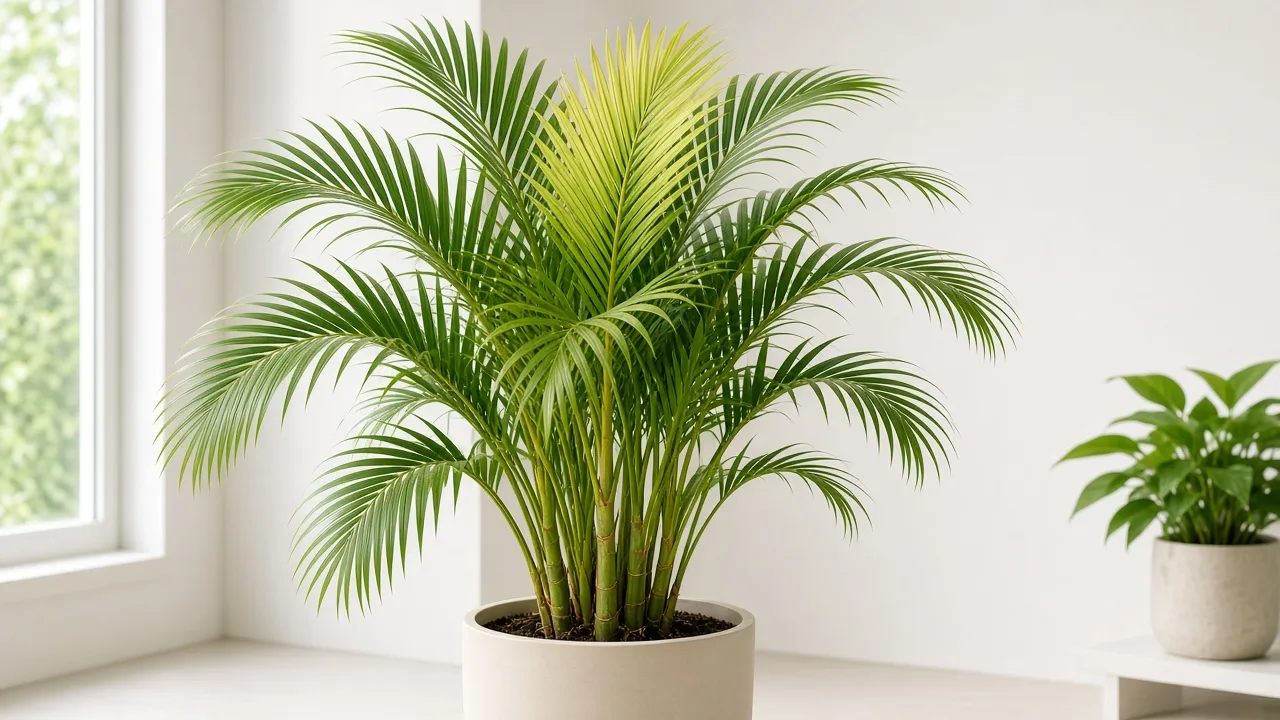
Iron Deficiency on Areca Palm: Causes, Checks & Fixes
This guide covers iron deficiency on Areca Palm. See also the general Iron Deficiency guide, watering, and light pages for this plant.
Iron Deficiency on Areca Palm: Causes, Checks & Fixes
Quick answer
Iron deficiency on areca palm (Dypsis lutescens—Butterfly Palm, Golden Cane Palm) shows as pale or yellow new fronds with dark green veins (interveinal chlorosis) on the youngest spear still unfurling, while older lower fronds on the same cane may remain normal green. Iron is immobile in plants, so chlorosis appears on young expanding tissue first—not on the lowest old leaflets the way potassium deficiency does.
For how iron chlorosis works on houseplants in general, see our iron deficiency guide. On clumping areca palms, inspect the newest pinnae still opening from each cane spear—veins stay green while tissue between them yellows on the freshest frond.
First step: confirm interveinal chlorosis with green veins on the newest unfurling spear, then check whether wet compacted mix, root damage, or months without complete micronutrient feeding blocks uptake before applying chelated iron.
When to use this page vs other Areca Palm guides
| Pattern | Read next |
|---|---|
| New spear frond yellow with green veins | Iron deficiency (this page) |
| Oldest frond margins yellow in broad bands, center green | Magnesium deficiency |
| Oldest leaflet tips orange or translucent spotting | Potassium deficiency |
| Whole canopy pale, golden petioles, slow growth | Nitrogen deficiency |
| New spear twisted or hook-shaped, not just pale | Calcium deficiency |
| Mature pinnae tips brown only, spears unfurl flat | Brown tips |
| General yellowing with wet soil, soft cane | Overwatering or root rot |
| Pale stretched fronds in a dim corner | Not enough light or yellow leaves |
What iron deficiency looks like on areca palm
New growth at each cane spear tells the story. Areca palms grow as a clumping palm with many bamboo-ringed stems from one base. Each cane pushes feathery compound fronds from a central spear. Iron shortage shows on the youngest frond still opening, not the lowest canopy first.
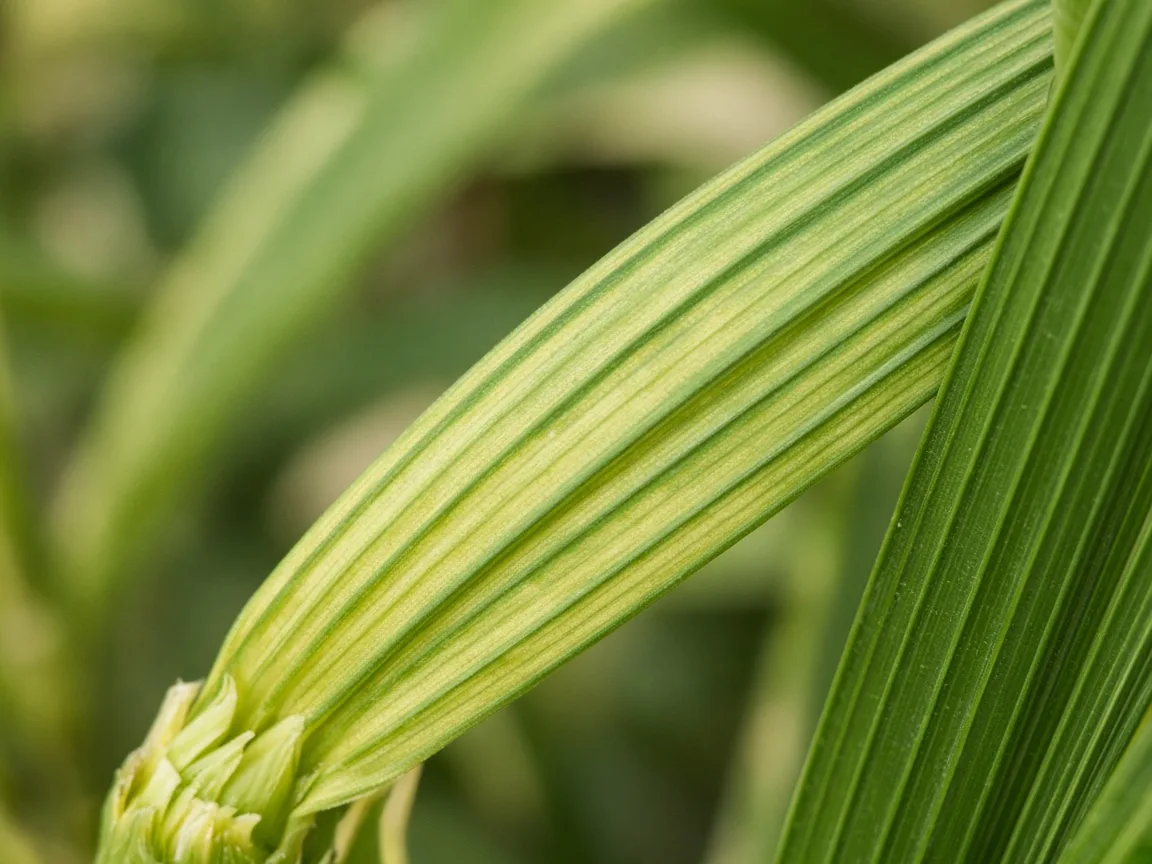
Pale yellow tissue between dark green veins on a new areca palm pinna still expanding from a cane spear—compare with normal green older leaflets lower on the same frond.
Typical signs:
- Pale or yellow new pinnae on the newest unfurling frond with veins remaining darker green
- Uniform or interveinal chlorosis across the youngest spear while older lower fronds stay relatively green
- Successively paler new spears on the same cane if untreated—two or three chlorotic openers in a row during active growth
- Necrotic tips on severely chlorotic new leaflets when deficiency is advanced and roots remain impaired
- Firm cane at the soil line if roots are functional—soft mushy cane on wet mix points to overwatering instead
Not iron deficiency:
- Broad yellow bands along oldest frond margins with green centers—magnesium deficiency
- Orange translucent spotting and tip necrosis on oldest leaflets only—potassium deficiency
- Uniform pale canopy including intensified golden petioles on many fronds—nitrogen deficiency (golden cane color is also normal on healthy Dypsis lutescens)
- Twisted or hook-shaped new spear without a clear vein pattern—calcium deficiency
- Crispy brown tips on mature leaflets without new-spear chlorosis—brown tips from fluoride or dry air
- Longitudinal necrotic streaks and frizzled new pinnae—manganese deficiency pattern on palms (see confirmation section)
Iron (Fe) deficiency appears as interveinal or uniform chlorosis of the newest leaves while older leaves remain green. RHS notes iron deficiency affects the youngest leaves first, unlike magnesium problems that tend to start on older foliage. On a moderate-growing clumping palm, that pattern is easiest to read on pinnae still opening from the central spear—not on mature lower blades that may simply be aging.
Why areca palm gets iron deficiency
Dypsis lutescens is a clustering palm that prefers evenly moist, well-drained soil and steady frond production in bright indirect light. Iron deficiency in palms is usually not caused by a lack of Fe in the soil, but rather by poor soil aeration, root injury, or uptake failure while each cane keeps trying to push new spears.
Decomposed indoor mix and poor root aeration
Iron deficiency is relatively common in container-grown palms, especially those kept in the same pot for long periods. Organic components such as peat or bark decompose into poorly aerated muck over time. Under anaerobic conditions, roots cannot respire and actively take up iron even when it sits in the mix. The newest spear—furthest from functioning roots during stress—shows chlorosis first.
This is why repotting into fresh well-drained palm mix often matters more than pouring iron on waterlogged soil.
Wet roots and root rot overlap
Chronic overwatering or standing water in cachepots reduces root surface area. Root injury from root rot diseases will similarly be expressed above ground as Fe deficiency, since damaged roots cannot intercept iron. Do not diagnose iron deficiency on sour wet soil with a soft cane—that is root failure until you confirm mostly firm tissue at the soil line.
Skipped micronutrient feeding on a frond-producing clump
Areca palms in bright homes replace fronds steadily through spring and summer. Months without any fertilizer in an actively growing clump can deplete micronutrients from a finite pot. Nitrogen is the most limiting element in container palm production, but continuous frond replacement also draws iron and other micronutrients. Owners who fear burn may skip all feeding while spears keep unfurling—see the areca palm fertilizer guide for a safe half-strength schedule.
Filtered water without iron in the feed
Many areca owners switch to filtered or reverse-osmosis water to avoid brown tips from fluoride. That can help mature leaflet margins but does not supply iron. If new-spear chlorosis persists on low-fluoride water with firm canes and appropriate dry-down, the plant likely needs complete balanced feeding with chelated iron or micronutrients during active growth—not more water changes alone.
High pH is a weaker iron trigger on palms than on broadleaf houseplants
High soil pH is the most common cause of Fe deficiency in broadleaf trees and shrubs, but in palms it usually does not cause Fe deficiencies. On areca palm, alkaline tap water is still worth monitoring because excessive uptake of other nutrient ions can result in Fe deficiency symptoms, but always rule out aeration and root health before assuming pH alone is the blocker.
New spear pinnae: reading chlorosis on unfurling golden cane fronds
An areca palm is not a single trunk. It grows as a clump of many canes, each ringed like bamboo and capable of producing arching fronds. Iron stress shows on the pinnae still expanding from the central spear on one or more canes while lower fronds from prior years may look fine.
That spear-only chlorosis distinguishes iron from magnesium deficiency, which hits oldest frond margins in broad bands, and from potassium deficiency, which shows translucent spotting on oldest leaflets. Areca palms in the same pot for years with soggy or compacted mix often show new-frond chlorosis before lower leaves show any nutrient sign—inspect the unfurling pinnae on each cane first, not the lowest yellowing leaflet.
Because each cane pushes fronds on its own schedule, one stem may show chlorosis while a neighbor looks green if roots on that section dry slower or that cane is pushing harder growth in brighter light per the light guide.
Decomposed peat and the container-aeration trap
Unlike a freshly repotted palm in airy bark-perlite mix, a clump kept three or more years indoors often sits in degraded substrate that holds water without oxygen. UF/IFAS links chronic Fe deficiency in container palms to poorly aerated decomposed potting substrate—the exact conditions common in living-room areca palms that have never been refreshed.
Warning signs the mix—not the label on your fertilizer—is the real problem:
- Pot feels heavy days after watering while top surface looks dry
- Fungus gnats or sour smell when you disturb the soil line
- Water runs straight through channels without evenly rewetting the root ball
- New spears chlorose on multiple canes despite occasional feeding
- Roots are dark and mushy when you slip the nursery pot out—treat as root rot before iron
Container-grown palms suffering from substrate degradation are best treated by removing the degraded substrate and repotting in fresh substrate. That correction often outlasts a single foliar iron spray on anaerobic roots.
Chelated iron caution on Dypsis lutescens
Unlike some nutrient scars that never re-green, Fe-deficient chlorotic leaf tissue can regain its normal green color if effectively treated—but only when roots can absorb it and you dose carefully. UF/IFAS documents iron toxicity on Dypsis lutescens seedlings showing necrotic spotting on foliage from excessive iron applications.
Practical rules for indoor areca palms:
- Fix moisture and aeration first; hold iron until canes are firm and soil is not waterlogged
- Use chelated iron (FeDTPA for foliar; FeEDDHA on alkaline soils) at label half-strength once—not weekly heavy drenches
- Prefer one complete palm feed with micronutrients over stacking iron sulfate, Epsom salt, and full-strength liquid on the same day
- Gardening Know How recommends dilute micronutrient foliar sprays in summer only when a product is labeled safe for foliage—root feeding with complete micronutrients is the usual first correction indoors
How to confirm
Work through this checklist in order:
- New spear fronds only—interveinal or uniform chlorosis on the newest unfurling frond on one or more canes.
- Vein pattern—tissue between pinnae veins pale while veins stay darker green (not uniform wash on oldest leaves).
- Watering and aeration—wet heavy pot vs even top-1-to-2-inch dry-down per the watering guide.
- Cane firmness—firm vs soft at soil line; sour wet mix means rot, not deficiency.
- Old-leaf patterns ruled out—no broad Mg bands or K spotting confined to oldest leaflets only.
- Mn streaking ruled out—no longitudinal necrotic streaks or frizzling on new pinnae (Mn deficiency on palms mimics Fe early but adds streaking).
- Feeding history—months without complete micronutrients during active spear production.
- Successive spears—chlorosis repeats on the next frond from the same cane, not a one-time pale opener after repot shock.
Old-leaf deficiency vs new-spear iron chlorosis
| Pattern | Leaf age affected | Vein pattern | Water history | First direction | Urgency |
|---|---|---|---|---|---|
| Iron deficiency | Newest unfurling spear | Green veins, pale tissue between | Wet compacted mix or long un-fed | Fix aeration; chelated iron if roots firm | Medium |
| Magnesium deficiency | Oldest fronds | Broad margin bands, green center | Long time in same pot | Magnesium deficiency | Medium |
| Potassium deficiency | Oldest leaflets | Tip necrosis, translucent spots | Variable | Potassium deficiency | Medium |
| Nitrogen deficiency | Whole canopy pale | Uniform, not vein-specific | Months un-fed in bright spot | Nitrogen deficiency | Medium |
| Root rot | Yellowing spreads; spears stall | Not classic vein pattern | Wet sour mix | Stop water; inspect roots | High (same day) |
First fix
Stabilize root-zone aeration—let the top 1–2 inches of mix dry before a thorough drink—before adding any iron or fertilizer.
- Lift the pot. If it feels heavy and soil stays wet below the surface, skip the next scheduled watering until the top 1–2 inches dry per the watering guide.
- Empty standing water from cachepots and saucers so the clump is not sitting in runoff.
- Hold iron, repotting, and heavy pruning for at least one week while you read the next spear response.
When to apply chelated iron or complete feed
After seven to ten days of appropriate moisture, firm cane tissue, and active spring or summer growth, apply one half-strength dose of complete balanced liquid fertilizer or palm-specific formula with chelated iron and micronutrients. Use the areca palm fertilizer guide for schedule context.
Do not pour full-strength iron chelate on bone-dry or waterlogged soil. Do not feed a stressed, newly repotted, or root-rotted clump until roots are firm and mix breathes again.
Step-by-step recovery
- Match watering to light so the top 1–2 inches dry evenly—not calendar watering on every cane in the clump.
- Slip the nursery pot out and sniff the root zone; repot into fresh palm mix if substrate is mucky, compacted, or root-bound after years indoors.
- Wait one week after the first corrected watering cycle on firm canes.
- Apply half-strength complete fertilizer with micronutrients once if new-spear chlorosis persists and roots are firm.
- Move slightly brighter if the plant sits in deep shade—slow photosynthesis limits nutrient use for new fronds.
- Monitor the next two spears on each affected cane. Each should show greener pinnae than the last.
- If chlorosis persists after two corrected feeds in active growth, consider one label-rate foliar FeDTPA spray on new foliage only—never on hot sun-stressed fronds.
Recovery timeline
Expect greener new spears within four to eight weeks after water rhythm stabilizes and appropriate half-strength feeding with micronutrients begins in moderate light. Areca palms grow at a moderate pace—give each cane a full month before deciding the fix failed.
Unlike many palm nutrient scars, iron-chlorotic tissue can regain green color if effectively treated while still expanding. Judge success by the next spear flush, not by expecting every pale pinna on the current frond to darken overnight.
Lookalike symptoms
| Pattern | Likely cause |
|---|---|
| New spear yellow with green veins | Iron deficiency (this page) |
| Oldest frond margins yellow in bands | Magnesium deficiency |
| Oldest leaflet tips orange or necrotic | Potassium deficiency |
| Whole canopy pale, slow growth | Nitrogen deficiency |
| New spear twisted, not just pale | Calcium deficiency |
| Mature pinnae tips brown only | Brown tips |
| Soft cane, wet soil | Overwatering or root rot |
| Pale stretched fronds in dim room | Not enough light |
What not to do
Do not pour full-strength iron chelate on wet or drought-shocked soil—iron toxicity can cause necrotic spotting on Dypsis lutescens. Do not repot, prune heavily, and feed on the same day on a stressed clump. Do not confuse golden cane petioles with iron deficiency without checking the newest spear pinnae. Do not treat chronic wet mix with iron alone; fix aeration or repot first. Areca palm is pet safe, but keep fertilizer and iron products away from pets and children.
How to prevent iron problems next time
Feed lightly and consistently during spring and summer active growth with complete palm or balanced fertilizer including chelated iron and micronutrients at half strength every two to four weeks when spears are actively unfurling.
Match watering to light so the top 1–2 inches dry predictably. Repot every two to three years when roots circle or mix decomposes in bright homes. If you use filtered water year-round, ensure your feed supplies iron—water quality fixes fluoride tips, not chlorosis on new spears.
When to worry
Escalate if chlorosis spreads through the clump while you increase iron—that may be salt burn or hidden rot. If new spears stay chlorotic after two months of correct dry-down, appropriate feeding, and moderate light, repot into fresh mix before adding more iron.
Soft cane at the base, sour-smelling soil, or spreading yellow on a heavy wet pot needs same-day root assessment—that is likely root rot, not iron lack.
Related Areca Palm guides
- Areca palm overview—species care hub
- Areca palm watering—top-1-to-2-inch dry-down check
- Areca palm fertilizer—half-strength palm feed with micronutrients
- Areca palm soil—well-drained palm mix for aeration
- Areca palm problems hub—full problem index
Related tool
Use the Fertilizer Dilution Calculator to dial in half-strength complete feed with micronutrients for iron deficiency on this plant before changing multiple variables at once.