Potassium Deficiency on Areca Palm: Causes, Checks & Fixes
Quick answer
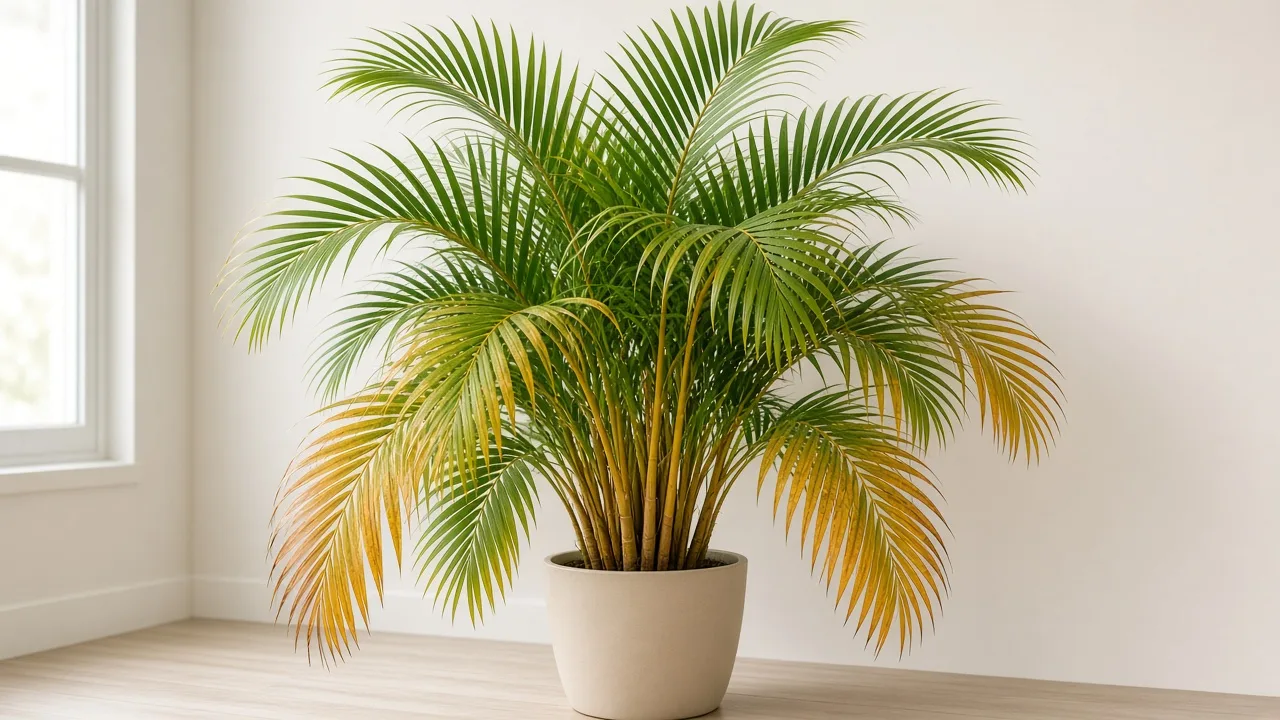
Potassium deficiency on areca palm shows translucent yellow-orange spotting and brown tip necrosis on the oldest leaflets and lowest fronds while newer spears stay green. First step: inspect the lowest canopy on each cane for tip-to-base spotting—not fluoride crisp tips on mature pinnae alone—then apply one half-strength palm fertilizer with adequate potassium during active growth after firm canes and appropriate dry-down.
Potassium Deficiency on Areca Palm: Causes, Checks & Fixes
This guide covers potassium deficiency on Areca Palm. See also the general Potassium Deficiency guide, watering, and light pages for this plant.
Potassium Deficiency on Areca Palm: Causes, Checks & Fixes
Quick answer
Potassium deficiency on areca palm (Dypsis lutescens—Butterfly Palm, Golden Cane Palm) shows translucent yellow-orange spotting and brown tip necrosis on the oldest leaflets of the lowest fronds, while newer spears and upper canopy fronds stay relatively green. Potassium is mobile within the plant, so palms pull it out of old tissue to support new growth—symptoms always hit oldest leaves first and are most severe toward leaflet tips.
For how potassium shortage works on houseplants in general, see our potassium deficiency guide. On clumping areca palms, walk the lowest frond on each cane—orange translucent flecks and frizzled brown leaflet tips on old pinnae point here before magnesium deficiency banding or calcium deficiency on the newest spear.
First step: inspect the lowest oldest fronds on each cane for tip-heavy spotting—not brown tips from fluoride alone on otherwise healthy mature pinnae. Confirm firm canes and top-1-to-2-inch dry-down per the areca palm watering guide before feeding.
What potassium deficiency looks like on areca palm
The lowest canopy tells the story. Areca palms grow as a clumping palm with many bamboo-ringed canes from one base. Each cane carries arching compound fronds. Potassium shortage shows on the oldest fronds and their distal leaflets, not on the central unfurling spear.
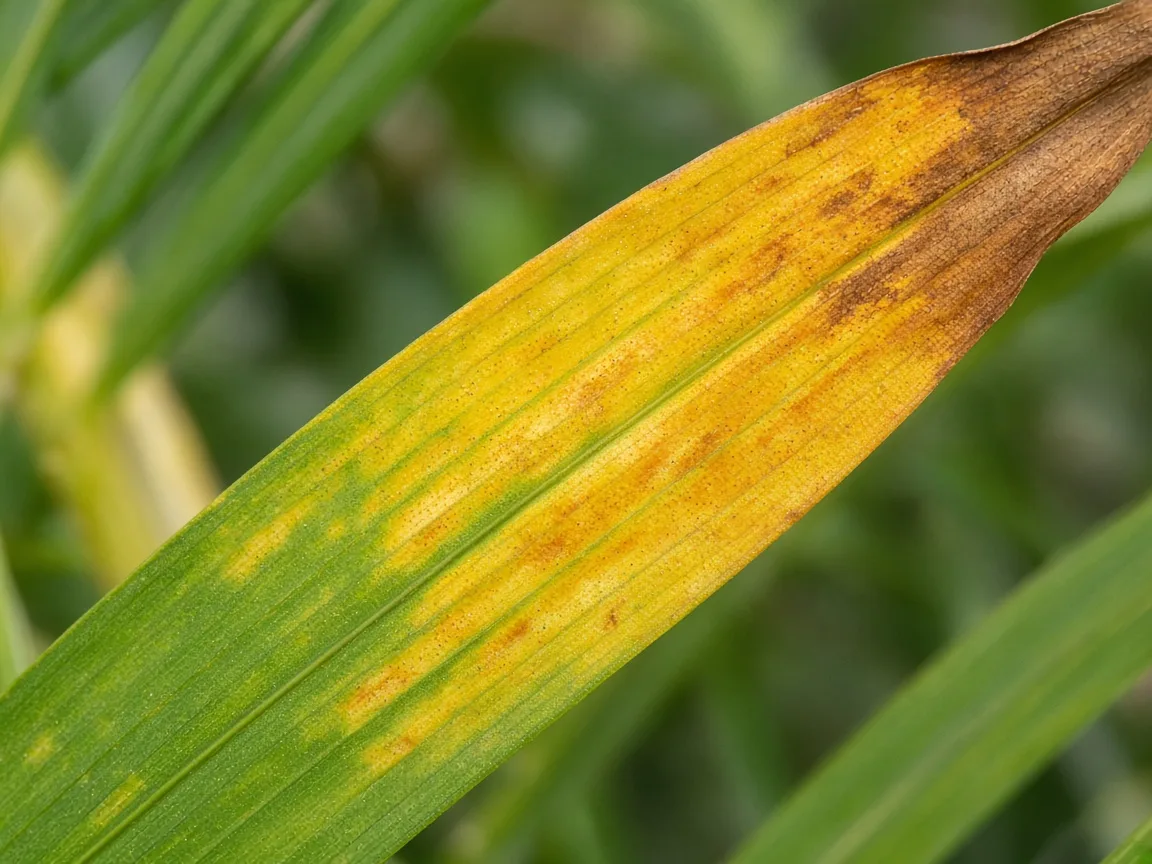
Translucent yellow-orange spotting with brown tip necrosis on an oldest areca palm leaflet—symptoms intensify toward the pinna tip and fade toward the leaflet base.
UF/IFAS documents potassium-deficient older leaves of Dypsis lutescens with discoloration plus marginal and tip necrosis. Typical signs:
- Translucent yellow to orange spotting on oldest leaflets of the lowest fronds
- Marginal and tip necrosis on distal pinnae, sometimes curled or frizzled at the ends
- Symptoms worst at the leaflet tip, less severe toward the leaflet base
- Severity decreases from oldest to youngest fronds—upper spears and newer fronds look greener
- Firm cane tissue at the soil line if roots are healthy
Not potassium deficiency:
- Broad yellow bands along oldest frond margins with a distinctly green center and no tip necrosis—magnesium deficiency
- Distorted or hook-shaped newest spear fronds while older fronds look normal—calcium deficiency
- Uniform pale canopy including many fronds at once—nitrogen deficiency
- Crispy brown tips on mature pinnae without orange spotting on lowest fronds—brown tips from fluoride or dry air
- New frond chlorosis with green veins—iron deficiency
- Soft cane, sour wet mix—overwatering or root rot
Why areca palm gets potassium deficiency
Dypsis lutescens is a clustering palm that prefers evenly moist, well-drained soil and steady frond production in bright indirect light. Potassium supports water regulation, enzyme function, and old-leaf turnover in actively growing palms. On indoor clumps, shortage usually traces to months without balanced feeding, salt-heavy nitrogen feeds without enough potassium, or depleted container mix—not a mysterious soil curse in a fresh bag of palm potting mix.
Potassium is mobile—oldest fronds pay first
When soil potassium runs low, the palm mines potassium from its oldest leaves and shuttles it toward new spear growth. Early potassium deficiency symptoms appear on the oldest leaves, with translucent spotting and necrosis that intensify toward leaflet tips. That is why you inspect the lowest frond on each cane, not the central unfurling spear.
Container palms vs landscape expectations
Potassium deficiency is widespread in field-grown and landscape palms but relatively uncommon and seldom serious in container-grown palms. Indoor areca owners still see it after years in the same pot without fertilizer, or when heavy nitrogen feeding pushes growth the root zone cannot support. Do not assume every yellow lower frond is potassium—overwatering and low light yellow oldest leaves too.
Salt buildup and unbalanced feeding
Areca palms are moderate feeders during spring and summer. Skipping feed all winter is fine, but stacking high-nitrogen houseplant fertilizer without adequate potassium through multiple growing seasons can leave the clump potassium-starved while salts accumulate. Flushing the pot periodically during the growing season helps if you feed regularly with tap water. White crust on the soil surface plus tip burn after feeding may be salt injury—flush before adding more fertilizer.
Confusion with fluoride tip burn
Areca palms are fluoride-sensitive. Fluoride accumulates at leaf margins and tips, causing crisp brown tips on mature pinnae. Fluoride is a water-chemistry problem; potassium is a feeding problem. Fluoride browning often looks like a sharp dead edge on otherwise green mature leaflets without the orange translucent spotting on the lowest oldest fronds. If lowest fronds show spotting plus tip necrosis while upper spears stay green, potassium fits better than fluoride alone.
Oldest-frond triage on clumping golden cane palms
An areca palm is not a single trunk. It grows as a clump of many canes, each capable of arching fronds. On a mature indoor specimen, one cane may show potassium spotting on its lowest frond while another looks fine if that stem is younger or pushing less growth.
Walk each cane from the soil line up:
- Find the lowest fully expanded frond on that stem.
- Inspect distal leaflets for orange translucent flecks and brown frizzled tips.
- Compare with the next younger frond on the same cane—spotting should be milder.
- Check the newest spear—it should open green if potassium is the only issue.
Potassium deficiency never starts on the central unfurling spear while older fronds look perfect. That pattern belongs on the calcium deficiency page. Likewise, broad yellow margins with a green heart on old fronds and no necrosis point to magnesium deficiency—though both deficiencies can overlap on long-held container palms.
Do not prune the lowest fronds too early
The palm is still extracting mobile potassium from those oldest leaflets. Removing every spotted lower frond before correcting feed removes the symptom and the reserve. Trim only fully dead pinnae if more than half a leaflet is necrotic and unsightly.
How to confirm
Work through this checklist in order:
- Oldest leaflets first—translucent yellow-orange spotting and tip necrosis on lowest fronds.
- Tip-heavy gradient—worst at pinna tips, greener toward leaflet base on the same pinna.
- Younger fronds cleaner—upper canopy and new spears relatively green.
- Watering ruled out—top 1–2 inches dry appropriately; no soft cane or sour wet mix.
- Feed history—months without fertilizer, or repeated high-nitrogen feeds without potassium.
- Fluoride ruled out—no sharp tip-only burn on mature pinnae across the canopy without lowest-frond spotting.
- Magnesium ruled out—no broad yellow bands without tip necrosis on old fronds.
Old-leaf nutrient patterns on areca palm
| Pattern | Leaf age affected | Key visual | First direction | Urgency |
|---|---|---|---|---|
| Potassium deficiency | Oldest leaflets on lowest fronds | Orange spotting, tip necrosis, frizzled tips | Half-strength palm feed with K | Medium |
| Magnesium deficiency | Oldest frond margins | Broad yellow bands, green center, no necrosis | Magnesium deficiency | Medium |
| Nitrogen deficiency | Older fronds, whole leaf pale | Uniform chlorosis, smaller new fronds | Nitrogen deficiency | Medium |
| Calcium deficiency | Newest spear frond | Distorted unfurling spear | Calcium deficiency | Medium |
| Fluoride tip burn | Mature pinnae tips | Crisp brown edge, no orange spotting on lowest fronds | Brown tips + filtered water | Low |
| Root rot | Spreading yellow, spears stall | Soft cane, wet sour mix | Root rot | High (same day) |
First fix
Apply one half-strength dose of palm-specific or balanced liquid fertilizer with adequate potassium—after you confirm the oldest-frond spotting pattern and firm canes.
- Lift the pot. If soil is waterlogged and canes feel soft, hold all fertilizer and correct drainage per overwatering first.
- If the top 1–2 inches dry on schedule and canes are firm, apply one half-strength feeding of palm-formulated or balanced fertilizer with potassium listed prominently—roughly a 3-1-2 N-P-K ratio is a common container-palm target per UF/IFAS container palm guidance.
- Use the areca palm fertilizer guide for seasonal timing—feed during spring through early fall active growth, not on a stressed winter-dormant clump.
- Hold repotting, heavy pruning, and extra feed doses for at least two weeks.
Do not dump full-strength fertilizer on dry or waterlogged soil. Do not treat fluoride tip burn with more fertilizer—that worsens salt stress. Do not remove all spotted lowest fronds the same week you feed.
Step-by-step recovery
- Match watering to light so the top 1–2 inches dry evenly per the watering guide.
- Apply half-strength palm feed once if the potassium pattern on oldest fronds is confirmed and roots are firm.
- Wait two to four weeks before a second half-strength dose during active growth—areca palms are moderate feeders, not heavy daily feeders indoors.
- Flush the pot with plain water once mid-season if you feed regularly and see white salt crust—especially before blaming potassium alone for tip burn.
- Move slightly brighter if the clump sits in deep shade—slow photosynthesis limits nutrient use for new fronds per the light guide.
- Monitor the next oldest fronds as they age—each generation should show less spotting than the prior one.
- Repot into fresh well-drained palm mix if roots are compacted and spotting persists after two corrected feeds in active growth.
Recovery timeline
Expect stabilized spotting on the next aging fronds within four to eight weeks after appropriate half-strength feeding begins in moderate light during the growing season. Areca palms grow at a moderate pace—give each cane a full month before deciding the fix failed.
Necrotic leaflet tips on fronds that already browned will not re-green. Judge success when newly aging fronds show milder spotting than the previous lowest frond and upper spears continue opening clean. Full canopy turnover can take several months because palms keep older fronds for a long time.
Lookalike symptoms
| Pattern | Likely cause |
|---|---|
| Orange spotting and tip necrosis on oldest leaflets | Potassium deficiency (this page) |
| Broad yellow bands on oldest frond margins, green center | Magnesium deficiency |
| Uniform pale older fronds, slow growth | Nitrogen deficiency |
| Distorted newest spear frond | Calcium deficiency |
| Crispy mature pinnae tips without lowest-frond spotting | Brown tips |
| Yellow lower fronds on heavy wet pot | Overwatering or root rot |
| General yellowing across canopy | Yellow leaves hub |
What not to do
Do not pour full-strength fertilizer on bone-dry or waterlogged soil. Do not repot, prune heavily, and feed on the same day on a stressed clump. Do not confuse golden cane petiole color with deficiency without checking oldest leaflet spotting. Do not switch to distilled water alone expecting potassium correction—water quality fixes fluoride tips, not mobile nutrient depletion. Areca palm is pet safe, but keep fertilizer away from pets and children.
How to prevent potassium problems next time
Feed lightly and consistently during spring and summer active growth with palm-specific or balanced fertilizer that includes potassium and magnesium. Half strength every two to four weeks when fronds are actively unfurling beats rare heavy doses that spike salts.
Match watering to light so the top 1–2 inches dry predictably. Repot every two to three years when roots circle or mix depletes in bright homes. If you use tap water year-round and feed often, flush salts periodically so tip burn is not misread as fresh potassium shortage.
When to worry
Escalate if spotting climbs into mid-canopy fronds while you increase fertilizer—that may be salt burn or hidden rot. If lowest-frond necrosis spreads for two months after correct dry-down, appropriate feeding, and moderate light, repot into fresh mix before adding potassium supplements.
Soft cane at the base, sour-smelling soil, or spreading yellow on a heavy wet pot needs same-day root assessment—that is likely root rot, not potassium lack.
When to use this page vs other Areca Palm guides
Use this page when oldest leaflets on the lowest fronds show translucent orange spotting and tip necrosis while newer spears stay green. Use magnesium deficiency when oldest frond margins yellow in broad bands without tip necrosis. Use calcium deficiency when the newest spear frond emerges distorted. Use brown tips when mature pinnae tips brown from fluoride or humidity without lowest-frond spotting. Use yellow leaves when you need a broader differential across the clump.
Related Areca Palm guides
- Areca palm overview—species care hub
- Areca palm watering—top-1-to-2-inch dry-down check
- Areca palm fertilizer—half-strength palm feed schedule
- Magnesium deficiency—broad old-frond banding differential
- Areca palm problems hub—full problem index
Related tool
Use the Fertilizer Dilution Calculator to dial in half-strength palm feed for potassium deficiency on this plant before changing multiple variables at once.