Black Spots on Asparagus Fern: Cladode & Soil-Line Checks
Quick answer
Black spots on Asparagus Fern (Asparagus setaceus) usually appear as pinhead lesions on fine cladodes (needle sprays), not broad leaves. Wet foliage with poor airflow causes fungal leaf spot; dry winter air brings spider mite stippling that bronzes to black. First step: stop misting, feel the top 2 cm of soil, and inspect cladode undersides with a magnifier.
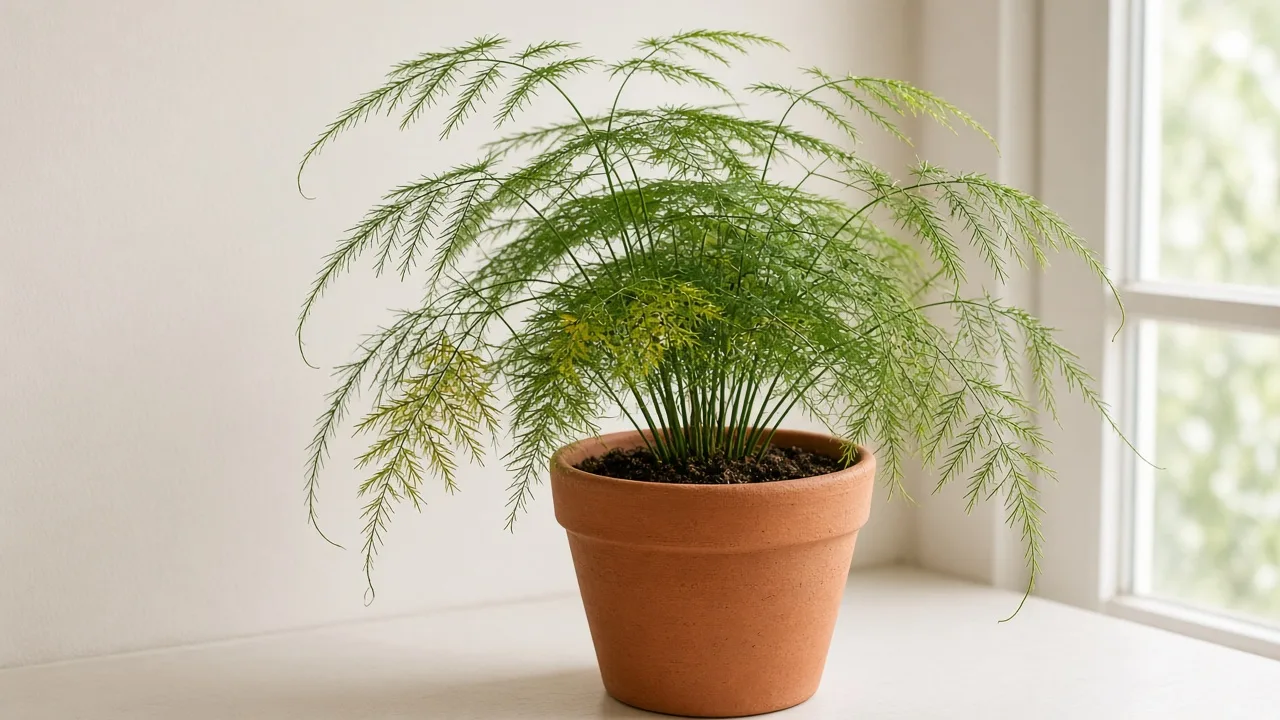
Black Spots on Asparagus Fern: Causes, Checks & Fixes
This guide covers black spots on Asparagus Fern. See also the general Black Spots guide, watering, and light pages for this plant.
Black Spots on Asparagus Fern: Causes, Checks & Fixes
Quick answer
Black spots on Asparagus setaceus (asparagus fern, lace fern) show up on fine needle-like cladodes—the feathery sprays that look like fern fronds but are actually flattened stem branches. For general black spot disease mechanics, see our black spots guide. On this plant, wet dense sprays plus stagnant air cause fungal leaf spot, while winter dryness brings spider mite stippling that darkens to black.
First step: stop misting or splashing water on the foliage, then press the top 2 cm of soil. Soggy mix with soft tubers means overwatering or root rot—not a fungicide-on-cladodes fix.
When to use this page vs other Asparagus Fern guides
| Pattern | Read next |
|---|---|
| Wet mix, yellow sprays, soft tubers | Overwatering or root rot |
| Fine stippling, webbing on cladodes | Spider mites |
| Black smear that wipes off | Aphids or mealybugs |
| Brown dry tips only, firm tubers | Brown tips |
| Whole sprays yellowing from base | Yellow leaves |
What black spots look like on Asparagus Fern
Healthy asparagus fern shows arching wiry stems with soft green cladode sprays held in horizontal planes. Black spots present differently on this fine-textured foliage than on broad-leaf houseplants:
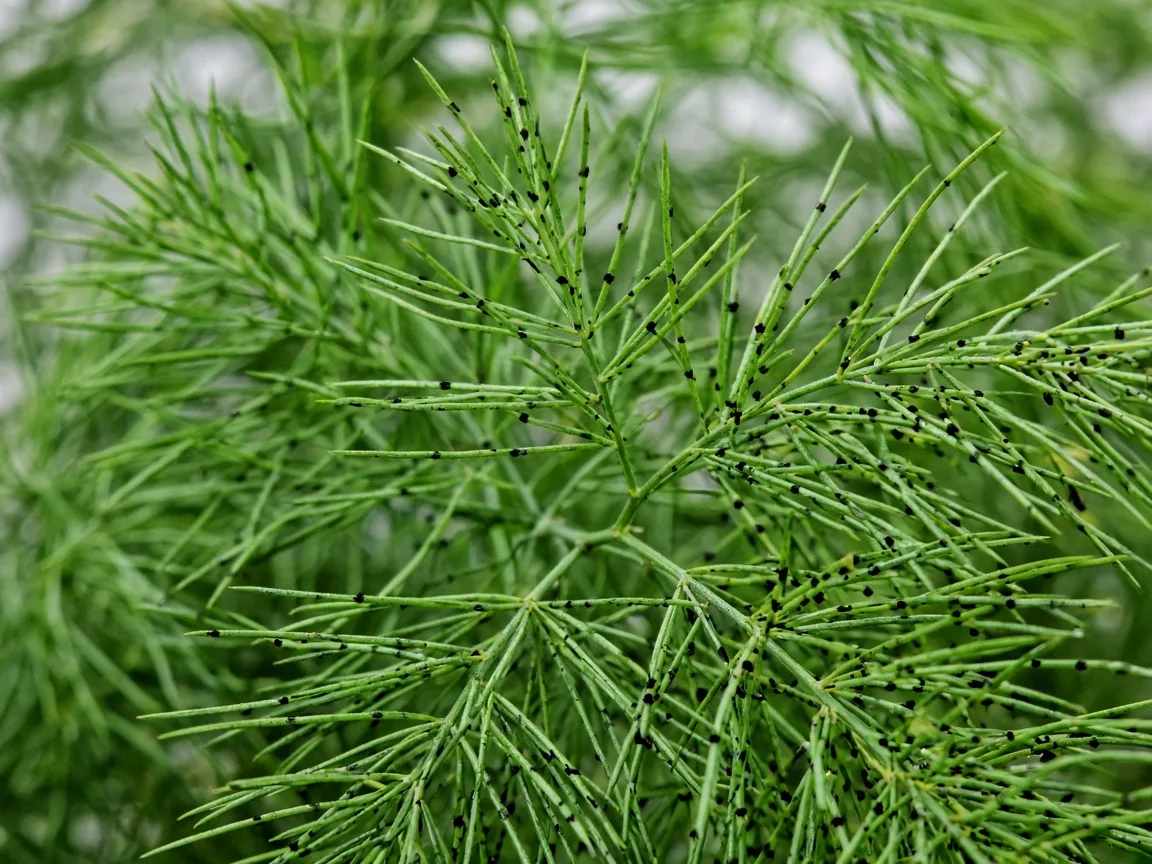
Pinhead black lesions on Asparagus setaceus cladodes—compare yellow halos (fungal spot) with bronze stippling (mites) and firm green tubers at the soil line.
- Pinhead black dots with yellow halos on individual cladodes — Classic fungal leaf spot after foliage stays wet; may show tiny black fruiting bodies in dead tissue.
- Bronze stippling that darkens across a spray — Spider mites in dry winter air; look for fine webbing between needles.
- Black smear that rubs off on your finger — Sooty mold on honeydew from aphids or mealybugs hiding in dense sprays.
- Water-soaked dark spots with yellow margins — Bacterial leaf spot after splash watering or rainy outdoor placement.
- Dry black only on lowest inner cladodes — Often normal aging as the crown pushes new sprays upward; firm tubers and clean tip growth confirm this.
- Black mushy tissue at soil line on wiry stems — Tubers rotting from chronic wet mix; sprays above may still look spotted before they collapse.
Unlike true ferns, damaged cladodes do not recover—NC State Extension notes yellow needles will not rejuvenate, but new growth can appear at the soil line once conditions improve.
The cladode spray moisture test
Asparagus fern’s dense needle sprays trap mist and splash water in ways that do not happen on snake plant or pothos leaves. This quick test is specific to Asparagus setaceus:
- Hold one affected spray up to a window and back-light the cladodes.
- If spots have yellow halos and stay fixed when dry, suspect fungal leaf spot from wet foliage.
- If you see tiny moving dots and fine silk, suspect mites before spraying fungicide.
- If black wipes off, wash honeydew off and hunt pests in the axils where wiry stems branch.
Wear gloves when handling damaged tissue—sap and berries are irritating and the plant is toxic to pets.
Why Asparagus Fern gets black spots
Wet foliage and poor airflow. Inadequate air circulation and wet foliage can cause leaf spot on asparagus fern. Hanging baskets and crowded shelf placement keep cladode layers damp after misting or overhead watering.
Spider mites in dry winter rooms. Delicate cladodes lose moisture fast in heated air. Mite feeding shows as stippling long before you notice webbing—common on this species per NC State pest notes.
Overwatering and tuber rot. Large tuberous roots store water but rot when mix stays saturated. Blackening at the crown often pairs with yellow dropping sprays and sour-smelling soil.
Pest honeydew and sooty mold. Aphids and mealybugs on soft new cladodes leave sticky residue that grows black sooty mold—not a separate fungal disease on the plant itself.
Splash and bacterial spot. Watering with a hard stream or moving the plant outdoors in rain spreads bacteria between overlapping cladode planes.
How to confirm the cause
- Dry-down check — Top 2 cm barely moist before rewatering per the watering guide; heavy pot days after watering on peat mix points to moisture stress.
- Tuber squeeze at soil line — Firm white tubers are healthy; soft brown tubers mean rot protocol.
- Magnifier on cladode undersides — Mites, aphids, or mealybug cottony patches.
- Spot texture — Fixed in dead tissue (fungus) vs wipes off (sooty mold) vs water-soaked (bacteria).
- New tip growth — Clean emerging cladodes mean your fix is working even if old needles stay spotted.
Lookalike symptoms on needle sprays
| What you see | Texture | Tuber check | Likely cause |
|---|---|---|---|
| Black dots with yellow halos | Dry, papery cladode | Firm | Fungal leaf spot |
| Bronze speckling, fine webbing | Dry stippling | Firm | Spider mites |
| Black coating rubs off | Smear on surface | Firm | Pest honeydew / sooty mold |
| Water-soaked dark patches | Soft, spreading in wet weather | Firm | Bacterial leaf spot |
| Black only on lowest inner needles | Dry, papery | Firm | Normal cladode aging |
| Soft black at crown | Mushy stem base | Soft tubers | Root rot |
Photo one affected spray and the soil line weekly. Spread onto every new tip cladode within two weeks beats counting total spotted needles.
When black spots become urgent
Treat same-day when tubers feel soft, entire sprays collapse from the base, or black lesions appear on every new cladode despite dry foliage and corrected watering. Lower urgency when spots stay on older inner sprays, tubers squeeze firm, and fresh tip growth looks green. A few isolated pinhead spots after you stopped misting often mean the outbreak is already slowing.
First fix for Asparagus Fern
Stop wetting the foliage and check whether the top 2 cm of soil is barely moist—not wet.
For firm tubers with leaf-only spots:
- Move the plant to bright indirect light with space between sprays for airflow.
- Water at soil level only; never mist cladodes to “help” humidity.
- Snip out heavily spotted sprays at the stem with gloves; bag and discard—do not compost wet infected tissue indoors.
- If mites are confirmed, follow the spider mites page before fungicide.
For fungal leaf spot after foliage has been dry for several days:
- Remove affected cladode sprays; improve airflow.
- If spots keep spreading on new growth, a copper soap fungicide applied outdoors per label may help after infected tissue is removed (Clemson HGIC).
For soft tubers:
- Stop watering, unpot, and inspect roots the same day per root rot.
Do not fertilize a spotted plant before moisture and pests are ruled out. Do not repot and prune every spray on the same day unless tubers are actively rotting.
Recovery timeline
Fungal spots on firm plants often stop spreading within two to three weeks after foliage stays dry and spotted sprays are removed. New cladodes may take four to six weeks to fill gaps in warm bright conditions. Tuber rot recovery depends on how much crown tissue was lost—division of healthy tuber sections at repotting may be needed.
Mistakes to avoid
- Misting dense needle sprays
- Overhead watering that soaks overlapping cladode layers
- Spraying fungicide while soil is waterlogged
- Ignoring mites because spots look like fungus
- Handling without gloves when sap is flowing
How to prevent black spots next time
Prevention on Asparagus setaceus is dry cladodes with steady root moisture, not foliar treatments:
- Water on soil feel, not calendar. Keep the top 2 cm barely moist per the watering guide.
- Raise humidity without wetting needles — pebble tray or humidifier, not mist.
- Give sprays room to breathe in hanging baskets; trim overcrowded stems in spring.
- Inspect monthly in winter for mites when indoor air is dry.
- Quarantine new plants before mixing with established baskets.
- Empty saucers after watering so tubers do not sit in stagnant water.
See Asparagus Fern overview and problems hub for the full care cluster.
Related Asparagus Fern guides
Conclusion
Black spots on asparagus fern are cladode-first diagnostics—wet needle sprays with poor airflow invite fungal leaf spot, while dry winter air brings mite stippling that darkens. Firm tubers and dry foliage separate leaf-level spots from crown rot. Stop misting, check soil moisture, and read new tip growth before reaching for sprays.