Pale Leaves on Asparagus Fern: Causes, Checks & Fixes
Quick answer
Pale leaves on asparagus fern usually mean washed-out cladodes—the fine needle-like stems that photosynthesize—not a single disease. First step: compare the greenest frond to the palest one, note whether the plant leans toward a window, and push your finger into the top inch of mix before fertilizing or repotting.
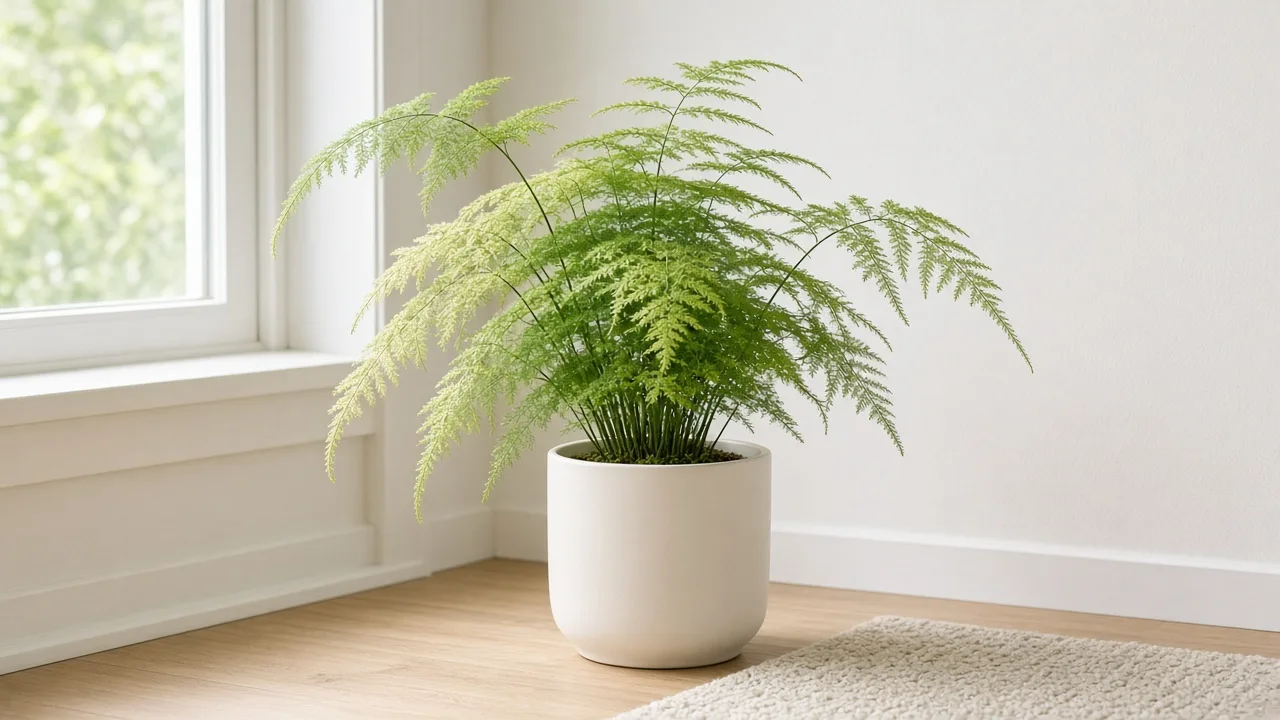
Pale Leaves on Asparagus Fern: Causes, Checks & Fixes
This guide covers pale leaves on Asparagus Fern. See also the general Pale Leaves guide, watering, and light pages for this plant.
Pale Leaves on Asparagus Fern: Causes, Checks & Fixes
Quick answer
Pale leaves on asparagus fern almost always mean pale cladodes—the soft, needle-like flattened stems along wiry fronds. Asparagus fern is not a true fern; Asparagus setaceus grows from tuberous roots and rhizomes that store water but fail quickly in oxygen-poor, constantly wet mix. Pallor is low chlorophyll, not one disease. The same washed-out look can come from dim light, root stress on wet soil, drought before needles yellow, iron or nitrogen drift, spider mite stippling, harsh direct sun bleaching fine foliage, or normal aging on the oldest outer sprays.
First step: compare the greenest frond to the palest one and note where the plant sits relative to your brightest window. Uniform light-green wash across many fronds in a dim hallway fits not enough light. Pale new spears with darker older stems may trace to iron deficiency or recent repot shock. Dull matte color with wet heavy pot points to overwatering or early root rot before needles turn yellow. Do not fertilize until you know which branch you are on.
For general pale-foliage mechanics, see our pale leaves guide. On asparagus fern, the contrast between dense emerald lace on one stem and washed chartreuse on the next—often on the same plant in a hanging basket—is one of the most reliable species-specific signals indoors.
When to use this page vs other Asparagus Fern guides
| Pattern | Start here | Or route to… |
|---|---|---|
| Washed-out light green, firm cladodes | This page | Not enough light |
| Long bare wiry stems, sparse needles | Leggy growth | Not enough light |
| Chartreuse advancing to yellow, clump drop | Yellow leaves | Underwatering |
| Pale new spears, dark old fronds | This page | Iron deficiency |
| Pale with wet soil, soft crown | Overwatering | Root rot |
| Tip pale then brown, moist soil | Low humidity | Brown tips |
What pale cladodes look like on asparagus fern
Healthy cladodes are grass-green to medium emerald, soft, and evenly colored along each frond. Pale stress changes that pattern in ways that hint at the cause—if you read them with soil moisture and tuber firmness.
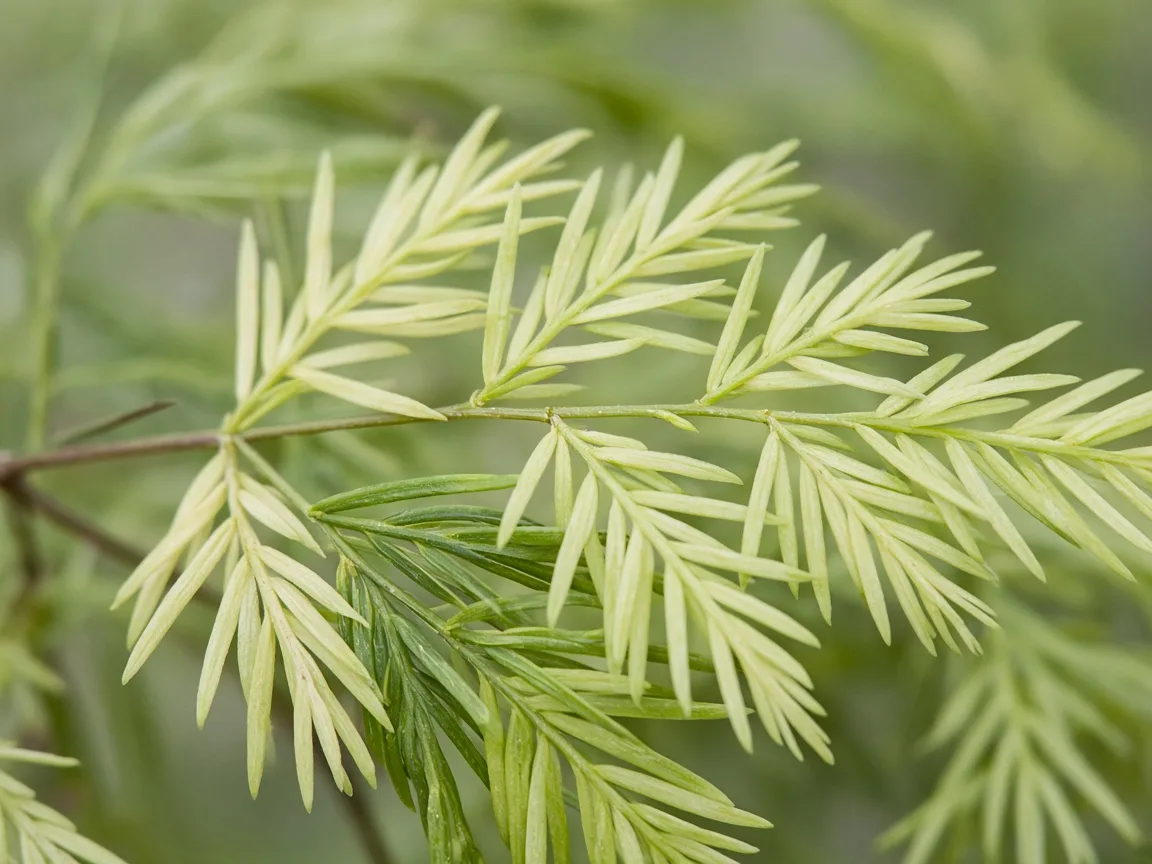
Pale Leaves symptoms on Asparagus Fern - washed-out chartreuse cladodes compared with greener tissue on the same plant.
Low-light washout:
- Many fronds share a uniform light yellow-green tone—not deep emerald
- Long gaps between cladode clusters on wiry stems; plant leans toward the brightest window
- Mix dries slowly because transpiration is low—easy to overwater a pale plant in shade
- New spears emerge smaller and lighter than older growth on the same plant
Root-stress dullness (wet soil):
- Cladodes lose gloss and look matte pale green; may feel thin along lower stems
- Pot stays heavy; top inch of mix damp for many days without your normal watering
- Pallor often starts near stem bases where fronds meet soil, before widespread yellow leaves
Drought pale before yellow:
- Outer frond tips turn chartreuse while mix is dry and pot feels light
- Fine needles still attached but lack the deep green of inner crown growth
- Tuberous roots at the soil line feel firm—storage buffered the drought briefly
Nutrient pale:
- Older fronds lighten first while veins stay slightly greener—see nitrogen deficiency
- Newest spears stay pale while mature stems look normal—see iron deficiency
- Same pot and mix for two or more years without refresh or measured feed
Sun-bleach pale (direct exposure):
- Pale or whitish patches on the sun-facing side of arching fronds
- Damage concentrates on glass-side sprays, not the shaded back of the plant
- Direct hot afternoon sun may also cause leaves to yellow—pale often precedes yellow on exposed cladodes
Pest stippling before pallor:
- Fine speckled patches on cladodes; webbing at stem joints in dry furnace air
- See spider mites on asparagus fern before assuming a watering mistake
Fully washed-out cladodes on existing stems rarely return to full emerald. Recovery shows up as new green spears from the crown, not as old needles darkening in place.
Hanging-basket crown pallor (asparagus fern only)
Sprengeri and lace types in high hanging baskets often show a split personality: outer cascading stems catch window light and stay greener while the crown near the hanger hook goes pale and sparse. The top self-shades; lower arching fronds steal light from inner growth. This is not underwatering if soil near the bottom stays moist but the crown thins—raise the basket so the crown sits near window height, rotate weekly, and trim bare inner stems at the soil line after you improve placement. See leggy growth when long bare wiry sections dominate.
Why asparagus fern turns pale
Pale cladodes mean the plant is producing less chlorophyll than it needs for its current growth rate—or losing it faster than it replaces it. On this species, the usual drivers tie directly to tuberous roots, fine foliage, and indoor light swings.
Insufficient light for photosynthesis is the top indoor cause. These plants need bright indirect light and insufficient light will result in yellow needles that drop—pale washout is the stage before that drop on many fronds. Indoor light drops sharply with distance from the window. A pot on an interior shelf six feet from glass is not getting window light; cladodes stay light green and sparse.
Overwatering and poor drainage keep tuberous roots in oxygen-poor mix. Root rot and yellowing can occur from overwatering or poor drainage. Damaged storage roots move less water and fewer nutrients; cladodes dull before turning yellow while the pot stays wet. Calendar watering in cool winter rooms and cachepots without drainage prolong saturation.
Underwatering and inconsistent moisture deplete fine root hairs before tubers empty. The foliage will yellow and drop if the soil is too dry for too long—chartreuse outer needles often appear first. Tuberous roots buffer short dry spells, but weeks of bone-dry mix in a bright warm spot produce pale then dropping cladodes.
Iron and nitrogen drift in old leached peat mix after years without feed or repot. Fine needle foliage shows deficiency on new vs old fronds differently than broad-leaf houseplants.
Low humidity in heated winter air can pale outer tips before they brown crisp—soil may read moist while foliage looks tired. If humidity is too low, browning of leaf tips can occur.
Spider mites and aphids stress cladodes in dry air; stippling may appear before generalized pallor. Check stem joints before assuming light or water alone.
Lookalike symptoms to rule out
| Pattern | Pot weight | Top inch of mix | Where pallor starts | Likely cause |
|---|---|---|---|---|
| Uniform washout | Normal to light | Slow to dry | Whole plant, long bare stems | Not enough light |
| Matte dull pale | Heavy | Wet for days | Stem bases near soil | Overwatering |
| Chartreuse outer tips | Light | Dry, crumbly | Outer frond tips | Underwatering |
| New spears only pale | Normal | Per rhythm | Newest growth | Iron deficiency |
| Lower fronds pale first | Normal | Per rhythm | Older arching stems | Nitrogen deficiency |
| Sun-side bleach | Normal | Per rhythm | Window-facing cladodes | Too much direct sun |
| Stippling before pale | Normal | Per rhythm | Patchy on cladodes | Spider mites |
| Crown pale, outer green | Normal | Moist at bottom | Top of hanging basket | Self-shading / placement |
One reading alone misleads. A pale plant in shade can sit in wet soil while looking “thirsty.” Pair moisture depth, pot weight, and where pallor started.
How to confirm the cause
Work through these six checks in order before repotting, fertilizing, or heavy pruning.
- Light at the crown — Run a hand-shadow test at midday where new spears emerge. Almost no shadow plus uniform pale green fits low light. Harsh direct sun on one side fits bleach—filter the window.
- Top-inch soil moisture — Push a finger about 1 inch into the mix near the pot edge. Wet with matte pale lower stems favors overwatering; dry with chartreuse outer fronds favors drought. See the watering guide.
- Pot weight — Lift the pot after you learn its wet and dry feel. Heavy for a week with dull spreading pallor at the crown signals chronic saturation, not thirst.
- New vs old frond pattern — All fronds equally pale → light. Only new spears pale → iron or recent stress. Lower arching stems pale first → nitrogen after light is ruled out.
- Tuber and stem base firmness — Gently press stems where they emerge from soil. Firm pale tubers support recovery; soft dark tissue means inspect for root rot.
- Pest check — Examine stem joints and cladode undersides for stippling, webbing, or clustered insects.
Confirmed low light: dim placement, stretched stems, slow soil dry-down, uniform washout. Confirmed wet-soil pallor: heavy pot, damp mix, dull color from base up. Confirmed drought pale: light pot, dry top inch, chartreuse outer tips, firm tubers. Likely nutrient drift: adequate light, normal moisture, persistent pale new or old pattern after two-plus years in same mix.
First fix for asparagus fern
Compare the greenest frond to the palest one and check top-inch soil moisture before any other action. That pair prevents watering a wet plant, withholding water from a dry one, or fertilizing a light-starved plant—three common mistakes that worsen pallor on tuberous-root asparagus fern.
If the plant is uniformly pale in a dim corner: move to bright indirect light—a few feet from an east window, or south or west exposure behind a sheer curtain. Hold watering steady until you relearn dry-down in the brighter spot. Full placement protocol: not enough light on asparagus fern.
If the mix is wet and cladodes look dull from the base up: stop watering immediately. Empty saucers and cachepots. Move off deep shade if evaporation is slow. If tubers feel soft or the mix smells sour, unpot and trim damaged tissue per the root rot guide. Wet-soil branch: overwatering.
If the top inch is dry and the pot is light with chartreuse outer tips: water thoroughly until a small amount drains, then discard runoff within 30 minutes. Keep soil moist but well-drained—one measured drink when dry, not repeated shallow splashes. See underwatering.
If light and moisture are normal but new spears stay pale for a month: consider quarter-strength balanced feed during active growth only after ruling out root damage—see fertilizer guide and nutrient sibling pages.
If sun-side bleach on glass-facing fronds: pull back from direct afternoon sun or add a sheer curtain. Filtered bright light is the target per the light guide.
Make one correction, then wait five to seven days before stacking repotting, fertilizer, and pesticide.
Recovery timeline
Low-light recovery takes two to four weeks of brighter placement before new compact green cladodes fill in along stems. Old pale needles on existing fronds do not re-green.
Mild drought pallor often stabilizes within two to four days after a proper soak-and-drain when tubers remain firm. New green spears may appear at the soil line within one to two weeks.
Chronic overwatering dullness spans one to three weeks when firm tubers survive and you keep the mix on the dry side of moist. Yellow needles will not rejuvenate, but new growth will appear at the soil line once conditions improve—that new growth is your benchmark.
Nutrient correction may take one to two flushes of new spears after measured feed or repot into fresh mix—old pale cladodes often stay lighter than ideal.
Judge success by new firm green spears, stable pot weight, and stopped spread of washout—not by old needles darkening in place.
What not to do
Do not fertilize pale asparagus fern before you confirm soil moisture, light, and tuber health. Salt buildup and forced growth stress roots that are already failing.
Do not increase watering when the mix is wet and stems at the base are soft—that accelerates tuber rot on this species.
Do not repot proactively when only outer arching stems look pale on an otherwise firm plant with normal moisture. Repot when tubers are rotting, the plant is severely root-bound and drying out in hours, or you must trim mushy roots.
Do not mist heavily to fix pallor—brief surface moisture does not hydrate tuberous roots and can keep fine cladodes wet in stagnant air.
Do not confuse healthy outer cascade aging with crown collapse. Adding water to a wet, dull crown makes rot worse.
How to prevent pale leaves next time
Match everyday care to how asparagus fern stores water and photosynthesizes through fine cladodes:
- Light — Bright indirect exposure; avoid direct hot afternoon sun that bleaches and yellows fine needles. See the light guide.
- Watering rhythm — Check the top inch with your finger; typical active-season interval is every 5–7 days, slower in winter. Water regularly spring through autumn and sparingly in winter. Resume from the watering guide rather than a fixed calendar.
- Drainage — Use well-drained peaty mix in a pot with drain holes; empty saucers within 30 minutes of watering. See soil guide.
- Humidity — Target roughly 50% RH in heated winter rooms; use a humidifier or pebble tray when furnace air runs dry.
- Hanging placement — Keep the crown near window height on trailing types; rotate weekly.
- Prune spent fronds — Remove pale or yellow stems at the soil line promptly to redirect energy to new spears.
- Refresh or feed thoughtfully — After two-plus years in the same mix, pale new growth may need repot or measured feed—not both on the same day.
When to worry
Treat pallor as urgent when:
- Many fronds dull from the base up while mix stays wet—possible advancing root rot
- Sour smell from drain holes or mushy tubers on inspection
- Sudden widespread washout within days on a previously green plant—check wilting overlap and pests
- Soft crown stems with saturated soil despite stopping water
Lower urgency: one or two oldest outer stems slightly lighter over months, mild winter slowdown with firm tubers, or pale only on fronds you already planned to remove at the base.
Related asparagus fern problems
- Asparagus fern overview — cladode biology and full care hub
- Watering — moisture rhythm for tuberous roots
- Not enough light — leggy sparse pale growth
- Yellow leaves — pallor advancing to yellow
- Overwatering — wet-soil dullness from the base
- Iron deficiency — pale new spears
- Spider mites — stippling before pallor
- Asparagus fern problems — browse all common issues