Distorted Leaves on Baby Rubber Plant: Causes, Checks &
Quick answer
Distorted leaves on Baby Rubber Plant mean new glossy obovate blades open twisted, puckered, or asymmetric—often permanently scarred while unfurling at upright stem tips. First step: isolate the plant and inspect the newest expanding leaf and pink petiole axils with a magnifier before changing watering or light.
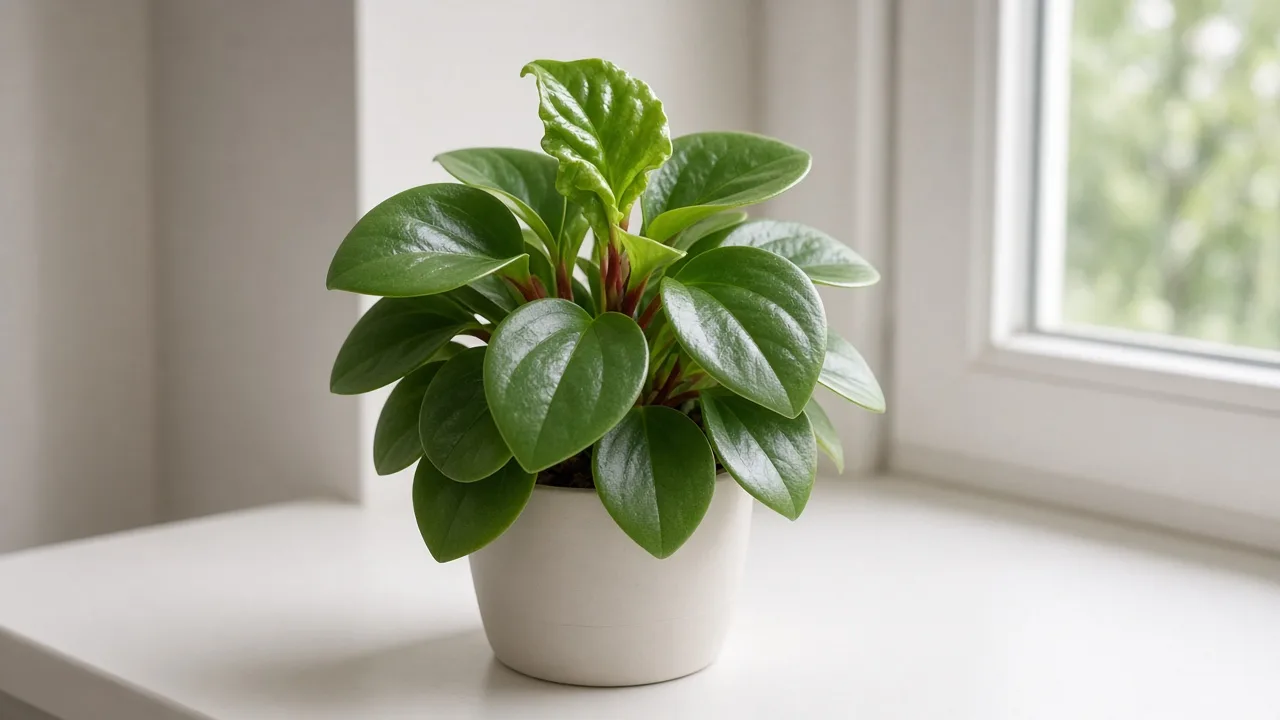
Distorted Leaves on Baby Rubber Plant: Causes, Checks & Fixes
This guide covers distorted leaves on Baby Rubber Plant. See also the general Distorted Leaves guide, watering, and light pages for this plant.
Distorted Leaves on Baby Rubber Plant: Causes, Checks & Fixes
Quick answer
Distorted leaves on Baby Rubber Plant (Peperomia obtusifolia) are glossy obovate blades that open twisted, puckered, ruffled, or asymmetric instead of the plant’s usual thick cupped shape. On this compact upright bush, distortion almost always scars while the leaf unfurls at the topmost stem tips—the semi-succulent tissue hardens in the damaged form and cannot be pressed flat later. For general causes of misshapen foliage, see our distorted leaves guide. On obtusifolia, thrips, spider mites, and mealybugs on the newest soft leaf are the most common urgent causes; cold drafts warping tender tips and stuck unfurling from dry winter air are the main care mimics.
First step: isolate the plant and inspect the newest expanding leaf and pink petiole axils with a magnifier. Look for silver streaks, stippling, cottony patches, clustered soft insects, or fine webbing before soaking, fertilizing, or repotting.
What distorted leaves look like on Peperomia obtusifolia
Healthy Baby Rubber Plant holds thick, glossy, cupped obovate leaves on short, often pink-tinged petioles along upright branching stems. Each leaf is sub-peltate—the petiole attaches near the center—so a slight natural dome on brand-new leaves is normal for a week or two. Distortion breaks that pattern when the blade hardens in a warped shape.
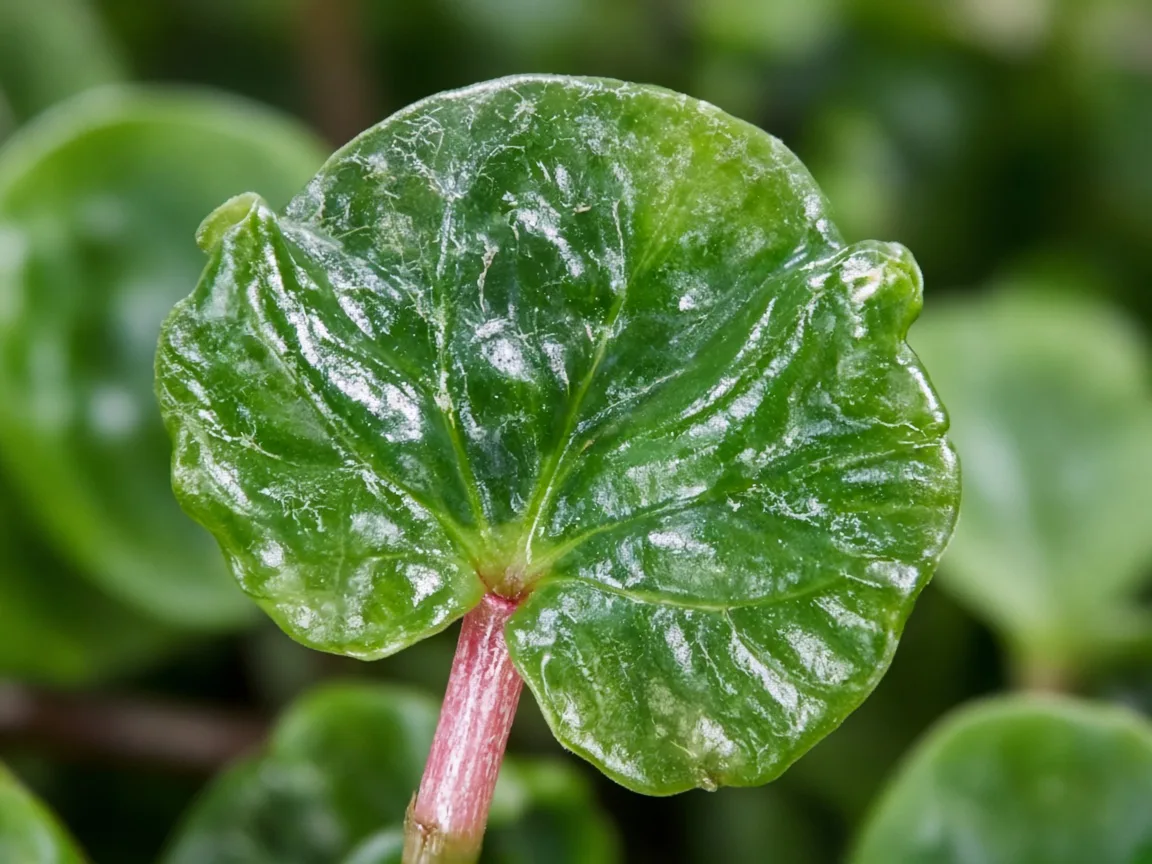
Distorted Leaves symptoms on Baby Rubber Plant - compare with healthy tissue on the same plant.
- Twisted or ruffled new leaf only — Mature glossy leaves below look normal. Classic pest feeding on expanding tissue at stem tips; see thrips, spider mites, and mealybugs.
- Asymmetric half-blade with silver scarring — One side of the unfurling obovate leaf opens smaller; silvery trails on pale tissue from thrips rasping soft cells.
- Stippled new tips with fine webbing — Spider mites scar expanding tissue on dry winter sills; distortion may follow stippling on the same leaf.
- Cottony white patches in leaf axils with puckered new growth — Mealybugs nest where pink petioles meet upright stems on this species.
- Stuck roll with dry brown crease — Leaf never opens fully; may look crumpled. Low humidity near heating vents or a physical snag on a shelf edge.
- Bumpy corky swellings on thick leaf backs — Oedema from overwatering in dim light; raised corky patches, not pest ripples on the newest tip.
- One wrinkled new leaf after a cold draft — Obtusifolia is intolerant of very drafty sites; a single warped tip after an AC blast fits environmental warp, not whole-plant failure.
The topmost stem cluster is the diagnostic focal point. Distortion confined there screams pests or unfurling stress; distortion across every mature leaf at once suggests chronic root failure or severe heat—cross-check overwatering when wet soil and soft stem bases appear together.
Reading obtusifolia’s sub-peltate unfurl vs stress twist
This is the diagnosis step most owners skip—and it matters on obtusifolia because the leaves are naturally thick and slightly domed.
Normal new-leaf dome: One inward-cupped obovate blade at a stem tip on firm soil, with pink petioles still stiff and neighboring mature leaves flat and glossy, usually means unfurling—not crisis. Wait until the leaf fully expands and thickens before changing care.
Pest twist: Only the softest new blade looks ruffled, puckered, or asymmetric while mature obovate leaves stay polished. Undersides or axils show stippling, webbing, silver scars, or cottony wax. UF/IFAS notes that mites are the main pest problem on peperomia; NC State recommends monitoring mealybugs, spider mites, and whiteflies on obtusifolia.
Moisture cup vs distortion: Curling leaves on this plant usually cup mature thick blades smoothly from drought or wet roots. Distortion twists new tissue asymmetrically—often with pest signs—not a uniform inward roll across several established leaves.
Variegated vs solid green: ‘Variegata’, ‘Golden Gate’, and other pale-marked cultivars show warp and scarring on cream or yellow sections before solid-green tissue in the same pot. If only the pale patch puckers while green areas stay flat, suspect light stress combined with pest feeding on thinner pigmented cells—not a mystery nutrient gap.
Why Baby Rubber Plant gets distorted leaves
Thrips on expanding tissue
Thrips rasp soft new peperomia leaves before they harden. Feeding creates permanent silver scars and ripples as the thick blade opens. The compact bush form hides insects in crowded leaf axils along upright stems, but the worst cosmetic damage lands on the newest obovate leaf.
Spider mites on dry winter tips
Spider mites thrive in warm, dry indoor air. Stippling and fine webbing at petiole bases can distort expanding leaves on a dry-stressed Baby Rubber Plant sitting on a sunny sill. Mites are a documented primary pest on this species per UF/IFAS.
Mealybugs in pink petiole axils
Mealybugs nest where short pink-tinged petioles meet upright stems—the classic hiding zone on obtusifolia. Distorted, puckered new growth with white cottony patches and sticky residue points to mealybugs, not random deformity.
Aphids on tender stem tips
Aphids cluster on young petioles and soft new blades, sucking sap and depositing honeydew. Twisted new growth with sticky shine and clustered soft insects fits aphid pressure at stem tips.
Cold drafts on unfurling tissue
Obtusifolia is intolerant of very drafty sites. Cold air from AC vents, winter door drafts, or chilled window glass can warp margins on otherwise healthy new foliage without changing soil moisture—check placement before repotting or fertilizing.
Low humidity and stuck unfurling
New leaves emerge from tight tips on short petioles. When humidity drops sharply near heating vents, the roll can dry and crease, opening wrinkled or partially fused. Mature leaves may show curling at margins without full asymmetric twist.
Oedema from wet mix in dim light
Oedema produces rough corky swellings on thick leaf backs when roots take up water faster than leaves transpire—cool, overcast, overwatered conditions. Bumpy corky texture differs from pest ripples on the newest unfurling tip. See overwatering when soil stays wet and lower leaves yellow.
Physical damage during unfurling
A new sub-peltate leaf catching on a shelf edge, tight plant grouping, or window frame can tear or crumple permanently. One asymmetric scar with no spread to subsequent leaves fits mechanical damage—not systemic weakness.
How to confirm the cause
Work through these checks in order before changing anything:
- Magnifier on newest expanding leaf — Thrips, aphids, mites, mealybug wax, or frass inside the roll and at pink petiole axils.
- Which leaves are affected — New tip only = pests or unfurling stress. Many mature leaves at once = heat, chronic root failure, or severe drought.
- Silver streaks vs sticky shine — Thrips scarring vs aphid honeydew respectively.
- Stippling and webbing — Fine silk at petiole bases confirms mites; see spider mites when stippling concentrates on warm window-side tips.
- Air placement — AC blasts, radiator heat, and cold glass touching obtusifolia tips warp new tissue fast.
- Soil moisture and stem bases — Wet heavy pot with soft collapsing bases points to rot layered with possible pest stress—not a humidity fix alone.
- Physical obstacles — Leaf scraped against object during unfurling on the compact bush.
If mature leaves stay flat but every new tip emerges twisted with stippling, treat as active pests—not a watering schedule tweak.
The first fix to try
Isolate the plant and inspect the newest expanding leaf and pink petiole axils with a magnifier—then rinse leaf undersides and axils thoroughly if pests are present.
That is the correct first fix when distortion is confined to new growth at stem tips. Do not fertilize or repot on day one.
- If thrips, mites, mealybugs, or aphids confirmed: Tilt the pot so runoff does not pool in the stem crown where leaves cluster—obtusifolia rots when crowns stay wet. Rinse undersides and axils with lukewarm water; apply insecticidal soap or horticultural oil per label on a repeat schedule after confirming live pests.
- If stuck dry unfurling without pests: Raise ambient humidity with a humidifier near the plant; do not compensate with extra water on wet soil. See low humidity.
- If oedema bumps on thick leaf backs: Reduce watering frequency; improve bright indirect light per the light guide so the plant uses water steadily.
- If mechanical snag: Free the petiole; remove only if more than half the blade is destroyed.
Step-by-step recovery
Thrips and mite recovery
- Isolate from neighboring houseplants on shared sills.
- Rinse all leaf undersides and axils with lukewarm water, tilting the pot to keep the upright stem crown from pooling overnight.
- Apply labeled insecticidal soap or refined horticultural oil if colonies persist after several rinses; repeat per product interval to catch newly hatched mites.
- Judge success by the next one or two obovate leaves emerging flat and glossy, not by old warped blades reopening.
Mealybug and aphid recovery
- Isolate; dab visible mealybugs with isopropyl alcohol on a cotton swab at axils.
- Rinse aphid clusters off tender stem tips with water.
- Treat returning colonies with labeled soap or oil; see mealybugs and aphids for full protocols.
- Wipe sticky honeydew from pink petioles so sooty mold does not follow.
Humidity unfurling recovery
- Run a humidifier in the room or group plants to raise local moisture away from heating vents.
- Do not pull a stuck unfurling leaf open by force—you will tear thick tissue permanently.
- Keep the normal dry-down watering rhythm—extra soil moisture does not fix dry air on obtusifolia.
Oedema and wet-soil recovery
- Stop watering until the top inch of mix dries.
- Move to stable bright indirect light so transpiration matches uptake.
- Bumpy corky tissue on old thick leaves is permanent; watch new tips for clean unfurling.
Recovery timeline
Pests controlled: The next unfurling leaf should show minimal scarring within two to four weeks on this slow grower; the current warped leaf stays shaped that way.
Humidity corrected: A following leaf may take two to three weeks to open cleanly after dry-air creasing caused a stuck roll.
Draft or mechanical damage: One scar is permanent; subsequent leaves normal immediately if the obstacle or cold blast is removed.
Worsening: Every new leaf distorted for multiple cycles despite treatment means re-check pest ID, neighbor plants, or root health on wet soil.
Judge progress by firm new glossy leaves along upright stems and stable pink petioles—not by whether older puckered blades flatten.
Lookalike symptoms
| What you see | Likely cause | Where to go next |
|---|---|---|
| Smooth inward cup on mature thick leaves | Moisture or light curl | Curling leaves |
| Ruffled new tip with silver scars | Thrips | Thrips |
| Stippling + webbing at petiole bases | Spider mites | Spider mites |
| Cottony axil patches + puckered tips | Mealybugs | Mealybugs |
| Sticky tips, soft green clusters | Aphids | Aphids |
| Stuck roll, dry brown edge, flat older leaves | Low humidity | Low humidity |
| Corky bumps on thick leaf backs | Oedema / overwatering | Overwatering |
Pale or yellow lower leaves with wet heavy soil overlap with root stress—see yellow leaves when the whole bush declines, not just the topmost tip.
Mistakes to avoid
- Watering or misting heavily because warped new leaves look thirsty without checking whether the pot is already wet and heavy.
- Showering straight down into the stem crown—wet leaf clusters overnight encourage stem and root rot on peperomia.
- Assuming every dome-shaped new obovate leaf is a crisis—wait for maturation before changing care.
- Fertilizing distorted growth hoping thick leaves will self-correct.
- Stopping after one pest rinse—eggs hatch on repeat cycles.
- Following Ficus elastica rubber-tree advice—obtusifolia is a compact peperomia with different watering and crown sensitivity.
How to prevent distorted leaves next time
Quarantine new plants for two weeks before placing them on shared sills. Inspect pink petiole axils and newest stem tips weekly during dry winter months when mites reproduce quickly in warm, dry air. Keep Baby Rubber Plant away from AC vents and cold window drafts—obtusifolia is intolerant of drafty sites. Let compost partially dry between waterings and avoid oversized cachepots that stay wet around a small rootball.
Clear shelf edges so unfurling sub-peltate tips do not scrape while still soft. Treat confirmed pests on label repeat intervals—not a single spray.
When to worry
Treat distortion as urgent when every new leaf opens warped for multiple weeks despite rinsing, sticky honeydew attracts ants, or stem bases soften on wet sour-smelling soil—layered root failure plus possible pests. Also escalate if stippling spreads while the pot remains heavy and never dries within two weeks.
Baby Rubber Plant is non-toxic to cats and dogs, so pest treatments and root inspections are safe from a toxicity standpoint—focus on fixing the growing condition, not emergency pet response.
Conclusion
Distorted leaves on Baby Rubber Plant usually scar new thick obovate tissue at upright stem tips—most often from thrips, mites, or mealybugs on soft unfurling blades, with cold drafts and dry-air creasing as common mimics. Magnify the newest leaf and pink axils before you pour water or fertilizer. Flat glossy replacements along firm stems tell you the plant is winning; repeated warped tips with stippling or wet soft crowns tell you to act fast.
When to use this page vs other Baby Rubber Plant guides
- Curling leaves on Baby Rubber Plant — Use when mature thick blades cup smoothly from moisture or light stress, not when new growth emerges twisted or asymmetric.
- Spider mites on Baby Rubber Plant — Use when stippling and webbing are the main story and you need a full mite protocol.
- Baby Rubber Plant problems hub — Browse all common issues on this species.
- Baby Rubber Plant watering guide — Use for routine moisture checks before assuming distortion is the main issue.