Thrips on Baby Rubber Plant: Causes, Checks & Fixes
Quick answer
Thrips on Baby Rubber Plant leave silvery streaks and black frass specks on thick waxy leaves, often scarring the newest leaves at the upright crown. First step: isolate the plant and shake suspect leaves over white paper to confirm tiny moving insects before rinsing foliage.
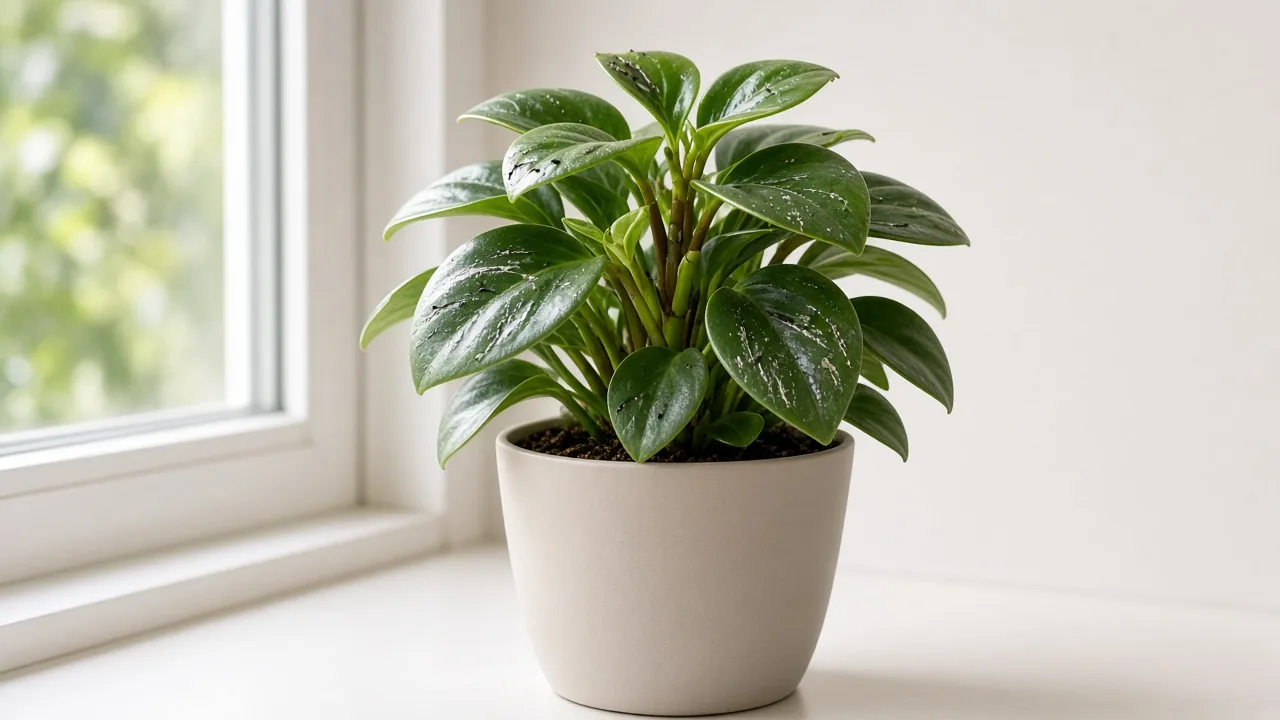
Thrips on Baby Rubber Plant: Causes, Checks & Fixes
This guide covers thrips on Baby Rubber Plant. See also the general Thrips guide, watering, and light pages for this plant.
Thrips on Baby Rubber Plant: Causes, Checks & Fixes
Quick answer
Thrips on Baby Rubber Plant (Peperomia obtusifolia) show up as silvery or bronze scrape marks on thick, glossy leaves, often with black specks of frass (insect excrement) and distorted or scarred new leaves at the upright crown. Thrips are tiny, slender insects that rasp leaf surfaces and suck cell contents, leaving streaked damage that looks different from the even edge browning caused by dry air alone.
For how thrips feed and why repeat treatments matter in general, see our thrips guide. On Baby Rubber Plant, the pattern usually starts on the newest leaves at the center of the bush-outer mature leaves can look fine while the crown tip is already scarred.
First step: isolate the plant and shake suspect leaves over white paper to confirm thrips before you rinse or spray anything. You need live insects or fresh scrape marks tied to feeding-not just one dull leaf from old age or not enough light.
What thrips look like on Baby Rubber Plant
Healthy Baby Rubber Plant leaves are thick, oval, and glossy-waxy on upright fleshy stems that typically reach about 12 inches indoors. Thrip feeding changes that polished look in specific ways:
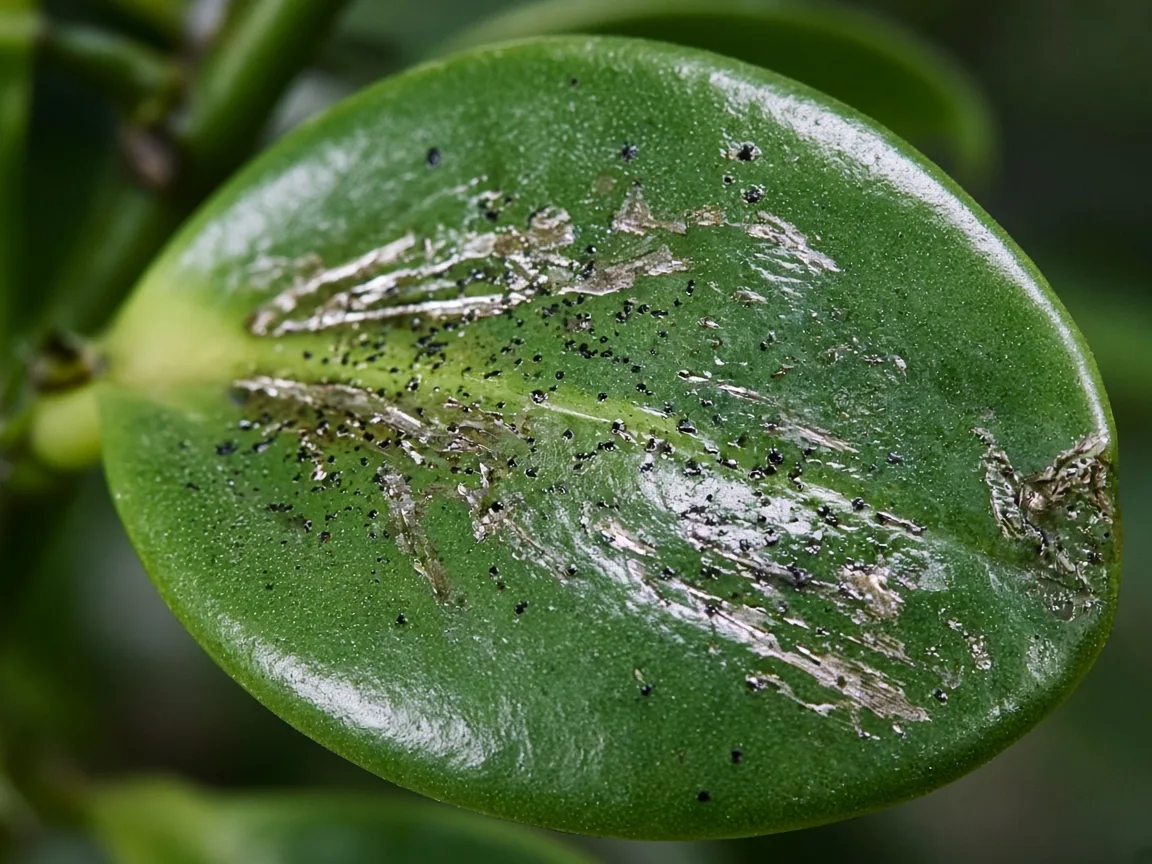
Silvery streaks and black frass specks on a thick glossy leaf-shake-test the newest crown leaves first.
Typical signs on obtusifolia:
- Silvery or scabby streaks on the glossy leaf face, especially on newer foliage near the crown
- Black varnish-like frass specks scattered on leaves or along petioles
- Distorted, curled, or scarred new leaves emerging from the center that fail to open flat
- Bronzed or dull patches where the waxy sheen is lost on heavily fed blades
- Slight droop on upper leaves when feeding is heavy-delicate petioles weaken before leaves drop
Adult thrips are less than 1/20 inch long, elongate, and vary from pale yellow to dark brown. Nymphs are wingless and often yellowish. On this compact bush you usually see damage before you spot individuals-use a white paper shake test or a 10× hand lens on undersides.
Where to look on Baby Rubber Plant:
- Newest leaves emerging from the upright crown center
- Leaf axils where thick petioles meet fleshy reddish stems
- Undersides along midribs on upper leaves (desk-height pots hide these during quick watering)
- Variegated sections on cultivars like ‘Marble’ or ‘Golden Gate’ where pale tissue shows streaks first
On variegated cultivars, silvery damage often appears first on cream or pale-green sections where the thinner pigmented tissue is easier to pierce. Solid green forms may hide early streaks longer because the uniform color masks faint scrape marks-check undersides even when tops look fine.
Unlike spider mites on Baby Rubber Plant, thrips do not spin fine silk at stem joints. Unlike mealybugs, they leave scrape marks and frass rather than white cottony axil clusters. Unlike scale insects, they are mobile when disturbed and do not form hard glued bumps.
Why Baby Rubber Plant gets thrips
Baby Rubber Plant is not unusually thrips-prone, but its compact upright bush form hides insects in crowded leaf axils and crown buds that a quick glance from above misses. Most pest thrips feed while hidden in buds and shoot tips; damage appears only after thick leaves expand, so the outer canopy can look glossy while the crown is already scarred.
Several traits make P. obtusifolia a good thrips host once pests arrive:
- Thick, succulent-like leaves offer plenty of sap access through individual cells despite drought tolerance
- Slow growth means stippling and silvery streaks stay visible on the same leaves for weeks before replacement foliage appears
- Desk-height placement encourages top-down watering views while undersides and crown buds go uninspected
- Small root system limits how aggressively the plant pushes clean replacement leaves during stress
Thrips do not appear because you watered wrong once-they arrive on nursery stock, cuttings, or plants summered outdoors and then walk short distances between pots when leaves touch neighbors on shared shelves. Warm indoor rooms let populations build year-round without outdoor cold to knock numbers back.
Stress from chronic overwatering or a soggy crown does not cause thrips, but it slows recovery. An overwatered peperomia with a soft stem base fights pests poorly. An underwatered one may already look slightly dull-exactly the confusion that delays thrips diagnosis when you assume the thick leaves just need water.
Heavy nitrogen fertilizer paired with frequent watering can also push soft new crown growth that thrips prefer for egg laying.
How to confirm the cause
Work through these checks before you change watering or buy spray:
- Shake test - Hold white paper under a suspect leaf and tap the blade sharply. Dislodged thrips appear as tiny moving specks on the paper.
- Crown inspection - Lift overlapping upper leaves and examine the newest emerging blade with bright light. Thrips damage often starts where the leaf is still partially folded.
- Frass pattern - Look for black specks scattered on silvery streaks. Uniform yellowing from wet soil rarely includes frass dots.
- Blue or yellow sticky trap - Hang traps near the pot to detect flying adult thrips even when counts look low on the plant itself.
- Neighbor scan - Inspect other houseplants on the same sill, especially recently purchased peperomias or shelf mates with soft new growth.
- Watering cross-check - If soil stays soggy, stems soften at the base, and lower leaves yellow without silvery streaks, rule out root rot before committing to a full pest cycle.
Confirmed thrips means silvery scrape marks plus live insects or fresh frass on multiple leaves-not one old yellow leaf at the base of an otherwise firm bush.
Lookalike symptoms
| What you see | Likely cause | Quick check | Next step |
|---|---|---|---|
| Silvery streaks + black frass | Thrips | Moving specks on shake test | Isolate; rinse undersides |
| Pinprick stippling + fine webbing | Spider mites | Tap test; silk at petioles | Crown-safe rinse |
| White cottony axil clusters | Mealybugs | Pink smear on swab | Alcohol dab |
| Tan domes glued to stems | Scale insects | Immobile shells | Scrape or labeled oil |
| Uniform lower yellow leaves, wet pot | Overwatering | No scrape marks or frass | Dry-down rhythm |
| Pale patching across ‘Marble’ blades | Natural variegation | Uniform pattern; no frass | No pest treatment |
| White cloud when disturbed | Whiteflies | Flat nymph disks on undersides | Sticky traps + soap |
When in doubt, isolate the plant and perform the shake test before treating.
Baby Rubber Plant care cross-check
Thrips exploit weak plants, but the pest still has to arrive first. Before you blame care alone, confirm vigor matches what obtusifolia needs:
| Care factor | Healthy baseline for obtusifolia | Pest vulnerability when wrong |
|---|---|---|
| Watering | Top inch of mix dry before the next drink (watering guide) | Chronic wet mix weakens roots; pests hit stressed crowns |
| Light | Medium to bright indirect (light guide) | Dim shelves slow replacement growth so scarred leaves linger |
| Fertilizer | Half strength during active growth only | Heavy nitrogen pushes soft tissue thrips prefer |
| Inspection | Lift crown leaves weekly on desk pots | Missed axil and bud feeding until frass appears |
A vigorous obtusifolia on the right watering and light rhythm still needs quarantine on new plants-good care does not repel thrips that hitchhike home from the nursery.
First fix for Baby Rubber Plant
Move the plant away from others and shake suspect leaves over white paper to confirm thrips.
Isolation stops thrips from walking to neighboring pots along touching leaves. The shake test tells you whether you are fighting live insects or old cosmetic damage before you rinse foliage or buy spray.
Once confirmed:
- Hold white paper under a crown leaf and tap sharply.
- Note whether specks move on the paper.
- Check for fresh silvery streaks and black frass on the same leaf.
- Only then proceed to rinsing.
Do not fertilize a thrips-hit Baby Rubber Plant hoping to push replacement growth-soft new crown shoots attract more feeding. Do not soak the soil trying to “humidify” the plant.
Step-by-step recovery
After isolation and confirmation:
Rinse foliage crown-safe
Rinse every leaf underside with lukewarm water, tilting the pot so runoff does not pool where thick leaves cluster around the upright stem. Baby Rubber Plant rots when crowns stay wet, so avoid showering directly down into the center of the bush. Use a sink sprayer; aim from below so undersides get direct pressure. Let leaves air-dry in bright indirect light the same day.
Forceful washing reduces pest numbers on manageable houseplants and clears frass so you can tell whether new damage appears after treatment.
Repeat on a thrips life-cycle schedule
- Repeat rinsing every two to three days for two weeks, focusing on crown leaves and undersides.
- Apply insecticidal soap labeled for houseplants if thrips persist. Coat stems, tops, and undersides. Soap kills on contact-repeat every five to seven days through at least three cycles to catch newly hatched nymphs.
- Prune badly scarred crown leaves only when distortion blocks new growth from emerging. Use clean scissors and bag cuttings immediately.
- Use blue sticky traps near the pot to monitor whether adult counts drop between rinses.
- Hold isolation until shake tests stay clean and new crown leaves emerge without fresh silvery streaks for two full weeks.
Some thrips species pupate in soil; if populations rebound despite clean foliage, consider a labeled soil drench only after reading the product label for indoor peperomia use-not as a day-one step.
Pesticides alone rarely give good thrips control-combine washing, monitoring, and selective pruning rather than one oil spray and stopping.
On obtusifolia, aim spray at petiole bases and crown buds from below the leaf cluster-misting only leaf tops leaves sheltered axils untouched.
Recovery timeline
Early rinsing shows fewer new streaks within a week when populations are small. A full soap course typically runs two to four weeks because thrips develop through multiple overlapping life stages. Silvery or scarred thick leaves do not revert to polished green-judge recovery by clean crown growth and firm stems, not perfect old foliage.
Because Baby Rubber Plant grows slowly, new clean leaves may take two to four weeks to emerge after pests are controlled. Variegated cultivars may keep pale scars on damaged sections long after insects are gone. That is cosmetic, not active feeding.
Signs treatment is working:
- Fewer moving specks on shake tests
- No fresh silvery streaks on newly expanded crown leaves
- Black frass stops accumulating on glossy blades
- Firm upright stems with plump thick leaves
Signs the problem is worsening:
- Scrape marks spreading to multiple stems between weekly checks
- New crown leaves failing to open flat
- Matching damage on neighboring shelf plants
- Stem softening at the base with sour-smelling mix-rot overlapping with pests
Mistakes to avoid
- Spraying once and stopping - Thrips hatch in overlapping generations; one treatment rarely clears a bushy obtusifolia.
- Flooding the upright crown during rinsing - That raises rot risk on a plant already sensitive to wet stems.
- Returning to the shelf too soon - Adults walk and fly short distances; two clean weeks matter.
- Heavy nitrogen feed during infestation - Soft growth feeds thrips and can increase populations.
- Treating water-stressed obtusifolia with oil in hot sun - Rinse and rehydrate first; follow label temperature limits.
- Assuming this is a rubber tree (Ficus elastica) - That woody fig needs different watering; see the baby rubber plant overview for identity and care context.
- Ignoring distorted leaves from old feeding - Scarred tissue will not flatten; judge success by clean new growth only.
How to prevent thrips next time
Prevention on Baby Rubber Plant is mostly about inspection and quarantine, not special pesticides.
- Quarantine new plants for two to three weeks in a separate room; check crown buds and leaf axils twice weekly before placing them near your Peperomia.
- Inspect during watering - Lift upper leaves and glance at the crown every time you check soil dryness.
- Keep plants vigorous - Medium to bright indirect light and watering when the top inch of mix dries matches how this species stays healthy without chronic wet stress.
- Moderate fertilizer - Apply at half strength during active growth; avoid nitrogen pushes that produce soft, pest-friendly crown tissue.
- Rinse dusty leaves occasionally - A light crown-safe rinse removes dust and makes new scrape marks easier to spot on glossy foliage.
- Space pots on shelves - Leaves that touch between plants give thrips a bridge.
Baby Rubber Plant is non-toxic to cats and dogs per the ASPCA, but keep pets away from freshly treated plants until sprays have dried completely.
When to worry
Most Baby Rubber Plants recover from moderate thrips infestations if you isolate early and repeat contact treatment for a month. Consider discarding the plant-and protecting the rest of your collection-when:
- Silvery damage covers most crown leaves despite four or more weeks of diligent weekly treatment
- The plant is already weakened from root rot or severe overwatering
- You cannot physically reach all crown buds on an overgrown specimen and reinfestation keeps returning
- Multiple high-value plants share one crowded tray and you cannot maintain isolation
Replacing one heavily infested Peperomia is often cheaper than losing an entire windowsill of plants to thrips you cannot see in overlapping axils.
Related Baby Rubber Plant problems
- Spider mites - pinprick stippling and webbing without scrape streaks or frass
- Mealybugs - white cottony axil clusters with honeydew
- Aphids - soft new growth clusters with sticky residue
- Distorted leaves - scarring and curl from thrips, edema, or cold drafts
- Whiteflies - white cloud when disturbed, not scrape marks
- Overwatering - yellow limp leaves that mimic pest stress without frass
When to use this page vs other Baby Rubber Plant guides
Use this page when you see silvery streaks, black frass specks, or distorted new crown leaves with confirmed thrips. Use yellow leaves when discoloration is uniform and soil-linked. Use curling leaves when the whole blade cups from dryness or heat without scrape marks. Use spider mites when stippling comes with webbing at stem joints.