Nitrogen Deficiency on Baby Rubber Plant: Causes, Checks &
Quick answer
Nitrogen deficiency on Baby Rubber Plant shows as uniform pale yellow-green on the oldest lower thick oval leaves along compact branches, with smaller or lighter new leaves at stem tips while the crown still pushes growth. First step: confirm even chlorosis on the lowest mature glossy leaf—not cupped new tips or green-veined new growth—and check whether the plant has gone seasons without complete fertilizer in the same snug pot.
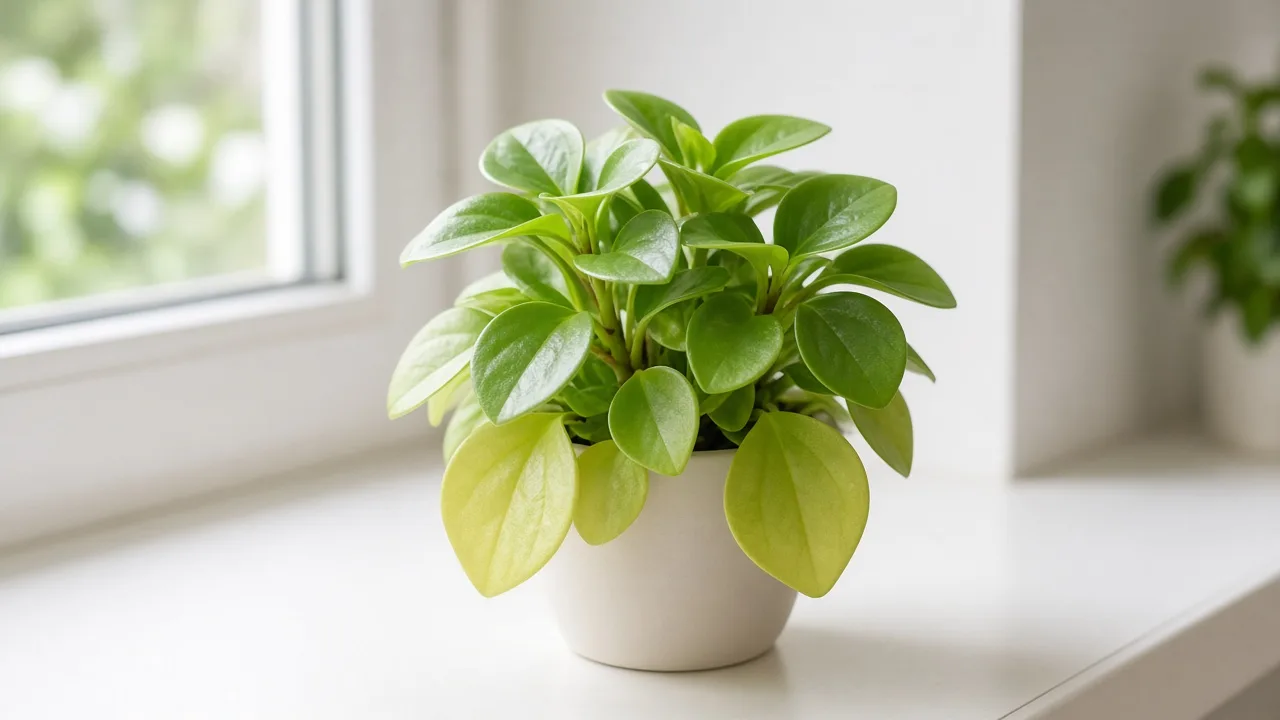
Nitrogen Deficiency on Baby Rubber Plant: Causes, Checks & Fixes
This guide covers nitrogen deficiency on Baby Rubber Plant. See also the general Nitrogen Deficiency guide, watering, and light pages for this plant.
Nitrogen Deficiency on Baby Rubber Plant: Causes, Checks & Fixes
Quick answer
Nitrogen deficiency on Baby Rubber Plant (Peperomia obtusifolia) shows as uniform pale yellow-green on the oldest lower thick oval leaves along compact branches, with smaller or lighter new glossy leaves at stem tips while the crown still pushes growth. Nitrogen is mobile in plants, so deficiency symptoms show up first on the lower leaves as a general yellowing—veins and tissue fade together, unlike calcium deficiency (cupped new stem-tip leaves) or iron deficiency (green veins on new growth).
See our nitrogen deficiency guide for general mobile-nutrient mechanics. On Baby Rubber Plant, inspect the lowest mature thick leaf along each compact branch—even washout there, with greener but undersized new leaves above, is classic nitrogen starvation before wet-root failure or low-light pale leaves.
First step: confirm uniform pale color on the oldest lower thick leaf—not cupped new tips or interveinal banding—then check leaf firmness, top-inch dry-down rhythm, and seasons without complete fertilizer in the same snug pot.
When to use this page vs other Baby Rubber Plant guides
| Pattern | Read next |
|---|---|
| Uniform pale oldest lower thick leaves, smaller new tips | Nitrogen deficiency (this page) |
| New stem-tip leaf cupped or tip-burned | Calcium deficiency |
| New leaves yellow with green veins | Iron deficiency |
| Yellow between veins on older leaves | Magnesium deficiency |
| Brown scorched margins on old leaves | Brown tips or potassium deficiency |
| Mushy stems, wet soil, widespread leaf drop | Overwatering or root rot |
| Whole plant pale in dim room | Not enough light or pale leaves |
| One bottom leaf only while green leaf unfurls above | Normal aging—yellow leaves |
What nitrogen deficiency looks like on Baby Rubber Plant
Healthy Baby Rubber Plant pushes thick, rounded, succulent-like glossy leaves on a compact bushy stem. Unlike the true rubber tree (Ficus elastica), obtusifolia stays small—usually under 12 inches—and stores water in those fleshy leaves. Nitrogen stress breaks that pattern on mature foliage on the lower portion of each compact branch, not with cupped new tips or vein-retained banding.
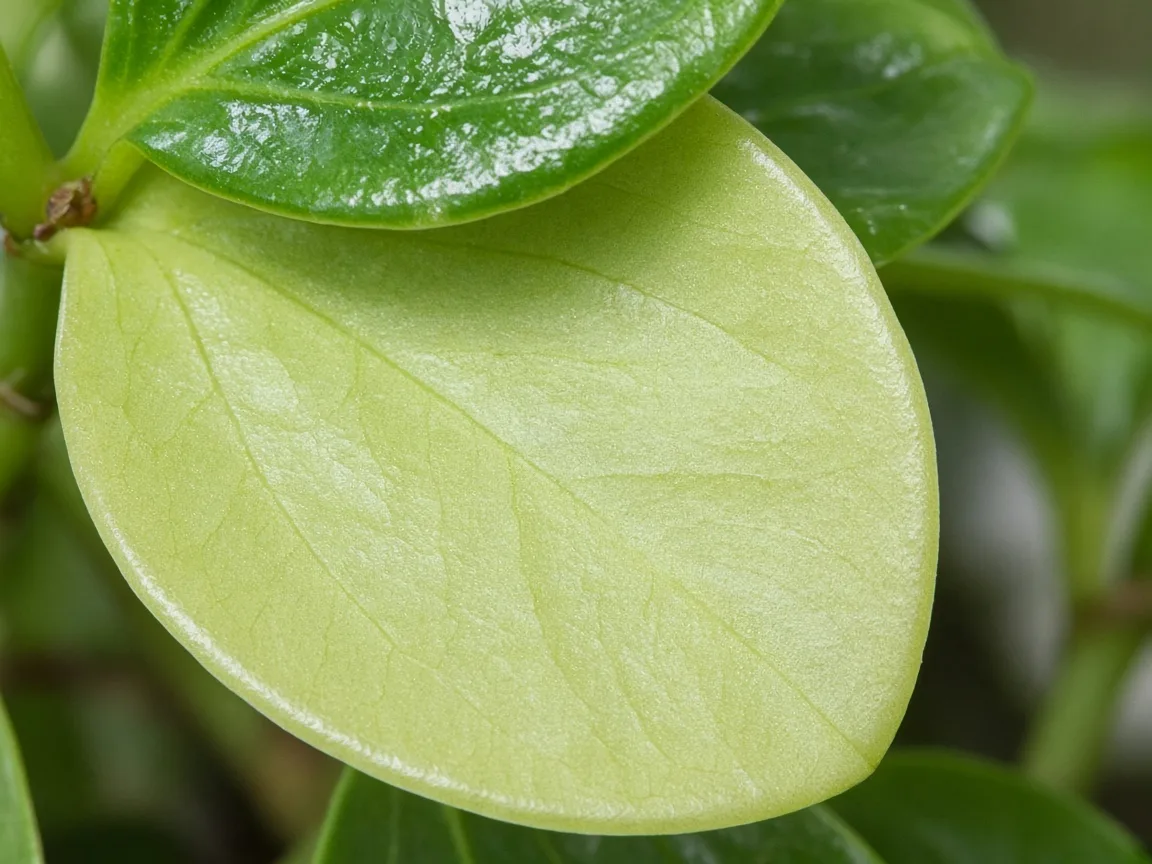
Oldest lower Baby Rubber Plant thick leaf with uniform pale yellow-green chlorosis—veins and tissue faded together on mature glossy foliage while newer leaves above stay greener.
Typical signs:
- Uniform pale yellow-green on the oldest lower thick oval leaf along each compact branch—veins and tissue lose color together
- Progressive climb up the branch over months as the plant strips nitrogen from old tissue to fund new growth at stem tips
- Smaller or thinner new glossy leaves at branch tips compared with earlier thick leaves on the same stem
- Overall washed-out green across multiple lower leaves while the crown still pushes new tips—unlike a dim-room not enough light plant that also stretches
- Slow flush during warm months when obtusifolia should still add leaves in bright indirect light
- Firm plump thick leaves that still feel turgid—unlike mushy overwatering tissue on constantly wet mix
- White salt crust at the pot rim from years of plain water leaching nitrogen through drainage holes
- One or two bottom leaves only on an otherwise lush plant may be normal aging—see yellow leaves
Not nitrogen deficiency:
- Cupped or tip-burned newest thick leaf at a stem tip—calcium deficiency
- Yellow new leaves with dark green veins—iron deficiency
- Interveinal yellowing on older mid-stem leaves—magnesium deficiency
- Mushy wilting leaves on wet soil—overwatering or root rot
- Slightly wrinkled flat leaves on dry soil—underwatering
- Fine stippling and webbing on glossy leaves—spider mites
- Whole plant pale and stretched in a dim corner—pale leaves before nutrient labels
Why Baby Rubber Plant gets nitrogen deficiency
Baby Rubber Plant is a light feeder with thick fleshy leaves and an epiphytic root system that prefers snug pots and well-drained mix. Owners often skip fertilizer entirely because obtusifolia tolerates neglect—but a specimen in the same small pot for two or more years can exhaust available nitrogen even when thick leaves look plump. UC IPM notes nitrogen deficiency causes slow growth and uniform yellowing of older leaves, and RHS guidance describes pale yellow older leaves and stunted growth when nitrogen is depleted.
Baby Rubber Plant-specific causes:
- Years without complete fertilizer — Obtusifolia is not a heavy feeder, but plain water for multiple growing seasons in an unchanged snug pot leaches nitrogen with each top-inch dry-down cycle. Desk plants in bright offices outgrow their mix faster than owners expect.
- Seasons skipped during active growth — Fertilize only when actively growing in spring and summer, but skipping every feed on a plant pushing continuous new thick leaves in a warm window still drains reserves. See the Baby Rubber Plant fertilizer guide for conservative rhythm.
- Depleted peaty mix — Standard potting mix with perlite that started airy composts down over seasons in an unchanged container. Roots stay alive but nitrogen availability drops until you refresh mix per the soil guide.
- Heavy leaching from frequent watering — Each thorough drink that runs through drainage holes carries soluble nitrogen away. A plant watered on a tight calendar in a small pot with fast drainage can look nitrogen-starved despite regular care.
- Root stress blocking uptake — Chronic overwatering in dim light limits nitrogen transport regardless of what is in the fertilizer bottle—yellowing from wet roots mimics deficiency until mix dries at the top inch.
- Competition from salt buildup — White crust at the pot rim or chronic overfeeding without flushing can lock out nitrogen uptake; overlap with mold on soil and fertilizer-burn patterns before adding more feed.
Thick leaf firmness before feeding
Baby Rubber Plant stores water in thick succulent-like leaves that should feel plump and firm even when the top inch of mix is dry. Before any fertilizer correction, pinch the pale lower leaf and a newer one—both should feel turgid, not papery or mushy.
Plump, glossy leaves with mix approaching dry at the top inch support one half-strength complete feed during active growth. Wrinkled, thin, or soft leaves on constantly wet mix mean overwatering or root rot—not a nutrient label problem. Correct drainage and moisture rhythm per the watering guide before any feed on soggy roots.
If only one branch shows pale lower leaves while other compact stems open normal thick leaves and roots stay firm, inspect that branch’s root zone separately—it may sit in a wet pocket of an overcrowded pot.
Lower thick leaves before stem tips
On each compact Baby Rubber Plant branch, nitrogen deficiency shows on the lowest mature thick oval leaf first—uniform washout across the entire glossy surface—while newer leaves higher on the same stem may stay greener but look smaller. Nitrogen is mobile, so the plant remobilizes it from older tissue to fund new growth at stem tips.
That pattern is the mirror image of calcium deficiency, which hits the newest leaf still opening at the stem tip while older thick leaves below look normal. It also differs from one bottom leaf yellowing while a green thick leaf unfurls above—a normal aging pattern covered on yellow leaves.
Judge severity by how many lower leaves on the same branch have climbed pale: one faded bottom leaf on an otherwise lush desk plant differs from three consecutive lower leaves uniformly washed out while new tips stay undersized.
Snug pot and leached mix
Peperomia obtusifolia has a small epiphytic root system that prefers remaining in a slightly snug container for years. Nitrogen uptake depends on healthy white root tips actively exploring fresh mix—not a root ball circling a dry hydrophobic core that passes water straight through drainage holes without holding nutrients.
When roots emerge from drainage holes but lower leaves still wash out pale, the problem is often depleted nitrogen in old mix, not pot size alone. Refreshing mix per the repotting guide restores nitrogen access without jumping to an oversized pot that stays wet and triggers the overwatering pattern obtusifolia tolerates poorly.
Lookalike symptoms
| Pattern | Check | Likely cause |
|---|---|---|
| Old lower thick leaves pale uniformly | Leaf position on branch | Nitrogen deficiency (this page) |
| New stem-tip leaf cupped or tip-burned | New vs old tissue | Calcium deficiency |
| New leaves yellow, green veins | Vein pattern | Iron deficiency |
| Interveinal yellow on old leaves | Mid-stem pattern | Magnesium deficiency |
| Mushy stems, wet soil, leaf drop | Root feel | Overwatering or root rot |
| Wrinkled flat leaves on dry soil | Pot weight | Underwatering |
| Whole plant pale, stretched stems | Light level | Not enough light |
How to confirm
- Old vs new tissue — Uniform pale color on the lowest mature thick leaf while newer glossy leaves above stay greener strongly suggests nitrogen.
- Vein pattern — Even chlorosis across veins and tissue—not interveinal banding (magnesium deficiency) or green veins on new tips (iron deficiency).
- Leaf firmness — Plump thick leaves vs mushy tissue from soggy peaty mix in a pot that never dries at the top inch.
- Fertilizer history — Years without complete feed on a plant in the same snug pot vs recent balanced feeding during spring growth.
- Root health — Firm white roots vs brown mush from chronic overwatering; uptake fails on damaged roots regardless of fertilizer.
- Moisture rhythm — Top inch dry before the next drink per watering targets; constant wetness causes yellowing that mimics deficiency.
- Successive lower leaves — Two or more pale lower leaves climbing the same branch on stable summer care points to depleted nitrogen, not one-time mechanical damage.
- Season — Symptoms during warm active growth with continuous new thick leaves fit deficiency better than winter rest alone when obtusifolia barely adds foliage.
First fix for Baby Rubber Plant
One half-strength dose of complete balanced fertilizer on already-moist (not dry, not waterlogged) mix—only after confirming uniform pale color on oldest lower thick leaves, plump firm leaf tissue, steady top-inch dry-down rhythm, bright indirect light, active spring or summer growth, and no mushy roots from chronic overwatering.
Do not repot, prune heavily, and triple-feed a recently relocated Baby Rubber Plant the same week. Stabilize watering per the Baby Rubber Plant watering guide first—the top inch should feel dry before the next drink, and the pot should never sit in standing cachepot water.
If lower leaves washed out after years of plain water in the same pot, one measured feed during active growth usually starts recovery faster than jumping to full-strength fertilizer on dry soil.
Step-by-step recovery
- Rule out overwatering — Confirm mix dries at the top inch and thick leaves feel firm, not mushy; treat root rot before fertilizer if roots are brown and soft.
- Apply half-strength complete feed once on moist mix during active growth; repeat at four- to six-week intervals through early fall if the next leaf responds per the fertilizer guide.
- Maintain top-inch dry-down rhythm—uptake fails when roots alternate between saturated and desiccated in heavy decorative pots.
- Repot into fresh well-draining mix if roots crowd the snug pot and pale lower leaves persist after two measured feeds on firm roots—see Baby Rubber Plant repotting.
- Move the plant gradually into brighter indirect light if not enough light is slowing growth and making pale leaves look like deficiency alone.
- Monitor the next two stem-tip leaves—the currently pale lower thick leaf rarely re-greens; recovery shows on subsequent new growth size and color at branch tips.
- Flush white salt crust at the pot rim before resuming feeding if buildup blocks uptake.
Recovery timeline
The currently pale lower thick leaf rarely returns to deep glossy green once chlorophyll is stripped. The next one or two leaves at stem tips after corrected complete feeding, steady moisture, and adequate light usually emerge larger and brighter within three to six weeks on firm roots—often slower than fast-growing vines because obtusifolia is a slow to moderate grower.
Severe root damage from chronic overwatering may delay recovery until the next full growing season. If successive new thick leaves stay undersized despite complete feed and stable summer care, inspect roots for rot before repeating fertilizer or repotting again.
Mistakes to avoid
- Do not confuse wet-root yellowing with nitrogen deficiency—check whether the top inch of mix dries and leaves feel mushy before feeding.
- Do not heavy-feed a Baby Rubber Plant on dry soil, waterlogged mix, or during winter rest—fix moisture and wait for active growth.
- Do not expect the current pale lower leaf to re-green—judge the next stem-tip unfurl.
- Do not stack repotting, heavy pruning, and full-strength feed the same week on a stressed plant.
- Do not jump to an oversized pot hoping more soil fixes uptake—obtusifolia dies from wet mix faster than from a snug root ball.
- Do not treat cupped new stem-tip leaves as nitrogen shortage—that pattern belongs on the calcium deficiency page.
Prevention
- Feed lightly with complete balanced fertilizer during active spring-through-early-fall growth per the Baby Rubber Plant fertilizer guide.
- Maintain top-inch dry-down rhythm per the watering guide with good drainage in the mix.
- Refresh depleted potting mix every two to three years when roots crowd the snug pot and water runs through too fast.
- Inspect lower leaves monthly during spring and summer—early uniform washout on one bottom thick leaf is easier to correct than a pale crown flush.
- Pause or reduce fertilizer in late fall and winter when growth slows, resuming only when fresh green tips appear in spring.
Related Baby Rubber Plant guides
- Baby Rubber Plant overview
- Baby Rubber Plant fertilizer
- Baby Rubber Plant watering
- Baby Rubber Plant light
- Baby Rubber Plant soil
- Yellow leaves
- Calcium deficiency
- Baby Rubber Plant problems hub
Conclusion
Uniform pale yellow-green on the oldest lower thick leaves along Baby Rubber Plant compact branches points to nitrogen depletion in mobile tissue—confirm the old-vs-new leaf pattern, rule out mushy overwatered roots on glossy thick leaves, stabilize top-inch dry-down watering, apply one measured complete feed during spring or summer growth, and judge recovery by the next stem-tip leaf flush.
Related tool
Use the Fertilizer Dilution Calculator to narrow causes for nitrogen deficiency on this plant before changing multiple variables at once.