Magnesium Deficiency on Basil: Causes, Checks & Fixes
Quick answer
Magnesium deficiency on basil shows as yellow tissue between dark green veins on older lower leaves while new top growth may look normal. First step: confirm interveinal chlorosis on older foliage—not uniform pale lower leaves from nitrogen loss alone.
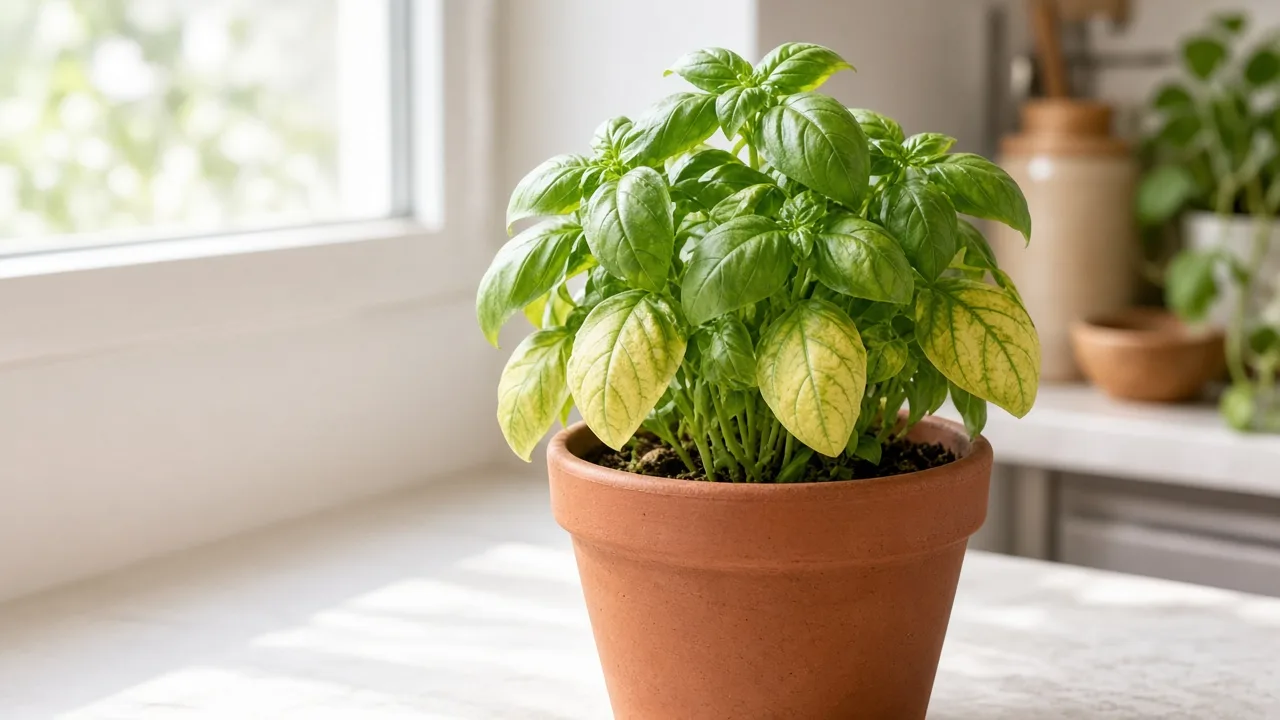
Magnesium Deficiency on Basil: Causes, Checks & Fixes
This guide covers magnesium deficiency on Basil. See also the general Magnesium Deficiency guide, watering, and light pages for this plant.
Magnesium Deficiency on Basil: Causes, Checks & Fixes
Quick answer
Magnesium deficiency on basil (Ocimum basilicum) shows as yellow tissue between dark green veins on older lower leaves while new top shoots may look normal. Magnesium is a mobile nutrient and chlorosis appears on mature leaves first because the plant strips magnesium from older tissue to supply fast-growing top buds.
See our magnesium deficiency guide for general interveinal chlorosis mechanics. On basil in sandy patio pots, inspect older lower leaves after weeks of summer harvest—yellow bands between dark green veins point to magnesium before nitrogen, which washes out whole lower leaves uniformly.
First step: confirm interveinal chlorosis on older lower leaves, not uniform pale lower leaves from nitrogen loss alone.
When to use this page vs other Basil guides
| Pattern | Read next |
|---|---|
| Old leaves yellow between green veins | Magnesium deficiency (this page) |
| Uniform pale lower leaves, no vein pattern | Nitrogen deficiency |
| Brown scorched leaf margins on old leaves | Potassium deficiency |
| New top leaves distorted or tip-burned | Calcium deficiency |
| Wilting on wet soil, black stem base | Overwatering |
| Midday droop on dry soil | Drooping leaves |
What magnesium deficiency looks like on basil
Basil’s broad aromatic leaves make interveinal chlorosis easy to spot on the lower harvest zone—veins stay dark green while the tissue between them yellows or bleaches pale green. Because basil is harvested from the top, oldest lower leaves often remain on the plant long enough to show magnesium banding before you pick them.
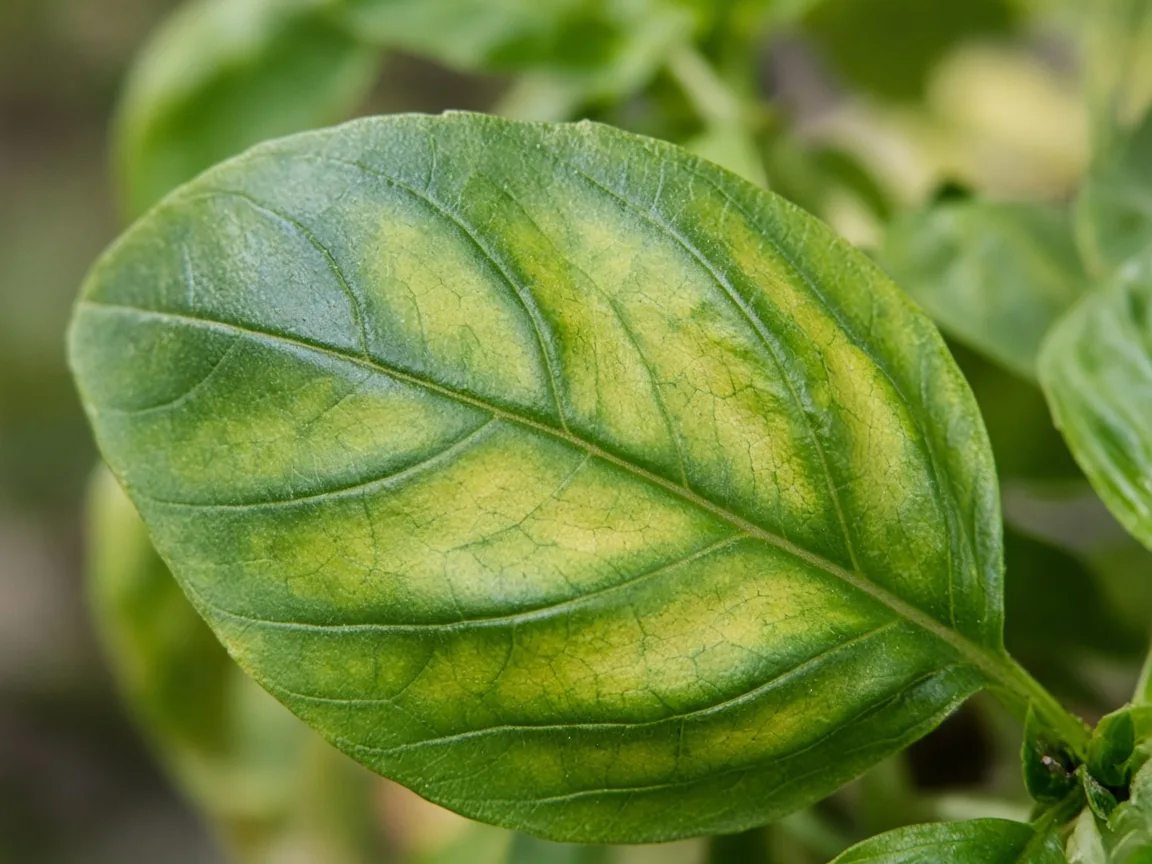
Interveinal chlorosis on an older basil leaf—dark green veins frame yellow tissue between them while new top shoots may still look normal.
Typical signs:
- Yellow or pale green patches between dark green veins on older lower leaves (interveinal chlorosis is the hallmark magnesium pattern)
- Veins stay relatively green while interveinal tissue bleaches
- New top shoots may look normal in early stages
- Firm green stems unlike black mushy overwatering cases
- Occurs during active harvest in full sun after weeks without complete feed
- Aromatic flavor may weaken on chlorotic lower leaves before you harvest them
Not magnesium deficiency:
- Uniform pale lower leaves without vein pattern — nitrogen deficiency
- Scorched or crisp brown leaf edges — potassium deficiency
- Wilting on wet soil with black stem base — overwatering
- New top leaf crinkle or tip burn — calcium deficiency
- Midday droop that recovers within hours of watering — drooping leaves
Why basil gets magnesium deficiency
Basil grows in fast-draining mix with frequent summer watering and continuous harvest pressure. Magnesium leaches from sandy containers faster than from peat-heavy houseplant soil. Nitrogen-heavy fertilizer—especially tomato or lawn products—promotes leaf production while magnesium stores in older foliage deplete. This is common on heavily harvested patio basil by mid-season.
Basil-specific causes:
- Sandy perlite-heavy mix — Per the soil guide, excellent drainage leaches magnesium with every summer drink. Container herbs in fast-draining media need regular complete feeding.
- Nitrogen-heavy feeding without micronutrients — Fast top growth after pinching strips magnesium from lower leaves.
- Frequent summer irrigation — Daily watering per the watering guide washes mobile magnesium downward if feeds lack micronutrients.
- Harvest export without replacement — Removing top shoots does not remove lower leaves, but heavy picking accelerates overall nutrient demand.
- Blocked uptake from overwatering — Root rot on soggy mix limits absorption even when magnesium is present.
- Confusion with nitrogen deficiency — Uniform pale vs interveinal vein-retention pattern.
Interveinal chlorosis in fast-draining herb mix
Basil’s sandy, fast-draining container mix—ideal for preventing root rot—also leaches magnesium faster than peat-heavy houseplant soil. Interveinal yellowing on older lower leaves after weeks of summer harvest and irrigation is a classic basil-container pattern, distinct from uniform nitrogen pale that washes out the whole lower leaf including veins.
Outdoor patio basil in small pots needs complete micronutrient feeds, not nitrogen-only tomato fertilizer alone. The visual split is recognizable: healthy-looking new top shoots above yellow-between-veins lower leaves that owners often misread as normal aging. When multiple lower leaves show the same vein skeleton pattern, it is deficiency—not senescence.
Harvest rhythm and the magnesium drain
Basil is grown to pinch and harvest top shoots repeatedly in full sun. Each flush of new growth demands magnesium for chlorophyll. When owners feed nitrogen-heavy products to push leaf size but skip micronutrients, the plant mobilizes magnesium from oldest lower leaves to supply the harvest zone.
Lower leaves that would normally be removed during picking may stay on the plant long enough to show clear interveinal banding. Do not confuse post-harvest pale with midday wilting on dry soil—basil recovers within hours of watering; magnesium chlorosis does not.
If you use Epsom salt or complete feed, judge recovery by new top leaves emerging without yellow between veins, not by old lower leaves re-greening.
Lookalike symptoms
| Pattern | Likely cause | Key difference on Basil |
|---|---|---|
| Old leaves yellow between green veins | Magnesium deficiency (this page) | Vein-retention pattern on lower harvest-zone leaves |
| Uniform pale lower leaves | Nitrogen deficiency | Whole leaf fades including veins; thin new top shoots |
| Margin scorch on old leaves | Potassium deficiency | Outer edge burn, not yellow between veins |
| New top leaves distorted | Calcium deficiency | Damage on expanding top tissue, not old lower leaves |
| Wilting on wet soil, black stem | Overwatering | Mushy roots; yellowing may lack vein pattern |
How to confirm
Work through these checks before you feed heavily:
- Vein pattern on leaf age — Interveinal chlorosis on older lower leaves with green veins points to magnesium.
- Fertilizer label — Complete micronutrient mix vs nitrogen-only products used for weeks.
- Mix type — Sandy fast-draining container vs rich compost bed with slower leaching.
- Uniform pale vs interveinal — Nitrogen washes out whole lower leaves; magnesium keeps veins green.
- Root health — Firm white roots vs brown mush on soggy summer pots.
- Harvest stage — Mid-season depletion after weeks of picking without complete feed.
- Watering context — Adequate moisture with chlorosis despite good drainage points to nutrient lack, not thirst.
First fix for Basil
One soil drench with Epsom salt at 1 tablespoon per gallon of water, or one half-strength dose of complete fertilizer containing magnesium—after confirming firm roots and appropriate moisture.
Do not apply Epsom drenches on waterlogged soil. Fix drainage per the watering guide first. Per the basil fertilizer guide, one measured correction—not weekly Epsom on soggy mix. Balanced fertilizers supply micronutrients when applied at appropriate strength.
Step-by-step recovery
- Switch to complete balanced fertilizer every two to three weeks per the fertilizer guide through harvest season.
- Apply one Epsom salt drench at 1 tablespoon per gallon if interveinal yellowing is clear on multiple lower leaves—repeat once after ten days only if pattern persists.
- Side-dress compost in ground beds to slow leaching.
- Refresh container mix mid-season if basil is heavily harvested in the same small pot and chlorosis continues after two corrections.
- Correct overwatering if stem base is black or roots are mushy—magnesium uptake requires healthy roots.
- Monitor new top leaves for clean green without interveinal banding over the next one to two flushes.
Recovery timeline
Judge recovery on new top shoots, not old chlorotic lower leaves:
- 3–7 days after first correction: Interveinal spread should stop on lower leaves
- 1–2 weeks: New top leaves emerge with uniform green color—main success signal
- 2+ weeks: Two clean top flushes confirm magnesium is adequate
Older chlorotic areas on harvest-zone leaves rarely return to full green. Success means unstained new basil shoots with normal aroma and color.
Mistakes to avoid
- Feeding before fixing waterlogged roots. Anaerobic basil roots cannot absorb magnesium; feeding burns injured tissue.
- Confusing nitrogen pale with magnesium banding. Uniform lower-leaf washout is nitrogen; vein-retention is magnesium.
- Using nitrogen-only tomato fertilizer all season. Fast leaf growth without micronutrient replacement depletes magnesium.
- Expecting old lower leaves to re-green. Mobile magnesium already moved to new shoots; judge the next top flush.
- Repeated Epsom drenches on soggy mix. Fix drainage before a second supplement application.
- Harvesting all chlorotic lower leaves and assuming the problem is solved. Check fertilizer history and new top growth quality.
Prevention
- Use complete balanced fertilizer with micronutrients through harvest season per fertilizer guide
- Refresh sandy container mix or side-dress compost in beds annually before mid-season depletion
- Match watering to fast-draining soil without letting pots sit waterlogged
- Avoid months of nitrogen-only feeding during peak summer harvest
- Track feeding dates—basil in small patio pots depletes micronutrients within weeks of heavy picking
- Flush container mix occasionally with plain water to limit salt build-up from hard water and fertilizer
Related Basil guides
- Basil overview
- Basil fertilizer
- Basil watering
- Basil soil
- Nitrogen deficiency
- Potassium deficiency
- Calcium deficiency
- Basil problems hub
Conclusion
Yellow tissue between green veins on older basil leaves signals magnesium depletion or blocked uptake in fast-draining harvest containers—confirm the interveinal pattern differs from uniform nitrogen pale, fix root health and leaching, then apply one Epsom drench or complete feed and monitor new top shoots for uniform green color.
Related tool
Use the Fertilizer Dilution Calculator to measure Epsom salt or half-strength complete fertilizer for magnesium deficiency recovery on this plant before changing multiple variables at once.