Nitrogen Deficiency on Basil: Causes, Checks & Fixes
Quick answer
Nitrogen deficiency on basil shows as pale or yellowing lower leaves while new top growth stays small, thin, or slow. First step: confirm yellowing starts on lower leaves after repeated harvest—not wilting on wet soil with black stems.
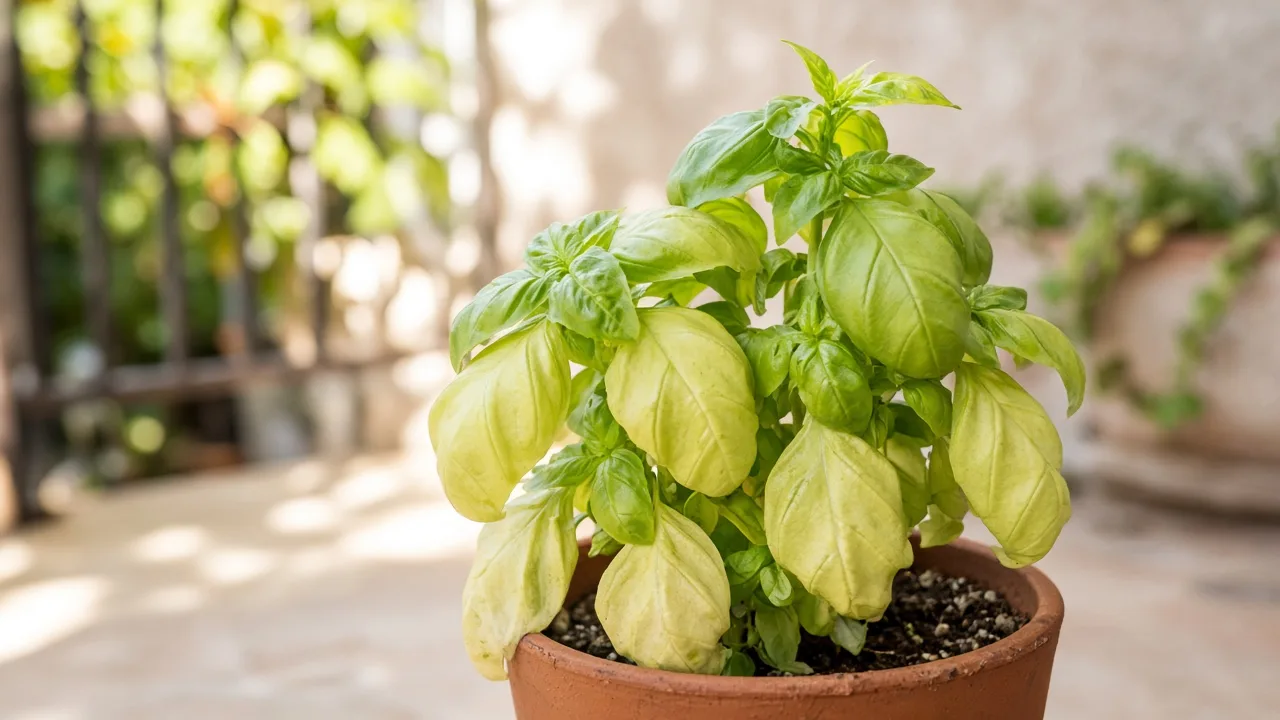
Nitrogen Deficiency on Basil: Causes, Checks & Fixes
This guide covers nitrogen deficiency on Basil. See also the general Nitrogen Deficiency guide, watering, and light pages for this plant.
Nitrogen Deficiency on Basil: Causes, Checks & Fixes
Quick answer
Nitrogen deficiency on basil (Ocimum basilicum) shows as pale green to yellow lower leaves while new top shoots stay small, thin, or slow. Nitrogen supports chlorophyll and leafy growth—basil is a fast-growing herb that depletes nitrogen quickly under harvest pressure.
See our nitrogen deficiency guide. On basil, watch lower leaves after repeated harvest—they pale while top buds stay weak if nitrogen is low.
First step: confirm lower leaves pale after heavy harvest, not wilting on wet soil with black stem base.
When to use this page vs other Basil guides
| Pattern | Read next |
|---|---|
| Lower leaves pale after harvest | Nitrogen deficiency (this page) |
| Wilting on wet soil, black stem | Overwatering |
| Thin stems reaching for window | Leggy growth |
| Midday droop on dry soil | Drooping leaves |
| Yellow between veins on old leaves | Magnesium deficiency |
| Holes, sticky residue | Aphids |
What nitrogen deficiency looks like on basil
Basil is harvested from the top, but oldest lower leaves remain on the plant long enough to show nitrogen washout—a uniform fade from deep green to pale yellow across the entire lower blade, including veins. New top shoots stay thin and produce weak, pale regrowth after pinching.
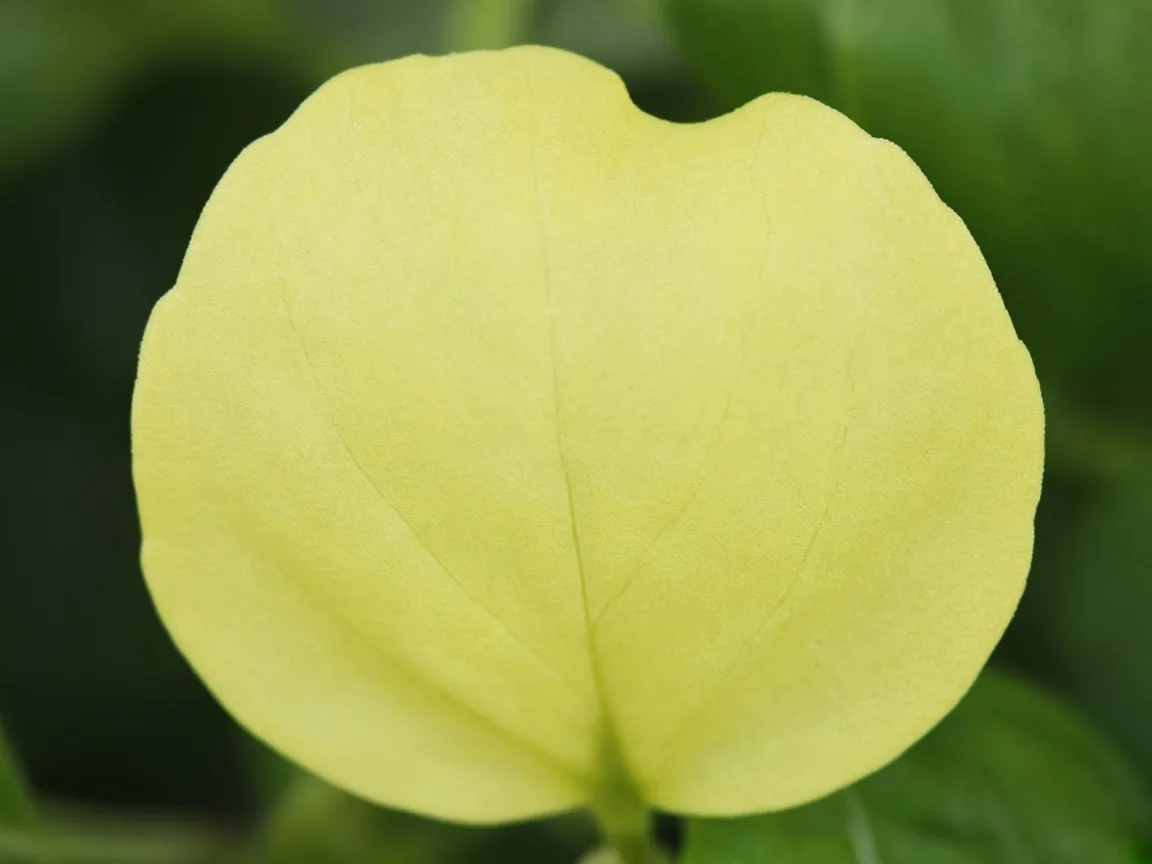
Uniform pale chlorosis on a lower basil leaf—the whole blade washes out including veins, unlike interveinal magnesium banding.
Typical signs:
- Uniform pale green or yellow on lowest leaves (nitrogen-deficient plants show pale older leaves first)
- Thin, small new top shoots after harvest
- Reduced flavor intensity in pale leaves
- Firm green stems unlike black mushy overwatering cases
- Full sun placement with otherwise adequate water
- Progressive washout on lowest leaves over weeks of picking without feed
Not nitrogen deficiency:
- Wilting on wet soil, black stem base — overwatering / damping off
- Leggy growth in shade — insufficient light reaching for window
- Holes and chewing — aphids or pests
- Midday droop on dry soil — drooping leaves thirst
- Yellow between veins on old leaves — magnesium deficiency
Why basil gets nitrogen deficiency
Basil is a fast annual herb grown for continuous leaf harvest in full sun. Every harvest removes nitrogen. Container basil without regular feeding, sandy mix that leaches nutrients, or exhausted compost shows pale lower foliage within weeks.
Basil-specific causes:
- Continuous harvest without feeding — Picking top shoots weekly strips nitrogen faster than slow houseplants. Container herbs need regular feeding during active growth.
- Container leaching — Frequent summer watering per the watering guide washes nitrogen from small pots.
- Sandy fast-draining mix — Per the soil guide, excellent drainage leaches nutrients unless replaced.
- Woody exhausted plants — Old basil stems produce thin pale leaves even with some feed.
- Confusion with overwatering — Wilting on wet soil with yellow lower leaves and black stem base.
- Flower diversion — Unpinched flowers steal nitrogen from leaf production.
Harvest pressure and nitrogen drain
Basil is grown to harvest leaves repeatedly—each cutting exports nitrogen that must be replaced. Unlike slow houseplants, container basil can show lower-leaf pale within two to three weeks of heavy picking in full summer sun. Thin new top shoots after harvest point to depletion even when lower yellow leaves are removed during picking.
Do not confuse post-harvest pale with midday wilting on dry soil—basil recovers within hours of watering; nitrogen pale does not. When flavor weakens and new shoots stay thin despite full sun and adequate water, nitrogen lack is the likely cause—not light stress.
Woody stems and the restart decision
Basil is usually grown as an annual harvest crop, not a permanent shrub. When stems turn woody and produce only thin pale leaves despite feeding, nitrogen depletion is compounded by exhausted vascular tissue. Restarting from seed or cuttings often outperforms nursing tired plants through another summer.
Young container basil responds to one dilute feed within one to two weeks. Woody patio basil may need restart rather than rescue feeding—check stem woodiness and overall vigor before stacking fertilizer.
Lookalike symptoms
| Pattern | Likely cause | Key difference on Basil |
|---|---|---|
| Lower leaves pale after harvest | Nitrogen deficiency (this page) | Uniform washout; thin new top shoots |
| Wilting on wet soil, black stem | Overwatering | Mushy roots; wilt despite moisture |
| Thin stems reaching for window | Leggy growth | Shade etiolation, not harvest depletion |
| Midday droop, dry soil | Drooping leaves | Recovers with water within hours |
| Yellow between veins | Magnesium deficiency | Vein-retention pattern on old leaves |
How to confirm
- Leaf age pattern — Lower leaves first after harvest cycles.
- Harvest history — Heavy picking without feed for weeks.
- Root check — White firm vs brown on soggy mix.
- Light adequate — Full sun; pale in shade is light issue per leggy growth.
- Stem base — Green and firm vs black rot.
- Plant age — Woody tired plant vs young depleted container.
- New shoot quality — Thin pale regrowth after pinching supports nitrogen lack.
First fix for Basil
One dilute balanced or slightly nitrogen-forward liquid fertilizer at half label strength after confirming firm roots and appropriate moisture—not waterlogged soil.
Per the basil fertilizer guide. One measured feed, not harvest plus triple fertilizer on the same day. Balanced fertilizers supply nitrogen for foliage growth when applied at appropriate strength.
Step-by-step recovery
- Feed every two to three weeks at half strength through peak harvest season.
- Pinch flowers promptly—flowering diverts nitrogen from leaves.
- Side-dress compost in ground beds if containers leach quickly.
- Restart from seed or cuttings if stems are woody and pale despite feeding.
- Correct overwatering if stem base is black—nitrogen uptake requires healthy roots.
- Monitor new top shoots for darker green, thicker leaves over one to two flushes.
Recovery timeline
Judge recovery on new top shoots, not old pale lower leaves:
- 3–7 days: New pinching sites should show darker bud color
- 1–2 weeks: New top shoots thicken and deepen in green—main success signal
- 2+ weeks: Two clean harvest flushes confirm nitrogen is adequate
Lower pale leaves rarely re-green. Woody exhausted basil may need restart rather than rescue.
Mistakes to avoid
- Confusing overwatering wilt with nitrogen pale. Black stem base on wet soil is root failure, not nutrient lack.
- Harvesting without replacing nitrogen. Fast basil depletes pots within weeks of heavy picking.
- Heavy feeding on waterlogged roots. Fix drainage before fertilizer.
- Expecting old lower leaves to re-green. Mobile nitrogen moved to new shoots; judge top regrowth.
- Nursing woody exhausted plants indefinitely. Restart often outperforms rescue on tired stems.
- Ignoring flower spikes. Unpinched blooms steal nitrogen from leaf production.
Prevention
- Feed lightly every two to three weeks during active harvest season per fertilizer guide
- Side-dress compost in ground beds
- Refresh sandy container mix mid-season if heavily harvested
- Pinch flowers promptly through summer
- Match watering to soil without chronic waterlogging
- Restart tired woody plants rather than nursing exhausted stems indefinitely
Related Basil guides
- Basil overview
- Basil fertilizer
- Basil watering
- Leggy growth
- Magnesium deficiency
- Potassium deficiency
- Basil problems hub
Conclusion
Pale lower basil leaves with thin new top shoots signal nitrogen depletion from harvest pressure—confirm uniform lower-leaf washout on firm roots, feed once at half strength, and judge recovery by darker thicker new shoots after pinching.
Related tool
Use the Fertilizer Dilution Calculator to narrow causes for nitrogen deficiency on this plant before changing multiple variables at once.