Curling Leaves on Begonia Maculata: Thirst & Pest Checks
Quick answer
Curling leaves on Begonia Maculata show inward roll or cupping on spotted angel-wing blades—usually underwatering when the top 2–3 cm of mix is dry, thrips or spider mites on new growth, or wilt-on-wet curl from soggy fibrous roots. First step: probe the top of the pot and inspect the undersides of the newest leaves before watering or spraying.
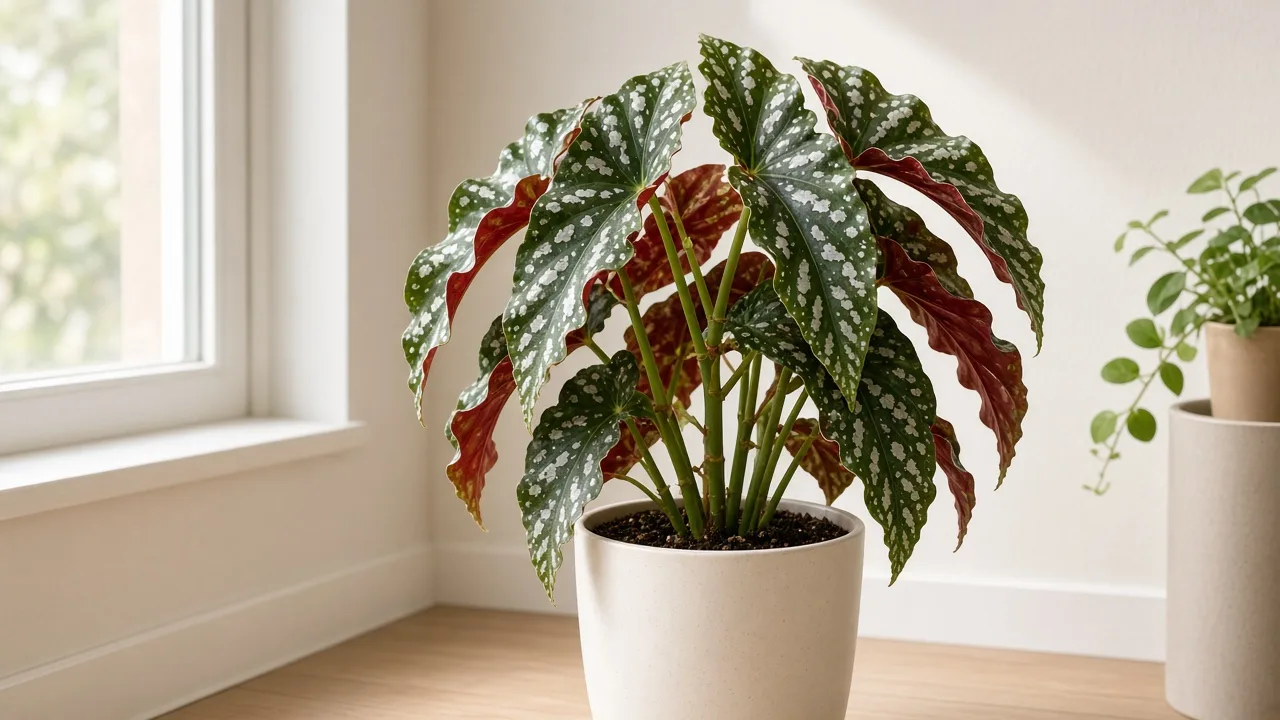
Curling Leaves on Begonia Maculata: Causes, Checks & Fixes
This guide covers curling leaves on Begonia Maculata. See also the general Curling Leaves guide, watering, and light pages for this plant.
Curling Leaves on Begonia Maculata: Causes, Checks & Fixes
Quick answer
Curling leaves on Begonia maculata (polka dot begonia, angel wing begonia) show inward roll or cupping on asymmetric wing-shaped blades with silver spots and red undersides—not the nightly fold of a prayer plant. For how leaf curl works in general, see our curling leaves guide. On Maculata, the top 2–3 cm dry-down check separates drought curl from overwatered root curl faster than any calendar.
First step: probe the top of the mix, lift the pot, and magnify the undersides of the newest spotted leaves before you water or spray.
Maculata communicates thirst through posture change on large angel-wing leaves before lower blades yellow. The same foliage can also curl from thrips or spider mites on tender new flush, dry air near HVAC vents, or damaged fibrous roots in dim corners where mix stays wet for weeks. Match the curl pattern before misting, fertilizing, or repotting.
When to use this page vs other Maculata guides
| You are seeing… | Start here | Or route to… |
|---|---|---|
| Inward cup on a light dry pot | This page | Underwatering |
| Stippling, silvery scars, or twisted new tips | Thrips or spider mites | This page for early curl stage |
| Wet heavy pot, wilt-on-wet curl | Overwatering | Root rot |
| Crispy margins only, hygrometer low | Low humidity | Brown tips |
| Small twisted new leaves with sticky residue | Aphids | Distorted leaves |
What curling leaves look like on Begonia Maculata
Maculata holds large angel-wing leaves with silver polka dots and reddish undersides on upright cane stems. Curl shows up in distinct ways on this spotted cane begonia:
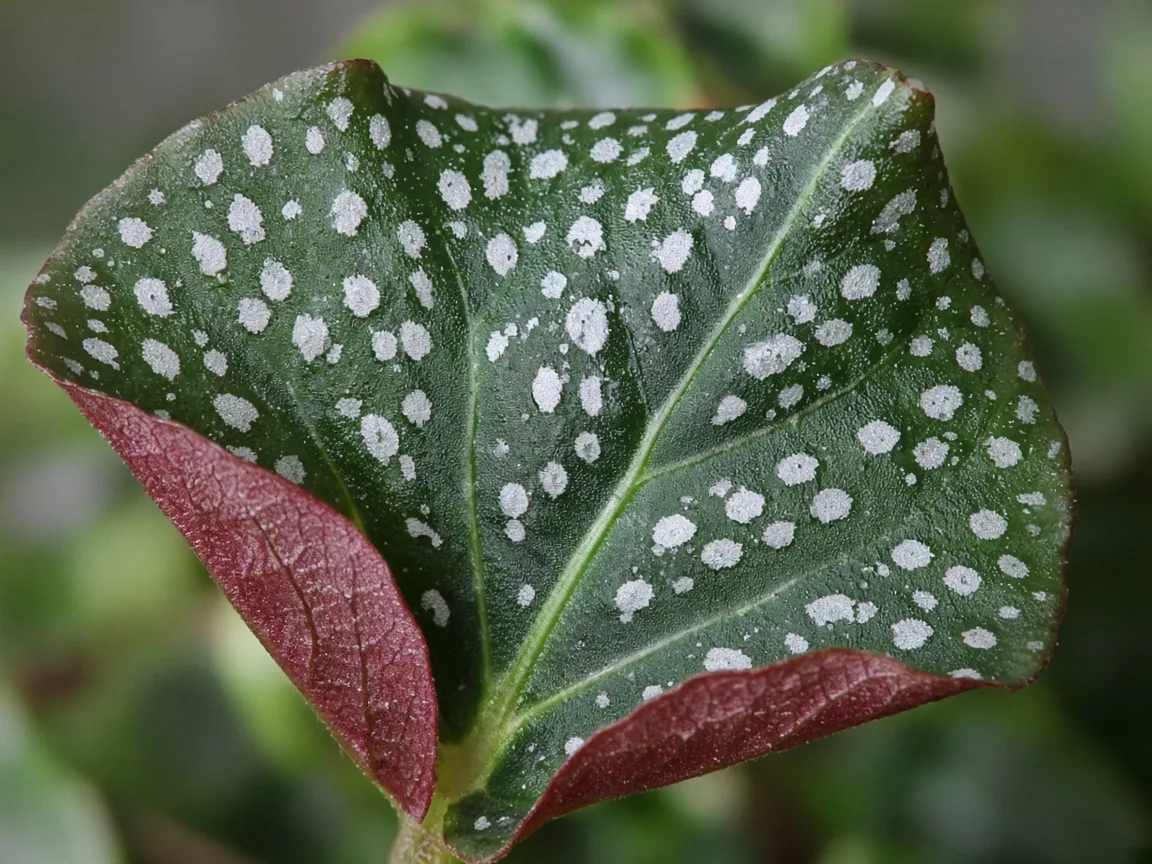
Lengthwise cup on a Maculata angel-wing leaf—probe top 2–3 cm soil moisture before misting or fertilizing.
Thirst cupping — Blades roll lengthwise or cup like a narrow trough. The pot feels light; the top 2–3 cm of mix is dry. Leaves feel thinner compared with well-hydrated wings. Cane begonias perform best in moist, well-drained soil—on Maculata in bright rooms, that often means the upper inch has dried while lower mix still holds some moisture.
Mite or thrip curl — Newest soft wing tips twist or cup while undersides show pale stippling, silvery streaks, or fine webbing. NC State lists thrips, spider mites, whiteflies, and mealybugs among cane begonia pests and recommends good air circulation. On Maculata, the cane tip flush—the softest new spotted wings—is where pests hide first; lower mature leaves can look healthy while tips curl.
Wilt-on-wet curl — Lower wing leaves curl while mix stays damp for many days and the pot feels heavy. Fibrous roots cannot move water even when soil is wet. BBC Gardeners’ World notes wilting on spotted begonia can follow overwatering and root rot—hold water and inspect roots if stems soften.
HVAC desiccation — Leaves nearest a heat or AC vent cup despite moist soil deeper down. Large wing blades lose water fast; the cane may look fine while one side curls. Pair with low humidity checks when margins also crisp.
Normal unfurling vs stress curl (Maculata only)
Unlike many houseplants, new Maculata leaves start rolled at the cane tip and should unfurl within a few days as the wing expands and silver spots sharpen. Experienced growers note that fresh begonia leaves always begin curled before opening flat. Stress curl differs: mature blades that were flat begin cupping, or new tips stay twisted after they should have opened. If only the topmost bud is rolled and the rest of the cane looks firm, wait before treating—if older wings curl together, start diagnosis.
Top 2–3 cm dry-down on cane roots (Maculata only)
Maculata is watered when the top 2–3 cm of mix feels dry, then soaked until drainage runs—at the soil line only, never wetting the spotted foliage. Repeated shallow sips leave the upper root zone dry while lower mix stays damp, producing paradoxical curl on a pot that feels moderately heavy. See the Begonia Maculata watering guide for the full rhythm.
Why Begonia Maculata leaves curl
For general curl mechanics on houseplants, see our curling leaves hub. On Maculata, causes tie to this species’ fast cane growth, large transpiring wings, and fibrous root sensitivity to wet-dry swings.
Underwatering is the most common indoor driver. Maculata in bright indirect light dries the top of the pot quickly—especially in airy cane pots with perlite-heavy mix. Leaf curling is a classic underwatering sign on this plant when the pot is light and the top inch is dusty-dry.
Thrips and spider mites exploit the same dry winter air. UMN Extension notes spider mites thrive in warm, dry conditions and thrips scar leaf tissue as they feed—both show first on Maculata’s newest wing tips before lower leaves look affected.
Root stress from overwatering produces paradoxical curl in dim corners. Maculata in a north-facing spot dries slowly; calendar watering keeps mix wet while fibrous roots lose oxygen. Damaged roots cannot hydrate large wings even when you add more water—route to overwatering before soaking again.
Low humidity alone can cup wing margins in drafty heat. RHS guidance on begonia houseplants links low humidity to faster transpiration and wilt risk when roots cannot replace water lost through large leaf surfaces.
Heat and light stress near west glass can curl sun-facing wings while the shaded side stays flat—filter harsh afternoon rays per the light guide.
Confirm the cause in five checks
- Top 2–3 cm moisture — Dry upper layer with a light pot supports thirst; damp for a week on a heavy pot means hold water.
- Pot weight — A feather-light pot with curl means drink; a sodden pot means inspect roots.
- Underside inspection — Stippling, silvery scars, or webbing on new tips → thrips or spider mites.
- Vent proximity — Curl on the side facing a heat register points to desiccation—check a hygrometer at leaf height.
- New growth — Flat emerging wings mean stabilizing; continued twist on wet mix → overwatering.
First fix for Begonia Maculata
Choose one first action:
| Confirmed cause | First fix | After 48–72 h if stable |
|---|---|---|
| Dry top 2–3 cm, firm cane | Water thoroughly at soil line until drainage runs; empty saucer within 30 minutes | Resume watering when top dries again |
| Thrips or spider mites | Isolate; rinse new-growth undersides with lukewarm water | Follow thrips or spider mites if activity persists |
| Wet mix, wilt-on-wet | Stop watering; move to slightly brighter filtered light | Inspect roots if smell or soft stem base appears |
| HVAC desiccation | Move pot away from vent; run humidifier to 50%+ RH at leaves | See low humidity—do not mist foliage |
If the top 2–3 cm of mix is dry and the cane is firm, water thoroughly at the soil line and drain the saucer within 30 minutes. That single soak is the right first move for thirst curl—do not also repot, prune, and spray on the same day.
Do not fertilize curled stressed foliage. Do not mist spotted wings—BBC Gardeners’ World recommends avoiding splashing leaves when watering spotted begonia because wet foliage increases fungal risk without raising ambient humidity.
Recovery timeline
| Phase | Timing | Improvement | Worsening |
|---|---|---|---|
| Post-soak | Days 1–3 | New wing tips feel firmer; cup loosens on thirst cases | No change on wet heavy soil |
| Stabilization | Weeks 1–2 | No new curl; emerging leaves open flat | More lower wings curl on damp mix |
| New growth | Weeks 2–4 | Clean spotted wings from cane tips | Stippling spreads despite rinses |
Severely cupped mature blades may never fully flatten. Judge recovery by new cane-tip leaves, not old angel-wing tissue.
Lookalike symptoms to rule out
| Symptom pattern | Soil / placement clue | Likely cause | First direction |
|---|---|---|---|
| Inward cup, light dry pot | Top 2–3 cm dry | Underwatering | Thorough soak + drain |
| Stippling, twisted new tips | Any moisture | Thrips / mites | Rinse + targeted treatment |
| Curl with wet heavy pot | Stays damp days | Overwatering / root stress | Hold water; inspect roots |
| Crisp margins, low hygrometer | Normal moisture | Low humidity | Humidifier + move off vent |
| Only topmost bud rolled | Rest of cane firm | Normal unfurling | Wait 3–5 days before treating |
What not to do
- Do not water a heavy wet pot because leaves look curled. That is root stress, not thirst.
- Do not mist to “fix curl.” Wet angel-wing foliage in low airflow invites powdery mildew on cane begonias.
- Do not assume prayer-plant behavior. Maculata does not fold leaves nightly—persistent curl on mature wings is a stress signal.
- Do not place a curled plant in direct sun. Filtered bright indirect light only; see light guide.
How to prevent curling on Begonia Maculata
Track top 2–3 cm dry-down instead of a calendar. Keep Maculata off hot vents, quarantine new plants, and inspect cane-tip flush weekly in winter heat. Bright light increases water use—pair stronger light with higher humidity during active growth. Review the Begonia Maculata overview for placement and the soil guide if the pot never dries evenly.
When to worry
Escalate if curl spreads on a wet heavy pot alongside soft stem bases or sour soil—that is likely root rot, not thirst. Silvery thrip scarring that keeps advancing after two rinse cycles needs direct pest treatment. Firm cane stems, clean new growth at tips, and stable moisture after one correction are low-urgency positive signs.
Conclusion
Curled Maculata leaves are top-of-pot moisture or pest signals—weigh the pot, magnify new wing undersides, and distinguish normal tip unfurling from stress curl before misting. Fix one cause, then read the next cane flush.