Caterpillars on Begonia Rex: Night Checks, Frass &
Quick answer
Caterpillars on Begonia Rex chew ragged holes through painted foliage and leave dark pellet-like frass, often hidden where overlapping leaves meet the shallow rhizome crown. First step: isolate the plant and hand-pick every visible larva after a dusk inspection with a flashlight before spraying anything.
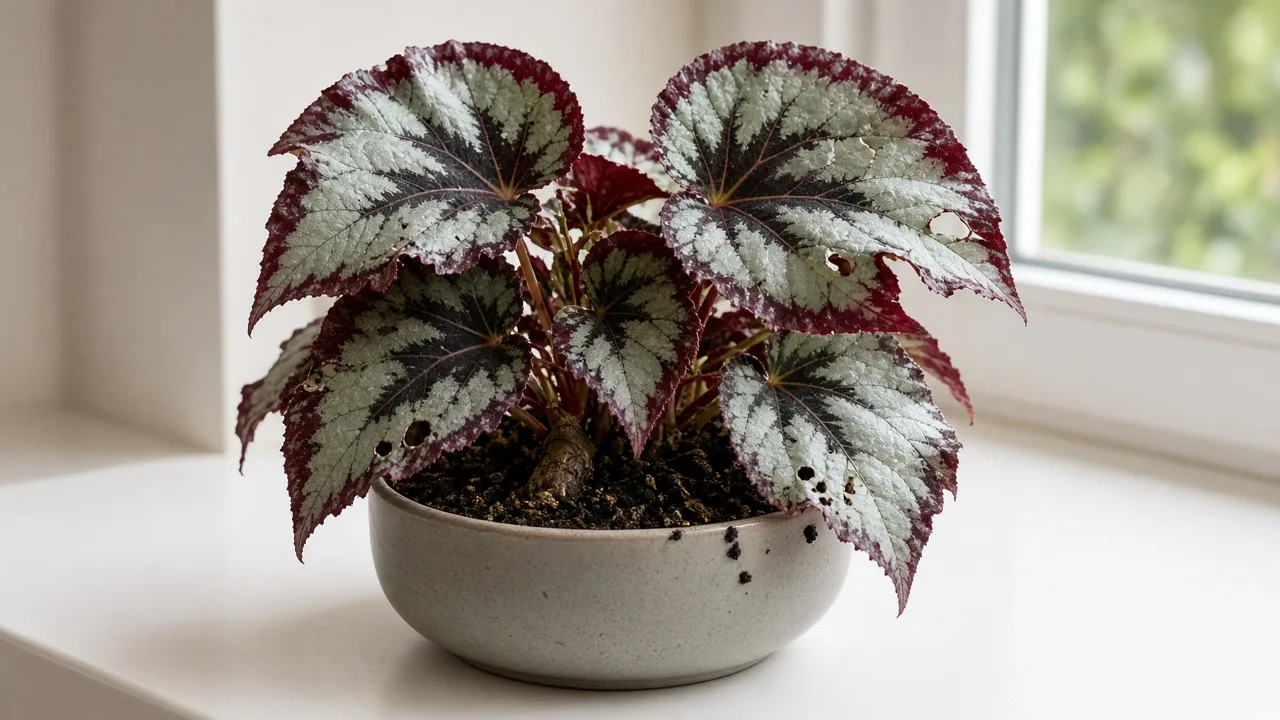
Caterpillars on Begonia Rex: Causes, Checks & Fixes
This guide covers caterpillars on Begonia Rex. See also the general Caterpillars guide, watering, and light pages for this plant.
Caterpillars on Begonia Rex: Causes, Checks & Fixes
Quick answer
Ragged holes punched through painted or metallic Rex leaves on your Begonia Rex (Begonia rex-cultorum), often with dark pellet frass on the blade, pot rim, or saucer below, point to caterpillar feeding—not the crisp brown margins from low humidity or the bordered tunnels of leaf miners.
For how caterpillars chew, leave frass, and respond to Bt in general, see our caterpillars guide. On Rex begonias, larvae often hide where overlapping painted leaves meet the shallow rhizome crown—exactly the axils you skip when bottom-watering to keep foliage dry.
First step: isolate the plant and hand-pick every visible larva after a dusk inspection with a flashlight.
When to use this page vs other Begonia Rex guides
| Pattern | Read next |
|---|---|
| Ragged holes + pellet frass + visible larvae | This page |
| Silvery scrape streaks | Thrips |
| Enclosed pale tunnel inside the blade | Leaf miners |
| Stippling + fine webbing | Spider mites |
| Clean edge tears, no frass | Holes in leaves |
| Uniform yellow, wet mix | Overwatering |
What caterpillars look like on Begonia Rex
Rex begonias push new painted leaves from a shallow rhizome sitting at or just above the soil line. Caterpillars often feed first on soft emerging blades in the rosette center and along petiole bases where leaves overlap—sheltered spots that stay dry because rex growers correctly avoid wetting foliage.
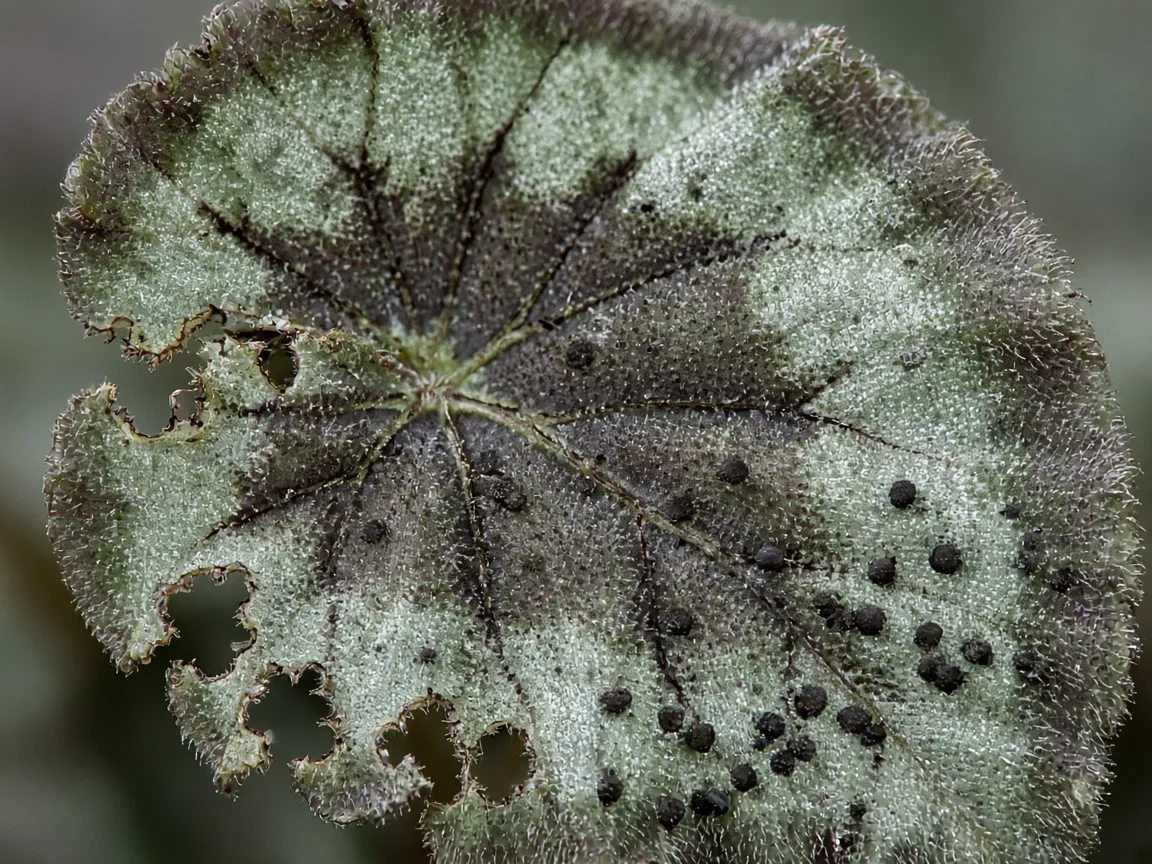
Ragged chew margins and pellet frass on painted Rex foliage—compare with firm, undamaged lower leaves on the same rhizome.
Typical signs include:
- Irregular holes through metallic, silver, or burgundy patterned leaf blades—not uniform brown tips from cultural stress
- Ragged chew marks on newest growth and tender leaf edges before the painted pattern fully develops
- Dark pellet-like frass on upper leaf surfaces, petiole bases, the shallow rhizome rim, or the saucer below holed leaves
- Visible larvae that may be green, brown, or mottled, often curled along undersides or tucked in crown axils
- Damage clustered on one rosette side, spreading overnight when feeding is active
- Skeletonized patches where only veins remain on severely chewed painted leaves
Caterpillars are butterfly and moth larvae ranging from tiny newly hatched worms to larger feeders. Many blend into rex foliage until frass and holes accumulate on the decorative pattern.
Unlike spider mites, no fine stippling and webbing. Unlike thrips, no silvery scrape marks—thrips rasp the surface; caterpillars chew through tissue.
Why painted Rex leaves show caterpillar damage so clearly
Rex begonias are grown for bold painted patterns—silver veins, burgundy swirls, and metallic sheen on hairy or textured blades. Caterpillar chewing does not fade like a humidity brown tip; it punches permanent holes through the pattern on tissue that will not repair.
One larva feeding on a newly emerging painted leaf can ruin the showpiece blade before it fully expands. That makes caterpillars feel urgent on rex collections even when only one insect is present—cosmetic damage is immediate and visible on cultivars like Escargot or Fireworks where the whole leaf is the display.
Judge severity by whether new center growth keeps emerging clean, not by whether old holed blades look perfect again.
Bottom-watering blind spots where larvae hide
Correct rex culture keeps water at the base only so leaves and the rhizome crown stay dry—UConn notes rex begonias should not stay wet at the crown. That habit is right for rot prevention but creates uninspected axils:
- Overlapping painted leaves at the rhizome line never get rinsed during routine care
- Petiole bases where new blades emerge stay sheltered and dry—ideal daytime cover for larvae
- Fallen painted leaves on the soil surface give caterpillars hiding spots between dusk feedings
This is not a reason to start top-watering rex begonias. It is a reason to inspect crown axils at dusk during the same bottom-water routine, when your hands are already at pot level per the watering guide.
Why Begonia Rex gets caterpillars (uncommon but real indoors)
Caterpillars are not a chronic weakness of rex begonias the way spider mites can be in dry winter air. They arrive as introduced larvae or unhatched eggs, then exploit soft foliage in a humid rosette.
Strictly indoor collections. In a year-round indoor setup with no patio summers and closed windows, caterpillars are unusual on houseplants. When holes appear anyway, mechanical tears during handling, leaf miners, or thrips rasping are more likely—confirm frass and a live larva before treating.
Hitchhiking on nursery stock. Eggs laid on leaves or in potting media can hatch weeks after you bring a rex home. Extension experts note that caterpillars in houseplants often trace to moths that laid eggs on the plant or in the soil—sometimes before the plant reached your shelf.
Summer outdoors or open windows. Rex begonias moved to shaded patios in warm months can pick up eggs from visiting moths. Low-growing painted leaves near open windows in spring or summer are easy landing spots. When the plant returns indoors, larvae hatch in stable 50–60% humidity and begin feeding on tender new growth.
Dense rosettes on shallow rhizomes. Happy rex plants in bright indirect light produce fresh painted leaves regularly from the rhizome. Those emerging blades are easier to chew than hardened older foliage—and overlapping leaves give larvae daytime cover until damage breaks through the pattern.
Crowded humidity trays. Grouped rex pots on pebble trays trap pests between touching painted leaves. A caterpillar on one pot can walk to neighbors on shared watering days.
Pet nibbles vs caterpillars on toxic Begonia Rex
Because begonias are toxic to cats and dogs per ASPCA, pets rarely sample rex leaves repeatedly—but occasional nibbles happen on accessible lower shelves. That chewing looks different from caterpillar feeding:
- Pet nibbles: Clean tears on lower leaves at nose height, no frass pellets, no larvae on inspection, damage does not spread to new center growth overnight
- Caterpillars: Rough holes with pellet droppings, often on newest painted blades anywhere on the plant, fresh damage appears daily while a larva feeds
If you are unsure, inspect at dusk for three evenings. A caterpillar will show itself or leave new frass; pet damage stays static. Keep soapy water disposal and treated foliage out of pet reach regardless—rex tissue remains toxic.
Lookalike symptoms
| Sign | Check | Likely cause |
|---|---|---|
| Ragged holes + pellet frass | Dusk inspection | Caterpillars (this page) |
| Silvery streaks, black specks | Shake test over paper | Thrips |
| Enclosed pale tunnel | Backlight the blade | Leaf miners |
| Stippling + webbing | Paper tap test | Spider mites |
| Clean mechanical tears | Handling history | Holes in leaves |
| Crispy brown tips only | Hygrometer check | Low humidity |
| Sticky new shoots, no frass | Hand lens on tender growth | Aphids |
How to confirm
- Isolate before handling other plants on the same humidity tray.
- Inspect at dusk with a flashlight—many caterpillars feed openly in low light and hide in crown axils during daytime care.
- Look for frass—dark pellet droppings strongly confirm caterpillar feeding even when the larva is hidden between overlapping painted leaves.
- Part the rosette gently—support stiff Rex petioles from below so brittle stems do not snap while you look into axils at the rhizome line.
- Shake test—hold white paper under a damaged leaf and tap the petiole. A falling caterpillar confirms the diagnosis; stippling dust without insects points to mites instead.
- Check the rhizome rim and soil surface for larvae that dropped from overhead feeding or hatched from eggs in potting media.
- Inspect neighbors on the same tray—rex collections grouped for humidity share pests quickly.
- Review history—new nursery plant, patio summer, or open windows strongly support caterpillar introduction over chronic indoor pest pressure.
If you find holes but no frass, no larvae over three dusk inspections, and no overnight spread, reconsider mechanical tears or distorted leaves from cultural stress before treating for insects.
First fix for Begonia Rex
Isolate the plant and hand-pick every visible caterpillar after a dusk inspection with a flashlight.
Move the rex begonia away from shelf mates. At dusk, examine inside overlapping crown leaves, petiole bases at the rhizome line, leaf undersides, and the soil surface around the shallow rhizome. Pick off every larva and drop it into soapy water. Wipe frass from painted leaves and the pot rim so you can tell whether new damage appears tomorrow.
Do not spray insecticide on day one if manual removal clears the plant. Do not repot immediately unless you find multiple larvae in the soil and hand-picking fails after several nights. Do not rinse the entire rex crown with a strong hose spray—saturating the rhizome invites rot on a species that rots when the crown sits wet.
Step-by-step recovery
After the initial hand-picking:
- Repeat dusk inspections for three to five evenings—caterpillars missed on day one often appear when feeding resumes in sheltered axils.
- Targeted leaf rinse only if needed—if eggs or tiny larvae may remain on reachable blades, support the pot and rinse individual damaged leaves in a sink with lukewarm water, tipping the plant so water runs away from the rhizome crown rather than pooling at the soil line. Avoid soaking the rosette center.
- Apply Bacillus thuringiensis var. kurstaki (Bt) if hand-picking cannot keep up. Bt must be eaten by caterpillars to work, targets chewing larvae specifically, and works best on young larvae. Coat tops and undersides of reachable leaves thoroughly, including petiole bases; reapply per label if feeding continues. Ask Extension notes Bt kurstaki is not toxic to bees though that matters less indoors than choosing the correct kurstaki strain for caterpillars.
- Use insecticidal soap only for very small larvae if Bt is unavailable—soap must contact caterpillars directly with no residual activity. Spot-test one lower painted leaf first; rex foliage can mark under repeated soap in hot window light near the light guide placement.
- Remove badly skeletonized leaves once new clean growth appears and no live larvae remain—keep partially holed painted blades if the rosette is sparse so photosynthesis continues.
- Hold fertilizer until feeding stops and new leaves emerge without holes—soft nitrogen-rich shoots are easier for any remaining larvae to chew per the fertilizer guide.
- Repot with fresh sterile potting mix only if larvae persist in soil after a week of picking and Bt. Remove old media, rinse roots gently, and dispose of infested mix in a sealed bag per repotting guidance for houseplants.
When handling prunings or larvae, remember begonias are toxic to cats and dogs—bag debris before moving it through pet areas.
Mistakes to avoid
Do not spray broad-spectrum insecticide before confirming a live caterpillar or fresh frass—you may mark delicate painted leaves without fixing the problem.
Do not skip dusk inspections. Daytime checks miss caterpillars that hide in crown axils while you bottom-water correctly.
Do not use Bt subspecies israelensis meant for fungus gnat larvae in soil—that strain targets fly larvae, not caterpillars. Use B.t. var. kurstaki for chewing caterpillars.
Do not flood the rhizome crown with foliar sprays or heavy rinses—rex rot from wet crowns is a real risk outlined in the root rot guide.
Do not return an isolated plant to the humidity tray after one clean day. Hold it two weeks with weekly dusk checks before mixing it back with your collection.
Do not reach for neem oil as a first caterpillar treatment—hand-picking and Bt kurstaki are more targeted for chewing larvae on sensitive painted foliage.
Recovery timeline
A single caterpillar on an established rex begonia often resolves within a few days of hand-picking and one follow-up dusk check. Multiple larvae may need one to two weeks of nightly inspections plus two to three Bt applications spaced per label directions.
Judge success by clean new painted leaves emerging without fresh holes, not by holed older foliage repairing itself—chewed tissue does not fill in. No fresh frass for five to seven days after the last larva is found means you are clear.
Worsening signs: new holes daily despite picking, larvae on every new shoot, severe defoliation on a small plant, or soft rhizome tissue at the soil line—escalate and reassess watering if the crown is failing independently of pests.
Prevention
Quarantine new rex begonias one to two weeks before placing them near other painted-leaf collections. Wisconsin Horticulture advises keeping new plants separated until pest-free.
After summer outdoors, rinse reachable foliage gently and inspect crown axils before the plant re-enters your home.
Scout weekly during warm months—focus on newest painted blades and the rhizome line where petioles meet soil.
Keep the soil surface clear of fallen painted leaves that give larvae daytime cover between dusk feedings.
Close or screen windows on nights when moths gather near indoor lights if you keep rex begonias on nearby sills.
Space pots on humidity trays so painted leaves do not touch—caterpillars crawl across contact points overnight.
Related Begonia Rex guides
Conclusion
Caterpillars on Begonia Rex are rare but diagnosable—ragged holes with pellet frass in or near the shallow rhizome crown tell the story. Hand-pick at dusk first; reach for Bt kurstaki only when larvae outpace manual removal. Recovery is measured by clean new painted leaves, not repaired holed blades.