Thrips on Begonia Rex: Silver Scars, Shake Tests &
Quick answer
Thrips on Begonia Rex rasp soft painted leaves at the rhizome crown, leaving silver streaks, black frass specks, and permanently puckered new blades. First step: isolate the plant and shake the softest unfurling leaf over white paper to confirm moving specks before spraying anything.
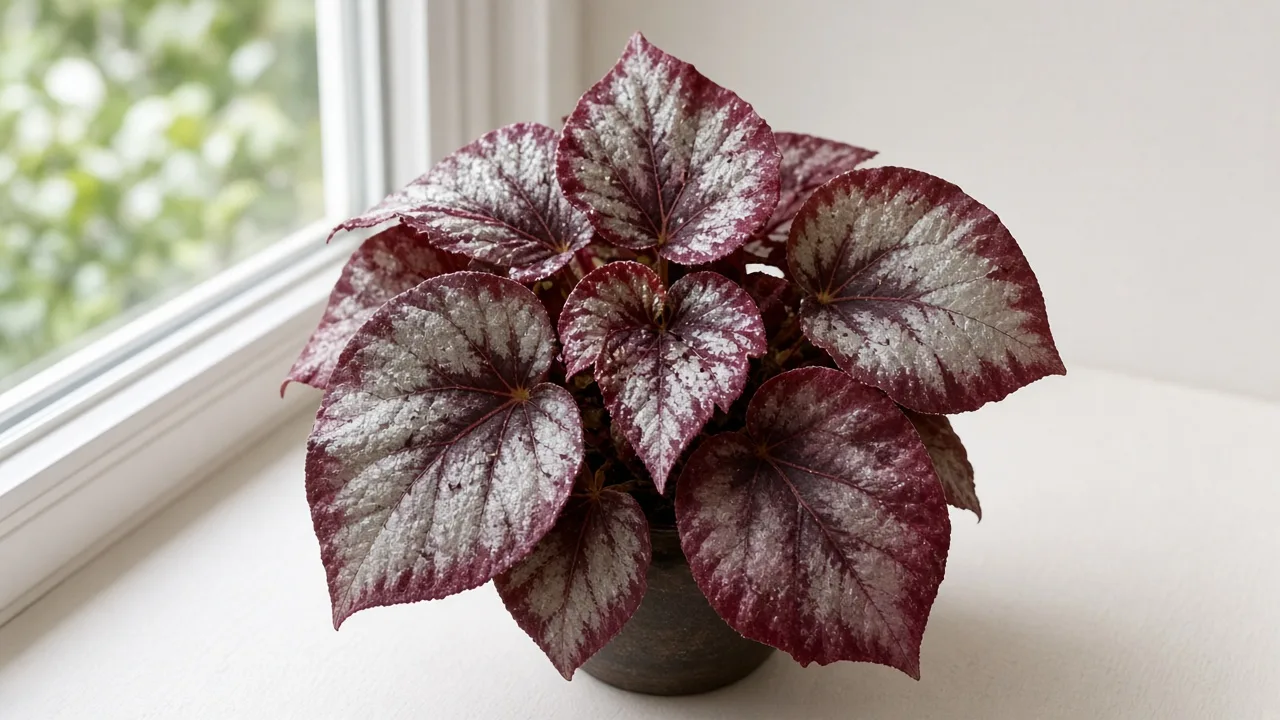
Thrips on Begonia Rex: Causes, Checks & Fixes
This guide covers thrips on Begonia Rex. See also the general Thrips guide, watering, and light pages for this plant.
Thrips on Begonia Rex: Causes, Checks & Fixes
Quick answer
Thrips on Begonia Rex (Begonia rex-cultorum) are small winged insects with rasping-sucking mouthparts that scar soft painted tissue at the rhizome crown, leaving silvery scrape streaks, black frass specks, and permanently puckered new blades while older lower leaves may still look fine from above.
For general thrips biology and control options, see our thrips guide. On Rex begonias, damage concentrates on the softest unfurling painted tips and sheltered petiole axils—exactly where correct bottom-watering keeps the rhizome dry but never rinses leaf undersides.
First step: isolate the plant and shake the softest unfurling leaf over white paper to confirm moving specks before spraying anything.
When to use this page vs other Begonia Rex guides
| Pattern | Read next |
|---|---|
| Silver streaks, black specks, crimped new painted tips | This page |
| Twist or puckering without silver scars | Distorted leaves |
| Fine stippling plus fine silk webbing | Spider mites |
| Sticky honeydew on soft shoots | Aphids |
| Enclosed pale tunnel inside the blade | Leaf miners |
| Ragged chew holes with pellet frass | Caterpillars |
| Even brown crisp edges, no dotting | Low humidity |
What thrips look like on Begonia Rex
Rex begonias push painted, metallic new leaves from a shallow rhizome at the soil line. Thrips feed first on that soft expanding tissue before the burgundy, silver, or swirl pattern fully develops—so damage often appears as a ruined showpiece leaf rather than random yellowing below.
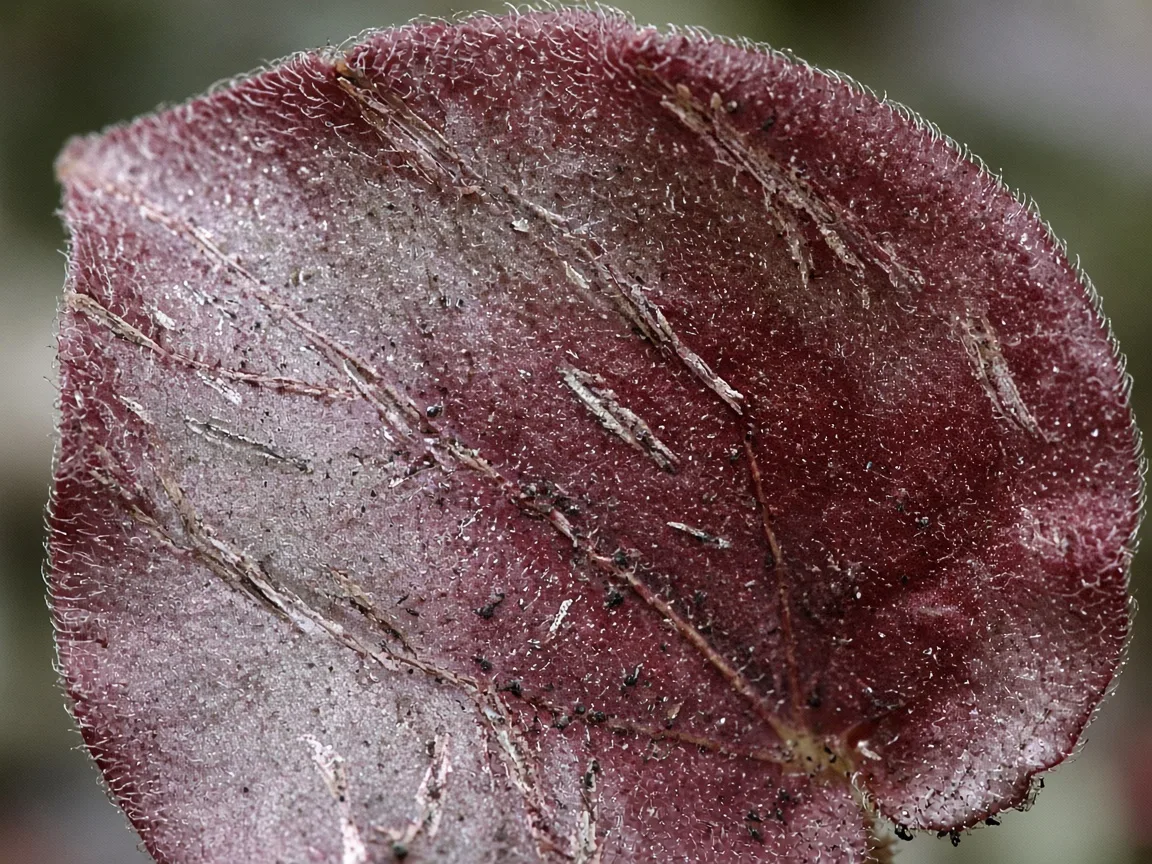
Silvery rasp marks and dark frass specks on soft painted Rex foliage—compare with firm, undamaged lower leaves on the same rhizome.
Typical signs include:
- Silvery or bronze scrape streaks across painted leaf surfaces—each mark is dead epidermal cells where thrips rasped and drained sap
- Black varnish-like frass specks on upper or lower blade faces, petiole bases, or the pot rim below fed leaves (UC IPM)
- Puckered, twisted, or asymmetric new blades that open crimped and stay that way—permanent once tissue hardens
- Distorted center growth where the rolled painted tip fails to unfurl flat; route severe unfurl scarring to distorted leaves for the full differential
- Adults or pale nymphs on shake test—rice-grain insects that crawl, not jump like some lookalikes
- Damage clustered on newest flush while mature painted leaves lower on the rosette still look normal until the infestation spreads
Thrips are generally less than one-eighth inch long with elongated bodies. On hairy rex undersides they are easy to miss until silver scarring breaks through the decorative pattern on cultivars like Escargot or Fireworks.
Unlike spider mites, no fine stippling dotting with silk webbing. Unlike aphids, no sticky honeydew sheen. Unlike caterpillars, thrips rasp the surface—they do not chew ragged holes with pellet frass.
Why painted Rex leaves show thrips damage so clearly
Rex begonias are grown for bold painted patterns on textured blades. Thrips scarring does not fade like a humidity brown tip; it permanently dulls or streaks the pattern on tissue that will not repair.
One thrips generation feeding on a newly emerging painted leaf can ruin the showpiece blade before it fully expands. That makes thrips feel urgent on rex collections even when only a few insects are present—cosmetic damage is immediate and visible.
Judge severity by whether the next one or two leaves unfurl clean, not by whether old scarred blades look perfect again.
Crown-safe rinsing on a bottom-watered rex
Correct rex culture keeps water at the base only so leaves and the rhizome crown stay dry—UConn notes rex begonias should not stay wet at the crown. NC State advises avoiding misting to prevent crown disease. That habit is right for rot prevention but creates uninspected feeding sites:
- Overlapping painted leaves at the rhizome line never get rinsed during routine care
- Petiole bases where new blades emerge stay sheltered and dry—ideal cover for thrips nymphs
- A quick glance at the metallic pattern from above misses silver streaks on hairy undersides
This is not a reason to start top-watering rex begonias daily. It is a reason to isolate and rinse undersides in a sink while tipping the pot so runoff drains away from the shallow rhizome, then let foliage dry in bright indirect light within an hour per the light guide.
Why Begonia Rex gets thrips
Thrips are not a chronic weakness of rex begonias the way spider mites can be in dry winter air. They arrive as introduced insects on new plants, cut flowers, open windows, or patio summers, then exploit soft foliage in a humid rosette.
Hitchhiking on nursery stock. Eggs laid in soft tissue can hatch weeks after you bring a rex home. Thrips feed on young leaves, buds, and tender shoots—exactly what a healthy rex pushes in bright indirect light at 50–60% humidity.
Summer outdoors or open windows. Rex begonias moved to shaded patios in warm months can pick up thrips from neighboring flowers. Low-growing painted leaves near open windows in spring are easy landing spots. When the plant returns indoors, feeding resumes on tender new growth in stable humidity.
Dense rosettes on shallow rhizomes. Happy rex plants produce fresh painted leaves regularly from the rhizome. Those emerging blades are easier to rasp than hardened older foliage—and overlapping leaves give thrips sheltered feeding sites that casual bottom-watering misses.
Crowded humidity trays. Grouped rex pots on pebble trays let thrips walk between touching painted leaves. Inspect every plant on the same shelf when you confirm thrips on one pot.
The rinse-vs.-humidity tradeoff. Rex growers need humidity to prevent edge crisping (low humidity is the top lookalike), but active thrips treatment requires repeated foliar rinsing that must not soak the crown. That tension is unique to rhizomatous painted-leaf begonias—not generic houseplant thrips advice.
Lookalike symptoms to rule out
| What you see | Likely cause | Key difference from thrips |
|---|---|---|
| Fine yellow stippling plus silk at petiole bases | Spider mites | Dotting on blade face; webbing; dry winter air context |
| Sticky shiny residue on soft shoots | Aphids | Soft-bodied clusters; honeydew; no silver scrape streaks |
| Enclosed pale tunnel inside the blade | Leaf miners | Tunnel inside tissue; no live thrips on shake test |
| Ragged holes with dark pellet frass | Caterpillars | Chew-through holes; live larva or frass pellets |
| Even brown crisp edges, no silver streaks | Low humidity | Margins only; hygrometer below 50%; no frass |
| Uniform yellow lower leaves, wet heavy mix | Overwatering | Soft rhizome possible; no moving specks on paper |
Confirmed thrips show silver scarring plus either live insects, frass specks, or distorted new painted tips—one sign alone is not enough if you cannot find pests or excrement.
How to confirm the cause
Work through this inspection in order:
- Isolate the plant on a tray away from other houseplants before handling foliage.
- Hold white paper under the softest new leaf and tap the blade sharply. Slow-moving specks dislodged onto paper confirm thrips.
- Magnify leaf undersides and petiole bases at the rhizome crown—look for pale nymphs, dark adults, silver streaks, and black frass flecks.
- Check the center rosette first, then outer lower leaves—rex thrips usually start where overlapping blades stay dry near new growth.
- Inspect shelf mates even if they look clean; matching silver streaks on a fern or peperomia on the same stand means quarantine the whole group.
- Rule out cultural stress before treating—if only crisp margins show with no silvering, check humidity and watering first.
UC IPM advises confirming pest thrips are present and causing damage before taking control action—important because painted rex leaves scar permanently and sprays stress a crown-sensitive species.
Female thrips insert eggs into plant tissue (Ohio Tropics houseplant thrips guidance). A rinse that knocks down adults may miss eggs—plan for repeated cycles, not one treatment.
First fix for Begonia Rex
Isolate the plant and rinse every leaf underside with lukewarm water while tipping the pot so the rhizome crown stays dry.
Move the rex to a sink or shower. Support the shallow rhizome above the pot rim with your hand or a tilted pot so water runs off painted blades and down the sides—not into the crown at the soil line. Rinse undersides thoroughly; thrips cluster where you never look during bottom-watering.
Pat excess moisture from hairy painted surfaces with a clean towel. Set the plant in bright indirect light with gentle airflow until foliage is dry within an hour. Do not return it to a dark corner while leaves stay damp—rex crowns are vulnerable to rot when wet.
This single step physically removes thrips before chemical treatment and confirms how widespread the colony is. Do not repot, prune heavily, and spray on the same day.
Step-by-step recovery
After the first rinse:
- Repeat crown-safe rinses every five to seven days for at least three cycles. Thrips eggs hide inside soft tissue and hatch on staggered schedules; repeat applications are necessary.
- Test insecticidal soap on one leaf before spraying the whole plant. Some begonias are sensitive to insecticidal soap—spray a single painted leaf, wait 24 hours, then treat the full rosette if no burn appears. Apply to undersides and petiole bases in evening or away from direct sun.
- Hang blue or yellow sticky traps near new growth to catch flying adults and monitor decline—UC IPM recommends sticky traps to detect thrips.
- Trim only heavily scarred painted blades after two clean new leaves emerge—cosmetic damage does not heal, but the rhizome needs foliage for recovery.
- Hold fertilizer until new growth looks healthy for two weeks. Do not push soft nitrogen-rich shoots while thrips are active.
- Re-inspect neighbors weekly for silver streaks on their newest leaves.
If damage spreads after three rinse-and-spray cycles, consider whether the rex is worth saving versus discarding a severely scarred specimen to protect the rest of your collection—especially on rare cultivars where every painted leaf is the display.
Recovery timeline
| Phase | What to expect |
|---|---|
| Days 1–3 | Fewer live thrips on shake test; frass may still be visible on old scars |
| Week 1–2 | Next painted leaf unfurls with less crimping if rinses stayed on schedule |
| Week 3–4 | Two consecutive clean new blades without fresh silver streaks |
| Month 2+ | Stable rhizome pushing regular painted growth; old scarred leaves remain cosmetic only |
Mild cases on a vigorous rex often stabilize within two to three weekly treatment cycles. Heavy center damage on a small rhizome may take a full growing season before the rosette looks full again—judge by clean new tissue, not repaired old blades.
Mistakes to avoid
- Misting painted foliage for humidity while treating thrips—rex leaves should stay dry at the surface; use a humidifier per low humidity guidance instead
- Soaking the rhizome crown during repeated rinses—tip the pot and dry foliage promptly
- One spray and done—eggs in soft rex tissue hatch after the first treatment
- Full-strength soap on the whole plant without a patch test—begonia foliage can burn
- Fertilizing to “help recovery” before pests are controlled—soft new shoots attract more feeding
- Ignoring shelf mates—thrips walk between touching leaves on shared humidity trays
- Repotting into fresh mix to “remove thrips” before foliage is clean—nymphs drop to soil but adults return to new growth; repot only after infestation is controlled and the mix genuinely needs refreshing
Prevention
Quarantine new rex begonias one to two weeks before placing them near other painted-leaf collections. Wisconsin Horticulture advises keeping new plants separated until pest-free.
After summer outdoors, rinse reachable undersides and inspect crown axils before the plant re-enters your home.
Scout weekly during warm months—focus on the softest painted blade at the rhizome tip and petiole bases where leaves overlap.
Keep humidity at 50–60% with a humidifier rather than wetting foliage—thrips and spider mites both spike when air is chronically dry, but rex culture still cannot tolerate wet crowns.
Hang blue sticky traps near active collections when you have had thrips on any shelf mate—early detection on rex begonias is hard because metallic patterns hide silver streaks until damage is advanced.
Space pots on humidity trays so painted leaves do not touch—thrips crawl across contact points overnight.
Related Begonia Rex guides
Conclusion
Thrips on Begonia Rex are diagnosable and treatable—silver scrape streaks with black frass on soft painted new growth at the rhizome crown tell the story. Isolate and rinse undersides without soaking the crown first; repeat weekly until two clean new leaves unfurl. Recovery is measured by flat painted new blades, not repaired scarred tissue.