Curling Leaves on Begonia Rex: Causes, Checks & Fixes
Quick answer
Begonia Rex leaves curl when dry air or dry roots pull moisture from large painted foliage faster than the shallow rhizome can replace it. First step: check the top 2–3 cm of soil and a hygrometer at canopy height—bottom-water if the mix is dry; if soil moisture is normal and RH sits below 50%, run a humidifier beside the plant.
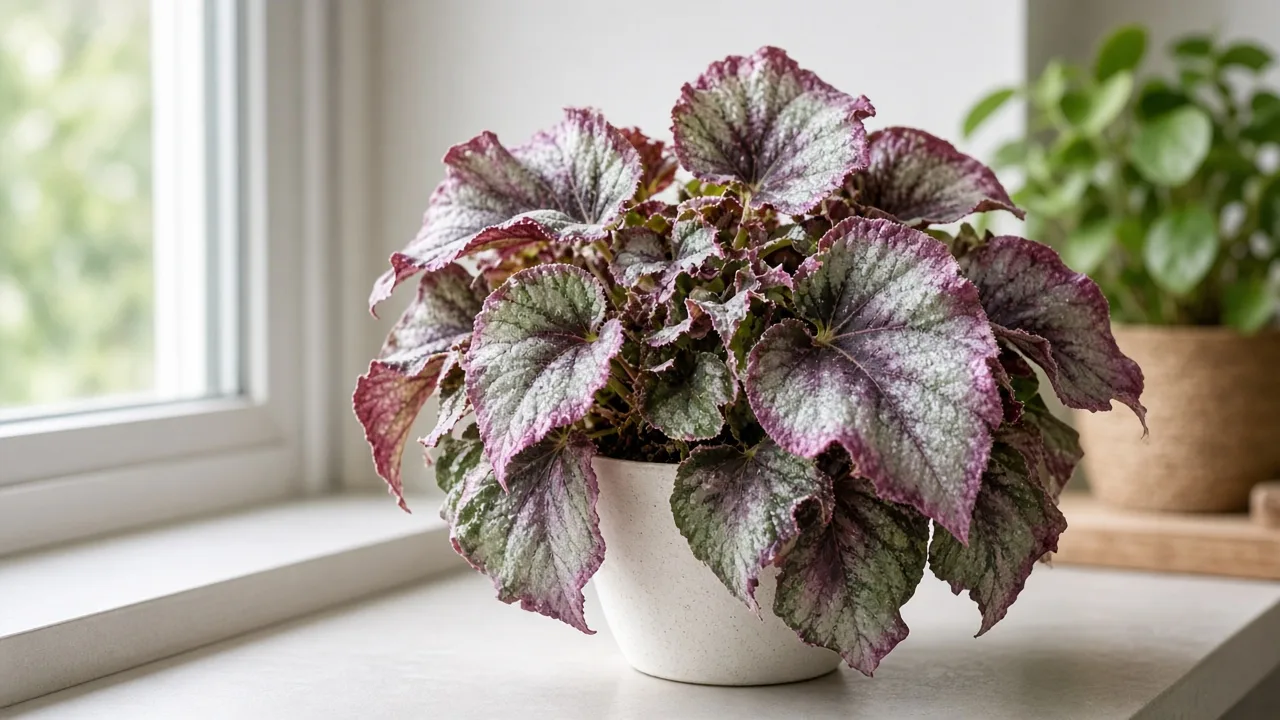
Curling Leaves on Begonia Rex: Causes, Checks & Fixes
This guide covers curling leaves on Begonia Rex. See also the general Curling Leaves guide, watering, and light pages for this plant.
Curling Leaves on Begonia Rex: Causes, Checks & Fixes
Quick answer
Begonia Rex (Begonia rex-cultorum) leaves curl when the plant loses turgor faster than its shallow rhizome and fine roots can replace it. On rex cultivars, cupping often shows up before brown crispy edges—a early warning that dry winter air or missed watering is stressing large, patterned foliage built for humid forest floors.
First step: check the top 2–3 cm of soil and a hygrometer at canopy height. If the mix is dusty dry and the pot feels light, bottom-water today and drain fully. If soil moisture looks normal but RH reads below 50%, run a humidifier beside the plant—do not mist leaves. For general leaf-curl mechanics, see our curling leaves guide; on rex begonias the pattern usually pairs cupped margins with either dry air or a dry root zone, rarely both at once.
What curling leaves look like on Begonia Rex
On rex begonias, curl is not one uniform gesture. Patterned cultivars like Escargot or Fireworks may show margins rolling upward or inward, creating a shallow cup while the metallic leaf center still looks colored. Thin-leafed hybrids often twist slightly at the tips before any browning appears—a stage earlier than the full margin crisping described on the low humidity guide.
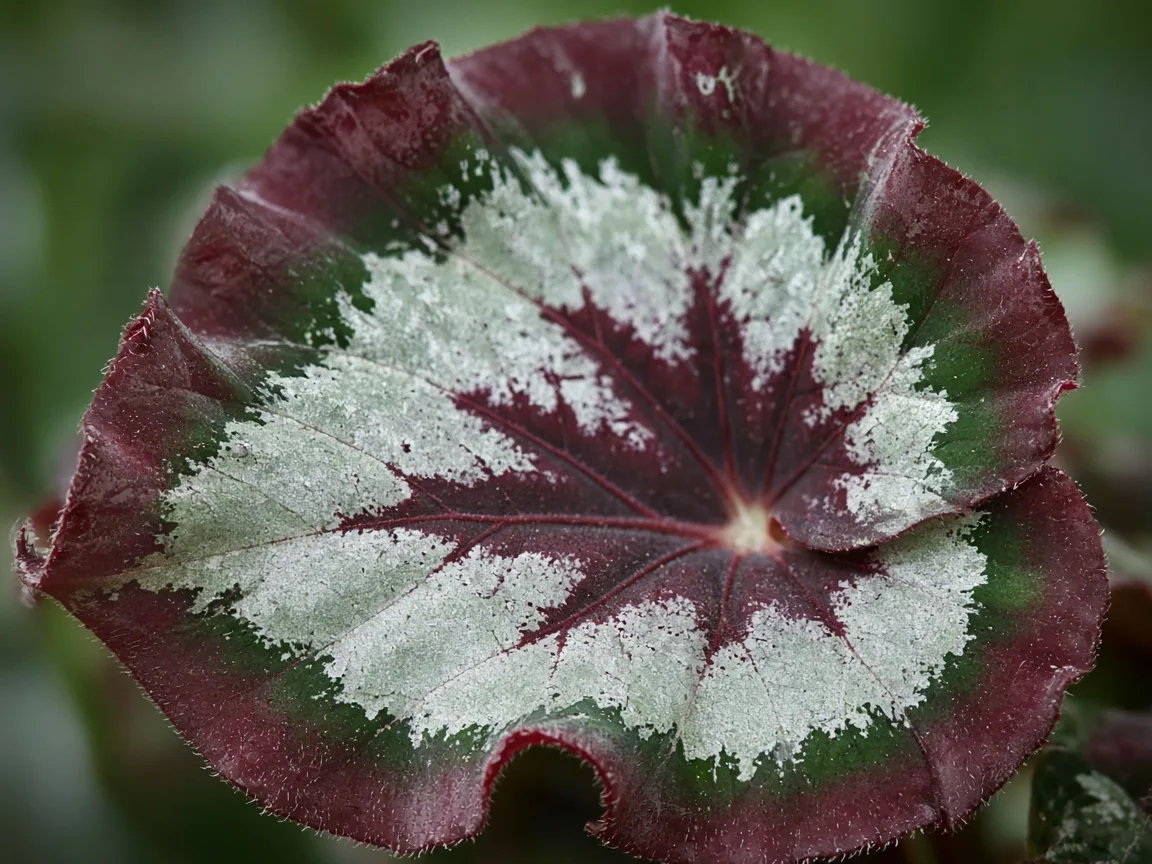
Curling leaves on Begonia Rex - compare cupped margins with flatter tissue on the same plant.
Common rex-specific patterns:
- Cupping without immediate brown edges - leaves reduce exposed surface area in dry air; may partially relax overnight and re-curl as daytime heating drops RH
- Limp curl with drooping petioles - whole leaves hang rather than stand firm; soil is usually dry several centimeters down (underwatering)
- Curl on leaves nearest a window, vent, or radiator - local heat or draft stress, not a whole-plant watering failure
- New leaves emerging already slightly curled - humidity crashed or the root zone stayed dry through the last flush of growth
- Asymmetrical roll - one side of a leaf cups more tightly, often the side facing a heat source or AC blast
- Curl plus fine stippling on undersides - suspect spider mites on Begonia Rex in hot, dry indoor air
Rex begonias are rhizomatous: leaves arise from a thickened stem at the soil surface. When only older outer leaves curl while the rhizome stays firm and new central growth looks normal, environmental stress is likely. When the whole rosette collapses with wet soil and a soft crown, curl is a secondary sign—inspect for overwatering or rot before adding humidity.
Why rex leaves cup before they crisp
Rex begonias are humidity-sensitive rhizomatous foliage plants with large, thin, often hairy leaves. Missouri Botanical Garden notes rex types need more than 50% humidity; dry indoor winter air commonly produces brown, crispy edges—but cupping often arrives first.
That sequence matters for diagnosis:
- Low humidity - leaves curl to limit transpiration from dry room air while soil moisture may still look normal; NC State lists humidifiers, pebble trays, bathrooms, and kitchens as practical fixes but warns to avoid misting and overwatering
- Underwatering - cells lose turgor; petioles go limp and leaves cup downward or inward while the pot feels light and mix pulls from the pot wall
- Heat and draft stress - hot air from radiators or cold window drafts desiccates margins on the exposed side; UConn notes rex growth slows when temperatures fall below 60°F but summer heat near glass can curl leaves without changing your watering calendar
- Spider mites - UConn reports rex begonias may host spider mites in hot, dry circumstances; feeding removes chlorophyll and leaves may curl or distort as tissue weakens
- Powdery mildew early stage - UConn lists initial mildew symptoms as spotting and curling of the foliage followed by white patches—different from pure dry-air cupping
Humid air is not the same as wet soil. UConn describes evenly moist root-zone conditions while still advising you to wait until the top inch of mix feels dry before watering. Rex types need moisture in the air around leaves and brief dry-down at the crown—not a permanently saturated pot to compensate for dry winter rooms.
Reading the rhizome while leaves curl
The creeping rhizome sitting at the soil line is your tie-breaker when foliage looks confused:
- Firm rhizome + normal soil moisture + cupped margins → humidity or heat stress first; see low humidity
- Firm rhizome + very dry top 2–3 cm + limp curl → underwatering; bottom-water before raising humidity
- Soft or mushy rhizome + wet soil + wilted curl → rot or chronic overwatering; do not soak heavily
- Firm rhizome + curl on new growth only + stippling below → pests; rinse undersides and raise RH while treating mites
Press the rhizome gently with a clean finger at the soil surface. Rex recovery depends on that tissue staying solid while you fix the environment—unlike deep-rooted houseplants where only leaf tips tell the story.
Lookalike symptoms to rule out
| Symptom pattern | Soil / pot | Location on plant | Most likely cause | First fix |
|---|---|---|---|---|
| Upward cupping, firm petioles, normal pot weight | Top inch dry or moist; firm rhizome | Margins on several leaves | Low humidity | Humidifier to 50–70% RH |
| Limp curl + light dry pot | Dry 2–3 cm down; mix shrunk from walls | Whole leaves droop | Underwatering | Bottom-water until surface moistens |
| Curl on sun-facing side only | Any moisture | One side of leaf | Direct sun / heat scorch | Move to bright indirect light |
| Curl + stippling + webbing | Often dry air too | Leaf undersides | Spider mites | Rinse undersides; raise RH |
| Curl + white patches on leaves | Any moisture | Upper leaf surface | Powdery mildew | Improve airflow; keep foliage dry |
| Wilted curl + wet heavy pot | Wet mix; sour smell possible | Lower leaves yellow first | Overwatering | Stop water; inspect rhizome |
If margins are already brown and crispy rather than merely cupped, the brown tips guide covers salt, tap water, and late-stage humidity damage when curl has progressed further.
How to confirm the cause
Work through these checks in order:
- Pot weight and soil moisture - Lift the pot. Very light with dusty dry top 2–3 cm confirms drought. Normal weight with cupped margins points to air humidity.
- Hygrometer at canopy height - Place a digital hygrometer beside the plant, not across the room. Below 45% RH with cupping strongly supports low humidity on rex begonias.
- Rhizome firmness - Soft crown tissue with wet soil overrides a humidity diagnosis.
- Placement scan - Note heat vents, radiators, sunny south windows, and cold winter glass within two feet of the foliage.
- Leaf undersides - Look for mite stippling, mealybug cotton, or thrips scarring before assuming environment alone.
- New vs old growth - Curl on the newest leaves suggests current stress; only older outer leaves curling may mean past drought or a seasonal RH drop that already stabilized.
When RH reads above 55% and leaves still curl with a light pot, trust the root zone—underwatering wins over humidity. When soil is appropriately moist and RH is low, humidifier first.
First fix for Begonia Rex
If the top 2–3 cm of mix is dry: bottom-water once. Set the pot in a tray of room-temperature water for 15–30 minutes until the surface darkens, lift it out, and let it drain completely. Do not splash the velvety leaves or rhizome crown.
If soil moisture is normal and RH is below 50%: run a small humidifier beside the plant targeting 50–70% RH at canopy height. Place the unit 1–3 feet from foliage—not directly under leaves where condensation drips onto the crown. NC State recommends humidifiers and pebble trays for rex types but specifically warns against misting.
Pick one path based on your checks, then wait 48 hours before stacking a second major change. Curl from dry air can relax within a day or two of stable humidity; drought recovery may show turgid petioles within hours after a proper soak.
Step-by-step recovery
After the first fix:
- Move off heat vents and cold window drafts - Even brief daily hot-air blasts keep margins curling on rex leaves nearest the source.
- Add a pebble tray as secondary humidity support - Pot sits above the water line on moistened pebbles; never let the rhizome base soak.
- Resume bottom-watering on schedule - When the top inch dries per the watering guide; do not keep soil soggy because leaves looked dry.
- Hold fertilizer - UConn advises refraining from feed from October until new spring growth; stressed rex tissue burns easily if fed early.
- Inspect for spider mites weekly - Dry air weakens foliage and invites mites; gentle underside rinse helps while RH rises.
- Trim only fully dead leaves - Partial cupping on old foliage can stay until new flat leaves replace it.
If curl persists above 55% RH with moist soil, check not enough light—weak winter growth plus adequate water sometimes produces small, twisted new leaves rather than true drought curl.
Recovery timeline
Judge progress by new growth and petiole firmness, not by old leaves flattening perfectly:
- Hours to 2 days - Underwatered rex plants often show firmer petioles after one thorough bottom-water
- 24–48 hours - Humidity-driven cupping may relax once RH holds above 50% consistently
- 1–2 weeks - First new leaf emerging flat or with minimal curl is the main success signal
- 4–6 weeks - A full flush of uncurled foliage may replace much of a winter-stressed canopy if light and watering stay stable
Existing crisp or twisted tissue does not fully flatten—brown or permanently distorted sections stay as they are. Success means curl stops spreading and clean new leaves arrive from the rhizome.
What not to do
Do not mist rex leaves to fix curl. NC State Extension says to avoid misting rex begonias to prevent disease; wet velvety foliage invites powdery mildew when you meant to help.
Do not overwater because leaves cup. Wet soil plus dry-looking curl is a dangerous split—soggy mix rots the rhizome while margins still roll in dry air.
Do not fertilize a curling rex before confirming moisture and humidity. Feed only after new growth looks healthy for two weeks during active season.
Do not stack repotting, heavy pruning, and pesticide on the same day you add a humidifier. One correction at a time keeps the plant’s response readable.
How to prevent curling next time
- Monitor RH weekly from heating season through March; run a humidifier proactively when readings drop below 50%, not after half the rosette cups
- Weigh or finger-check the pot every few days in bright summer light—rex in shallow pots dries faster than calendar schedules suggest
- Keep rex away from radiator lines and forced-air vents; local RH can sit 10–15% below room average on a shelf near a vent
- Bottom-water at the base only so the rhizome crown stays dry while ambient humidity supports the canopy
- Group humidity-loving plants modestly, but do not rely on grouping alone in a dry heated room
When to use this page vs other Begonia Rex guides
Use this page when leaves cup or roll while the plant still has mostly colored foliage—especially if curl appeared before brown edges. Switch to low humidity when margins are already crispy and RH is clearly low. Use underwatering when the pot is light, soil is dry at depth, and petioles are limp. See drooping leaves when the whole rosette hangs without strong cupping. Escalate to spider mites if stippling and webbing appear on undersides despite good watering.
Related Begonia Rex guides
- Begonia Rex overview - humidity, light, and rhizome care hub
- Low humidity - when curl progresses to crispy margins
- Watering - bottom-water rhythm and crown-dry rules
- Underwatering - limp curl with dry mix
- Brown tips - edge damage after curl has advanced