Scale Insects on Blue Star Fern: Rhizome-Zone Checks & Fixes
Quick answer
Scale insects on Blue Star Fern show as flat tan, brown, or waxy bumps glued to frond bases, lobed frond undersides near the petiole, and sheltered rhizome forks—not the plant's even golden rhizome scales. First step: isolate the pot and dab every visible shell with 70% isopropyl alcohol on a cotton swab at frond bases without flooding surface rhizomes.
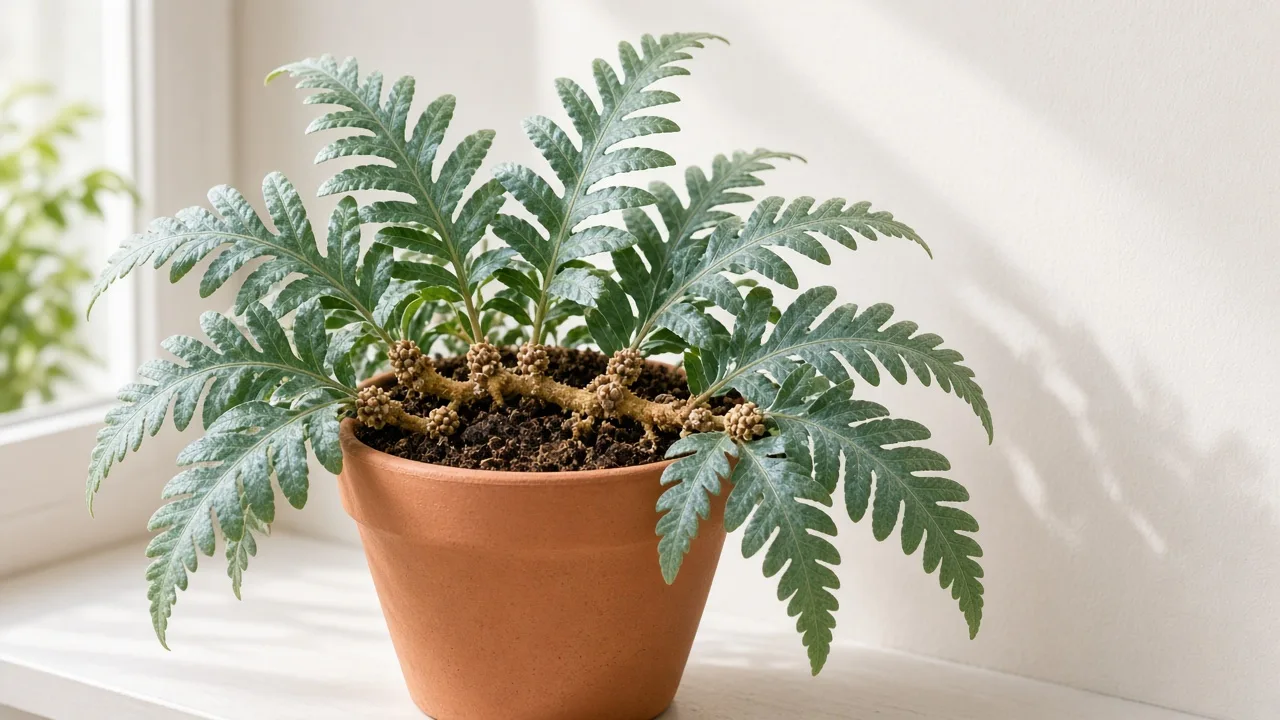
Scale Insects on Blue Star Fern: Causes, Checks & Fixes
This guide covers scale insects on Blue Star Fern. See also the general Scale Insects guide, watering, and light pages for this plant.
Scale Insects on Blue Star Fern: Causes, Checks & Fixes
Quick answer
Scale insects on Blue Star Fern (Phlebodium aureum) show up as flat tan, brown, or waxy bumps glued to frond bases where lobed blue-green leaves meet creeping golden rhizomes, along lower midribs on frond undersides, and in sheltered rhizome forks where stems branch. They are immobile sap feeders protected by a waxy or shell-like cover that pierce frond tissue and drain sugars from the foliage this fern is grown for.
For how scale life cycles, crawler timing, and armored versus soft scale work indoors in general, see our scale insects guide. On Blue Star Fern, the practical pattern is hard disks at frond-to-rhizome junctions on a spreading epiphyte, sticky shine on bluish lobes below infested bases, and colonies that stay hidden until you lift fronds and inspect golden rhizome crevices—not the evenly fuzzy golden rhizome surface that is healthy plant anatomy.
First step: isolate the pot the same day you spot bumps. Move it away from other houseplants, then dab every visible scale shell with a cotton swab dipped in 70% isopropyl alcohol, pressing directly on each bump at frond bases and midrib attachment points without pouring liquid over exposed rhizomes.
Dull, crispy fronds on bone-dry mix point to underwatering on Blue Star Fern—confirm shells and honeydew before you treat pests alone. For species basics, see the Blue Star Fern overview. Blue Star Fern is non-toxic to cats and dogs; still keep pets away until alcohol or soap dries on treated fronds.
When to use this page vs other Blue Star Fern guides
This page is the pest-first entry for immobile shell-like sap feeders on Phlebodium frond bases and rhizome forks.
- Blue Star Fern overview — Baseline care, buying checks, and how this rhizomatous epiphyte grows indoors.
- Mealybugs on Blue Star Fern — Use for white cottony tufts in the same frond-base zones, not hard tan disks.
- Spider mites on Blue Star Fern — Use for fine webbing and stippling in dry air, not glued bumps.
- Aphids on Blue Star Fern — Use for soft green colonies on unfurling fronds with honeydew.
- Blue Star Fern problems hub — Browse all common issues on this species.
Why Blue Star Fern attracts scale at frond bases and rhizome forks
Spreading rhizomes create dozens of hiding spots. Blue Star Fern grows as a rhizomatous epiphyte with creeping rhizomes densely covered in golden scales rather than a single tight rosette. Overlapping lobed fronds and surface rhizomes form sheltered crevices where scale settles and stays immobile once the cover hardens—exactly where quick overhead watering passes skip.
Bluish lobed fronds hide stem-zone colonies. Mature Phlebodium leaves are deeply lobed with a distinctive blue-green cast; bumps on open blade centers are uncommon. Instead, scale infestations cause yellowing, honeydew, and sooty mold on the fronds below bases you never lifted. A moderate infestation can span many frond axils while the plant still looks fine from across the room.
Houseplant scale species favor ferns. Brown soft scale is common on gardenia, fern, and fig indoors, and hemispherical scale favors ferns among other houseplants—both fit the tan dome bumps you see at Phlebodium frond bases.
Warm indoor rooms lack natural enemies. Scale crawlers are mobile only briefly before they settle; mild room temperatures let populations build year-round. Nursery arrivals, summer patio shade, and unquarantined shelf neighbors are common entry routes. NC State recommends monitoring ferns for spider mites and thrips; scale fits the same sheltered-frond-base inspection habit even when it is not the first pest listed.
Stressed rhizomes recover slowly. Chronic wet mix softens roots per overwatering, dim corners slow new fronds per not enough light, and low humidity browns margins without changing the bump pattern. Cross-check watering rhythm and soil structure before assuming pesticides alone will fix a plant that is already waterlogged or light-starved.
What scale insects look like on Blue Star Fern
Early infestations concentrate on frond bases and rhizome overlap zones, not random spots on mature lobe centers. Check these patterns together:
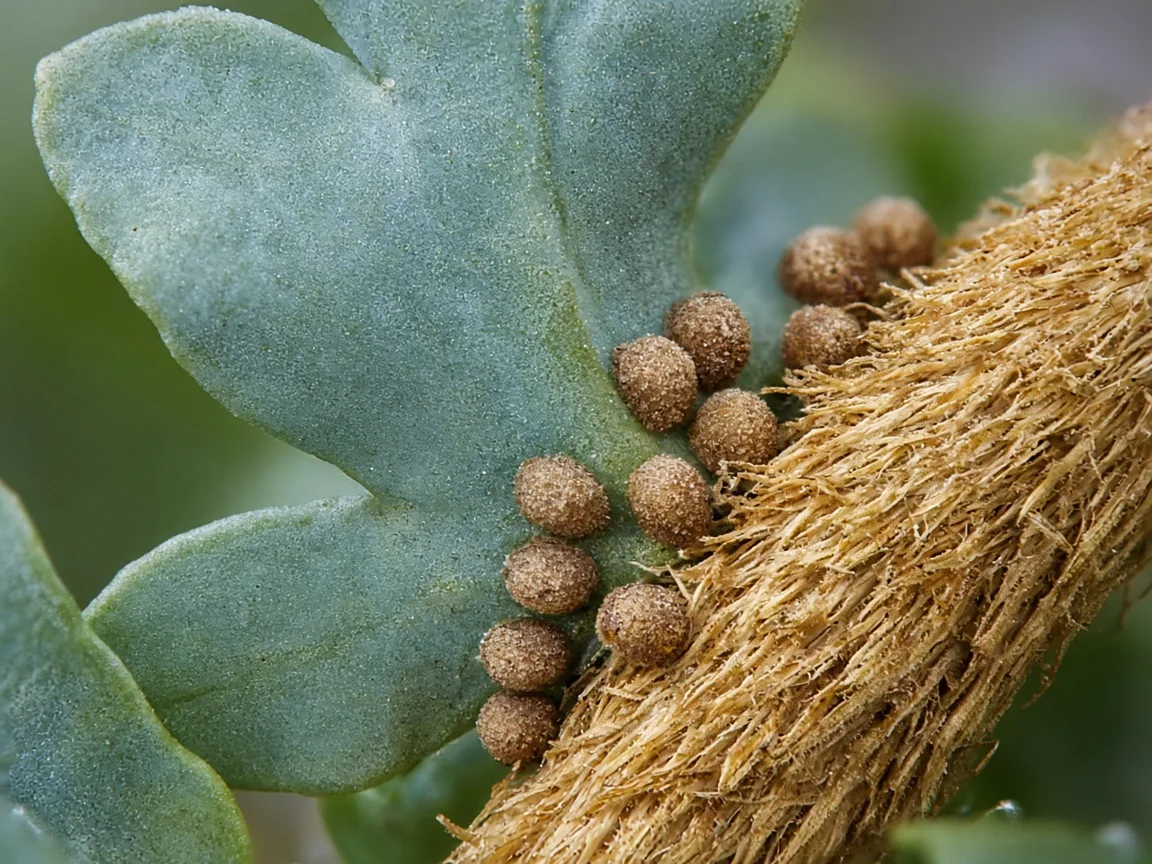
Tan scale shells along a Blue Star Fern frond base—compare with clean bluish lobe tissue and firm golden rhizome scales on the same plant.
- Flat or dome-shaped tan, brown, or waxy bumps along frond bases where each lobed frond meets creeping rhizomes
- Shell-like disks on the lower midrib on frond undersides near the attachment point
- Bumps tucked in rhizome forks where golden stems branch and new fronds sprout
- Sticky, shiny honeydew on bluish fronds, the pot rim, or the shelf below
- Black sooty mold on honeydew-coated tissue in humid rooms with weak airflow
- Stunted or distorted new fronds emerging small or pale when feeding is heavy at rhizome tips
- Ants on the pot rim farming honeydew from hidden colonies
- Pale yellow to orangish crawlers before shells harden—tiny until they settle at the next soft frond base
Do not mistake normal features for pests. Healthy Blue Star Fern rhizomes carry firm, evenly golden fuzzy scales along the entire creeping stem—that is normal anatomy described by NC State Extension, not insect colonies. Mature fronds may show raised sporangia spots in orderly rows on undersides before they darken—they follow vein patterns, lift as plant tissue, and are not accompanied by honeydew or ants. Scale stress shows firm bumps at multiple frond bases in a row, stickiness, and stalled clean new growth—not one pale lower frond on an otherwise bump-free plant.
Where scale hides on a rhizome-creeping Phlebodium
Scale on Blue Star Fern concentrates where lobed architecture overlaps spreading rhizomes. Work through this order before treating:
- Frond bases at rhizome junctions — Run bright light along every junction where a lobed frond meets golden rhizomes on the soil surface, including bases hidden behind overlapping foliage.
- Rhizome forks — Trace branching points where one creeping stem splits; scale often crusts forks before it spreads to open lobes.
- Lower midribs on undersides — Check the bottom third of each lobe on both faces near the petiole—not only the bluish upper surface.
- Pot rim, cache pots, and basket fiber — Honeydew drips collect on rims; ants often signal colonies you have not seen yet.
- Neighbor plants — Inspect pots whose fronds touched this fern or shared a patio table.
This frond-base and rhizome-fork map is specific to a creeping epiphytic fern—not a woody floor plant inspected only at thick petiole sheaths.
Confirm scale vs mealybugs, aphids, thrips, mites, golden rhizomes, and sporangia
| What you see | Likely cause | Key check |
|---|---|---|
| Tan or brown immobile bumps on frond bases | Scale insects | Shell test; honeydew on fronds below |
| White cottony tufts in rhizome crevices | Mealybugs | Fluffy wax; pink smear when crushed |
| Soft pear-shaped insects on unfurling fronds | Aphids | Colonies move when disturbed |
| Silver streaks and black specks on young lobes | Thrips | Scraping fronds onto white paper releases slender insects |
| Fine webbing and yellow stippling | Spider mites | Dry air; mites on undersides, not shell bumps |
| Whiteflies puffing off when fronds are shaken | Whiteflies | Flying adults; not glued disks |
| Even golden fuzz across entire creeping rhizome | Normal rhizome scales | Firm, uniform; no honeydew |
| Parallel raised spots on mature frond undersides | Normal sporangia | Even rows; no honeydew; not clustered in crevices |
| Yellow fronds, sour wet mix, soft rhizomes | Root rot | No scale shells; rhizomes may smell off |
Confirmed diagnosis — Immobile shells plus honeydew or ants on multiple frond bases with firm rhizomes. Suspected — One tan speck without stickiness may be callus or mineral splash; use the shell test before spraying.
Shell test at the frond base
Pry one bump with a toothpick or fingernail. Armored scale covers can be lifted separately from the body; soft scales crush with body fluid beneath a waxy dome. WSU PestSense notes that scale shells lift to reveal a six-legged insect or cottony eggs beneath, while plant tissue stays green when you scrape a harmless bump. Dried hard-water crust on a pot rim does not lift as an insect shell and is not clustered along frond bases.
First fix: isolate and alcohol-dab every shell at frond bases
Isolate the plant away from others, then dab each visible scale shell with 70% isopropyl alcohol on a cotton swab, pressing directly on the bump at frond bases and midrib attachment points.
That single action removes adults you can reach and confirms live pests—not dust—before you commit to sprays. UW Extension recommends removing scales with a swab dipped in soapy water or alcohol for lightly infested houseplants—the contact kills the insect under the cover without soaking the entire rhizome mat on day one. WSU PestSense adds that alcohol on cotton swabs helps control light infestations, especially crawlers, though excessive alcohol can harm some plants—patch-test one hidden frond base first.
Work systematically:
- Start at outer frond bases along the longest creeping rhizomes and move inward toward active growth tips.
- Use a fine brush dipped in alcohol when a swab cannot fit into tight overlap zones—never pour alcohol or soapy water over exposed golden rhizomes so it pools at the crown.
- Wipe honeydew off bluish fronds below colonies with a damp cloth, keeping surface rhizomes from staying wet overnight.
- Drop swabs in a sealed bag so mobile crawlers do not fall onto the bench.
Repeat weekly until you find no new bumps for two consecutive inspections. Missing even a few adults lets scale return—on a multi-frond Blue Star Fern with spreading rhizomes, that means every base and fork matters, not only the worst cluster.
Do not repot, heavily prune, or fertilize a pest-hit fern on day one hoping to push new lobes—that produces tender tissue pests prefer. Test alcohol on a hidden frond base and wait 24 hours before treating fronds in hot direct light per the light guide.
Pet safety note: Blue Star Fern is non-toxic to cats and dogs. Keep pets away until alcohol dries, and do not let them chew treated frond tissue.
Insecticidal soap on fragile fern fronds
If shells persist after two or three weekly alcohol passes, apply insecticidal soap labeled for ornamentals. Fern foliage burns more easily than thick succulent leaves, so contact products demand patch tests and rhizome-safe application.
Rules for Blue Star Fern:
- Patch-test one frond section and wait 24–48 hours; lobed fern blades scorch more easily than rubber-plant leaves.
- Coat frond bases, rhizome forks, and lower midribs thoroughly; contact products only kill insects they touch.
- Avoid stacking alcohol dab and soap on the same day.
- Horticultural oil timed when crawlers are active can work on some scale species—use only after a patch test and never flood surface rhizomes.
- Systemic insecticides are not effective against all scale types—especially armored scales—so contact removal stays the safer first choice on a fern you handle regularly.
Manage ants before they protect scale
Ants harvest honeydew and defend scale from predators. If you see ant trails on the pot rim beneath spreading fronds, treat frond bases immediately and break ant access before expecting sprays to work.
Recovery timeline and new frond emergence
Manual removal should stop new shell formation within two to four weeks of consistent weekly dabbing. Expect clean new lobed fronds unfurling from rhizome tips within four to eight weeks during active warm-season growth under medium indirect light. Yellowed or sooty-coated fronds from heavy feeding will not fully recover cosmetically—judge success by the next firm unfurling without bumps.
Firm frond bases and steady new growth from rhizome tips are good signs. Soft, sour-smelling rhizomes on wet mix mean rot overlapping with pests—see root rot before more wet treatments.
How to prevent scale on Blue Star Fern
Quarantine every new nursery fern for two to three weeks before placing it near other plants. Inspect frond bases and rhizome forks weekly during spring and summer active growth—the same rhythm you use for mealybug checks in crevices.
Choose stock without crusted frond bases, keep surface rhizomes from sitting in pooled water during normal watering, and maintain airflow so honeydew does not linger on lobed straps. Manage ants on shelves before they establish scale “farms” along frond bases.
When you bring a patio fern indoors for cool nights, scout frond bases again—temperature shifts can coincide with crawler movement between plants. Align repotting with spring growth only after pests are controlled, not as a day-one reaction to bumps alone.
When to escalate
Escalate if tan bumps crust most frond bases on the plant, sooty mold covers most bluish lobes, or the infestation spreads to neighboring plants after isolation. Chronic scale during peak growth can stall unfurling and weaken the rhizome mat even when roots are healthy.
For heavy recurring infestations, a local extension office can help confirm armored versus soft scale and discuss options. Scale alone rarely kills a Blue Star Fern with firm rhizomes, but it can ruin a flush of new fronds and invite secondary stress if you respond with extra water over rhizomes or fertilizer instead of pest removal.