Thrips on Blue Star Fern: Silver Fronds & Fixes
Quick answer
Thrips on Blue Star Fern rasp sap from unfurling lobed fronds and soft rhizome tips—often leaving silvery streaks, black frass specks, and crinkled new growth above creeping golden rhizomes. First step: isolate the pot and shake the newest fronds over white paper to confirm slender insects before treating.
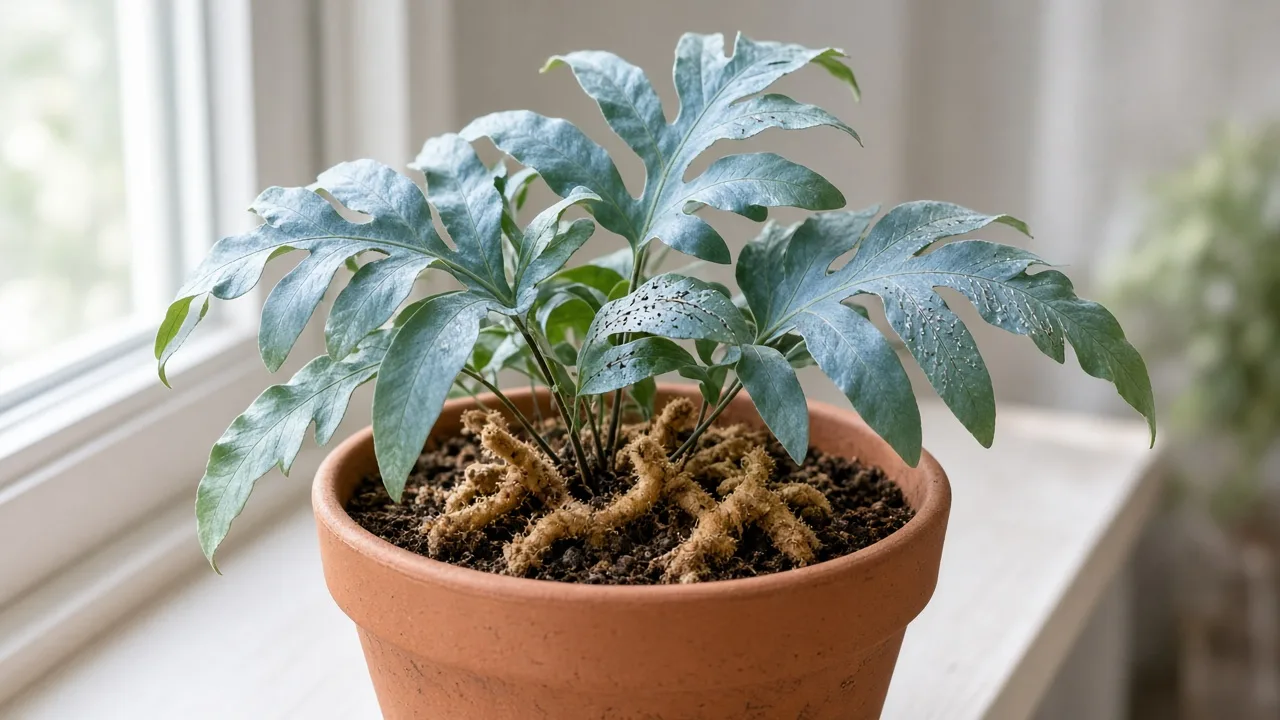
Thrips on Blue Star Fern: Causes, Checks & Fixes
This guide covers thrips on Blue Star Fern. See also the general Thrips guide, watering, and light pages for this plant.
Thrips on Blue Star Fern: Causes, Checks & Fixes
Quick answer
Thrips on Blue Star Fern (Phlebodium aureum) are tiny, slender insects that puncture leaf surfaces and suck out cell contents, leaving silvery or bronze streaks, black frass specks, and distorted young growth on deeply lobed blue-green fronds. They favor unfurling fronds at rhizome tips, overlapping pinnae lobes, and the glossy upper surface of the newest blades—often before older fronds show obvious damage.
For how thrips rasp tissue, why pupae complicate one-shot sprays, and when sticky traps help in general, see our thrips pest guide. On Blue Star Fern, the practical pattern is silver scarring on emerging lobes above creeping golden rhizomes, slender insects dislodged by a paper-shake test at the softest new growth, and crinkled pinnae where the plant is pushing moderate seasonal flush from rhizome forks.
First step: isolate the pot away from other houseplants, then hold white paper under the newest fronds at a rhizome tip and shake or tap them to confirm thrips before you spray anything. Mushy golden rhizomes on constantly wet mix are a different emergency—see Blue Star Fern root rot before you treat pests.
When to use this page vs other Blue Star Fern guides
This page is the pest-first entry for silvery streaking and frass on young lobed fronds.
- Blue Star Fern watering — Use when fronds wilt and wet mix suggest moisture stress, not insects.
- Distorted leaves on Blue Star Fern — Use when lobes pucker without silver streaks or confirmed thrips.
- Spider mites on Blue Star Fern — Use for fine webbing and dry-air stippling on undersides, not black frass specks on upper lobes.
- Holes in leaves on Blue Star Fern — Use when tissue tears into open holes after rasping, not silver-only scars.
- Florida fern caterpillar on Blue Star Fern — Use for chew holes and frass pellets, not slender insects on paper.
- Blue Star Fern problems hub — Browse all common issues on this species.
Why thrips target Blue Star Fern rhizome tips and lobe overlaps
New fronds are soft and nutrient-rich. Blue Star Fern grows as a rhizomatous epiphyte with creeping golden rhizomes on the soil surface. Most pest thrips feed while hidden in buds and shoot tips—here that means inside coiled new lobes, along rhizome forks, and on the still-glossy upper blade of the youngest frond emerging from a golden tip.
Lobed architecture creates pest shelters. Deeply divided pinnae overlap like shingles. Thrips sit in the narrow gaps between lobes and at frond bases where they meet surface rhizomes—the same crevices that make spider mites hard to spot until stippling spreads.
Humid indoor fern rooms suit thrips life cycles. This species wants moderate indirect light and steady moisture with 40–60% humidity at foliage height—the Almanac recommends higher humidity for Phlebodium and lists pests to watch for indoors. Still air between grouped ferns lets thrips breed year-round on houseplants when natural enemies are scarce.
NC State lists thrips among pests to monitor on Phlebodium aureum alongside spider mites, the Florida fern caterpillar, and fungus gnats—so silver damage on new lobes should be read as a likely pest check, not automatic fertilizer deficiency.
What thrips damage looks like on Blue Star Fern
- Silvery or bronze streaks on young lobed fronds — Feeding punctures cells and leaves a silvery-white discoloration on the upper surface, especially visible on blue-gray Phlebodium blades
- Tiny black frass specks — Varnishlike excrement dots on the frond surface near streaks; Maine Cooperative Extension notes gray or silvery speckled areas marked by excrement
- Distorted, ruffled, or stunted unfurling pinnae — Thrips in developing shoot tips cause distorted growth; blue star fern shows crinkling on the newest lobe above a rhizome tip
- Pale rasped patches that later tear — Heavy feeding can progress to small holes—see holes in leaves when tissue actually opens
- Pale yellow to dark brown slender insects — Adults under 2 mm; shake foliage over white paper to dislodge them
- No cottony wax or fine silk webbing — Rules out mealybugs and spider mites when those signs are absent
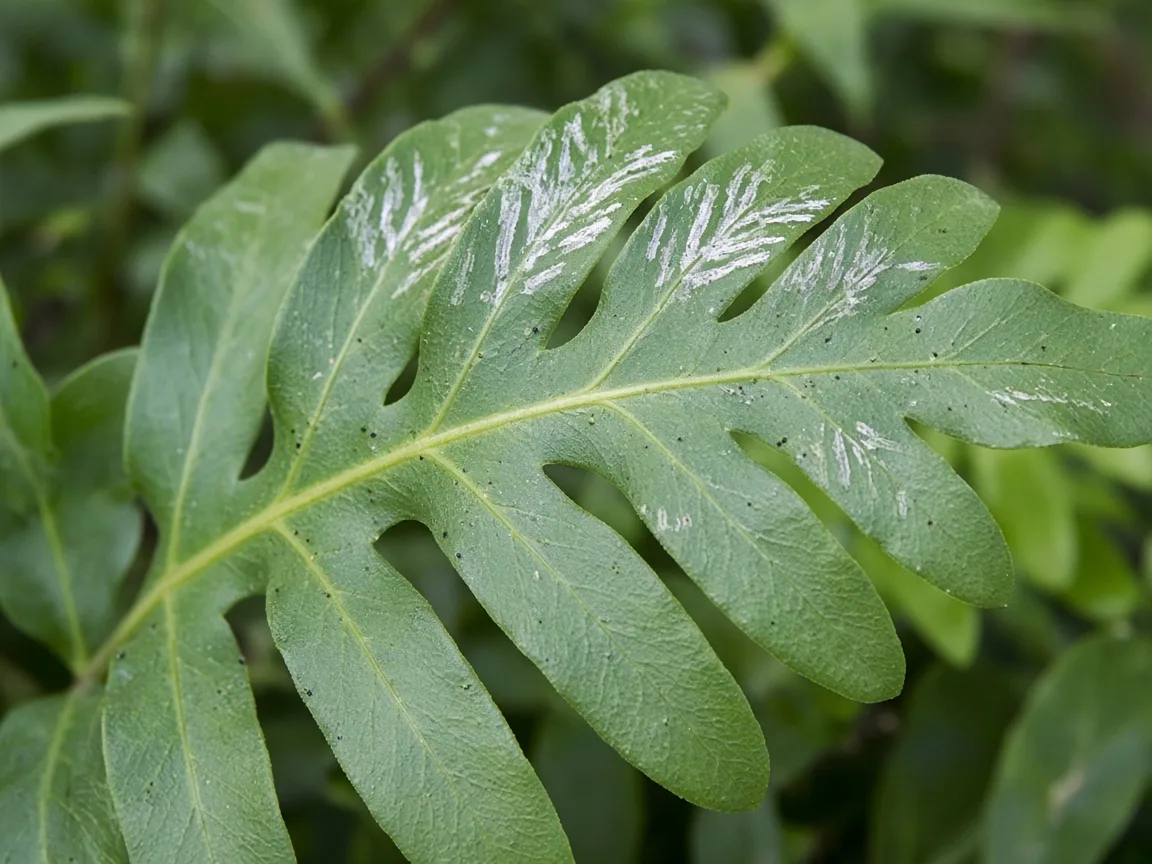
Silvery rasp marks and black frass on a young Blue Star Fern lobe—compare with clean blue-green tissue on an older frond below.
Do not confuse normal golden fuzzy rhizomes or brown spore patches along pinna midribs with pest frass. Healthy rhizomes are uniformly golden and firm; spore lines run in parallel rows on mature undersides and are stationary—not accompanied by fresh silver streaks on the upper lobe face or insects on a paper-shake test.
Rhizome-tip inspection and the paper-shake test
Thrips hide where Blue Star Fern grows fastest. Work through this order:
- Rhizome tips and coiled new lobes — Gently lift the softest frond emerging from a golden rhizome fork; thrips often sit inside the glossy coil at the growth point.
- White-paper shake test — Hold white paper under foliage and shake the top two or three youngest fronds; slender moving specks confirm thrips better than a casual glance at lobed surfaces.
- Upper lobe surfaces — Silver streaks show on the top of young fronds, unlike many pests that concentrate on undersides first.
- Overlapping pinnae bases — Still air between lobes can harbor adults near creeping rhizomes.
- Neighboring pots on the same shelf — Thrips drift; check ferns beside the infested plant.
This rhizome-tip, lobe-overlap path is specific to a creeping epiphytic fern—not a rosette bird’s nest fern or a vining aroid.
Confirm thrips vs mites, caterpillars, and care stress
| What you see | Likely cause | Key check |
|---|---|---|
| Silvery streaks, black frass, ruffled new lobe | Thrips | Paper-shake releases slender insects |
| Random stipple dots, webbing at frond bases | Spider mites | Dry winter air; mites on undersides |
| Ragged chew, green frass pellets | Caterpillars | Larvae on blades; no scurrying thrips on paper |
| Brown immobile bumps on frond bases | Scale insects | Does not scurry on paper |
| White cottony masses at rhizome forks | Mealybugs | Stationary wax; alcohol dab smears |
| Even brown margins, no frass | Low humidity | No insects on paper shake |
| Mushy rhizomes, sour wet mix | Root rot / overwatering | No frass; rhizomes soften |
Confirmed diagnosis — Silver upper-surface streaks plus frass and thrips on white paper with firm golden rhizomes. Suspected — Silver alone after a recent move to harsh light needs a shake test before spraying.
First fix: isolate and confirm with a paper-shake test
Move the pot away from other plants for at least two weeks after you last see live thrips or fresh frass on new growth.
Hold plain white paper under the newest fronds at a rhizome tip and shake or tap them. UC IPM recommends shaking foliage over white paper to see if thrips dislodge before taking control action—on Blue Star Fern, focus on soft growth above golden rhizomes and the frond that is still unfurling. If nothing moves but silver streaks spread weekly, hang a blue sticky trap near the pot for a second pass.
Why confirmation beats spraying day one
Harsh weather, poor care, and other pests can cause similar-looking damage. Blue Star Fern also scorches in direct sun—silver from thrips usually tracks new growth in a humid shaded spot, not sudden bleaching on sun-exposed lobes. One confirmed paper-shake saves lobed foliage from unnecessary oil films.
Rhizome-safe rinse after confirmation
Once thrips are confirmed, follow with a firm water stream along each frond surface, working from base to tip while keeping golden surface rhizomes from sitting in pooled water—the same rhizome-safe approach used for spider mite rinses on this species. Tilt the pot so rinse water exits the drainage holes; wrap exposed rhizomes in a dry towel if you shower the plant in a sink.
Repeat rhizome-safe rinses every three to four days while new frass appears, then reassess.
Insecticidal soap on lobed fern foliage
If silver streaks keep spreading after two or three weekly rinse cycles, apply insecticidal soap labeled for ornamentals. UC IPM lists insecticidal soaps and horticultural oils as temporary control with thorough coverage; spinosad products can be more effective on stubborn thrips when label directions allow indoor use.
Critical rules for Blue Star Fern:
- Patch-test one lobe and wait 48 hours before treating the whole plant—fern fronds can react to sprays.
- Spray early morning so lobes dry before peak humidity builds.
- Coat unfurling pinnae, lobe overlaps, and frond bases—contact products only kill insects they touch.
- NC State warns that browning and rot follow poor humidity and wet crowns—avoid heavy oil films on heat-stressed plants or rhizomes kept constantly wet from runoff.
- Pesticides will not restore injured tissue—remove badly scarred young fronds only after active thrips decline.
Avoid stacking repot, heavy prune, or fertilizer the same week you start spray—that masks whether pests or care stress caused the setback.
What not to do the same day
Do not let rinse water pool around golden rhizomes overnight. Do not increase watering because fronds look stressed—check whether the top 3–4 cm of mix is actually dry first. Do not apply oil sprays in hot afternoon sun on window sills.
Recovery timeline and the next clean lobe
Fresh frass should stop appearing on new fronds within one to two weeks of consistent isolation, confirmation, and rhizome-safe rinsing. Expect a clean blue-green lobe emerging from a rhizome tip within four to eight weeks during active growth—Phlebodium is a moderate grower from creeping rhizomes. Permanently silvered or crinkled fronds will not fully smooth once they harden—damaged plant material remains until pruned or replaced by new growth.
Firm golden rhizomes and steady unfurling from tips are good signs. Softening rhizomes on wet mix means rot—not thrips—and needs a different response immediately.
Blue Star Fern care cross-check during treatment
While fighting thrips, keep baseline care steady:
- Light — Medium to bright indirect light per the light guide; avoid baking recovering lobes in hot afternoon glass.
- Water — Water when the top of the mix dries per the watering guide; drought-stressed fronds recover slowly after pest damage.
- Soil — Open, bark-heavy mix per the soil guide so rhizomes stay aerated after rinses.
- Humidity — Target 40–60% at frond height; the Almanac notes Phlebodium prefers humid rooms without soggy pots.
How to prevent thrips on Blue Star Fern
Quarantine every new fern for two weeks before placing it near other plants. Inspect unfurling lobes weekly during spring and summer growth. Hang blue sticky traps near the pot to monitor flying adults in humid rooms—bright or blue sticky traps help detect thrips without replacing leaf inspection.
Keep care aligned with the Blue Star Fern overview—moderate indirect light, well-draining bark mix, and shallow pots that respect spreading rhizomes. Improve airflow between pots so lobe overlaps do not sit in stagnant humidity. Scout fungus gnats separately—wet mix stress weakens recovery from any pest.
When to escalate
Escalate if silver streaks cover most emerging lobes after three full rinse-and-soap cycles, if every new frond emerges distorted for two months, or if thrips reappear immediately after quarantine ends. Chronic feeding during slow winter growth can stall the rhizome mat even when older fronds look stable.
For heavy recurring infestations, a local cooperative extension office can confirm the species and discuss options. Systemic insecticides move through plant sap and can stress sensitive ferns—contact rinses and soaps are usually safer first choices on a non-toxic foliage plant you handle regularly.
Thrips alone rarely kill a mature Blue Star Fern with firm rhizomes, but they can ruin the ornamental flush of young lobed fronds and invite rot if you respond with extra water or fertilizer.