Curling Leaves on Blue Star Fern: Causes, Checks & Fixes
Quick answer
Curling leaves on Blue Star Fern usually mean lobed fronds are cupping to cut water loss—from dry mix, low winter humidity, heat near glass, or sap feeders on unfurling pinnae. First step: probe the top inch of mix at the pot edge and lift the pot before you mist rhizomes or change your watering rhythm.
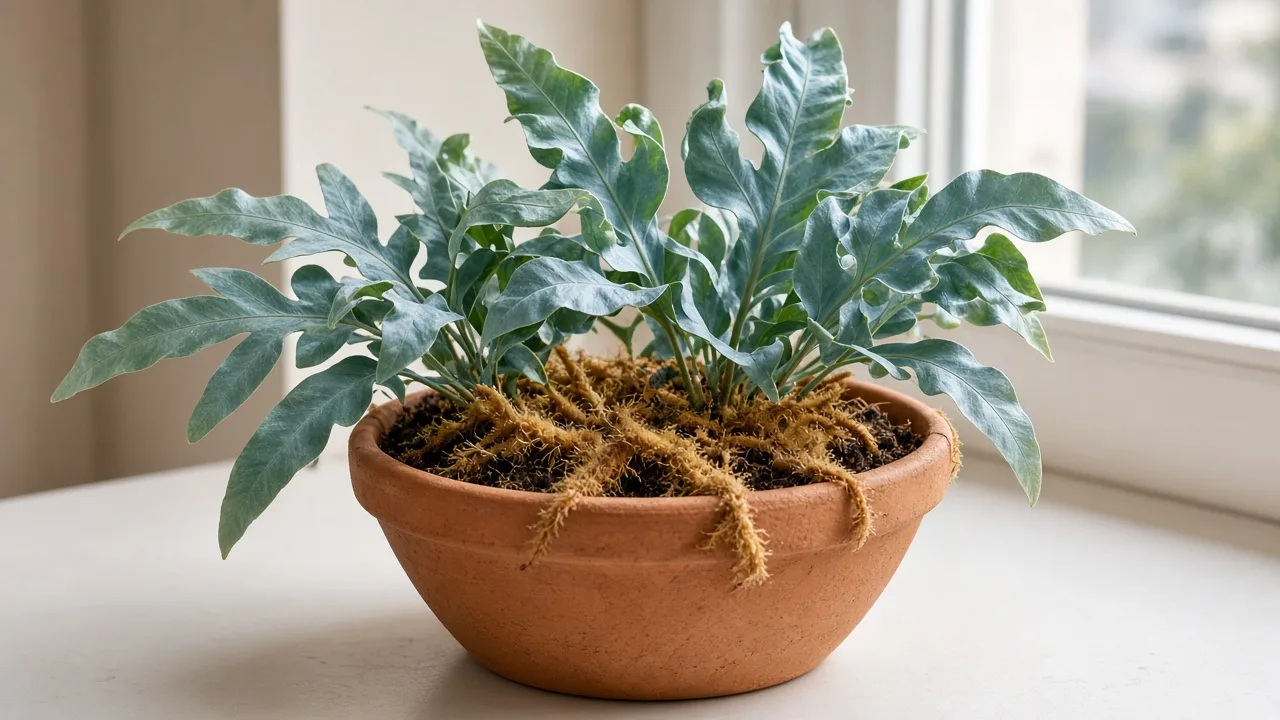
Curling Leaves on Blue Star Fern: Causes, Checks & Fixes
This guide covers curling leaves on Blue Star Fern. See also the general Curling Leaves guide, watering, and light pages for this plant.
Curling Leaves on Blue Star Fern: Causes, Checks & Fixes
Quick answer
Curling leaves on Blue Star Fern (Phlebodium aureum) show up as inward cupping, lengthwise roll, or twisted new pinnae on deeply lobed, blue-green fronds—not the fine needle curl of a Boston fern. On this rhizomatous epiphyte with golden runners on the soil surface, curl is almost always a moisture, humidity, light, or pest signal at the rhizome tips or pot edge, not a mysterious nutrient shortage.
For how leaf curl works as a general protective stress response, see our curling leaves guide. On Blue Star Fern, the pattern usually appears on whole lobes while mix at the pot wall still reads dry, on new fronds stuck halfway out of a rhizome tip, or on the window-facing side after too much sun.
First step: probe the top inch of bark mix at the pot edge (without crushing surface rhizomes) and lift the pot. Light and dry with tight inward cupping means underwatering. Heavy and damp with limp, downward-hanging fronds means stop watering and check for overwatering or root rot. Moist soil with curl worst near a vent or sunny glass points to low humidity before you flood the pot.
When to use this page vs other Blue Star Fern guides
| Pattern | Read next |
|---|---|
| Tight cupping, light pot, dusty dry top inch | Underwatering |
| Limp fronds, heavy wet pot, yellowing lower fronds | Overwatering or root rot |
| Crispy margins, moist soil, winter heat | Low humidity |
| Bleached or crisp window-side fronds after a move | Light or not enough light |
| Stippling, webbing, silver streaks on new growth | Spider mites or thrips |
| Full frond limpness with sour wet mix | Wilting or drooping leaves |
What curling leaves look like on Blue Star Fern
Healthy Blue Star Fern spreads fuzzy golden rhizomes across the mix and sends up long, irregularly lobed fronds in blue-green to gray-green tones. NC State Extension describes large deeply lobed evergreen fronds with undulate margins and notes that curling is a common symptom of low humidity and underwatering, while browning often signals the plant needs higher humidity. Stress curling breaks that look in recognizable ways:
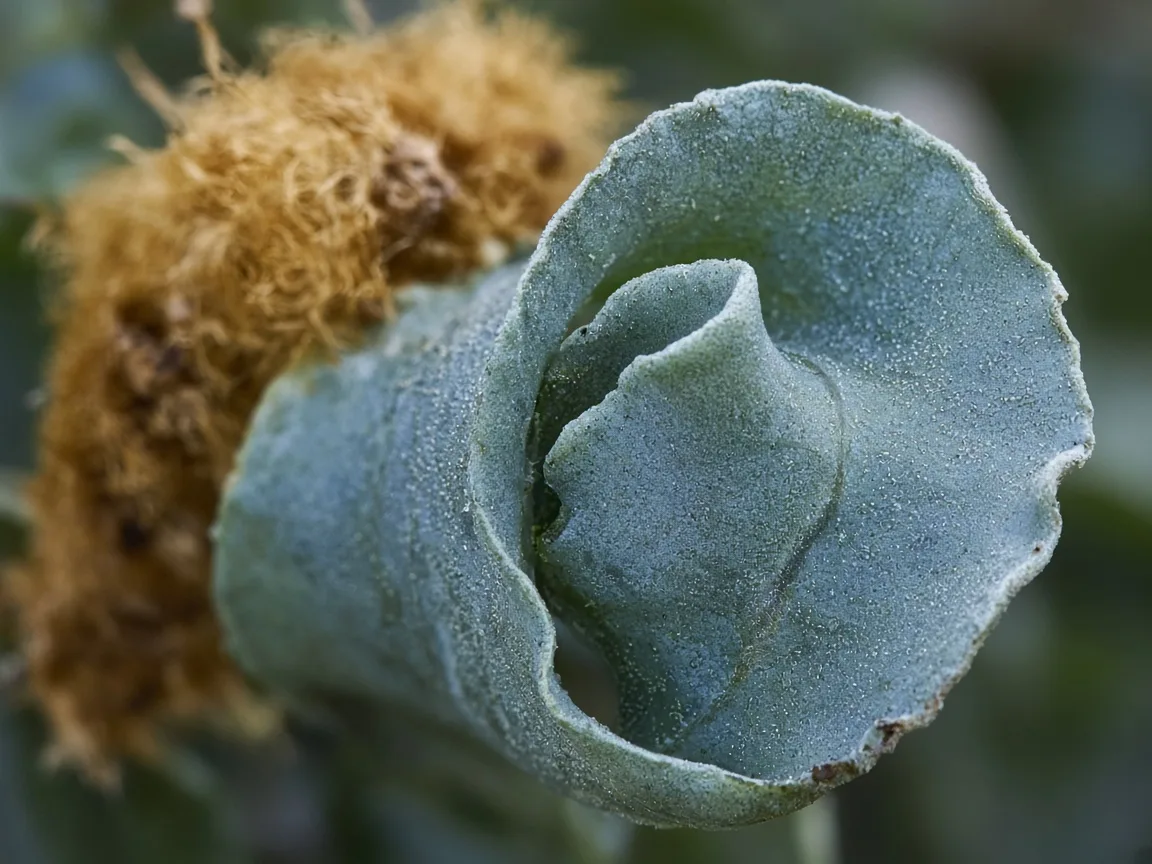
Inward-cupped lobe on Blue Star Fern—compare with the natural ripple on neighboring pinnae from the same rhizome.
- Lengthwise inward cupping along a lobe or whole frond, often with a duller, less silvery green color
- Twisted or narrow new fronds emerging from rhizome tips—growth stuck corkscrewed or stalled
- Limp, soft curl downward while mix stays wet for many days (root stress, not thirst)
- One-sided cupping on fronds facing hot afternoon sun or a heating register
- Crispy feel along curled margins when dry air pulls moisture faster than roots replace it
- Silver streaks or stippling on young fronds with fine webbing underneath (pest curl)
Mature fronds that already cupped will not fully flatten once tissue hardens. Recovery shows in the next frond opening broad and glossy from a firm rhizome tip, not in old lobes snapping back.
Reading curl at rhizome tips vs mature lobes
Blue Star Fern is not a prayer plant—its fronds do not fold nightly. All meaningful curl is stress-related, and rhizome tips tell the current story better than lower fronds.
New growth at rhizome tips unfurls from the leading edge of a creeping runner. If the newest spear is narrow, twisted, or stalled while older fronds still look acceptable, suspect pests on tender tissue, heat beside glass, or rot where a buried rhizome stays wet. This species is often grown with runners on top of the mix in a wide, shallow pot per the soil guide—burying dry golden rhizomes in soggy peat is a common owner mistake that weakens tips even when the pot center feels fine.
Mature outer lobes reflect past weeks of care. Even cupping on several fronds often traces to repeated dry-down at the pot wall or dry winter air, because ideal culture includes medium to high humidity and a moist but not soggy substrate. NC State also notes this fern tolerates drying out between waterings—that tolerance helps you avoid swampy pots, but it does not mean weeks of bone-dry bark at the surface while rhizomes shrivel.
Cultivar ripples (‘Davana’ and similar) show extra wavy margins—that sculptural ripple is normal. Stress cupping tightens the whole lobe and often pairs with pale color, limp texture, or pest marks.
Round sori vs pest silvering on lobed fronds
Confusing pest damage with normal fern biology wastes time and can lead to unnecessary sprays on a plant already under stress.
Normal spore patches appear as round sori running along each side of the pinna midrib on mature frond undersides—reproductive tissue, not disease. They do not cause cupping on the upper surface and do not spread as silver streaks on new growth.
Thrips or mite feeding shows on youngest fronds: silver-gray scars, black specks, distorted unfurling, or fine webbing near rhizome tips. UC IPM describes spider mites as common on houseplants and increasing when plants are dusty or drought-stressed—dry heated rooms can invite both low-humidity curl and pest curl on the same plant. Minnesota Extension notes spider mites favor warm, dry conditions on indoor plants.
If you see orderly round sori only on old frond undersides with flat upper blades, skip pesticide and fix environment first.
Why Blue Star Fern gets curling leaves
Underwatering and dry pot edges are the most common thirst trigger. Epiphytic roots sit shallow in bark-heavy mix. Owners who fear rot sometimes under-water the perimeter while the center still looks dark—outer fronds cup inward while golden rhizomes at the surface feel dry or brittle. A light pot and dusty dry top inch confirm drought; see underwatering for soak-and-drain recovery.
Low humidity and winter heat pull water from thin lobes faster than roots supply it. NC State lists medium to high humidity among ideal conditions, and the Old Farmer’s Almanac notes Phlebodium prefers 60–80% RH yet copes with average homes better than many ferns. Furnace season often drops room RH while watering rhythm stays unchanged—pair low humidity fixes when margins crisp with acceptable soil moisture.
Too much sun or heat near glass causes protective cupping and fading blue-green color. Hot afternoon sun on one side produces one-sided curl before the whole clump dulls—cross-check the light guide.
Overwatering and root stress produce limp curl on wet mix—roots cannot move water efficiently when oxygen is low. Lower fronds may yellow while rhizome tips still push small twisted fronds. That pattern overlaps overwatering and early root rot.
Spider mites, thrips, scale, and mealybugs hide on frond undersides and along rhizomes. NC State lists spider mites, thrips, and Florida fern caterpillar among problems to monitor on this species. Scout before assuming thirst.
How to confirm the cause
Work through these checks in order before you stack fixes:
- Top inch at the pot edge and pot weight — Dusty dry mix and a light pot confirm thirst. Heavy, cool, wet mix with limp fronds means hold water. Baseline rhythm lives in the Blue Star Fern watering guide.
- Surface rhizomes — Firm golden runners should feel plump, not mushy or shriveled. Sour smell or black mush at a buried section means stop watering that zone and inspect for root rot.
- Hygrometer at frond height — RH below about 40% with cupping and moist edge soil supports dry-air stress. Pair with low humidity fixes.
- Placement audit — Distance to vents, radiators, and south- or west-facing glass. One-sided curl with moist soil fits heat or sun.
- Pest inspection — Hold white paper under a frond and tap. Moving specks, stippling, or webbing mean spider mites or thrips—not more water.
- New frond trend — A flat new frond after one correction means you found the cause. Repeated twisted spears for two weeks mean keep investigating pests or chronic dry air.
Lookalike table
| What you see | Likely cause | Differentiating check |
|---|---|---|
| Tight cup, light pot, dry top inch | Underwatering | Fronds perk after thorough soak |
| Limp curl, wet heavy pot | Overwatering / root stress | Sour smell; yellow lower fronds |
| Cupping, moist soil, dry room | Low humidity | RH low at frond height |
| Window-side bleach + cup | Sun / heat stress | Follows brighter placement |
| Twisted new fronds, stippling | Pests | Tap test; webbing |
| Tips only brown, not full cup | Often brown tips | Narrow distal band |
| Odd puckering on one lobe only | Distorted leaves | Mechanical or pest pattern |
First fix for Blue Star Fern
Probe the top inch of mix at the pot edge and lift the pot—then act on what you find, not the calendar.
If the mix is dry and the pot feels light, carry the plant to a sink and soak thoroughly until water runs from drainage holes, then empty the saucer. Let the pot finish dripping before you return it to its spot. Avoid pouring recovery water only onto dry surface rhizomes without soaking the root zone—they need moisture below, not a brief mist.
If the top inch is moist, weight is normal, and curl is worst near a vent or sunny window, move the pot out of that dry microclimate first before you add water. Relocate at least a meter (3 ft) from floor registers and pull back from hot afternoon glass.
Do not bury shriveled golden rhizomes deeper into wet mix as your only fix—that traps moisture against tissue that needs air circulation, which NC State lists among ideal cultural conditions.
Step-by-step recovery
After the first fix, change one variable at a time:
- Underwatering path — Soak until runoff, discard saucer water, resume when the top 3–4 cm feels barely dry per the watering guide. Mild cupping often relaxes within 24–48 hours if rhizomes are firm.
- Low-humidity path — Run a humidifier or wide pebble tray (pot base above water). Target 40–60% RH at frond height for maintenance, with 60% or higher during recovery per Almanac guidance.
- Heat and light path — Shift to medium indirect light; use sheer curtain if needed. Curl often eases once heat load drops—review seasonal window intensity on the light page.
- Pest path — Isolate, rinse frond undersides at the sink with your hand shielding the soil, then treat confirmed pests per the relevant guide. Avoid harsh chemical sprays on stressed ferns when possible.
- Wet-root path — Let the top inch dry; confirm drainage and soil aeration. Do not fertilize a stressed clump.
Hold fertilizer until a new frond opens firm and glossy for two weeks. Curl from stress is rarely fixed by feed alone.
Recovery timeline
24–48 hours: Drought-related cupping on firm rhizomes often relaxes after one thorough soak. Limp curl on saturated mix does not improve until the root zone dries—do not keep watering.
Weeks 1–3: New fronds should emerge broader and flatter once humidity, water, and light stabilize. Winter recovery may be slower than summer active growth on this moderate grower.
Weeks 3–8: Fresh lobed fronds replace sparse sections if conditions stay steady. Old cupped blades may persist until you trim them at the rhizome base after recovery.
When to worry: Mushy rhizomes, foul smell, or no new growth for six weeks after corrections—inspect roots and consider whether salvage is realistic.
Mistakes to avoid
- Misting rhizomes only instead of soaking dry mix or raising room RH—surface wetting does not rehydrate roots
- Soaking a wet pot because fronds look limp—deepens root oxygen loss
- Burying dry golden runners in soggy peat to “save” them—invites rot on an epiphyte that wants air at the surface
- Moving to direct sun to “perk up” a cupped plant—often increases curl and bleaching
- Fertilizing before moisture and pests are ruled out
- Repotting on day one unless rhizomes are mushy or mix is clearly failing—repotting stacks stress on a curling clump
How to prevent curling next time
- Learn pot weight when properly moist versus dry at the edge
- Water when the top 3–4 cm dries, per the watering guide
- Keep 40–60% RH at frond height in heated months (higher when recovering)
- Hold medium indirect light—review seasonal window intensity on the light page
- Scout frond undersides and rhizome tips weekly in winter
- Quarantine new plants before placing them beside established runners