Caterpillars on Blue Star Fern: Causes, Checks & Fixes
Quick answer
Caterpillars on Blue Star Fern chew irregular holes through lobed blue-green fronds and leave dark pellet-like frass, usually after patio time, nursery hitchhikers, or moth eggs near open windows. First step: isolate the fern and hand-pick every larva from fuzzy surface rhizomes and the softest new pinnae at dusk with a flashlight.
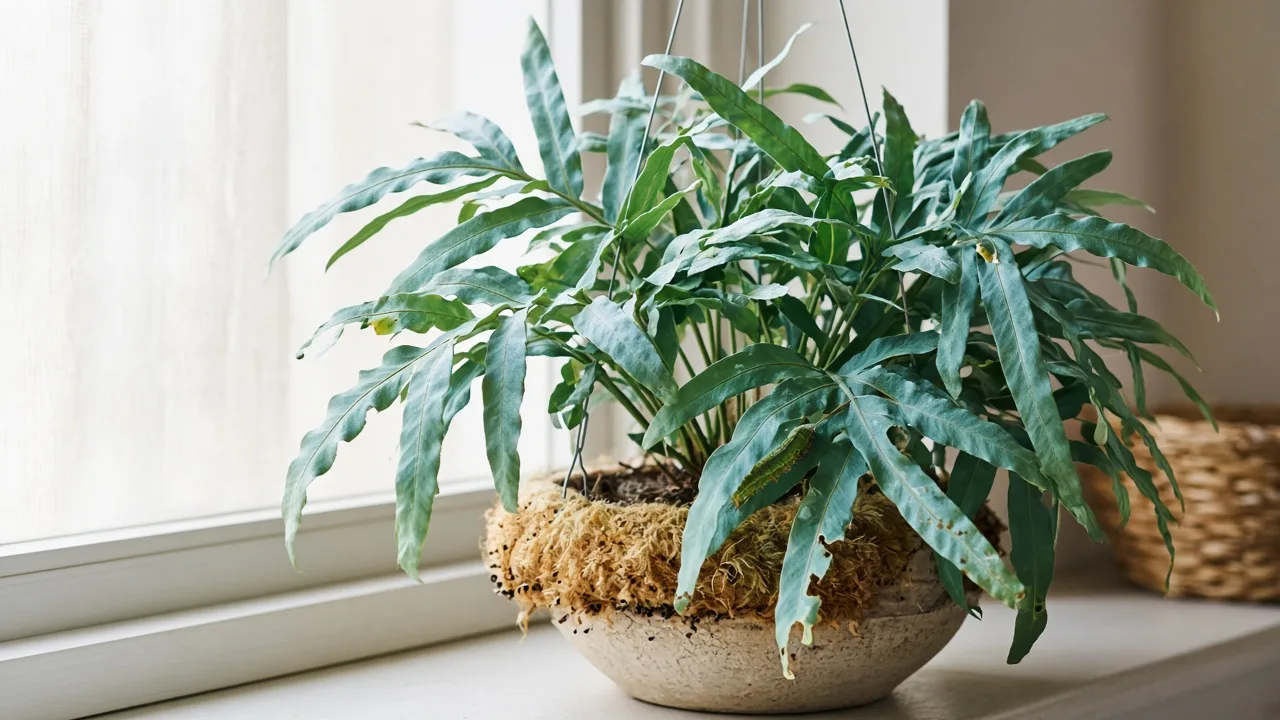
Caterpillars on Blue Star Fern: Causes, Checks & Fixes
This guide covers caterpillars on Blue Star Fern. See also the general Caterpillars guide, watering, and light pages for this plant.
Caterpillars on Blue Star Fern: Causes, Checks & Fixes
Quick answer
Caterpillars on Blue Star Fern (Phlebodium aureum) chew irregular holes and notched margins through deeply lobed, blue-green fronds and leave dark pellet-like frass on foliage, fuzzy golden rhizomes, the pot rim, or the shelf below. Indoor cases are less common than spider mites, thrips, and fungus gnats on this fern, and usually trace to hitchhiking larvae after patio season, nursery stock, open windows, or eggs laid near outdoor ferns.
For how caterpillars feed, leave frass, and respond to handpicking and Bt in general, see our caterpillars guide. On Blue Star Fern, larvae concentrate on the softest pinnae at frond tips and along creeping rhizomes that spread over the pot surface—not evenly across every old lobe you see from across the room.
First step: isolate the fern and hand-pick every caterpillar from fuzzy surface rhizomes and the softest new pinnae at dusk with a flashlight.
When to use this page vs other Blue Star Fern guides
| Pattern | Read next |
|---|---|
| Ragged chew + frass pellets + visible larvae | This page |
| Open holes but unsure of chewer type | Holes in leaves |
| Serpentine tunnels inside blade, few through-holes | Leaf miners |
| Silvery streaks, black specks, little frass | Thrips |
| White cottony clusters at frond bases or rhizomes | Mealybugs |
| Brown armored bumps on fronds or rhizome | Scale insects |
| Fine webbing and stippling on frond undersides | Spider mites |
| Round brown spore patches in rows along midribs, no chew | Normal sori (see below)—not a pest page |
| Soft rhizomes, sour soil, wilt without frass | Overwatering or root rot |
What caterpillars look like on Blue Star Fern
Caterpillars damage plants by chewing leaves and often leave fecal deposits on the damaged foliage. On Phlebodium aureum, the signature is ragged holes chewed through lobed, wavy-margined fronds with a powdery blue-green cast—not the bordered internal tunnels of leaf miners or the sticky shine of sap feeders.
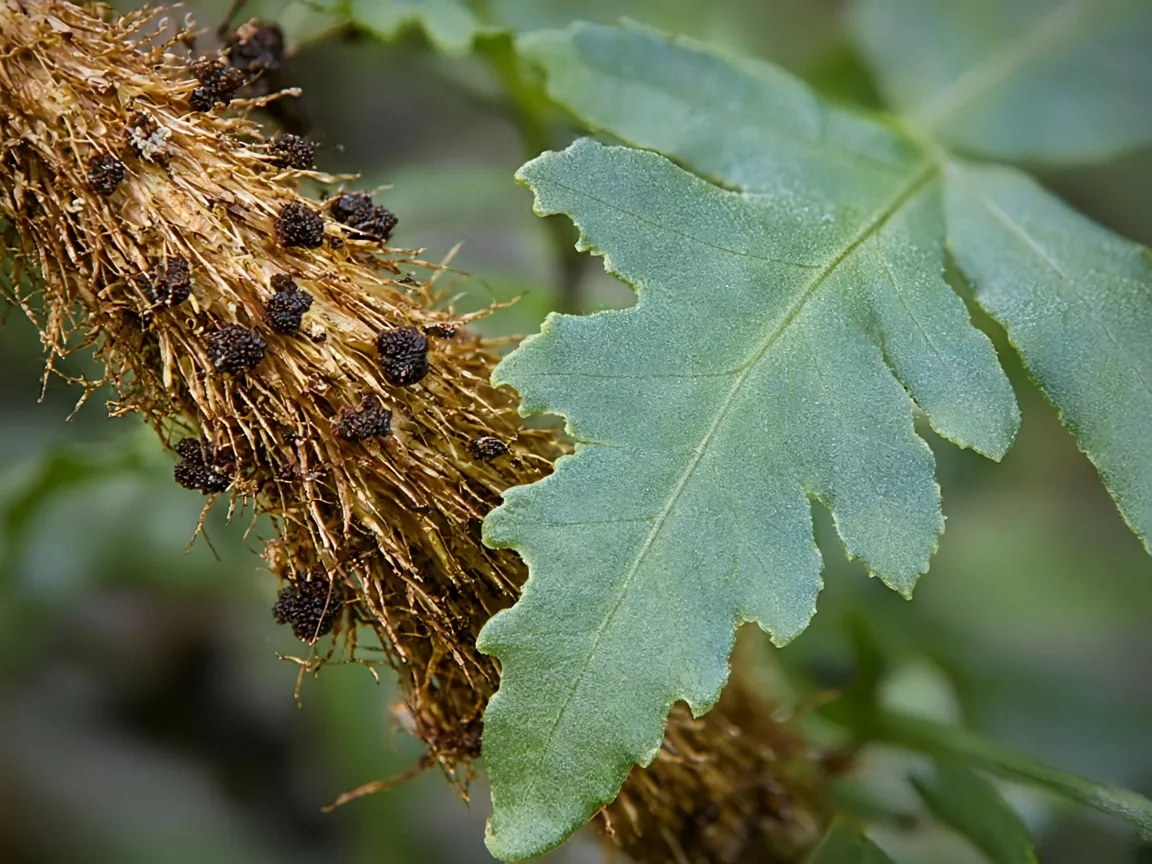
Irregular chew notches along a lobed blue-green pinna with dark pellet-like frass on the fuzzy rhizome below—compare with intact sori rows on a neighboring segment.
Chewed fronds and frass:
- Irregular holes and ragged notches through large, deeply lobed fronds—damage often starts on the softest pinnae at the frond tip before older lobes
- Dark pellet-like frass on frond surfaces, along golden rhizomes, on the pot rim, in the saucer, or on the table below a hanging basket
- Thin silk or lightly rolled leaflet tips on some larvae—open rolls gently to look for a caterpillar inside
- Chewed tissue that looks torn inward rather than a clean mechanical split along a lobe edge
Larva signs:
- Green, brown, or striped caterpillars on frond undersides, along midribs, or tucked under surface rhizomes and potting mix at the soil line
- Florida fern caterpillar and similar fern feeders occur in variable color forms; size up to about 1¼ inch when mature on commercial ferns
- Movement when touched; dried debris alone is not enough to confirm caterpillars
Growth impact on Blue Star Fern:
- Shredded unfurling croziers when feeding is heavy during warm months with good light
- Cosmetic scarring on mature lobes that will not repair—recovery is judged on clean new fronds, not old notches
- Slow replacement after defoliation if the plant sits in too little light or chronically wet mix—stabilize culture after pests are gone
Telling chew damage from Blue Star Fern spore sori
A common false alarm on Phlebodium is mistaking reproductive spore sori for pest damage or frass. NC State notes round sori that run along each side of the pinna midrib on the frond underside. Those patches are fixed in place, arranged in orderly rows, and do not produce loose pellets when you tap the frond over paper.
Caterpillar frass, by contrast, is loose, dark, and pellet-like—it accumulates on top of the frond or falls to rhizomes and the pot below. If you see through-holes with ragged margins and rolling pellets, caterpillars are far more likely than spores. When holes are clean with no frass, compare holes in leaves for mechanical tears before spraying anything.
Where caterpillars hide on rhizomes and lobed fronds
Blue Star Fern is a rhizomatous epiphyte often grown in hanging baskets so the fuzzy golden rhizomes show above the mix. That habit creates predictable hiding spots:
- Unfurling croziers at frond tips—the softest pinnae; one larva can notch an entire new lobe before it hardens
- Undersides of the newest two or three fronds—especially where lobes overlap
- Rhizome crevices on the pot rim, mount, or basket edge—Florida fern caterpillars hide on stems at the base of plants or in soil during the day
- Potting mix surface under cascading rhizomes—shake the basket gently over white paper at dusk
- Cachepot ledges and saucers—frass falls from feeding sites above
If you only glance at the blue fronds from across the room, you will miss most colonies. Part lobes gently, lift surface rhizomes with a stick, and inspect at night when larvae feed more actively.
Why Blue Star Fern gets caterpillars
Phlebodium aureum is not a magnet for caterpillars because your watering is wrong—moths and butterflies lay eggs on edible tender foliage. NC State lists Florida fern caterpillar among insects to monitor on this species, and commercial fern literature ties similar larvae to Polypodium-type ferns that share Blue Star Fern’s ancestry.
Common introduction routes:
- Outdoor summer placement on a patio or shaded porch, then brought inside without inspecting rhizomes
- New nursery plants that sat outside where night-flying moths are attracted to lights and lay eggs on nearby plants
- Open windows and doors near actively growing ferns in warm weather
- Greenhouse or garden-center batches—Florida fern caterpillar is a known greenhouse pest on Boston and other ferns
A plant in dim light recovers slowly after defoliation but does not attract caterpillars the way fresh spring and summer fronds do. Chronic overwatering weakens rhizomes and slows replacement leaves after feeding stops—fix culture after pests are gone, not on day one.
How to confirm the cause
Work through these checks in order:
- Frass search — pellet-like droppings on fronds, rhizomes, or below the pot strongly indicate caterpillars, not fungal spots or mite stippling.
- Crozier exam — inspect unfurling tips and rhizome undersides. Live larvae confirm caterpillars. Clean splits with no frass suggest mechanical damage—see holes in leaves.
- Backlight test — hold a holed lobe to a window. Enclosed pale trails inside the blade without external pellets mean leaf miners, not caterpillars.
- Sori check — fixed round patches along midribs on the underside without loose pellets are normal spores, not frass.
- Movement test — touch a larva with a stick. Caterpillars move or curl; dried debris is inconclusive.
- Night inspection — if you see fresh holes but no daytime larvae, repeat at dusk with a flashlight along rhizomes and frond tips.
- Entry route review — recent patio time, nursery arrival, or open-window season supports caterpillars over chronic indoor spider mites or fungus gnats.
If chew marks persist without frass after two inspections, compare hole edges carefully before treating—bumping a hanging basket can nick lobes without insects.
First fix for Blue Star Fern
Isolate the fern and hand-pick every caterpillar from fuzzy surface rhizomes and the softest new pinnae at dusk with a flashlight.
Move the pot away from other plants immediately. Handpicking caterpillars early prevents excessive damage on a fern whose next unfurling frond can lose a large share of its tissue in one warm night.
Work from croziers outward:
- Inspect and remove larvae from unfurling tips, rhizome crevices, and overlapping lobes on the top fronds
- Shake the frond gently to dislodge caterpillars onto paper, then drop larvae into soapy water or crush them
- Brush frass off rhizomes with a dry paintbrush so you can spot new pellets tomorrow
- Wear gloves if you handle chewed tissue; wash hands after—ferns are often pet-safer than many houseplants, but hygiene still matters around frass
Do not spray pesticides, neem, or horticultural oil until you confirm live larvae or fresh frass. Ferns are sensitive to many pesticides, especially liquid formulations; unnecessary foliar treatments stress Phlebodium more than one hand-removed larva.
Step-by-step recovery
After the first hand-picking session:
- Repeat dusk checks every two to three days for two weeks—eggs hatch in waves, and one missed larva under a rhizome can restart damage.
- Prune only when necessary — remove shredded fronds that are mostly consumed after you see clean new growth pushing; follow the Blue Star Fern pruning guide so you do not strip too much photosynthetic area at once.
- Rinse lightly if frass is heavy — a gentle shower on frond undersides can remove droppings and dislodge tiny larvae; let fronds dry in bright indirect light afterward.
- Bt kurstaki if larvae persist — Bacillus thuringiensis subsp. kurstaki kills caterpillars that eat treated leaves and spares most beneficial insects when used as directed. Apply to lobes where larvae are actively feeding; re-treat small new caterpillars because Bt breaks down on leaf surfaces.
- Hold fertilizer until new fronds look firm for two weeks—see the fertilizer guide only after pest pressure is clearly down.
- Stabilize culture — match soil drainage and watering to how fast the pot dries so replacement fronds push strongly.
Avoid broad-spectrum sprays on indoor Blue Star Fern unless a licensed applicator recommends them—handpicking plus Bt on foliage usually suffices on a single container plant.
Recovery timeline
- Days 1–3: Frass accumulation stops; no new holes on the unfurling crozier after larvae are removed
- Weeks 1–2: Next frond emerges with minimal chew if inspection stayed consistent
- Weeks 2–5: Plant looks stable from across the room; old notches remain cosmetic on lower lobes
- Beyond five weeks: If every new frond is chewed again, review outdoor exposure, quarantine gaps, and whether you are mistaking crown rot from wet rhizomes for caterpillar damage
Judge success by clean unfurling growth and firm rhizomes—not by older lobes turning perfect again.
Mistakes to avoid
- Spraying before confirming larvae — holes from handling or pets do not need pesticide
- Mistaking spore sori for frass — fixed midrib patches are normal; loose pellets are not
- Drenching the crown with pesticide — risks rot on an epiphyte that needs airy rhizomes
- Fertilizing a chewed fern first — nutrients do not remove larvae
- Repotting on day one — unnecessary unless you also find waterlogged mix or root failure; caterpillars rarely require repotting
- Ignoring rhizome edges — mid-frond scans miss the most common resting site on Phlebodium
How to prevent caterpillars next time
- Quarantine new Blue Star Fern two to three weeks before grouping with other tropicals
- Inspect rhizomes and croziers after every outdoor stay or when buying from outdoor nursery rows
- Screen open windows at night in warm months when moths are active
- Scout weekly during fast spring and summer growth when soft lobes push from frond tips
- Keep hanging baskets away from outdoor lights that attract egg-laying moths
- Maintain medium indirect light and airy mix so the plant replaces fronds quickly after minor feeding—see the overview and problems hub for baseline culture
Related Blue Star Fern guides
Use this page when you see ragged chew, pellet frass, and larvae or fresh egg clusters on lobed fronds—especially at croziers and surface rhizomes. Route to holes in leaves when damage is unclear, leaf miners for internal tunnels, and mealybugs or scale insects when sap-feeding signs dominate without frass. For culture that keeps Blue Star Fern resilient after pest removal, start with watering, light, and soil.
Related tool
Use the Plant Problem Diagnosis Tool to narrow causes for caterpillars on this plant before changing multiple variables at once.