Holes in Leaves on Blue Star Fern: Causes, Checks & Fixes
Quick answer
Holes in Blue Star Fern lobed fronds are chew or tear damage—fern caterpillars, slugs, thrips, leaf miners, or rough handling on spreading rhizomes—not crown rot or a nutrient mystery. First step: inspect golden surface rhizomes and frond undersides at dusk with a flashlight before spraying.
Holes in Leaves on Blue Star Fern: Causes, Checks & Fixes
This guide covers holes in leaves on Blue Star Fern. See also the general Holes in Leaves guide, watering, and light pages for this plant.
Holes in Leaves on Blue Star Fern: Causes, Checks & Fixes
Quick answer
Holes in Blue Star Fern (Phlebodium aureum) almost always mean tissue was removed or torn—fern caterpillars, slugs, thrips rasping, leaf miners, or mechanical breaks on lobed fronds and surface rhizomes—not a generic “stress” pattern or rhizome rot. For how chewing pests and mechanical tears work in general, see our holes in leaves guide. On this epiphytic fern, the decisive clue is usually along the golden rhizome line at the soil surface and on the undersides of the softest new lobes, not on lower old blades alone.
First step: inspect surface rhizomes and frond undersides at dusk with a flashlight—before you change watering, fertilizer, or reach for oil sprays.
Indoor blue star ferns more often show spider mites, thrips, fungus gnats, and Florida fern caterpillar than chronic hole damage from culture alone, so new holes usually trace to nursery hitchhikers, patio time, open windows, or rough handling—not months of silent indoor feeding.
When to use this page vs other Blue Star Fern guides
| Pattern | Read next |
|---|---|
| Ragged chew + pellet frass + larvae | Caterpillars |
| Pale winding trails inside the lobe when backlit | Leaf miners |
| Silvery streaks, black specks, stippling without full holes | Thrips |
| Sticky honeydew on new growth | Aphids |
| Round black spots with yellow halos, not chew | Black spots |
| Fine webbing and stippling on undersides | Spider mites |
| One clean tear after moving pot or dividing rhizomes | This page (mechanical section) |
| Soft mushy rhizomes, sour soil, wilt without frass | Overwatering or root rot |
What holes look like on Blue Star Fern
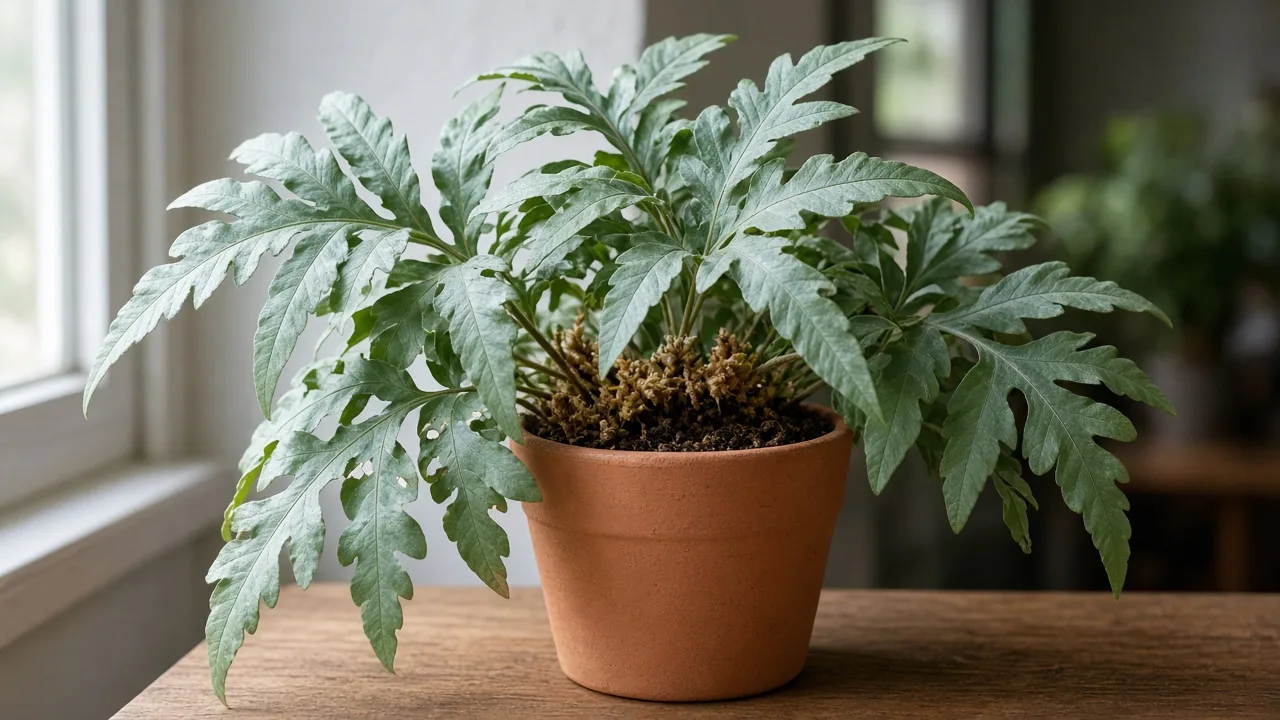
Healthy blue star ferns carry blue-green, deeply lobed fronds with rounded tips on wiry stems, spreading from fuzzy golden rhizomes that often crawl over the pot rim. Hole problems break that sculptural look in predictable ways when you know which tissue was damaged.
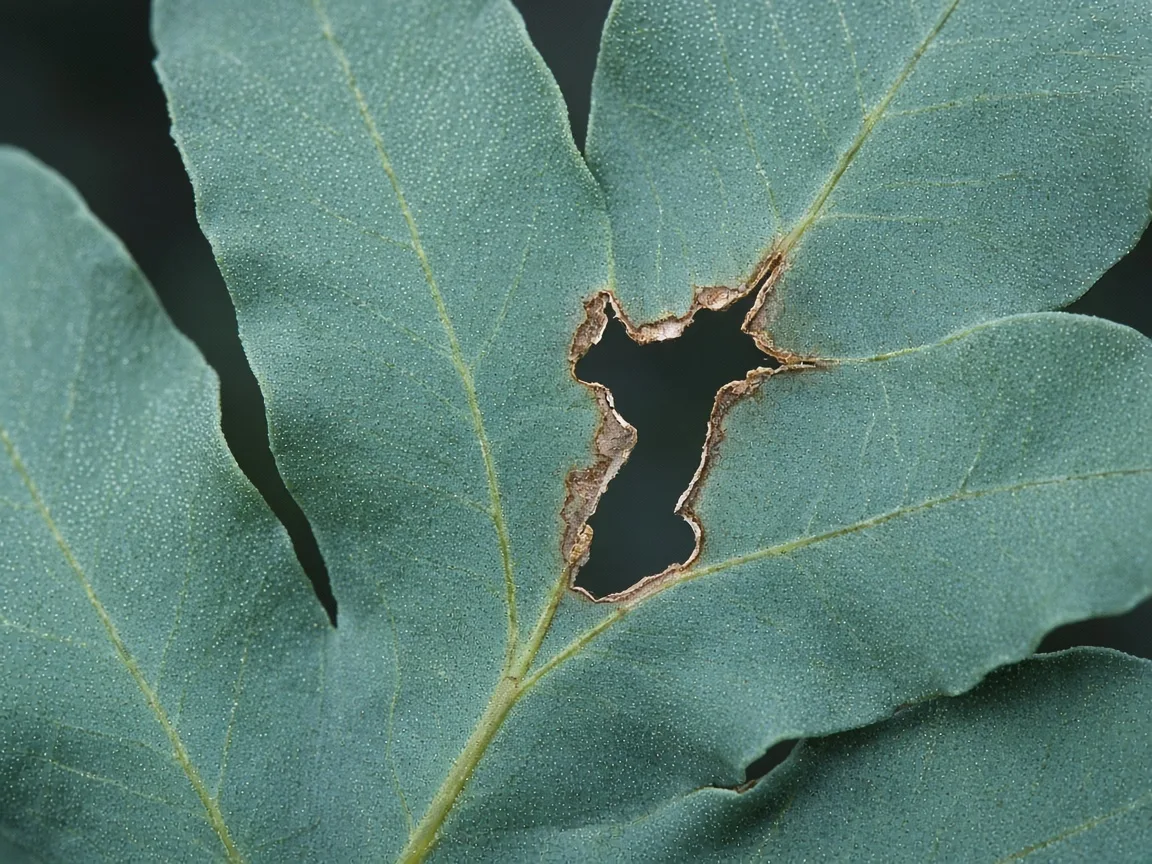
Irregular ragged holes through one lobed Phlebodium frond—compare with an intact neighbor blade on the same plant before you spray.
| Cause | Hole pattern on lobed fronds | Extra signs | First fix on Blue Star Fern |
|---|---|---|---|
| Fern caterpillars | Large irregular holes and notched margins | Pellet frass on fronds or pot rim; larvae at dusk | Hand-pick from rhizome line—see caterpillars |
| Slugs and snails | Irregular edge tears, often overnight | Silvery slime on pot rim or rhizome base | Handpick after dark on floor-level or patio pots |
| Thrips | Pale rasped patches that tear into small holes | Silvery scars, black specks; no frass pellets | Rinse undersides; route to thrips |
| Leaf miners | No open holes—tunnels inside when backlit | Serpentine trails between frond surfaces | Leaf miners guide |
| Mechanical snag | One-time clean tear on one lobe | No spread, no frass; after moving or dividing | Relieve pressure; no pesticide |
| Pet chew | Crushed or torn mid-frond | Tooth marks, scattered bark; plant is non-toxic to cats and dogs but not edible | Move plant; repair is cosmetic |
Golden rhizome line vs lobe holes (Blue Star Fern only)
Phlebodium aureum spreads by creeping rhizomes densely covered in golden scales that often sit on top of the mix in a wide shallow pot. That geometry changes where holes matter:
- Chew on the softest unfurling lobe tips while rhizomes look firm stops the next sculptural frond before it opens—treat as urgent and inspect at night for Florida fern caterpillars hiding at the stem base or on the soil surface.
- Holes only on older outer lobes while new tips stay clean often means past feeding or one mechanical tear—mark the newest holed blade and watch for five days before spraying.
- Brown mush at the rhizome crown without ragged chew is overwatering or saturated bark mix—not a leaf chewer. Do not confuse it with holes.
Match height on the plant and whether rhizomes feel firm before you drench the soil for a foliage pest.
Backlight test on lobed fronds (Blue Star Fern only)
Unlike bird’s nest strap fronds, blue star blades are deeply divided. That makes miners and chew easy to confuse:
- Clip nothing yet—hold one damaged lobe toward a window or lamp.
- Open ragged hole with torn green margin = something chewed through from outside (caterpillar, slug, thrips tear).
- Pale winding tunnel with intact outer skin = leaf miner—sprays aimed at chewing pests will not reach the larva inside.
- Many small angular scrapes on the softest new lobe only = thrips or early caterpillar rasping—confirm with a magnifier on the underside.
If backlight shows tunnels, switch guides before you buy a broad caterpillar spray.
Why Blue Star Fern gets holes in leaves
Blue star fern is an epiphytic, rhizomatous houseplant that tolerates indoor culture better than many ferns, but its soft new lobes are still easy for night feeders to bite. The moist, bark-heavy mix and humid bathrooms that suit this species can also hide pests at the soil line.
Fern caterpillars
The Florida fern caterpillar (Callopistria floridensis) feeds on many commercial ferns, including polypody relatives. Eggs are laid on tender leaflets; tiny caterpillars feed mostly at night and hide at the base of plants or in soil by day. Several larvae can chew off more tissue than they eat, which explains sudden lacy damage on a small pot.
Infestations often start when ferns arrive pre-infested from growers—houseplant pests commonly hitchhike on introduced plants and eggs hatch indoors weeks later. Warm rooms speed the life cycle.
Slugs and snails
Slugs rasp irregular holes and leave silvery mucus trails. They are common on floor-level bathroom pots, wide saucers, and ferns summered outdoors. Organic mulch on the mix surface gives slugs daytime cover.
Thrips
Thrips scrape lobe surfaces, causing silvery streaks, speckling, and distorted young lobes. Heavy feeding can produce small torn areas that look like pinholes. They run quickly when disturbed.
Leaf miners
Miners leave serpentine tunnels inside the blade rather than open holes—see the UC IPM leafminer note for the tunnel pattern. They are less common on indoor blue star ferns than caterpillars but appear on nursery batches and outdoor returns.
Mechanical tears and pet interest
Lobed, rounded fronds snag easily when you slide a wide shallow pot past furniture or catch a rhizome on the rim during repotting. Pets may crush fronds even though the plant is listed non-toxic.
What usually does not cause holes
Fungal leaf spots show brown patches with halos—not clean through-holes. Spider mites cause stippling and webbing, not ragged chew margins. Low humidity browns tips and margins without punched-out lobe tissue. Overwatering yellows fronds and rots rhizomes without pellet frass.
How to confirm the cause
Work through these checks in order:
- Time the inspection. Go out at dusk or after lights dim when fern caterpillars feed. Slugs also move at night.
- Search the rhizome line. Lift fronds gently and inspect golden rhizomes on the mix surface, stem bases, and the inside rim of a wide pot.
- Look for frass. Black pellet droppings below holed fronds confirm caterpillar feeding even if the larva is hidden.
- Check for slime. Silvery winding trails on pots or rhizomes point to slugs—not caterpillars.
- Backlight one lobe as above to separate miners from chew.
- Tap-test for thrips. Shake a damaged frond over white paper; tiny elongated insects that run quickly suggest thrips.
- Review plant history. New nursery fern, recent outdoor patio stay, or neighboring infested plants increase caterpillar and thrips odds.
- Exclude mechanical damage. If holes appeared immediately after moving or dividing and no pests are found over three nightly checks, suspect physical breakage.
First fix for Blue Star Fern
Inspect at night and hand-pick caterpillars or slugs before spraying anything.
Move Blue Star Fern away from other ferns. At dusk, examine surface rhizomes, the soil line, and undersides of holed lobes. Handpick caterpillars and slugs into soapy water. Wipe frass pellets from stems and the pot rim so you can tell whether new damage appears tomorrow.
If you find slugs, check under the pot, saucer, and cachepot. For thrips only (no caterpillars), rinse fronds gently in a sink—support each lobe to avoid snapping wiry stems.
Do not drench the crown or rhizomes with oil on day one. Gardening Channel recommends watering at the pot edge and avoiding soaking rhizomes; heavy wetting plus pesticide burn compounds stress.
Step-by-step recovery
- Isolate the fern from other houseplants.
- Hand-pick caterpillars or slugs nightly for three to five evenings—populations drop fast when caught early.
- Rinse fronds with lukewarm gentle spray to dislodge small larvae and thrips. Let the plant drain fully; do not leave rhizomes sitting in runoff.
- Apply Bacillus thuringiensis (Bt) labeled for caterpillars if hand-picking cannot keep up—ferns are sensitive to many pesticides, so choose a caterpillar-specific product and coat undersides and the rhizome line. Caterpillars must ingest treated tissue.
- Use insecticidal soap for thrips if Bt is not appropriate—test one frond first and wait 48 hours before full application.
- Set yellow sticky cards near the pot to monitor flying adult moths or thrips—detection only, not sole treatment.
- Remove badly skeletonized fronds at the base once new clean growth appears.
- Hold fertilizer until feeding stops and new lobes unfurl without damage—see your fertilizer guide for when to resume.
Recovery timeline
Minor caterpillar damage on a healthy Blue Star Fern often stabilizes within one to two weeks of nightly hand-picking. Bt-treated infestations may need two to three weekly applications before new lobes emerge clean.
Holed tissue never refills—judge success by undamaged new tips and no fresh frass. Thrips control with washing and soap typically shows cleaner new lobes within two to three weeks.
If new holes keep appearing after three weeks of consistent treatment, re-inspect for pupae in surface bark debris or a second pest species.
Lookalike symptoms
| What you see | Likely cause | Guide |
|---|---|---|
| Uniform brown tips, no through-holes | Dry air or uneven moisture | Low humidity or watering |
| Yellowing entire fronds, soggy mix | Root stress | Overwatering |
| Stippling + fine webbing | Mites | Spider mites |
| Internal pale trails, skin intact | Miners | Leaf miners |
| Chew + frass on multiple ferns | Caterpillars | Caterpillars |
Mistakes to avoid
- Pouring pesticide into the frond crown or over golden rhizomes—epiphytic tissue rots easily; treat lobes, not the rhizome mat.
- Assuming every hole means overwatering—mushy rhizomes without frass are cultural; ragged chew with pellets is biological.
- Full-strength horticultural oil on the whole plant the first day—ferns are pesticide-sensitive; confirm pests and test a small section.
- Fertilizing while fronds are still being eaten—new soft tissue attracts more feeding and salts stress recovering roots.
- Ignoring one mechanical tear—A single snag is harmless; spreading tip damage is not.
How to prevent holes next time
- Quarantine new ferns two to three weeks before mixing them with established plants.
- Scout the rhizome line weekly during warm humid growth—new lobes soft-open quickly under good soil moisture and light.
- Screen open windows at night in warm months when moths are active.
- Water at the pot edge, keeping exposed rhizomes as dry as practical, per your watering rhythm.
- Handle lobed fronds gently when misting or shifting a wide shallow pot.
- Rinse outer fronds after patio season before bringing plants indoors.
Related Blue Star Fern guides
Use this page when you see open holes or notches through lobed fronds and need to separate chew, miners, slugs, thrips, and handling tears before treatment. Open caterpillars when frass and larvae confirm chewers; leaf miners for internal tunnels; thrips for silvery rasping. For culture that keeps the rhizome mat resilient, start with the Blue Star Fern overview and problems hub.
Related tool
Use the Plant Problem Diagnosis Tool to narrow causes for holes in leaves on this plant before changing multiple variables at once.