Thrips on Boston Fern: Pinnae Checks & Fixes
Quick answer
Thrips on Boston Fern rasp tender pinnae and unfurling croziers, leaving silvery streaks, black frass specks, and rippled new fronds—often after hitchhiking on new plants or cut flowers. First step: isolate the fern and shower-rinse every frond and pinna underside with lukewarm water before spraying anything.
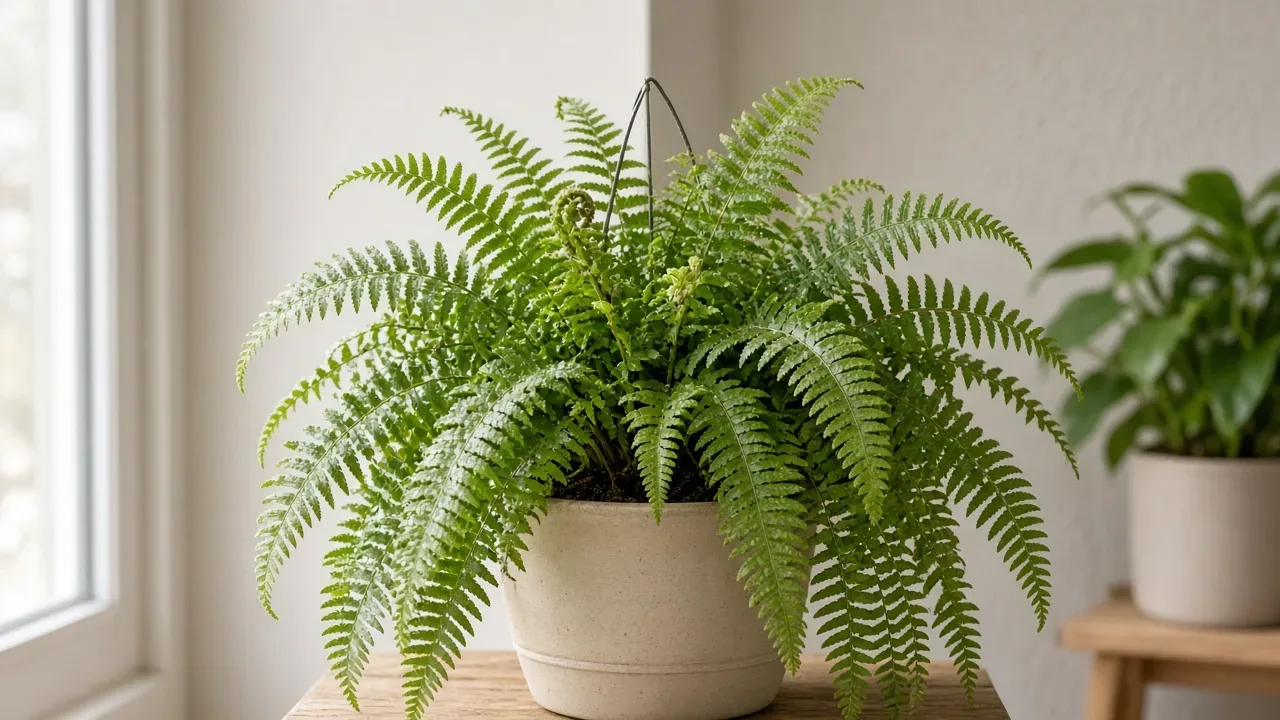
Thrips on Boston Fern: Causes, Checks & Fixes
This guide covers thrips on Boston Fern. See also the general Thrips guide, watering, and light pages for this plant.
Thrips on Boston Fern: Causes, Checks & Fixes
Quick answer
Thrips on Boston Fern (Nephrolepis exaltata) are small, winged insects with rasping-sucking mouthparts that scar tender pinnae (leaflets along each frond) and unfurling croziers at the crown. Feeding leaves silvery streaks, black frass specks, and rippled new growth—easy to misread as low-humidity brown tips until you inspect in side light.
For how thrips behave on houseplants in general, see our thrips guide. On Boston fern, damage clusters on the softest tissue: croziers at the crown, young pinnae undersides, and the inner curve of arching fronds—not the tough older rachis alone.
First step: isolate the plant and shower-rinse every frond and pinna underside thoroughly with lukewarm water before applying any spray.
When to use this page vs other Boston Fern guides
| Pattern | Read next |
|---|---|
| Silvery streaks, black frass, rippled croziers | This page |
| Yellow stippling with fine silk webbing | Spider mites |
| Sticky honeydew and dark pear-shaped insects on young fronds | Aphids |
| Rippled fronds without silver streaks or insects | Distorted leaves |
| Even brown tips along frond margins, no frass | Low humidity or brown tips |
| Wet mix, sour smell, collapsing crown | Overwatering or root rot |
What thrips look like on Boston Fern
Thrips are generally less than one-eighth inch long with elongated bodies—more like a grain of rice than round aphids. UF/IFAS notes that infested leaves dry out and develop a scarred or silver-flecked appearance, with small brownish specks of excrement on undersides.
On Nephrolepis, the sheer number of pinnae per frond means damage looks like fine glitter or dust until you compare a healthy frond from the same plant.
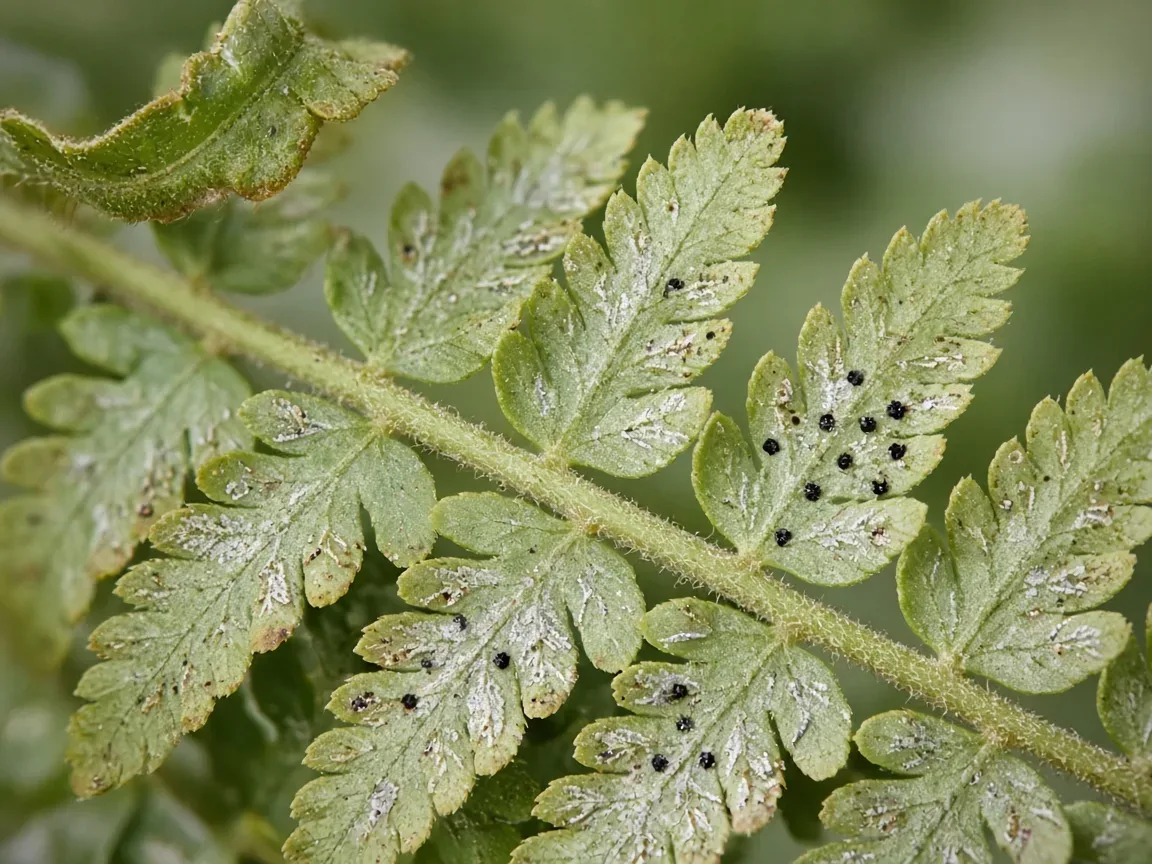
Silvery rasp marks and tiny black frass specks on Boston fern pinnae—compare with an intact leaflet on the same frond.
Early feeding on pinnae and croziers:
- Pale silver or bronze streaks across individual pinnae
- Tiny black dots (frass) on pinna undersides or tucked in crozier folds
- Slight dulling of green on affected leaflets while older fronds still look full
- Damage often starts on one arching frond near the crown before spreading outward
Established infestation on a full plant:
- Rippled, narrow, or scarred pinnae on the newest fronds
- Croziers that unfurl crooked or stall half-open
- Silvery patches visible when you backlight fronds against a window
- Slender yellow, brown, or black insects on a white-paper shake test
What Boston fern thrips damage is not:
- Fine yellow stippling with silk at frond bases—spider mites, not thrips
- Shiny sticky residue with clustered dark aphids—aphids
- Uniform brown tips on pinnae edges without silver flecks—low humidity or salt stress per the watering guide
Scarred pinnae stay scarred. Clean new fronds from the crown after treatment are your recovery signal.
Where thrips hide in croziers and pinna undersides
Boston fern grows from a crown that continuously pushes croziers into arching fronds with hundreds of pinnae per plant. Thrips follow protected, soft tissue, not the leathery rachis you see from across the room.
Work from crown to frond tips:
- Crown and croziers — unfurling tips are softest; silver scarring shows here first
- Pinna undersides — lift leaflets along the rachis and check midribs in angled light
- Inner arch of hanging fronds — fronds pressed together in baskets trap insects and moisture
- Lower fronds last — populations move up to new growth; old damage low on the plant matters less than fresh streaks at the crown
Because Boston fern prefers high humidity and consistently moist—but not waterlogged—soil, owners often mist leaves while missing thrips tucked inside croziers. Misting alone does not replace a targeted rinse or labeled spray.
Why Boston Fern gets thrips
Thrips are not a sign that you “failed” at fern care. They are attracted to young leaves, buds, and tender growth—exactly what Nephrolepis produces when light and moisture support steady frond replacement per the light guide and overview.
Indoor outbreaks usually trace to:
- New ferns or cut flowers brought in without quarantine
- Shared benches or hanging hooks in dry, heated winter rooms
- Open windows in warm months when outdoor ornamentals carry thrips
- Overfertilized soft growth that concentrates nutrients in sap (thrips and aphids both favor tender flushes)
Dense, humid foliage helps the fern look lush—but it also gives thrips countless pinna shelters. That trade-off is normal on this species.
How to confirm the cause
- White-paper shake test on three fronds at different heights
- Side-light pinnae — silver rasp marks vs. uniform brown tips
- Crozier check — rippling or stuck unfurling without insects suggests distorted leaves from care stress; add frass or moving specks for thrips
- Sticky-card catch — blue or yellow traps near the pot catch winged adults for monitoring
- Neighbor scan — thrips often appear on multiple plants before you notice Boston fern damage
Identification before treatment is core IPM: confirm the pest, then choose the least toxic control that contacts it.
First fix for Boston Fern
Isolate the fern and shower-rinse all fronds and pinna undersides with lukewarm water, then let the pot drain completely.
Hang or tilt the basket so water runs through and out the drainage holes—do not leave the crown sitting in a full cachepot of rinse water. A strong but gentle spray physically removes many thrips from pinnae before you introduce soap or oil.
Repeat rinses every three to five days for at least two weeks while you watch new croziers. One rinse rarely breaks the life cycle because eggs sit inside tissue and pupae can drop into moist peat-based mix described in your potting setup.
Step-by-step recovery
- Isolate from other houseplants, especially flowering specimens
- Shower rinse — crown, croziers, pinna undersides; drain fully
- Humidity steady — target the fern’s normal range via humidifier or pebble tray per low-humidity guidance; avoid constant heavy mist that keeps fronds wet overnight in cold rooms
- Trim only heavily scarred fronds at the base if they harbor dense frass—do not shear the whole plant at once
- Insecticidal soap if rinses fail — spray must contact thrips directly; test one frond first because fern pinnae can burn
- Repeat on a schedule — reapplication is usually necessary through several thrips generations (often five to seven days apart for three to four cycles when using soap)
- Monitor new croziers — clean unfurling fronds mean success
If populations rebound after four soap cycles, consider spinosad or other products labeled for thrips on ornamentals, following the label indoors. Boston Fern is non-toxic to cats and dogs, which makes labeled soaps attractive—but still spot-test phytotoxicity on pinnae.
Shower-rinsing without drowning the crown
Boston fern tolerates rinses better than many houseplants, but the crown and constantly moist mix are rot risks if water pools. Pair rinses with sound watering habits:
- Rinse in the morning so fronds dry in bright indirect light the same day
- Remove the nursery pot from decorative cachepots before heavy rinses
- After showering, let the pot drip until weight feels normal—soggy mix invites fungus gnats and root stress
- Skip foliar feeds until new growth looks clean for two weeks
This rhythm matches how professionals manage Nephrolepis in hanging baskets: physical knockdown first, cultural stability second, chemistry only when needed.
Recovery timeline
You should see fewer live thrips on shake tests within one week of consistent rinses. New fronds emerging without silver streaks in two to four weeks confirm control. Old scarred pinnae remain scarred—remove for appearance if you wish.
Severe infestations on a single crowded basket may need six to eight weeks of repeated treatments because thrips hide in soil and leaf tissue between visible flushes.
What not to do
- Do not treat as humidity burn alone if frass and silver flecks are present
- Do not leave fronds dripping overnight in a cold room after rinsing
- Do not use homemade soap mixes without understanding burn risk on delicate pinnae—commercial insecticidal soaps are formulated for plants
- Do not fertilize heavily while thrips feed on soft new growth
- Do not repot, prune heavily, and spray on the same day—stagger stressors so you can read the plant’s response
How to prevent thrips next time
Quarantine new ferns and bouquets. Scout pinnae weekly at the crown. Keep humidity in the 50–70% comfort band this species prefers. Sticky cards catch winged adults early. When you summer ferns outdoors, inspect before bringing them back indoors in fall.
Align routine care with the Boston Fern problems hub so you can jump to the right guide when symptoms overlap.
When to worry
Escalate when most new croziers fail to open cleanly, silver damage jumps to multiple fronds per week despite rinses, or thrips show on shake tests from several plants in the same room. In dense collections, discarding one heavily infested basket may protect the rest.
A few streaked pinnae on one frond during active summer growth is common and rarely threatens a well-rooted fern if you isolate and rinse early.
Related Boston Fern guides
- Boston Fern overview — culture and humidity targets
- Boston Fern watering — moisture without a waterlogged crown
- Boston Fern light — bright indirect light for steady frond replacement
- Boston Fern soil — peat-based mix and drainage
- Spider mites — stippling and webbing vs silver thrips scars
- Aphids — honeydew and black fern aphid clusters
- Distorted leaves — ripples without confirmed insects
- Boston Fern problems — full symptom index
Conclusion
Thrips on Boston fern are a crown-and-pinnae problem in most homes—not mysterious whole-plant collapse. Trace croziers and leaflet undersides on arching fronds, isolate, rinse before you spray, and judge recovery by clean new growth from the crown. Scarred pinnae can stay silver; healthy unfurling fronds are the signal that worked.