Brown Leaves on Bougainvillea: Causes, Checks & Fixes
Quick answer
Brown leaves on bougainvillea are dead tissue on the small true leaves—not the colorful bracts aging after bloom. First step: touch the brown area and lift the pot. Crispy tan-brown on a light dry pot usually means drought or frost burn; soft dark brown on cool wet mix points to overwatering or root decline.
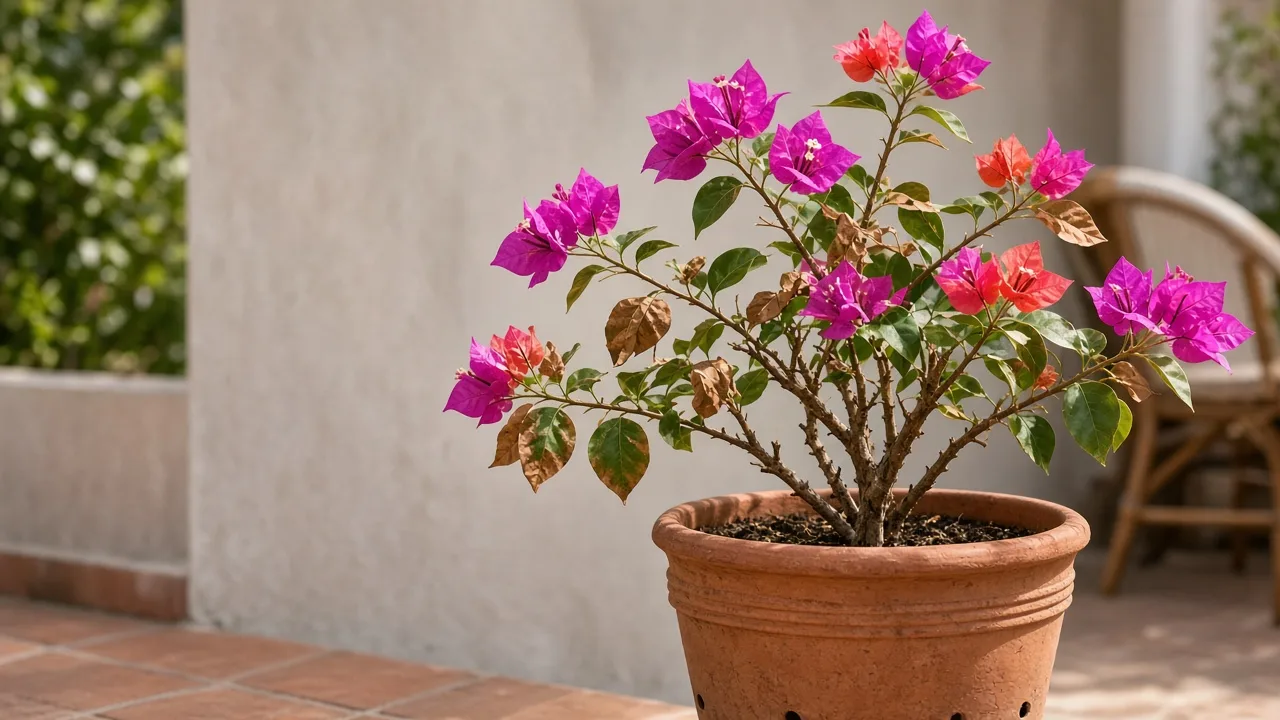
Brown Leaves on Bougainvillea: Causes, Checks & Fixes
This guide covers brown leaves on Bougainvillea. See also the general Brown Leaves guide, watering, and light pages for this plant.
Brown Leaves on Bougainvillea: Causes, Checks & Fixes
Quick answer
Brown leaves on bougainvillea mean dead or dying tissue on the small true leaves along thorny woody stems—not always the showy bracts that fade after bloom. This subtropical vine from South America evolved for full sun, fast drainage, and dry intervals between soaks, so whole-leaf browning on patio containers usually traces to severe drought, frost or cold shock, chronic overwatering and root decline, salt or fertilizer burn, pests, or normal post-flush leaf drop—not one generic “brown leaf disease.” For how necrotic leaf tissue works across plants, see our brown leaves guide. On bougainvillea, papery bract fade after color is normal; spreading brown on true leaves with the wrong soil moisture is not.
First step: touch the brown tissue and lift the pot. Crispy tan-to-brown blades on a light, dry container call for one deep soak and a return to the soak-and-dry rhythm. Soft dark brown lower leaves on cool, damp, heavy mix means stop watering and read the overwatering branch—do not treat wet-soil wilt like thirst.
What brown leaves look like on Bougainvillea
Bougainvillea’s colorful display comes from modified leaves called bracts around tiny white flowers. Growers often search “brown leaves” when they see true foliage—the smaller green blades between thorny stems—turning necrotic, or when bracts age after a flush.
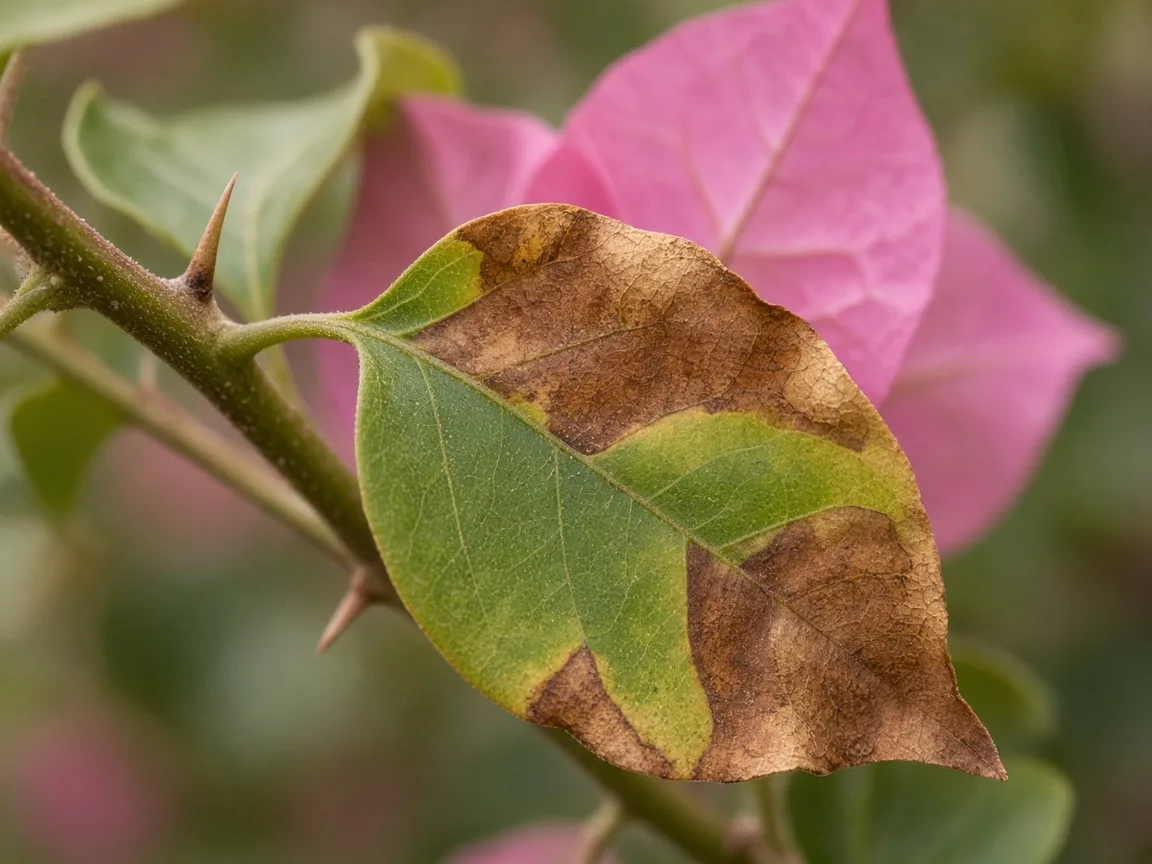
Brown Leaves symptoms on Bougainvillea - compare crispy necrotic true leaves with still-green tissue on the same stem.
True-leaf necrosis (actionable brown):
- Tan to dark brown whole blades that feel papery or crisp, often on older outer canopy leaves first
- Soft dull brown lower leaves on wet heavy soil, sometimes after prior yellowing—see yellow leaves on bougainvillea
- Sudden mass brown after a freeze, cold move indoors, or nights near 5 °C (41 °F)—tips brown, then whole leaves
- Uniform brown edges soon after heavy feeding or white crust on the rim—salt stress on container roots
- Speckled brown with fine webbing on leaf undersides—spider mites on bougainvillea
Bract fade (usually normal, not “brown leaves”):
- Colorful bracts bleach, pale, or dry papery brown after several weeks of display
- Pattern follows a recent bloom flush on the same wood, not random scattered true-leaf necrosis
- True leaves nearby stay green unless a separate stress is active—compare faded flowers if color loss is the main concern
Do not confuse post-bloom bract senescence with true-leaf disease. Fading bracts after a color flush are expected; spreading brown on new true leaves is a care signal.
Papery bracts vs brown true leaves
This distinction is bougainvillea-specific and saves panic on otherwise healthy vines.
| What browned | Texture | Soil / weather | Urgency |
|---|---|---|---|
| Bracts only | Dry, papery, still attached or dropping cleanly | Often dry-down after bloom; stems firm | Low—seasonal |
| True leaves | Crisp (drought/frost) or soft (wet roots) | Matches dry light pot or wet heavy pot | Medium—fix the cause |
| Both bracts and leaves | Mixed crisp and limp | Recent frost, sprinkler flood, or travel neglect | Higher—inspect roots and temperature |
Bracts are already papery by nature; they are not meant to stay magenta forever. True leaves should stay firm and green through the growing season unless the plant is in winter semi-dormancy or shedding after a flush—UF/IFAS Charlotte County notes leaf drop can follow flowering and is soon followed by new growth when culture is sound.
Reading brown along thorny woody stems
Bougainvillea grows as a woody climber with thorns at leaf axils, not a soft herbaceous bush. Where brown appears on the stem matters as much as color.
Interior old wood: One or two fully brown true leaves on lower interior stems while shoot tips stay green often mean normal turnover on mature wood—low urgency if the dry-down check is intact.
Outer canopy after drought: Crisp brown on sun-exposed outer leaves with a light pot points to edge desiccation advancing into whole-blade necrosis—common on small containers in peak summer. Overlaps with brown tips before the entire leaf dies.
Bottom-up on wet soil: Several lower true leaves turn soft brown within a week while mix stays damp—the classic root-stress pattern on drought-adapted roots. Escalate to root rot if stems soften at the soil line.
Tip dieback after frost: Brown on newest small leaves at extending shoots after a cold night is higher urgency than one spent lower blade—protect from further chill before you prune.
Wear gloves when inspecting lower brown leaves—thorns pierce skin easily during close handling.
Why Bougainvillea gets brown leaves
Severe drought and whole-leaf desiccation
Bougainvillea is extremely drought-resistant once established, but whole true leaves can still die when a container dries past what the root system can supply—especially on small pots in full sun or after travel neglect. Tissue turns crispy brown and may hang on the thorny stem until you prune it. This differs from intentional dry-down for bloom, which usually keeps new growth clean if stress stays mild.
Overwatering, root decline, and wet-soil necrosis
UF/IFAS states bougainvillea performs better when soil is left a little dry. Constant moisture suffocates fine roots; lower leaves often yellow first, then turn soft brown and drop while the pot stays heavy. Lawn sprinklers and oversized peat-heavy pots are frequent patio triggers—over-watering with misdirected sprinklers is a common leaf-drop story in Florida landscapes.
Frost, cold moves, and winter brown
Bougainvillea needs protection from frost and freeze and is reliably perennial in USDA zones 9–11. Cold nights brown exposed foliage; overwintering indoors without enough light can accelerate seasonal brown drop—the RHS recommends a minimum night temperature of 10 °C (50 °F) to avoid winter leaf drop in conservatories.
Salt and fertilizer burn
Heavy or frequent feeding in containers can scorch true leaves into brown margins that advance inward. Bougainvillea wants light feeding during active growth; excess nitrogen also suppresses bracts while pushing soft foliage that browns under stress.
Pests and disease lesions
Spider mites desiccate leaf tissue into bronze or brown speckling before whole blades crisp. Fungal leaf spots that merge can necrose into brown patches—see black spots on bougainvillea when lesions have dark centers or yellow halos.
Normal post-flush leaf drop
After a heavy bract flush, bougainvillea may shed some true leaves as energy shifts to new wood—patient waiting is appropriate when stems are firm, mix dries normally, and fresh tips appear within weeks. This is not the same as rapid brown spread on wet summer soil.
Lookalike symptoms to rule out
| Pattern | Most likely cause | Key differentiator |
|---|---|---|
| Crispy brown whole leaves, light dry pot | Drought / severe underwatering | Mix pulls from rim; perks after one deep soak |
| Soft brown lower leaves, wet heavy pot | Overwatering / root stress | Wilt on moist soil; may smell sour |
| Mass brown after freeze or indoor move | Cold injury | Recent temperature swing; tips first |
| Papery brown bracts only, green true leaves | Normal bract senescence | Follows bloom flush |
| Brown tips only, center still green | Margin burn | See brown tips |
| Yellow then brown on wet soil | Root decline | Yellow leaves stage first |
How to confirm the cause (6-step inspection)
-
Texture test - Crisp papery brown → drought, frost, or mite damage. Soft dull brown → wet-root stress.
-
Finger test at 3–5 cm plus pot weight - Dry light pot supports drought; damp heavy pot supports overwatering.
-
Bract vs true-leaf check - Confirm whether only showy bracts browned or true foliage is necrotic.
-
Stem firmness - Firm woody stems with localized brown leaves differ from soft tissue at the soil line with sour mix.
-
Weather and move history - Note frost, haul-indoors dates, and sprinkler changes in the last two weeks.
-
New growth status - Green extending tips mean recovery is possible; brown on newest leaves means active stress.
First fix for Bougainvillea
Match one first action to what you confirmed—do not fertilize, repot, and prune the same day.
-
Crispy brown on a light dry pot → One deep soak until water runs from drainage holes; drain fully; resume watering dry-down checks.
-
Soft brown lower leaves on wet heavy soil → Stop watering until the top 3–5 cm dries and the pot lightens. Empty saucers. If decline continues, unpot per root rot.
-
Post-frost brown → Move to a bright frost-free location; reduce winter irrigation; delay hard pruning until you see where live wood begins.
-
Bracts only browned after bloom → No emergency fix—wait for the post-flush growth surge; avoid extra water “to help.”
-
One or two brown lower leaves on firm old wood → Remove spent blades if they detach easily; continue normal culture.
Step-by-step recovery by confirmed cause
Drought recovery
- Soak deeply once; confirm runoff drains freely.
- Move off reflected heat that desiccates small pots if needed.
- Judge success by new green true leaves on shoot tips within one to two weeks—old brown blades will not re-green.
Overwatering recovery
- Stop irrigation; let top 3–5 cm dry completely.
- Disconnect from lawn sprinklers or daily drip shared with thirstier plants.
- If brown/yellow spread continues on drying soil, inspect roots and repot only into same-size or smaller gritty mix if rot is confirmed.
Cold damage recovery
- Protect from further frost; keep nights above 10 °C (50 °F) when overwintering per RHS guidance.
- Water sparingly while growth is slow—cold plus wet soil worsens root stress.
- Prune dead stems to green tissue in late winter before the spring surge.
Recovery timeline
- Drought caught early - New green tips often appear within one to two weeks after a proper soak; crisp brown leaves may stay attached until pruned.
- Overwatering caught early - Lower brown leaves drop; firm new tips in two to three weeks if roots remain healthy.
- Frost damage - Tip dieback resolves after spring pruning; full canopy fill may take a full growing season.
- Normal post-flush drop - Individual brown leaves over days; no upward spread if culture is sound.
Fully brown true leaves do not turn green again—track recovery by woody stem-tip growth and fresh bracts, not old blade color.
What not to do
- Do not water brown leaves on wet, heavy soil because stems look limp—that deepens root rot.
- Do not blast with nitrogen fertilizer to “save” brown foliage; it pushes leaves over bracts on a stressed vine.
- Do not repot into a larger pot while brown spreads on soggy mix—more volume holds more moisture around failing roots.
- Do not confuse fading bracts with lethal true-leaf necrosis when stems are otherwise firm.
- Do not prune heavily immediately after frost before you identify live wood—wait until danger passes.
How to prevent brown leaves on Bougainvillea
- Water when the top 3–5 cm dries and the pot lightens—bougainvillea hates wet feet.
- Grow in full sun per UF/IFAS; shade slows dry-down and worsens sprinkler overwatering.
- Use fast-draining mix from the soil guide; avoid peat-heavy bags without perlite and sand.
- Protect from frost before nights approach damaging cold; overwinter bright with reduced water.
- Feed lightly during active growth per the fertilizer guide; flush salts if margins browned after feeding.
- Inspect leaf undersides weekly in hot dry weather for mites before whole leaves crisp.
When to worry
Treat as urgent when:
- Stem tissue softens at the soil line with wet mix and sour smell
- Most true leaves brown within 48–72 hours on consistently damp soil
- Wilting spreads on a pot that will not dry out—possible root collapse
- Blackened stems advance after freeze damage
Lower urgency: papery brown bracts only after bloom, or one brown lower true leaf on firm old wood with green extending tips.
Bougainvillea care cross-check
| Factor | Brown-leaf risk when wrong |
|---|---|
| Water | Chronic wet → soft brown lower leaves; severe dry → crisp whole-leaf brown |
| Light | Shade → slow dry-down, weak recovery, poor bracts |
| Temperature | Frost → mass brown; cold room + wet soil → compounded stress |
| Drainage | Saucers full or blocked holes → root necrosis and brown drop |
| Feed | Excess salt → margin burn advancing to brown blades |
Related Bougainvillea problems
- Bougainvillea overview - full-sun biology, bracts, and baseline care
- Watering guide - finger test, pot weight, and dry-down rhythm
- Overwatering - wet-soil brown and wet-wilt triage
- Underwatering - dry pot, crisp brown whole leaves
- Yellow leaves - often precedes soft brown on wet soil
- Brown tips - margin burn before whole-blade necrosis
- Root rot - mushy roots when brown pairs with damp mix
- Bougainvillea problems hub - browse all common issues on this species
When to use this page vs other Bougainvillea guides
- Brown tips on Bougainvillea - Use when only margins are tan while the leaf center stays green.
- Yellow leaves on Bougainvillea - Use when foliage is yellowing on wet or alkaline soil before it turns brown.
- Overwatering on Bougainvillea - Use when wilt and heavy wet pots are the main story.
- Faded flowers / bracts - Use when color loss is on showy bracts, not true-leaf necrosis.