Caterpillars on Bougainvillea: Looper ID, Hand-Pick & Bt
Quick answer
Caterpillars on bougainvillea are usually bougainvillea loopers—night-feeding inchworms that scallop leaf edges, chew bracts, and leave dark pellet-like frass on thorny stems. First step: after sunset, inspect tender shoots and bracts with a flashlight while wearing gloves, and hand-pick every larva into soapy water before spraying.
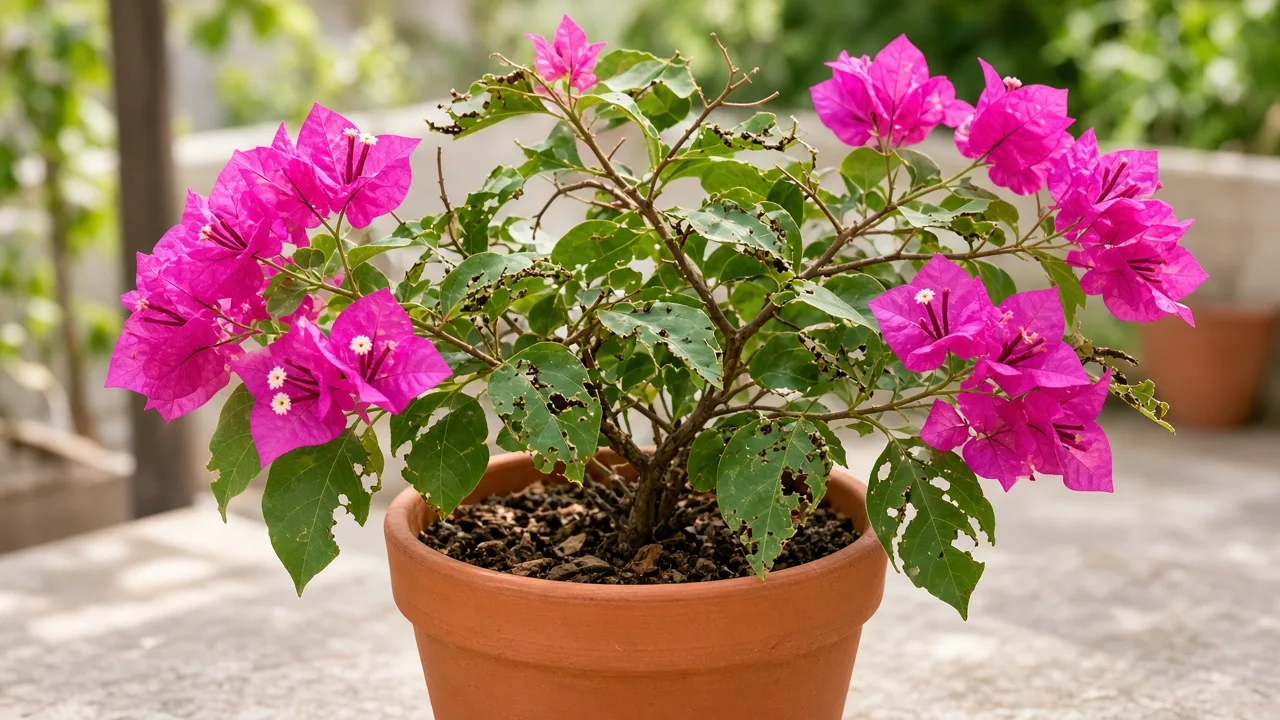
Caterpillars on Bougainvillea: Looper ID, Hand-Pick & Bt
This guide covers caterpillars on Bougainvillea. See also the general Caterpillars guide, watering, and light pages for this plant.
Caterpillars on Bougainvillea: Looper ID, Hand-Pick & Bt
Quick answer
You walk past your patio bougainvillea and notice scalloped leaf edges, ragged holes in magenta bracts, and dark pellet-like droppings on thorny stems—often with no caterpillar in sight at noon. That overnight pattern usually means bougainvillea looper, a smooth yellow-green to brown inchworm up to about 1 inch long whose larvae and adult moths are active at night.
For how caterpillars chew, leave frass, and respond to handpicking in general, see our caterpillars guide. On bougainvillea, damage clusters on tender shoots, small leaves, and showy bracts on sun-grown outdoor vines—not on the same schedule as overwatering yellow leaves or no flowers from too little light.
First step: after sunset, inspect tender shoots and bracts with a flashlight while wearing gloves, and hand-pick every larva into soapy water before spraying.
This page owns bougainvillea looper depth. If you are not sure which pest made the holes, start with holes in leaves on bougainvillea for routing between loopers, leaf miners, and mechanical tears.
When to use this page vs other Bougainvillea guides
| Pattern | Read next |
|---|---|
| Scalloped margins + frass pellets + inchworm gait | This page |
| Serpentine tunnels inside leaf, minimal frass | Leaf miners |
| Sticky honeydew, curled soft tips | Aphids |
| Clean tear, no frass, no night spread | Holes in leaves (mechanical) |
| Green growth but zero bracts | No flowers or light |
| Yellow leaves + wet mix smell | Overwatering or root rot |
What bougainvillea looper damage looks like
Bougainvillea is grown for papery bracts and fast vining growth in full sun. Loopers target the soft tissue that drives that display—not the woody thorny arms lower on the plant.
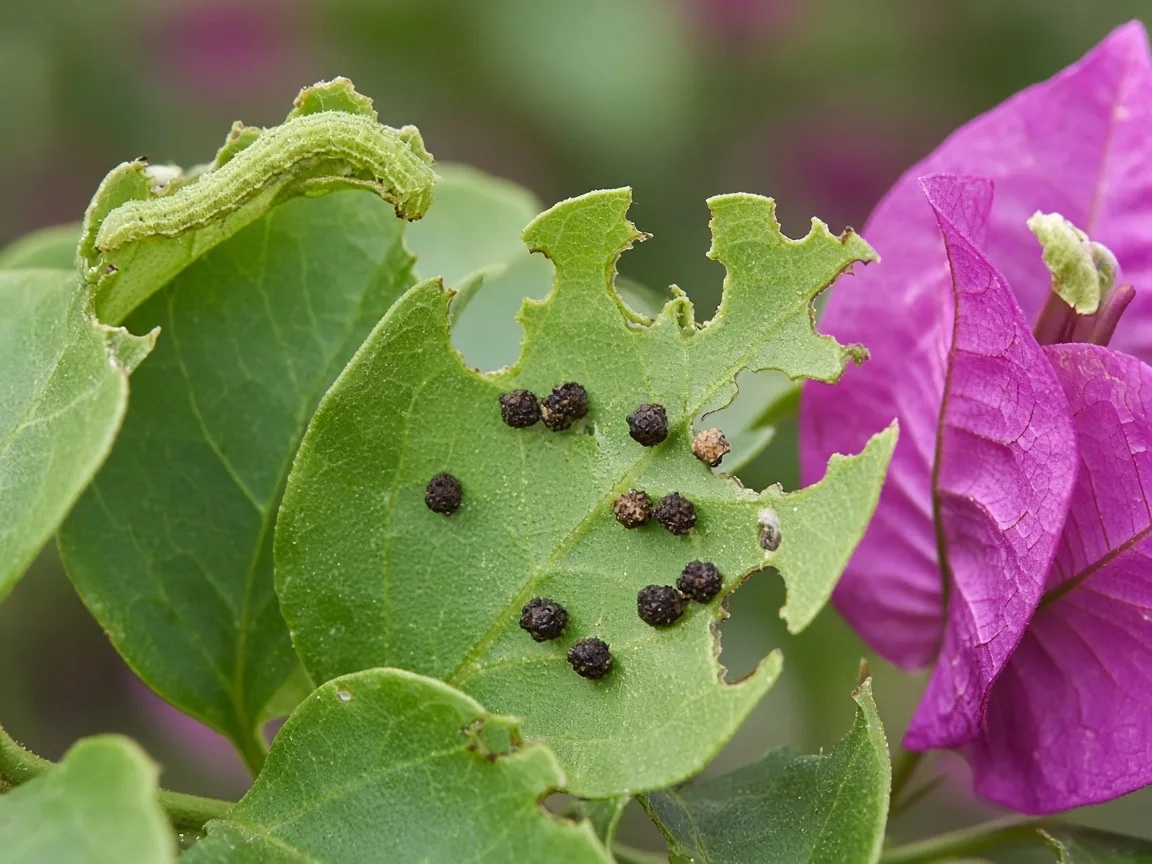
Scalloped leaf margins with dark pellet-like frass—compare with an intact bract on the same stem.
On the vine you will usually see:
- Scalloped or notched leaf edges on young foliage; older larvae chew mature leaves too
- Ragged sections missing from magenta bracts, which can look like a failed bloom season until you find frass
- Dark fecal pellets on leaves, stems, or the pot rim below feeding sites
- Smooth loopers that move in an inchworm loop, often camouflaged against green tissue
- Damage that worsens over several warm nights, unlike slow nutrient chlorosis
The larvae are the immature stage of the somber carpet moth (Disclisioprocta stellata). Adults are small gray-brown moths you may never notice because they fly at night and do not feed on foliage.
Why bract chew confuses growers
Bougainvillea owners often blame fertilizer timing or drought when color disappears. Looper chew on bracts and tender shoots is physical damage, not a bloom hormone problem. If stems are firm, roots are sound per your watering rhythm, and sun hours are honest—but tissue is literally eaten—treat pests before changing feed or pot size.
Where loopers hide on thorny bougainvillea
This is not a flat houseplant leaf scan. Bougainvillea’s thorny, twining stems push new growth at tips and along arching canes.
High-risk zones:
- New shoot tips and the first few soft leaves behind the growing point
- Bracts surrounding tiny true flowers—colorful and thin, easy to scallop
- Inner canopy where loopers hide deep in the plant during the day
- Patio pots tucked under eaves where moths lay eggs on warm nights
Wear thick gloves and eye protection. Thorns cause punctures unrelated to pests; wash any sap that contacts skin. Pets should stay clear—see the bougainvillea overview for thorn and sap notes.
Outdoor wall and patio plants vs indoor pots
Looper outbreaks are common on outdoor bougainvillea in warm weather when tender growth flushes. Container vines on sunny patios and trellised walls see the heaviest feeding because natural enemies may not keep up during peak summer.
Year-round indoor bougainvillea rarely develops loopers unless the pot recently came inside from outdoors, sat near open windows at night, or arrived on nursery stock with eggs. If your indoor vine has holes but no frass after three dusk inspections, pivot to spider mites or mechanical damage on holes in leaves before spraying.
Why bougainvillea gets loopers in warm weather
Moths lay eggs on soft tissue when the plant pushes new growth—often after rain or irrigation followed by heat. Young larvae feed on tender shoots and leaf edges, which matches bougainvillea’s spring and summer flush on well-lit plants.
Loopers also occur on related Nyctaginaceae hosts such as four o’clocks growing beneath or beside a vine. A wall planting with mixed companions can harbor larvae that climb into bougainvillea at night.
Stressed vines in too much shade may show fewer bracts but are not immune—loopers still prefer soft tips when present. Chronic shade problems belong on not enough light, not in a pesticide pass.
Confirm before you treat
Work through this chain:
- Find frass plus feeding pattern — pellet droppings with scalloped chew confirm caterpillars, not aphid honeydew (sticky and clear).
- Inspect at night — loopers feed actively after dusk; daytime-only checks miss small larvae.
- Watch the gait — looping inchworm movement separates loopers from static scale insects.
- Rule out leaf miners — serpentine tunnels inside the leaf without pellet frass point to leaf miners, not loopers.
Hold a damaged leaf over white paper and tap lightly; green or brown pellets that roll off support caterpillar feeding.
Lookalike symptoms on bougainvillea
| Pest or cause | Hole pattern | Droppings / residue | Active when | First fix on bougainvillea |
|---|---|---|---|---|
| Bougainvillea looper | Scalloped margins, ragged bracts | Dark frass pellets | Night | Gloved hand-pick at dusk; Bt if needed |
| Leaf miner | Serpentine trail inside leaf | No pellets | Day (larva inside tissue) | Remove affected leaves; see leaf miner page |
| Aphids | Distortion more than holes | Sticky honeydew | Day | Treat aphid colony—not loopers |
| Thrips | Silvery scarred tissue | Dark specks (frass-like but no larvae) | Day | Confirm with thrips page |
| Mechanical / thorn tear | Clean rip, one-time | None | Any | No spray; support stem if needed |
First fix: gloved hand-pick at dusk
Hand-pick every visible looper into soapy water after sunset when larvae feed on shoot tips and bracts. That is the safest first response on ornamental bougainvillea because it avoids spraying colorful tissue you want to keep clean for display.
Steps:
- Water the plant earlier in the day so you are not wrestling thorns on wet, slippery stems at night.
- Use a flashlight on tender shoots, bracts, and inner leaves.
- Drop larvae into a jar of soapy water; crush eggs if you see flat pale deposits on leaf undersides.
- Check again the next two evenings—missed small loopers grow quickly in heat.
Hand-picking is effective for caterpillars when populations are still moderate.
If hand-picking cannot keep up: Bt and spinosad
When feeding continues after several nights of picking, use pesticides labeled for ornamental caterpillars and follow the label exactly.
- Bacillus thuringiensis controls young loopers well; caterpillars must ingest it while feeding. It may be less effective on mature larvae.
- Spinosad works on both young and older loopers per UC IPM—still requires thorough coverage of leaf undersides and shoots.
Apply in late evening when loopers are active and beneficial insects are less exposed. Avoid broad-spectrum sprays that do not list caterpillars—they will not control bougainvillea loopers. Do not stack heavy pruning, repotting, and pesticide on the same day on a stressed vine.
Neem oil and Bt are commonly suggested on garden blogs for loopers; treat them as supplements to picking, not replacements for confirmation. If rain washes spray away, reapply only within label limits.
Recovery timeline and what tissue can heal
Chewed leaves and torn bracts stay damaged on that flush. Recovery means new shoots and bracts emerge without fresh chew, usually within two to four weeks on an established vine in full sun with sound soil drainage.
Heavy infestations can defoliate sections, but mature healthy bougainvillea typically survives if roots stay firm. A small young pot stripped bare may need longer to rebuild canopy—judge by new tip growth, not old holes.
Light cleanup pruning of shredded tips can improve appearance after larvae are gone; hold major hard pruning until you know feeding has stopped.
What not to do
- Do not assume missing bracts mean feed or drought without checking for frass and night larvae.
- Do not spray indoor kitchen-adjacent pots without confirming loopers—hitchhiking pests need ID first.
- Do not fertilize heavily on a defoliated vine to “push growth” while larvae are still present.
- Do not ignore a second flush—warm weather can restart feeding on new tender shoots within weeks.
How to prevent loopers next season
During warm months, scout outdoor bougainvillea weekly at dusk when you water or deadhead. Remove weeds and nearby alternate hosts when practical. Encourage birds and existing garden predators—they feed on loopers though populations sometimes outpace them in peak summer.
Before bringing patio pots indoors, rinse stems and inspect at night for two weeks. Quarantine new nursery vines from established plants until you see clean new growth.
Align routine care so the vine is not overly lush in shade—soft weak growth in poor light is more vulnerable to many problems, but loopers are primarily an outdoor warm-season pest on sun-grown bougainvillea.
Practical checks
Urgency
Treat as urgent when:
- A young container plant loses most leaves within a week
- Fresh chew appears on multiple stems nightly despite picking
- Bract loss is ruining a planned display and larvae are still visible
Lower urgency: scattered scalloping on a large wall vine with birds active in the yard—pick nightly and monitor before spraying.
Best inspection order
- New shoot tips and bracts at dusk with a flashlight
- Inner thorny stems where loopers hide by day
- Frass on leaves and pot rim below the vine
- Neighboring four o’clocks or mixed vines for shared pressure
- If no larvae after three evenings, use holes in leaves for alternate IDs
Related Bougainvillea guides
- Bougainvillea overview — sun, thorns, and seasonal bloom rhythm
- Bougainvillea problems hub — all common issues on this species
- Holes in leaves — when chew pattern is unclear
- Leaf miners — tunnels without frass pellets
- Pruning — cleanup after pest-free new growth returns
- Light — bract color depends on honest sun hours