Iron Deficiency on Calathea: Yellow New Leaves, Green Veins
Quick answer
Iron deficiency on calathea shows as yellow or pale tissue between dark green veins on the newest rolled leaves at the rhizome crown while older patterned lower leaves may stay normal. First step: confirm interveinal chlorosis on new center growth—not edge crisping from tap water or yellowing on oldest leaves first—and check that rhizomes are firm before one chelated iron drench.
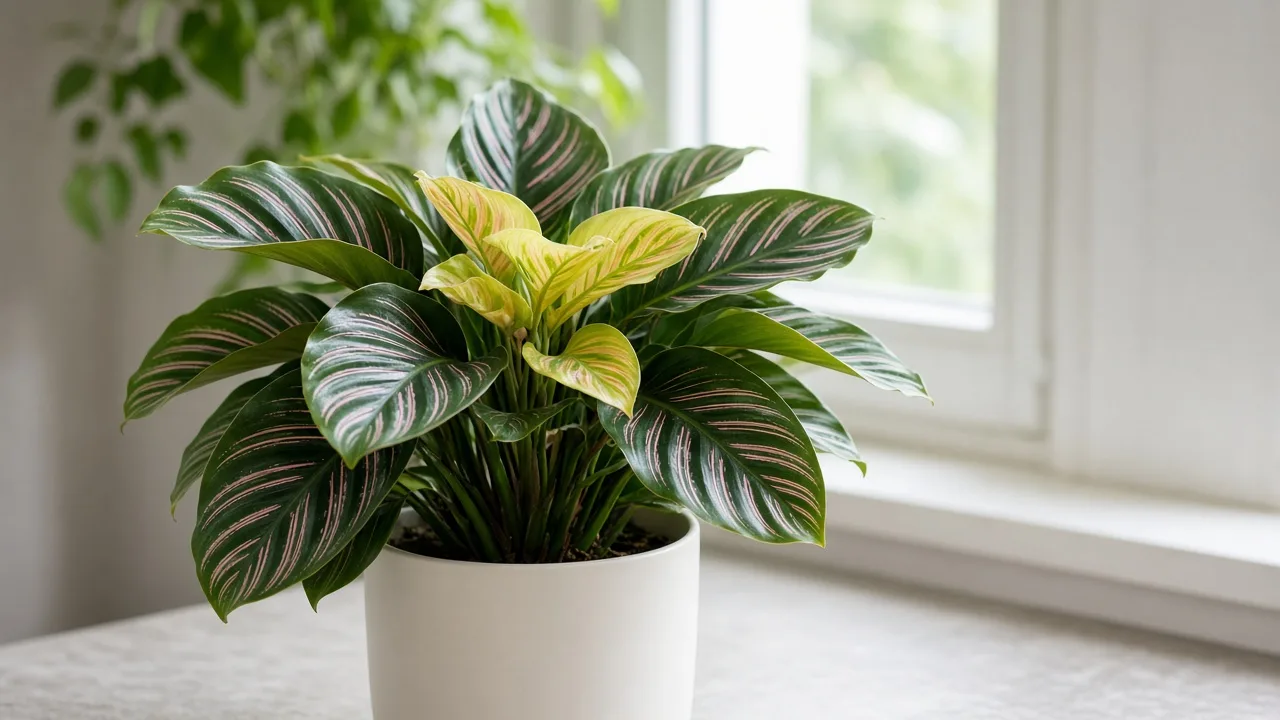
Iron Deficiency on Calathea: Causes, Checks & Fixes
This guide covers iron deficiency on Calathea. See also the general Iron Deficiency guide, watering, and light pages for this plant.
Iron Deficiency on Calathea: Causes, Checks & Fixes
Quick answer
Iron deficiency on calathea (Calathea / Goeppertia spp.) shows as yellow or pale tissue between dark green veins on the newest rolled leaves at the rhizome crown, while older patterned lower foliage may stay normal. Iron is immobile in plant tissue, so chlorosis appears on young expanding prayer leaves first—not on the lowest old blades the way nitrogen deficiency does.
See our iron deficiency guide for general chlorosis mechanics. On calathea, inspect the small rolled leaf still opening at the center crown—veins stay green while stripe zones between them bleach yellow on new tissue. That pattern differs from magnesium deficiency, which hits older lower leaves first, and from tap-water edge crisping, which burns margins while mid-blade patterning stays relatively sharp.
First step: confirm interveinal chlorosis on newest center rolls, then check rhizome firmness and whether mix stays too wet before applying chelated iron.
When to use this page vs other Calathea guides
| Pattern | Read next |
|---|---|
| Yellow new leaves, green veins on center rolls | Iron deficiency (this page) |
| Yellow between veins on oldest lower leaves | Magnesium deficiency |
| Uniform pale old lower leaves, washed-out patterns | Nitrogen deficiency |
| Crispy brown margins, sharp mid-blade patterns | Brown tips |
| Sour soil, soft rhizome, limp stems | Overwatering |
| General yellowing, mixed causes | Yellow leaves |
What iron deficiency looks like on Calathea
Calathea pushes upright rolled prayer leaves from shallow rhizomes. Iron stress breaks that pattern at the newest expanding center tissue, not across every outer blade at once. The classic symptom of iron deficiency is interveinal chlorosis where leaf tissue yellows while veins remain green.
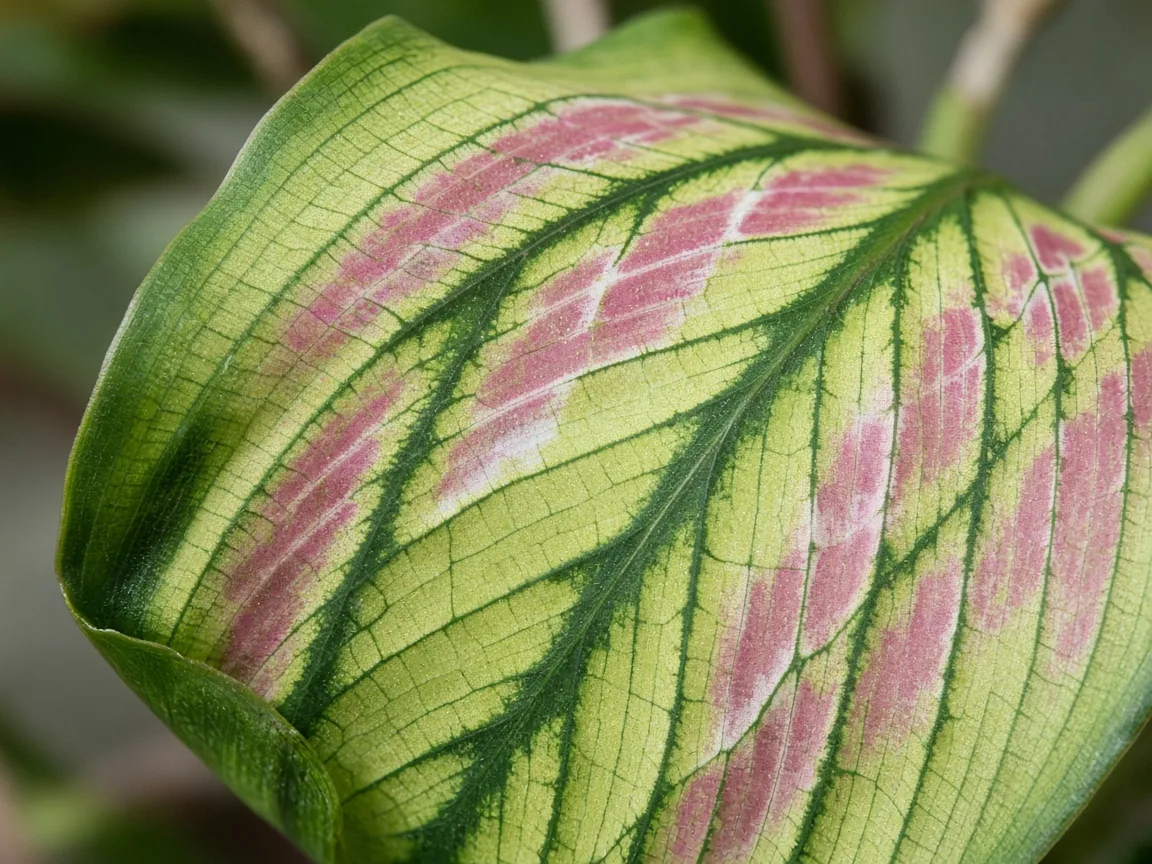
Interveinal chlorosis on a new calathea roll—veins stay dark green while pink or white stripe zones bleach chartreuse between them.
Typical pattern:
- Yellow or pale green between dark green veins on the newest rolled leaves at the rhizome crown
- Pink, white, or lime stripe markings still visible through chlorotic tissue on expanding blades
- Older lower patterned leaves may stay normal green for weeks while center rolls look chlorotic
- Successively paler new rolls if untreated through active growth
- Firm white rhizome unlike mushy overwatering damage
- Nyctinastic folding may still work on chlorotic new blades—prayer movement at night is normal, not proof of health
What it does not look like:
- Yellow between green veins on oldest lower leaves first — magnesium deficiency
- Uniform pale wash on lowest outer blades without vein banding — nitrogen deficiency
- Crispy brown tips and margins only — brown tips / tap water or low humidity
- Fine speckles with webbing on undersides — spider mites before assuming chlorosis
- Washed-out pale green across many leaves with long petioles — not enough light
Because calathea spreads from rhizomes, compare center crown rolls against lowest outer blades on the same clump. One pale new leaf after repotting may be transient stress; iron deficiency shows two or three successive center rolls with green-vein chlorosis during spring and summer growth.
Why calathea gets iron deficiency
Calathea is a moisture-loving prayer plant fed lightly and watered often—conditions that both leach micronutrients and block uptake when mix stays too wet. Iron may be present in soil but unavailable when pH rises or roots are stressed, which is common in long-held indoor pots.
Prayer-plant-specific causes:
- Depleted peat-coir mix after 18–24 months — Frequent filtered-water irrigation washes soluble iron; the rhizome keeps pushing new patterned leaves from an empty root zone.
- Chronic overwatering — Sour anaerobic mix limits micronutrient uptake; chlorosis on new rolls with soft rhizome smell points to overwatering overlap, not simple iron starvation.
- Alkaline tap water or lime-heavy components — Raises pot pH over time and locks iron chemically even when you feed; high pH makes iron unavailable to plants.
- Skipped micronutrients in fertilizer — Nitrogen-heavy feeds without chelated iron promote new rolls while iron reserves fail on expanding tissue.
- Salt stress from excess fertilizer — White rim crust or burned margins injure roots and block micronutrient absorption; flush before iron drenches if buildup is heavy.
- Misread magnesium deficiency — Interveinal yellowing on old lower leaves with green veins is magnesium; iron hits new center rolls.
Do not diagnose iron deficiency on sour wet soil with brown mushy rhizomes—that is root failure until you confirm mostly firm white rhizomes and appropriate moisture.
New rolled center leaves: iron on expanding calathea prayer blades
Calathea shows iron stress on the small rolled leaf still opening at the rhizome crown—a pattern that would be nonsense on a snake plant rosette or pothos vine tip. Veins remain dark green while expanding stripe zones between them bleach yellow before the blade fully flattens.
That crown-only chlorosis distinguishes iron from nitrogen, which starts on the lowest outer patterned leaves. It also differs from normal juvenile color: a brand-new calathea roll is briefly lime for a few days, then deepens. Worry when every new center roll stays chartreuse with dark veins for weeks after hardening.
Because calathea leaves are patterned, read chlorosis through the markings—pink stripes on G. ornata, peacock medallions on G. makoyana, round medallions on G. orbifolia. Iron bleaches the tissue between veins while the vein skeleton and stripe edges stay relatively green.
Compare three consecutive center rolls from the same rhizome. One pale opener after a move may be stress; three in a row with green-vein interveinal yellow during active growth is a strong iron signal.
Filtered water, frequent drinks, and iron lockout
Calathea is sensitive to fluoride, chlorine, and salts in tap water. That sensitivity creates a diagnostic trap indoors—but also a nutrient trap:
Tap-water edge damage pattern:
- Crispy brown tips and margins on otherwise green blades
- Pattern contrast stays relatively sharp—the medallions and stripes remain visible
- Damage may appear on newer leaves after switching to unfiltered municipal water
- Often paired with low humidity edge crisp on maroon undersides
Iron chlorosis pattern:
- Yellow between green veins on newest center rolls, not tip-only burn
- Older lower patterned leaves may stay normal while the crown looks chlorotic
- Successively paler new rolls through the growing season
- Firm rhizome, moist but not sour mix, months in the same depleted pot
Both at once:
- Hard alkaline tap water plus depleted mix produces margin crisp on some blades and green-vein chlorosis on center rolls
- Fix filtered or settled water rhythm first, then one chelated iron drench—do not triple fertilizer to compensate for fluoride burn
Frequent filtered-water irrigation per the watering guide keeps calathea happy but leaches iron faster than on drought-tolerant houseplants. Without periodic complete feeding or fresh moisture-retentive mix, the rhizome outruns available micronutrients even when you water correctly.
Rhizome health before chelated iron
Calathea grows from underground rhizomes that push upright clumps. Before applying chelated iron, confirm:
- Rhizomes are firm and white or light tan at the soil line—not brown, mushy, or smelling sour
- Mix is moist but drains within days—not waterlogged for a week after one drink
- No heavy white salt crust rings the pot rim—flush with plain water before feeding if crust is visible
Applying iron into waterlogged rhizomes wastes product and can burn injured roots. Fix drainage and water rhythm first per calathea watering, then apply one chelated iron drench at label strength or slightly below for sensitive prayer plants.
Lookalike symptoms
| Pattern | Likely cause | Key difference on Calathea |
|---|---|---|
| Yellow new rolls, green veins | Iron deficiency (this page) | Interveinal chlorosis on expanding center tissue; old lower blades may stay green |
| Yellow between veins on old leaves | Magnesium deficiency | Chlorosis on oldest lower patterned leaves first |
| Pale old lower leaves, faded patterns | Nitrogen deficiency | Whole lower blade washout without green-vein skeleton |
| Crispy edges, patterns still visible | Brown tips | Tip and margin burn without interveinal banding on new rolls |
| Sour soil, soft rhizome | Overwatering | Root rot smell; yellowing may be uniform, not crown-only chlorosis |
| Pale washed-out clump, long petioles | Not enough light | No green-vein pattern on new rolls; move plant before heavy iron drenches |
How to confirm
Work through these checks before you drench iron:
- Leaf age pattern — Newest rolled center leaves show interveinal yellow with green veins; older lower blades may stay normal.
- Successive rolls — Two or three consecutive center leaves emerge increasingly chlorotic during active growth.
- Rhizome check — Firm white rhizomes vs brown mush on sour wet mix.
- Water quality — Filtered vs tap causing edge crisp without crown chlorosis pattern.
- Mix age — Same pot 18–24 months without repot or complete micronutrient feed.
- Magnesium cross-check — No interveinal yellow on oldest lower leaves with normal new rolls.
- Light context — Very dim placement may wash out new rolls uniformly without classic green veins—confirm fertilizer and mix history.
- Salt crust — Flush if white rim deposits present before chelated iron.
First fix for Calathea
Confirm firm rhizomes and appropriate moist—not soggy—mix, then apply one chelated iron soil drench at half to full label strength per the calathea fertilizer guide.
Chelated iron products correct iron chlorosis when roots can absorb micronutrients. One measured drench on stable filtered water and humidity—not repotting plus triple fertilizer after a recent move.
Do not heavy-feed a waterlogged calathea. Do not use Epsom salt for iron chlorosis—that treats magnesium deficiency, not immobile iron on new rolls. Continue filtered or settled water so new edge crisp is not misread as failed recovery.
Step-by-step recovery
- Confirm roots — Firm rhizome and appropriate moisture per watering guide.
- Flush salts if white crust rings the pot rim before the first iron drench.
- Apply chelated iron drench once; repeat only after four weeks if new rolls stay chlorotic and roots remain firm.
- Continue filtered water so tap-water crisp does not mask new vein patterns on center rolls.
- Repot into fresh moisture-retentive mix if rhizomes fill the pot and chlorosis persists after corrected watering plus one iron drench across six weeks.
- Monitor new rolled leaves for green tissue between veins—the success signal is unstreaked pattern color on the next center roll, not old blades re-greening.
Recovery timeline
Judge recovery on new rolled leaves from the rhizome crown, not chlorotic blades already open:
- 1–2 weeks after chelated iron drench: The roll currently opening may still look pale—the rhizome responds slowly on sensitive prayer plants
- 2–4 weeks: The next center roll opens with stronger green between veins—main success signal
- 6+ weeks: Two or three clean new flushes confirm iron is available; older chlorotic rolls may stay chartreuse permanently
Already-yellowed tissue between veins rarely re-greens. Success means unstained new prayer leaves with bold markings unfurling from the crown.
Mistakes to avoid
- Applying iron before fixing waterlogged rhizomes. Anaerobic roots cannot take up chelated iron; fix drainage first.
- Using Epsom salt for green-vein yellow on new rolls. Magnesium treats old-leaf chlorosis, not immobile iron on center tissue.
- Confusing tap-water crisp with iron chlorosis. Edge burn with sharp patterns is water chemistry; green-vein yellow on new rolls is iron.
- Heavy fertilizer instead of chelated iron. Excess nitrogen without available iron worsens the pattern on fast-growing prayer plants.
- Expecting old chlorotic rolls to re-green. Immobile iron already failed on those blades; judge the next center roll.
- Repeated iron drenches on unchanged sour mix. Without drainage correction, drenches wash through without uptake.
Prevention
- Feed lightly with complete fertilizer including chelated iron during active growth per fertilizer guide
- Refresh depleted peat-coir mix every 12–18 months before rhizomes circle a nutrient-empty core
- Use filtered or settled water to limit alkaline salt buildup that locks iron
- Flush mix occasionally with plain water during the active season to limit salt accumulation
- Keep humidity at 50–70% and bright filtered light so the rhizome can use micronutrients efficiently
- Avoid chronic overwatering that blocks uptake on moisture-loving prayer plants
Related Calathea guides
Conclusion
Iron deficiency on calathea is a new-roll green-vein chlorosis—yellow tissue between dark veins on expanding center prayer leaves while older patterned blades may stay normal means confirm tap water is not crisping edges, check firm rhizomes, then apply one chelated iron drench. Judge recovery by greener new center rolls, not re-greened old blades.
Related tool
Use the Fertilizer Dilution Calculator to narrow causes for iron deficiency on this plant before changing multiple variables at once.