Magnesium Deficiency on Calathea: Yellow Between Veins
Quick answer
Magnesium deficiency on calathea shows as yellow or pale tissue between dark green veins on older lower patterned leaves while new rolled center leaves may look normal. First step: confirm interveinal chlorosis on lower foliage—not edge-only crisping from tap water—and check that rhizomes are firm before one Epsom salt drench.
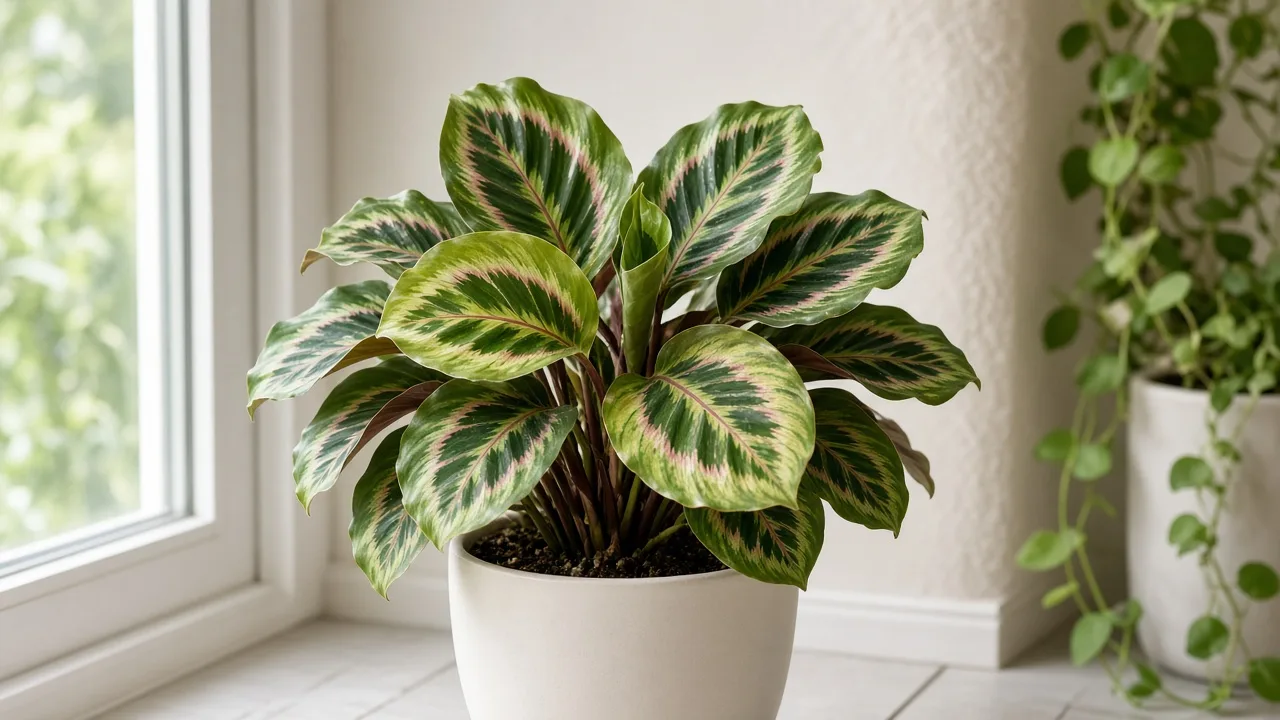
Magnesium Deficiency on Calathea: Causes, Checks & Fixes
This guide covers magnesium deficiency on Calathea. See also the general Magnesium Deficiency guide, watering, and light pages for this plant.
Magnesium Deficiency on Calathea: Causes, Checks & Fixes
Quick answer
Magnesium deficiency on calathea shows as yellow or pale tissue between dark green veins on older lower patterned leaves, while new rolled center foliage may still look normal. Magnesium is mobile in plant tissue, so chlorosis appears on mature leaves first as the plant pulls it toward new growth.
For how interveinal chlorosis works in general, see our magnesium deficiency guide. On calathea, inspect the oldest lower striped leaves first—the vein skeleton stays green while the spaces between bleach yellow. That pattern differs from iron deficiency, which hits new expanding leaves with green veins on older foliage.
First step: confirm interveinal chlorosis on older lower leaves, not edge-only crisping from tap water or low humidity.
When to use this page vs other Calathea guides
| Pattern | Read next |
|---|---|
| Yellow between green veins on old leaves | Magnesium deficiency (this page) |
| Crispy margins only, no vein pattern | Brown tips |
| Uniform pale old leaves without vein banding | Nitrogen deficiency |
| Yellow new leaves, green old leaves | Iron deficiency |
| Margin scorch on old leaves | Potassium deficiency |
| Sour soil, soft rhizome, limp stems | Overwatering |
What magnesium deficiency looks like on calathea
Calathea carries bold stripe, spot, and feather patterns on oval prayer-plant leaves—interveinal chlorosis is easy to spot once you compare lower and upper foliage on the same stem.
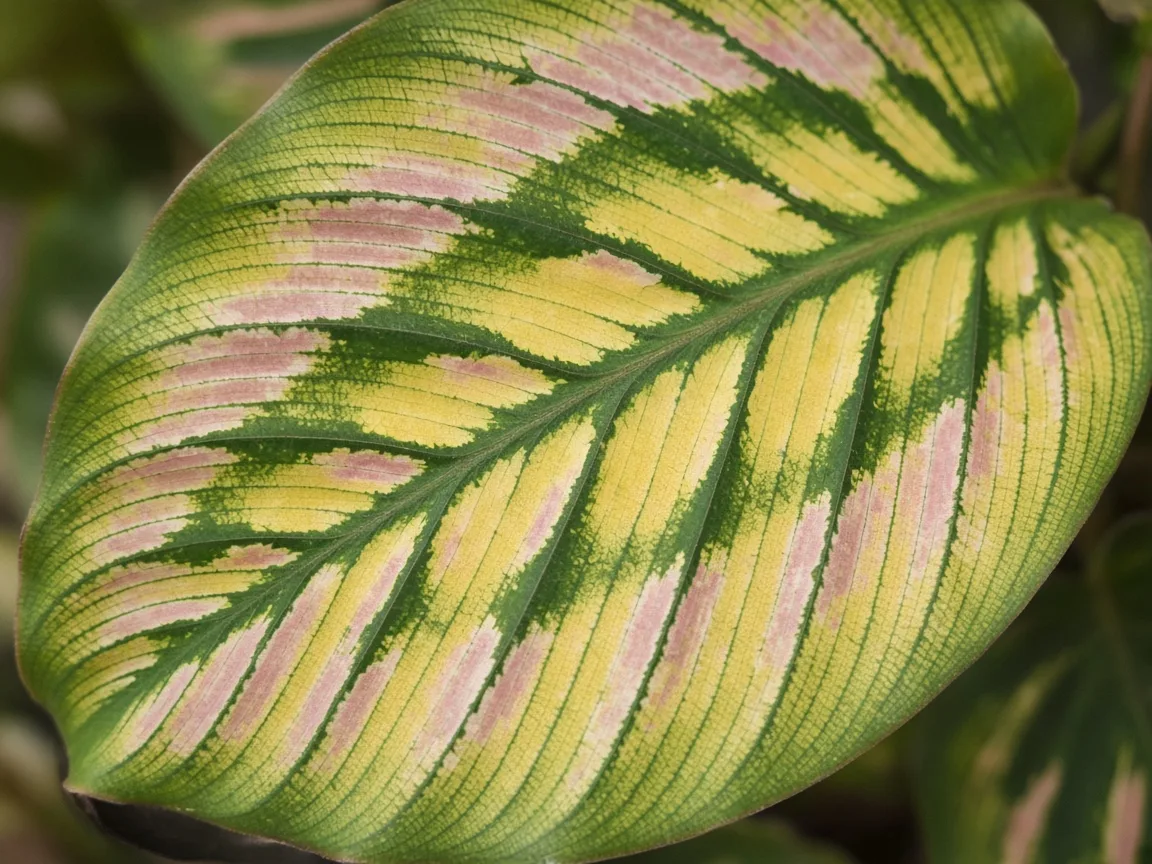
Interveinal yellowing on an older calathea leaf—veins stay dark green while pink or white stripe zones bleach pale between them.
Typical pattern:
- Yellow or pale green between dark green veins on the oldest lower leaves
- Pink, white, or lime stripe patterns still visible through chlorotic tissue
- Veins stay relatively green while interveinal areas bleach or turn chartreuse
- New rolled center leaves may look normal for weeks after lower leaves fade
- Firm rhizome at the soil line unlike mushy overwatering damage
- Nightly leaf folding may continue because turgor is still adequate
What it does not look like:
- Crispy brown margins only without yellow between veins — brown tips / tap water or low humidity
- Yellowing on the newest small rolled leaves with green veins on older foliage — iron deficiency pattern
- Uniform pale wash across entire old leaves including veins — nitrogen deficiency
- Scorched outer margins on otherwise green blades — potassium deficiency
Because calathea spreads from shallow rhizomes, the outermost lower leaves yellow first. One basal leaf fading after years can be normal senescence; magnesium deficiency affects several older patterned leaves at once during active growth.
Why calathea gets magnesium deficiency
Calathea is watered often and fed lightly—a combination that leaches magnesium faster than on drought-tolerant houseplants. RHS guidance recommends keeping compost evenly moist during the growing season and repotting every few years; each drainage event carries soluble minerals out of peat-coir mix unless you replace them.
Prayer-plant-specific causes:
- Nitrogen-heavy fertilizer without micronutrients — Promotes new rolled leaves while magnesium depletes from older tissue.
- Leaching from frequent filtered-water irrigation — Moisture-loving habit per the watering guide washes magnesium without replacement feeding.
- Long time in the same pot — After 18–24 months, moisture-retentive mix loses available magnesium even with correct watering.
- Blocked uptake from overwatering — Sour anaerobic mix limits absorption; Epsom salt will not fix rotting rhizomes.
- Skipped feeds — Owners who pause all fertilizer to avoid burn never replace magnesium that left with drainage water.
Calathea prefers slightly acid mix (pH 6.0–7.5). Extreme pH drift is uncommon in fresh indoor peat-coir, but very old compacted containers can lock nutrients.
Lookalike symptoms
| Pattern | Check | Likely cause |
|---|---|---|
| Old leaves yellow between green veins | Vein skeleton intact | Magnesium deficiency (this page) |
| Crispy edges only | No interveinal banding | Brown tips |
| Uniform pale old leaves | Veins fade too | Nitrogen deficiency |
| Yellow new leaves, green old | Pattern reversed | Iron deficiency |
| Cup + dry soil | Light pot | Underwatering |
| Yellow + wet heavy pot | Sour smell? | Overwatering |
How to confirm
- Vein pattern on leaf age — Interveinal chlorosis on multiple older lower leaves, not one random basal leaf.
- New growth check — Newest rolled leaves still patterned and firm early on; magnesium spares young tissue until advanced.
- Fertilizer label — Complete micronutrients vs nitrogen-only; months without any feed increases likelihood.
- Rhizome health — Firm white rhizomes vs soft brown tissue on sour wet mix.
- Edge vs interveinal damage — Margin crisp without vein skeleton vs yellow between veins.
- Water quality stable — Filtered or settled water routine so new crisp is not misread as failed nutrient recovery.
If every check points to magnesium and rhizomes are healthy, proceed with one targeted supplement—not a full feeding overhaul yet.
First fix for calathea
Apply one Epsom salt drench at one tablespoon per gallon of water to already-moist soil, then wait two to three weeks.
Use plain magnesium sulfate (Epsom salt). Water lightly the day before if the surface is dry, then pour room-temperature solution through the mix until a little drains. Empty the saucer within 30 minutes. This dilution is a standard indoor-plant magnesium supplement rate.
Apply to stable plants—not immediately after repotting, cold draft stress below 18 °C (65 °F), or on soggy sour mix. Do not foliar-spray in direct sun on patterned calathea leaves.
Mistakes to avoid
- Epsom salt on waterlogged rhizomes — Fix drainage and root health first; nutrients cannot absorb through failing roots.
- Full-strength fertilizer after spotting yellow — Calathea burns easily; half-strength complete feed after the drench is enough.
- Treating edge crisp as magnesium — Tap-water and humidity damage hits margins without interveinal vein banding.
- Repeated weekly Epsom doses — One drench plus balanced feed is safer than continuous magnesium loading.
- Stacking repot, prune, and feed on one day — Change one variable so you can read the plant’s response.
Step-by-step recovery
After the first Epsom drench, support recovery in this order:
- Resume light balanced feeding — Half-strength complete liquid fertilizer monthly through active growth per the fertilizer guide.
- Maintain filtered-water rhythm — So new edge damage is not misread as failed magnesium recovery.
- Monitor the next two leaf cycles — Watch the next two sets of rolled leaves unfurl from each stem. Clean patterning between veins confirms the fix.
- Repeat drench once — If interveinal yellowing persists after two weeks and roots are firm, one second drench is reasonable—not weekly applications.
- Repot if soil is exhausted — Fresh moisture-retentive mix if rhizomes fill the pot and chlorosis persists after two treatments.
Recovery timeline
Mild interveinal chlorosis on a few lower leaves often stabilizes within two to four weeks after one proper drench and corrected feeding. The next unfurling rolled leaf is the earliest reliable sign.
Older chlorotic patterned leaves may stay yellow permanently even when the plant is healthy again. If new leaves open yellow between veins, repeat the diagnostic path—iron or root stress may now be the limiting factor.
Stripe patterns through interveinal chlorosis
Calathea’s bold stripe and spot markings make magnesium deficiency visually distinct—dark green veins stay sharp while yellow or chartreuse fills the spaces between them on oldest lower leaves. Pink or white zones on cultivars like Medallion or Roseopicta often show through the chlorosis, which helps separate this from tap-water edge burn (margins crisp without a vein skeleton) and from nitrogen washout (whole leaf fades uniformly, veins included).
Because calathea is watered often, magnesium leaches faster than on succulents—complete micronutrient feeds matter more here than on drought-tolerant species.
Frequent watering and magnesium loss on prayer plants
Calathea’s evenly moist compost preference means more drainage events per month than on a snake plant or ZZ plant. Each watering session carries soluble magnesium out of peat-coir mix. Owners who use filtered or rainwater—which lacks the minerals hard tap water deposits—must replace magnesium through fertilizer or occasional Epsom drenches rather than assuming the potting mix holds reserves indefinitely.
Shallow rhizomes near the soil surface absorb nutrients quickly when roots are healthy, but they also fail fast in sour anaerobic mix. Probe top 2 cm moisture and rhizome firmness before every supplement—not just when leaves yellow.
Rolled center leaves vs lower-leaf chlorosis
New calathea leaves emerge as tight rolled tubes from the rhizome crown. Magnesium deficiency typically spares these young leaves while older outer blades show interveinal yellowing—the plant relocates mobile magnesium upward. Iron deficiency reverses that pattern: newest rolled leaves pale between green veins while older foliage looks relatively normal.
Persistent nightly leaf folding on pale lower leaves is normal nyctinasty, not proof the plant is healthy. Check whether the next rolled leaf opens with clean green tissue between veins—that is your recovery signal.
Prevention
- Feed with diluted balanced fertilizer containing micronutrients during active growth per the fertilizer guide.
- Give a twice-yearly Epsom salt drench at the dilution above if the plant stays in the same container year-round.
- Flush the pot with plain water occasionally to prevent salt buildup from synthetic feeds.
- Repot into fresh mix every two to three years so baseline minerals return.
- Keep medium to bright indirect light and 50–70% humidity so growth and nutrient uptake stay aligned.
Related Calathea guides
Conclusion
Magnesium deficiency on calathea announces itself on older patterned leaves as yellow tissue between still-green veins. Confirm firm rhizomes and moist-but-drained soil, apply one diluted Epsom salt drench during active growth, then resume light balanced feeding. Judge success on the next rolled prayer-plant leaves—not on old yellow tissue recovering its color.