Curling Leaves on Dieffenbachia: Causes, Checks & Fixes
Quick answer
Curling leaves on Dieffenbachia usually mean the plant is conserving moisture (underwatering or dry winter air), roots cannot drink on wet soil (overwatering), or sap feeders are distorting new growth. First step: push your finger one inch into the mix near the pot edge while you scan leaf undersides for webbing or stippling. Dry inch plus a light pot calls for a thorough soak; damp heavy soil calls for a dry-down pause before you fertilize or repot.
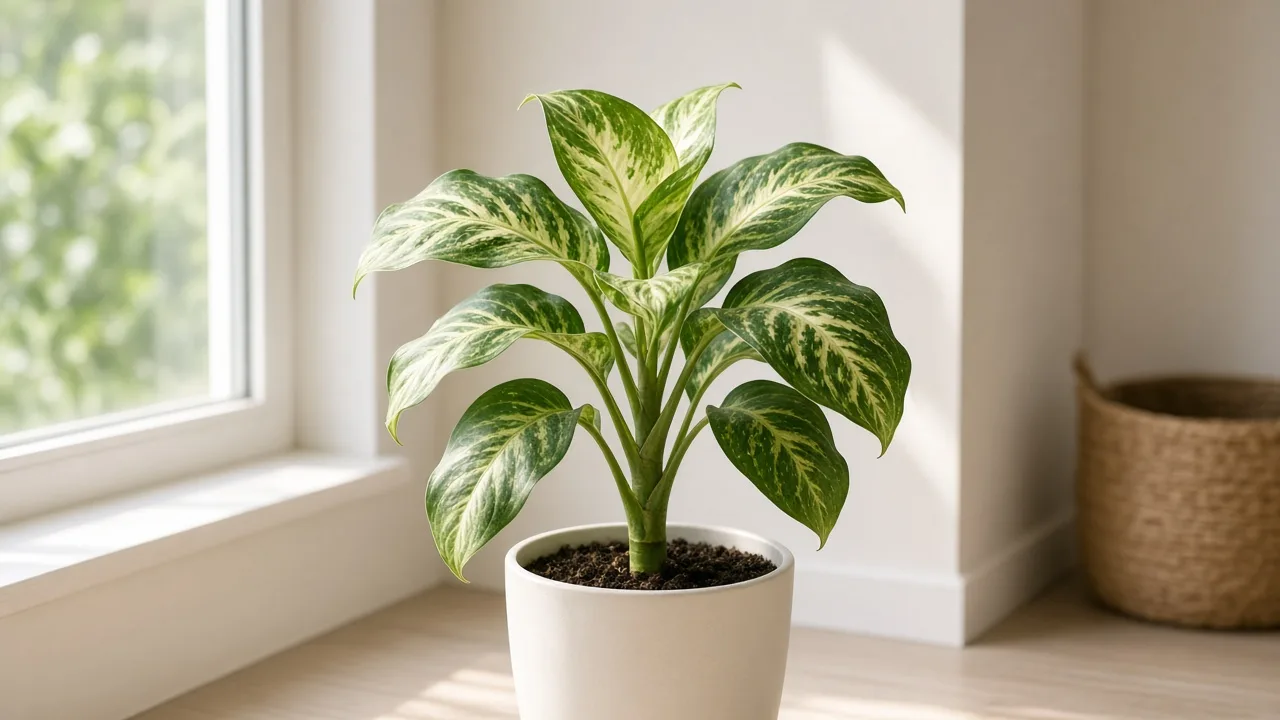
Curling Leaves on Dieffenbachia: Causes, Checks & Fixes
This guide covers curling leaves on Dieffenbachia. See also the general Curling Leaves guide, watering, and light pages for this plant.
Curling Leaves on Dieffenbachia: Causes, Checks & Fixes
Quick answer
Curling leaves on Dieffenbachia (dumb cane) are a stress response, not a single disease. Broad, thin-blade foliage on an upright cane curls inward along the midrib or margins when the plant tries to lose less water, when roots fail on wet soil, when dry winter air desiccates edges, or when pests and salts distort tissue. For how leaf curl works across houseplants, see our curling leaves guide. On dumb cane, the top-inch moisture check plus a quick underside pest scan separates the top three causes faster than guessing.
Healthy Dieffenbachia holds patterned leaves at a slight upward angle from thick petioles. Curl shows up as tube-shaped blades, downward-cupped margins, or twisted new growth—sometimes on one side of the plant only when a vent or window chills that face.
First step: push your finger one inch into the mix near the pot edge and lift the pot. If the inch is dry and the container feels light, water thoroughly and empty the saucer—see underwatering on Dieffenbachia. If the inch is damp and the pot stays heavy with limp curled lower leaves, pause watering until that layer dries—see overwatering. While your hand is near the foliage, check undersides for stippling or webbing before you mist or fertilize.
Wear gloves when handling curled leaves. Sap contains calcium oxalate crystals that irritate skin and can numb the mouth if ingested.
What curling leaves look like on Dieffenbachia
Curl patterns on dumb cane are distinct from prayer-plant nightly folding—Dieffenbachia leaves stay cupped until you fix the stress.
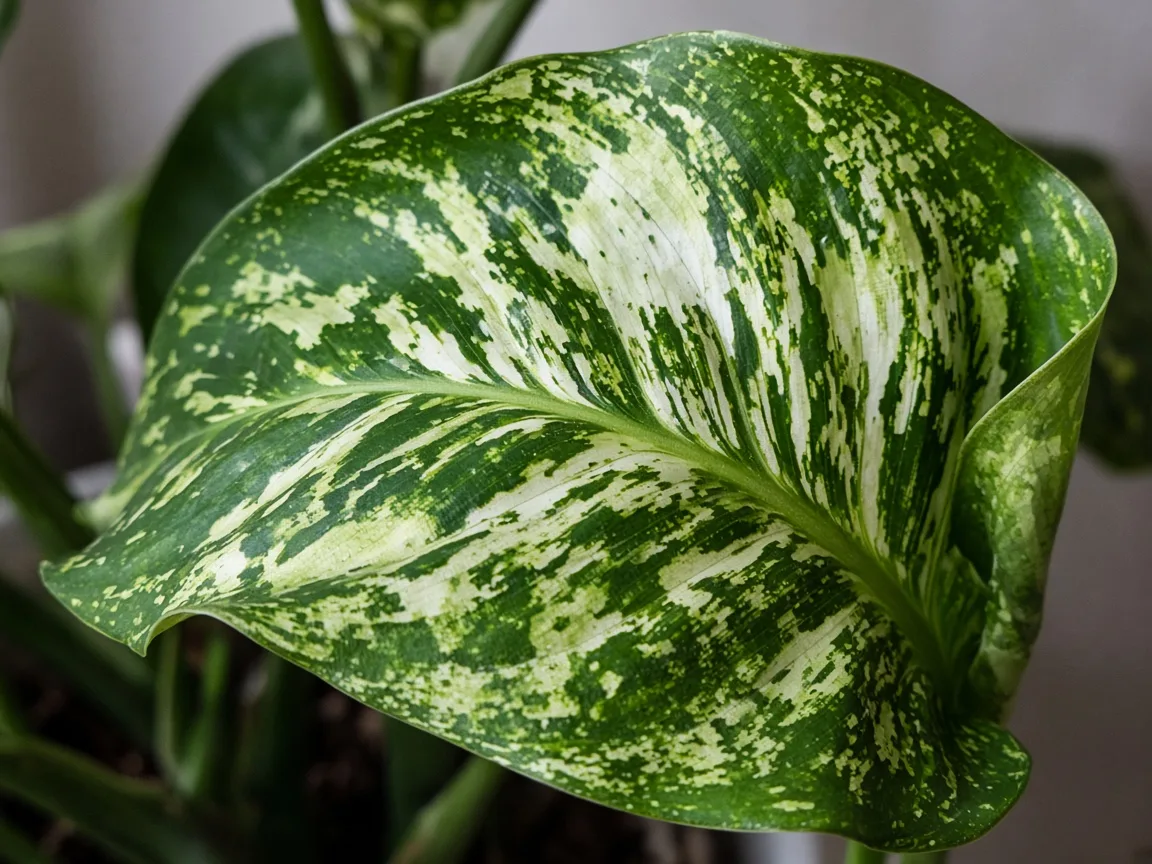
Curling leaves symptoms on Dieffenbachia - compare cupped tissue with flat healthy blades on the same cane.
- Inward roll on dry, light pot — blades curl lengthwise or cup at margins; petioles may droop slightly; mix is dry one inch down and often dusty two inches deep. Classic drought conservation on large transpiring leaves.
- Curl with limp lower leaves on heavy wet soil — lower leaves curl and feel soft while mix stays cool and damp five or more days after watering. Roots are not delivering water upward—overlap with overwatering and early root rot.
- Margin curl with crisp brown edges, firm cane — center of leaf stays green; damage worsens near heaters, AC paths, or winter glass. Points to low humidity rather than root failure.
- Curl with brown edges after heavy feeding — UF/IFAS notes curled, browning leaves from excessive fertilizer; white crust on soil surface may be visible. Flush salts before feeding again.
- Distorted new leaves with stippling — young blades emerge twisted; fine yellow speckles on upper surface; webbing at petiole bases. Spider mites pattern—common when RH drops below ~30% for weeks.
- One-sided curl near window or vent — leaves on the chilled or blasted side cup while opposite leaves stay flatter; soil moisture reads normal. Cold-draft or hot-air pattern; UF/IFAS links droop without prior yellowing to cold below about 55°F.
- Bleached patch plus curl on sun-facing side — pale or tan sectors on variegated cultivars with cupped tissue toward glass. Too much direct sun on ‘Camille’, ‘Tropic Snow’, and other pale-centered types.
Curled leaves rarely flatten perfectly once tissue has set. Recovery means new tip growth unfurls flat, not old blades reopening like new.
Why Dieffenbachia gets curling leaves
Underwatering and drought conservation
Dieffenbachia evolved in the humid understory of tropical America but still rolls leaves when root-zone moisture runs short. Large 8–14 inch blades lose water fast in bright, dry rooms. When the top inch stays dry too long, the plant reduces exposed leaf area by curling—often before whole-plant wilting dominates.
Summer vacation gaps, small pots in sunny windows, and winter heat without adjusting your calendar are common triggers. A light pot and dry inch confirm thirst before you soak.
Overwatering and root stress
Chronic wet soil is the opposite failure mode. UConn Extension lists yellowing lower leaves and base rot as overwatering signatures, and notes Dieffenbachia will not tolerate constant overwatering. Saturated roots lose oxygen; uptake fails while mix stays wet—so leaves curl as if dry. This trap catches growers who see cupped foliage and add more water.
Pair curl with pot weight, sour smell, and stem firmness at the soil line before repotting.
Low humidity and winter heating
UConn recommends maintaining humidity by grouping plants or using a pebble tray because large leaves dry up in a hot room when air is too dry. Winter furnaces drop RH beside radiators; margins curl inward while the cane stays firm and watering rhythm unchanged. Not the same as underwatering—check a hygrometer beside the pot.
Excess fertilizer and salt buildup
UF/IFAS troubleshooting specifically calls out curled leaves with brown edges from excessive fertilizer application and advises flushing accumulated salts with clean water. Winter feeding on a slow-growing plant, full-strength doses, or repeated feeds without leaching push salts that burn roots and cup margins—overlap with brown tips.
Spider mites and sap feeders
Pale leaves with webby material on undersides signal spider mites on Dieffenbachia per UF/IFAS. Mites pierce cells; new growth curls and bronzes. Dry air accelerates outbreaks—treat pests and raise humidity together.
Cold drafts and temperature swings
Dieffenbachia prefers temperatures between 60 and 75°F indoors. Leaves exposed to winter glass, frequently opened doors, or AC vents may cup and droop on that side while soil moisture is appropriate. Lower leaf drop from sudden temperature change or drafty placement is a separate but related stress signal.
Too much direct sun
Pale variegated sectors scorch and curl when afternoon sun hits leaves through glass. Dumb cane tolerates shade but best growth occurs in bright indirect light—not hot south or west panes on white-centered cultivars.
Lookalike symptoms to rule out
| What you see | Likely cause | Quick check |
|---|---|---|
| Inward curl, light pot, dry inch | Underwatering | Soak once; resume top-inch rhythm |
| Curl + yellow lower leaves, heavy wet pot | Overwatering / root stress | Dry-down; inspect roots if limp persists |
| Margin curl, crisp edges, near vent/radiator | Low humidity | Hygrometer; see low humidity |
| Curl + brown edges after frequent feed | Salt / fertilizer burn | Flush pot; pause fertilizer |
| Stippling, webbing, twisted new leaves | Spider mites | Isolate; see spider mites |
| Curl one side only, cold window | Draft / chill | Move; keep above ~55°F |
| Bleach + curl on sun side | Too much direct sun | Filter light; see light guide |
| Uniform yellow, not curl-first | Yellow leaves | Moisture and light cross-check |
How to confirm the cause
Work through these checks before repotting, heavy pruning, or pesticide on the same day:
- Soil moisture at one inch — Push a finger or skewer one inch deep near the pot edge. Dry and light pot confirms drought. Damp and heavy with limp curl points to wet-root stress.
- Pot weight and drain — Lift the container. Standing water in saucers or cachepots extends wet cycles—empty within 30 minutes after every drink.
- Leaf undersides — Tap a blade over white paper; moving specks, stippling, or webbing trump moisture guesses.
- Which leaves and which side — All-over margin curl in dry winter air vs one-sided chill vs new-growth-only pest distortion.
- Recent feeding — Winter fertilizer, full-strength doses, or crust on soil surface support salt curl per UF/IFAS.
- Stem firmness — Spongy base on wet mix is urgent; see root rot.
First fix for Dieffenbachia
If the top inch is dry and the pot is light: water thoroughly until runoff drains, then empty the saucer. Do not sprinkle daily sips that keep only the surface damp.
If the inch is damp and the pot is heavy with limp curled leaves: stop watering until the top inch dries—often 7–14 days in a large pot—then resume the watering guide rhythm. Do not fertilize a stressed plant.
If margins are crisp but soil moisture is normal: move at least 3 feet from vents and hot glass; raise RH toward 40–60% with a humidifier or grouping.
If stippling or webbing is present: isolate the plant and follow the spider mites page while you humidify—mites and drought curl can coexist.
If curl followed heavy feeding: flush the pot with several volumes of clean water through drain holes, let drain fully, and skip fertilizer for four to six weeks.
Make one primary correction first so you can read the plant’s response on new growth.
Step-by-step recovery by confirmed cause
Underwatering:
- One thorough soak; empty saucer.
- Resume watering when top inch dries—not a fixed weekday.
- Remove only fully desiccated leaves with gloves.
Overwatering (firm cane, early curl):
- Dry-down until top inch is dry.
- Brighten to medium indirect light so the plant uses water steadily.
- Unpot only if limp curl continues after two dry cycles.
Low humidity:
- Humidifier or plant grouping; clear vent blast zones.
- Old crisp margins stay brown; watch new unfurls.
Fertilizer / salts:
- Flush salts; feed half-strength only in active growth months.
Spider mites:
- Shower or labeled rinse; repeat per mite guide; keep RH above ~40%.
Cold draft:
- Relocate to stable 60–75°F zone; remove badly damaged leaves.
Recovery timeline
Mild drought curl often eases within 24–72 hours after a proper soak if stems were still firm. Wet-root cases need one to three weeks of correct dry-down before new leaves look normal. Pest and salt damage may require two to four weeks for clean tip growth. UF/IFAS notes Dieffenbachia should be watered regularly with soil allowed to dry between waterings—consistent rhythm prevents repeat curl more than any single rescue drink.
Judge success on flat new leaves at the cane tip, not old cupped blades.
What not to do
Do not water again when soil is already wet because curled leaves “look thirsty.” Do not mist heavily as a substitute for root-zone moisture or humidity planning—wet foliage in dim corners invites fungal spotting. Do not fertilize curled, stressed dumb cane to “perk it up.” Do not repot, prune heavily, and spray pesticide the same day—you will not know which change helped. Do not assume prayer-plant behavior; Dieffenbachia curl is a stress flag until you fix the driver.
How to prevent curling leaves on Dieffenbachia
Water when the top inch dries, reduce frequency in winter, and always drain saucers. Keep the plant in bright indirect light without hot afternoon sun on variegated leaves. Maintain 40–60% RH beside the pot in heating season. Feed lightly March through September; flush if tips brown. Inspect undersides weekly in dry offices. Turn the pot a quarter turn every few days so growth stays even—UF/IFAS recommends turning to encourage even growth.
When to worry
Escalate if curl spreads while soil stays wet a week after you stopped watering, the cane base softens, or new growth stays twisted after mites are treated and RH is stable. Those patterns overlap advancing root rot or chronic overwatering. Unpot with gloves if sour smell or mushy roots appear.
Pet safety when removing curled leaves
The ASPCA lists Dieffenbachia as toxic to cats and dogs. Bag trimmed tissue promptly; keep pots off pet routes. Contact your veterinarian or ASPCA Poison Control at (888) 426-4435 if ingestion is suspected.
Conclusion
Curling leaves on Dieffenbachia split into dry pot, wet pot, dry air, salt burn, pests, and chill—and the first two look alike from across the room. Run the top-inch check, weigh the pot, and scan undersides before you change everything at once. When new speckled leaves unfurl flat at the tip, you picked the right fix.
Related Dieffenbachia guides:
- Watering - top-inch dry rhythm
- Underwatering - drought curl and light pots
- Overwatering - wet-soil curl
- Low humidity - margin cup in dry air
- Spider mites - stippling and distorted new growth
- Yellow leaves - yellow-curl overlap
- Overview - species context and toxicity
When to use this page vs other Dieffenbachia guides
- Dieffenbachia watering guide - Use for routine moisture checks before assuming curl is the main issue.
- Dieffenbachia problems hub - Browse all common issues on this species.
- Underwatering on Dieffenbachia - Different entry point when curl pairs with a very dry pot.
- Overwatering on Dieffenbachia - Different entry point when curl pairs with wet, heavy soil.
- Low Humidity on Dieffenbachia - Different entry point when only margins curl in dry winter air.