Pale Leaves on Dieffenbachia: Causes, Checks & Fixes
Quick answer
Pale leaves on Dieffenbachia usually mean too little light for the cultivar, spider mites on the undersides, or roots struggling on wet soil—not a mystery nutrient crisis. First step: compare the newest unfurling leaf to one two nodes below on the same cane. If the top leaf is lighter and variegation looks dull in a dim room, move the pot to bright filtered indirect light today before you feed or repot.
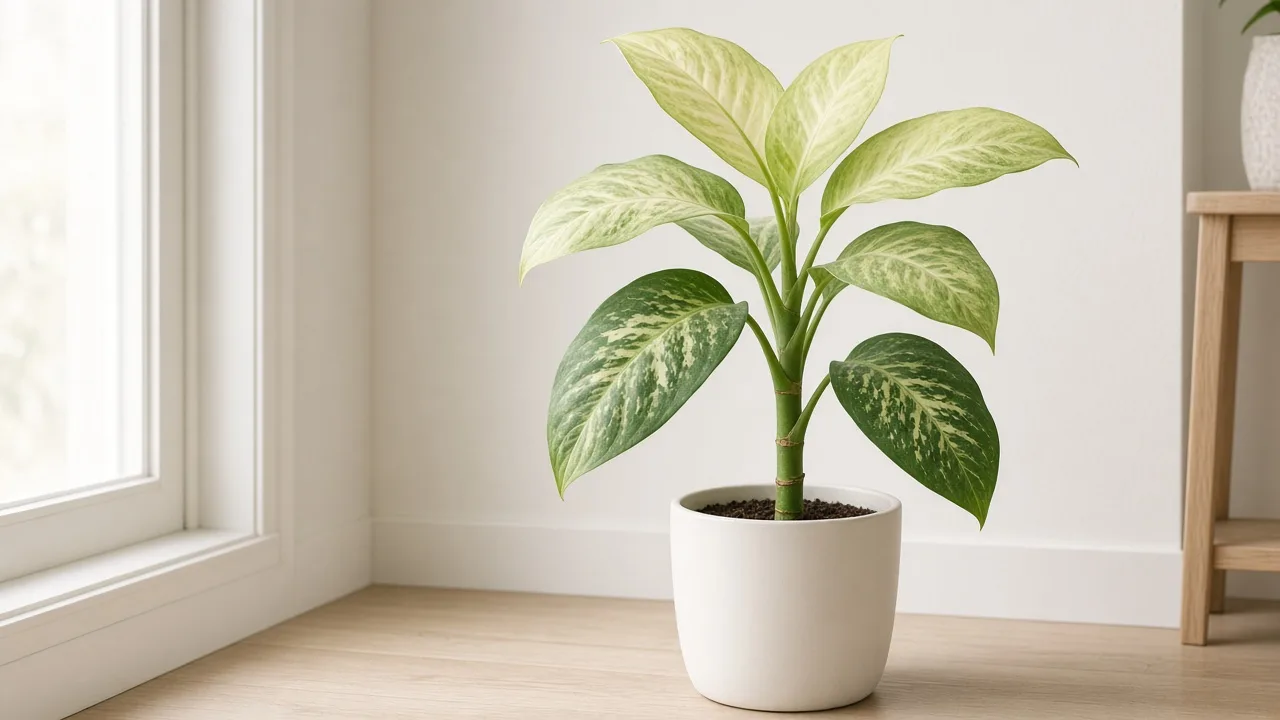
Pale Leaves on Dieffenbachia: Causes, Checks & Fixes
This guide covers pale leaves on Dieffenbachia. See also the general Pale Leaves guide, watering, and light pages for this plant.
Pale Leaves on Dieffenbachia: Causes, Checks & Fixes
Quick answer
Pale leaves on Dieffenbachia look like lost ink on a patterned blade—cream, white, and yellow sectors fade to a flat yellow-green, and the plant can still stand upright on a firm cane. That is different from the bottom-leaf yellowing you see with chronic wet soil, and different from leggy stretch when internodes lengthen before color washes out. Dumb cane is sold as shade-tolerant, but variegated cultivars need enough light to hold pattern; in a dim hall the newest leaf is often the palest, while older leaves from brighter months keep stronger contrast.
For how chlorosis and light wash work across houseplants in general, see the pale leaves symptom hub. On Dieffenbachia, the pattern usually starts at the growing tip on an upright cane: washed variegation, smaller blades, and sometimes a lean toward the brightest window. UF/IFAS notes that pale leaves with webby undersides often mean spider mites, which can bleach foliage before you notice movement. Wet roots on a heavy pot can also limit chlorophyll production—pale upper leaves on soggy mix overlap with overwatering and root rot.
First step: hold the newest leaf next to the leaf one or two nodes below on the same cane. If the top blade is lighter and your pot sits more than six feet from useful daylight, move it today to bright filtered indirect light—typically two to four feet from an east window or several feet back from filtered south or west glass. Do not fertilize, repot, or prune heavily until you have ruled out mites on the undersides and confirmed soil moisture with the Dieffenbachia watering guide top-inch check.
Wear gloves when handling damaged tissue. Dieffenbachia sap contains insoluble calcium oxalate crystals that irritate skin and mouths.
What pale leaves look like on Dieffenbachia
Healthy dumb cane shows bold green backgrounds with cream, white, or yellow patterning on large alternate leaves along a thick upright stem. Pale-leaf stress dulls that pattern before the plant collapses.
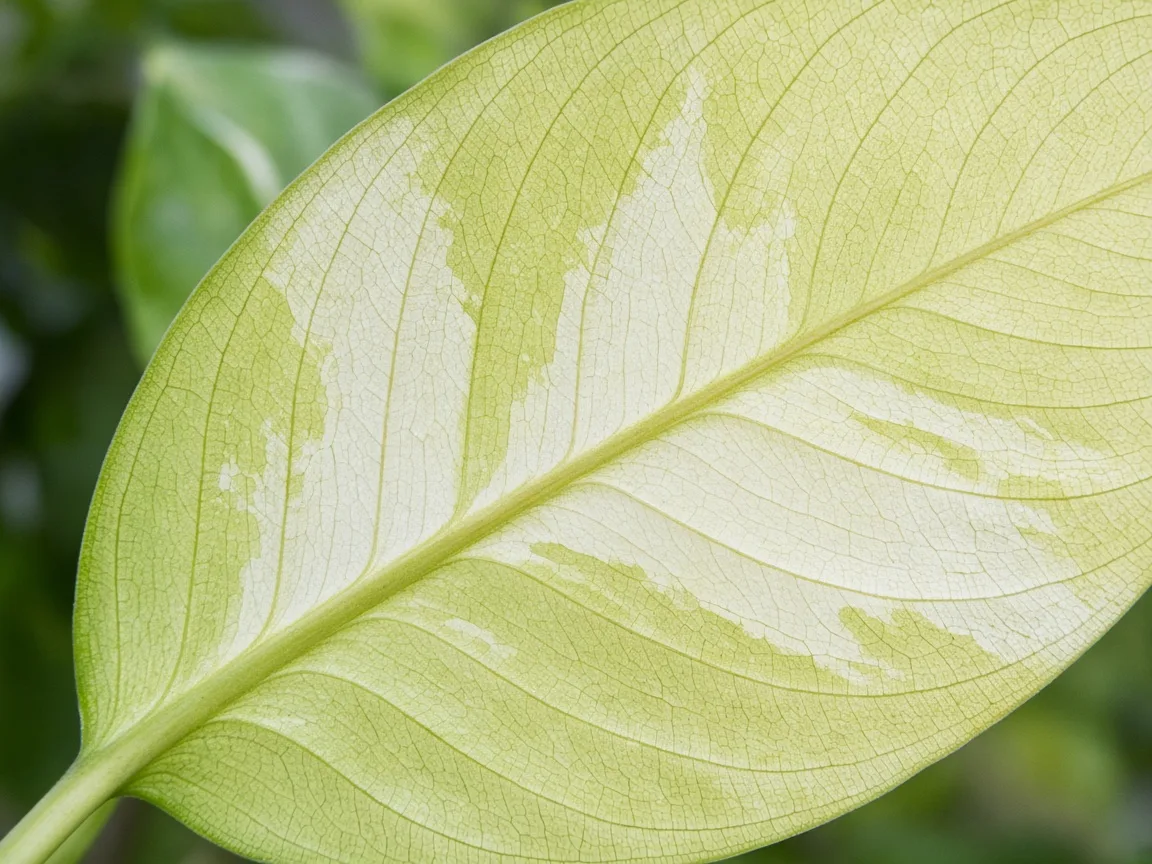
Pale Leaves symptoms on Dieffenbachia - compare with healthy tissue on the same plant.
- Washed variegation on new growth — the latest unfurling leaf opens with less cream or white and more uniform yellow-green, while an older leaf on the same cane still shows sharp contrast. Common on ‘Camille’, ‘Tropic Snow’, and other high-variegation types in dim rooms.
- Whole-plant light green cast — blades look evenly dull, not spotty; internodes may already be long and lower cane bare. Overlaps with not enough light and leggy growth.
- Pale with stippling and fine webbing — leaf undersides show tiny specks or silk threads; upper surface may look dusty or silvery before classic spider mites damage spreads.
- Pale between veins after a cold night — interveinal areas lighten or tan while veins stay darker; cane may feel firm but recent leaves look bleached on the side facing a window or vent. Cold injury pattern noted in commercial Dieffenbachia production guides.
- Pale upper leaves on a heavy wet pot — color drains on newer foliage while lower leaves yellow or droop on saturated mix. Root stress lookalike; soil stays damp five or more days after watering.
- Bleached patches on variegated sectors in direct sun — pale or papery bleached zones on white-heavy leaves after sudden exposure to harsh midday sun. UConn notes leaf yellowing or discoloration from full sunlight on dumb cane.
Pale tissue rarely re-darkens to its former pattern. Recovery is measured by the next clean unfurl at the cane tip, not by old washed blades.
Reading the cane: where pale starts on dumb cane
Unlike rosette plants where old and new leaves stack in one crown, Dieffenbachia grows upward on a single cane. That geometry makes pale leaves a tip-down story:
- Tip-only fade — only the opening leaf is light; older leaves retain pattern. Strong signal for insufficient light for this cultivar, not root rot.
- Fade climbing down the cane — pale color appears on several successive new leaves over weeks while the pot stays dark. Light has been marginal through multiple growth cycles; expect bare stem below as lower leaves drop.
- Random pale blotches on one side — check drafty glass or AC; cold and sun scorch often localize before they affect the whole plant.
- Uniform pale with limp petioles on wet soil — roots may not be delivering nutrients even if you feed; fix moisture before nitrogen deficiency or iron deficiency pages.
This cane read is the fastest way to avoid repotting a plant that only needed brighter placement.
Cultivar brightness: why your Camille pales before Compacta
Commercial interiorscape data gives concrete light targets. ‘Star Bright’ and ‘Snow Flake’ tolerate roughly 50 foot-candles, while ‘Camille’ needs on the order of 150–250 foot-candles to stay attractive. Inappropriate low light causes foliar variegation reduction and excess stem elongation—exactly the pale, stripeless look owners describe.
UConn adds that best growth occurs in bright indirect light, while heavy shade slows growth—variegated sectors, which carry less chlorophyll, fade first because the plant cannot photosynthesize enough to maintain pigment in white and cream zones. Green-heavy ‘Compacta’ and similar types tolerate dimmer spots longer but still wash out if left on a distant shelf for months.
Use the Dieffenbachia light guide for placement, foot-candle estimates, and grow-light hours when windows are not enough.
Why Dieffenbachia gets pale leaves
Too little light for the cultivar
Indoor corners often deliver far less usable light than a tropical understory outdoors. When photons are scarce, dumb cane allocates chlorophyll to surviving tissue and simplifies variegation on new leaves. Growth may continue, but each unfurl is paler and smaller. If growth has slowed or stopped entirely, UF/IFAS suggests brighter placement and appropriate feeding only after light improves.
Low light also keeps pots wet longer because transpiration drops—so pale tips and soggy roots can coexist. Cross-check moisture before assuming a nutrient spray will fix color.
Spider mites bleaching broad blades
Mites suck sap from undersides of large Dieffenbachia leaves, producing a speckled, silvery, or pale upper surface. UF/IFAS lists pale leaves with webby undersides as a classic spider mite sign and recommends isolation plus a forceful rinse before pesticides. Mite damage can mimic light wash from across the room—always inspect undersides before moving the pot.
Root stress on chronically wet mix
Dieffenbachia roots need oxygen as well as water. Saturated mix limits nutrient uptake; newer leaves may pale while lower leaves yellow. This is not true deficiency until roots recover. See overwatering when the pot feels heavy and cool days after you watered.
Cold drafts and temperature swings
UF/IFAS recommends temperatures between 60 and 75°F for houseplant Dieffenbachia. Exposure below about 55°F can cause droop; production tables link chlorotic or light brown areas between main veins to cold damage. Pale interveinal tissue after a cold night near winter glass is a thermal pattern, not mites.
Too much direct sun on white variegation
White and cream sectors burn easily. UConn lists leaf yellowing or discoloration when plants sit in full sunlight. Pale, papery patches on variegated ‘Rudolph Roehrs’ types often mean pull back from harsh rays, not add fertilizer.
True nutrient deficiency (after ruling light, pests, and roots)
Indoor dumb cane can show nitrogen or iron deficiency, but pale variegation loss in a dim room is far more often light. UConn notes that plants in limited light require less frequent fertilization—feeding a pale plant in shade stacks salts without fixing color.
Lookalike symptoms to rule out
| What you see | Likely cause | Quick check |
|---|---|---|
| Newest leaf pale, older leaves still patterned, dim room | Low light for cultivar | Distance from window; internode length |
| Pale with stippling, webbing undersides | Spider mites | Rinse test; see spider mites |
| Pale tops, yellow lower leaves, heavy wet pot | Overwatering / root stress | Top inch wet 5+ days; overwatering |
| Uniform soft yellow at cane base | Senescence or wet roots | One leaf vs many; stem firmness |
| Crisp brown tips with pale centers | Salt / fertilizer burn | Feed history; brown tips |
| Interveinal pale after cold night | Temperature injury | Placement near glass or vent |
| Bleached patches on white sectors in sun | Sun scorch | Move out of direct beam |
How to confirm the cause
Work through these checks before repotting, drenches, or heavy pruning:
- Cane comparison — Compare the opening leaf to the leaf two nodes down. Tip-only wash supports light; multi-leaf wash on wet soil supports roots.
- Underside inspection — Tilt each blade and use a flashlight. Webbing, stippling, or moving specks confirm mites before you relocate for light.
- Top-inch moisture — From the watering guide: dry inch means you can water if the plant is limp from drought; wet inch on pale new growth means pause water and assess roots.
- Window geometry — Note distance, direction, and whether variegated sectors face the glass. Long bare cane below a small pale crown supports light correction.
- Temperature history — Recall AC blasts, winter window contact, or a recent move outdoors. Localized pale leaves on one side fit thermal stress.
- Root spot-check (pale + wet + yellow lowers) — Slide the root ball partly out. Firm white or tan roots support dry-down; mushy roots mean root rot protocol.
First fix for Dieffenbachia
If the newest leaf is paler than the one below and the plant sits in a dim spot, move the pot today to the brightest safe filtered indirect location you have—or add a full-spectrum grow light 12–14 inches above the foliage for 12–14 hours daily. That single placement change is the correct first response for most pale-variegation cases and costs nothing.
If undersides show webbing or stippling, isolate the plant first and rinse all leaf surfaces—including stems—with lukewarm water in a shower or with a spray bottle. Let foliage dry, then re-inspect in three days before any pesticide. Do not move a mite-infested plant onto a windowsill beside other collections.
Do not apply fertilizer, iron chelate, or repot on day one unless you have confirmed deficiency or rotten roots after the checks above.
Step-by-step recovery by confirmed cause
Low light (washed new leaves, firm cane, appropriate moisture):
- Relocate or add grow light as above; rotate a quarter turn every few days so the cane does not lean permanently.
- Wait for two new leaves before judging—first unfurl may still be slightly pale.
- Trim only fully spent lower leaves; keep blades that still photosynthesize.
- Match watering to faster use in brighter light—top inch may dry sooner.
Spider mites (stippling, webbing, isolated pale patches):
- Isolate; rinse undersides twice weekly until no new stippling.
- Increase humidity modestly if air is desert-dry, but do not mist into a dark corner—that worsens fungal issues.
- Escalate to labeled miticides only if rinse cycles fail; see spider mites.
Overwatering (pale new growth, heavy pot, yellow lowers):
- Pause water until top inch dries; empty cachepot water within 30 minutes.
- Bright indirect light helps the plant use moisture—pair with light guide.
- Unpot only if dry-down fails to stabilize pale/yellow spread.
Cold or sun injury (localized pale or bleached sectors):
- Move off the cold window or out of direct sun beam; stabilize 60–75°F.
- Do not prune healthy green tissue; remove only papery scorched sections with gloves.
Confirmed deficiency (after light, pests, and roots are ruled out):
- Follow the specific nitrogen or iron guide; feed only during active growth per fertilizer schedule.
Recovery timeline
After a light correction, many variegated dumb canes show a bolder second or third new leaf within two to four weeks in warm months—shorter internodes and sharper cream edges are the win. Winter may add a week because growth slows.
Mite rinse programs often need two to three weeks of twice-weekly washes before new stippling stops; old pale speckling on mature blades may remain visible.
Root-stress pale leaves track with drying cycles: if the top inch dries reliably and the cane stays firm, the next unfurl should hold color better within one to two watering cycles. Mushy cane or climbing yellow means escalate to root rot care.
Old pale leaves will not fully re-variegate; success is stable new pattern at the tip.
What not to do
- Do not dump fertilizer on a pale plant in a dark corner—salts accumulate while roots underperform in low light.
- Do not assume every pale leaf needs repotting; placement and mites are more common first causes.
- Do not spray pesticides before confirming pests; soapy sprays on heat-stressed foliage in sun can add burn.
- Do not stack repot, prune half the cane, and feed in one weekend—you will not know which change helped.
- Do not ignore webbing because the plant “looks clean” from across the room; Dieffenbachia’s broad leaves hide mite colonies on undersides.
How to prevent pale leaves next time
Place cultivars where realistic brightness matches variegation level—high-white types near brighter filtered windows, green types tolerating farther placement. Rotate weekly, clean windows seasonally, and water when the top inch dries so low light does not pair with chronic wet roots in well-draining mix.
During dry heating months, rinse or wipe undersides monthly to catch mites before they bleach foliage. Keep pots above 55°F away from winter glass contact and AC vents. When you buy a new dumb cane, quarantine two weeks and compare new growth color to nursery photos—early pale unfurls in your home mean adjust light before problems spread.
When to worry
Treat as urgent if the cane base softens on wet mix, pale leaves spread while the pot stays waterlogged, webbing coats multiple plants, or pets chew fallen pale tissue—sap is toxic and dropped leaves are easy targets.
Lower urgency: one slightly pale new leaf on an otherwise patterned plant after a short cloudy spell, or gradual fade that corrects within two unfurls after a light move.
Conclusion
Pale leaves on Dieffenbachia are usually a pattern and placement problem, not a missing magic nutrient. Read the cane tip first, flash the leaf undersides, and move to bright filtered light when new growth washes out in a dim room—before you repot or feed. When light, moisture, and mite checks align with what dumb cane actually needs, cream stripes return on the next unfurling leaves and the upright stem stays firm.
When to use this page vs other Dieffenbachia guides
- Not enough light — Use when stretch, bare cane, and small crown leaves are the main complaint, even if some pale color is present.
- Yellow leaves — Use when tissue turns soft yellow, especially lower leaves on wet soil or cold-exposed sides.
- Spider mites — Use when stippling, webbing, or silvery dust dominates over variegation fade.
- Iron deficiency — Use when new leaves show green veins with yellow between veins after light and roots are ruled out.
- Dieffenbachia problems hub — Browse all common issues on this species.
Related Dieffenbachia guides
- Dieffenbachia overview
- Dieffenbachia watering
- Dieffenbachia light
- Dieffenbachia soil
- Not enough light
- Yellow leaves
- Spider mites
- Overwatering
- Dieffenbachia problems
Related tool
Use the Plant Problem Diagnosis Tool to narrow causes for pale leaves on this plant before changing multiple variables at once.