Brown Leaves on Dracaena: Causes, Checks & Fixes
Quick answer
Brown leaves on Dracaena are dead tissue—existing strap blades do not re-green. First step: pinch a browned leaf and press the cane at the soil line. Crispy dry brown with a light pot usually means severe underwatering or fluoride buildup; soft dark brown on cold wet soil points to overwatering or root damage.
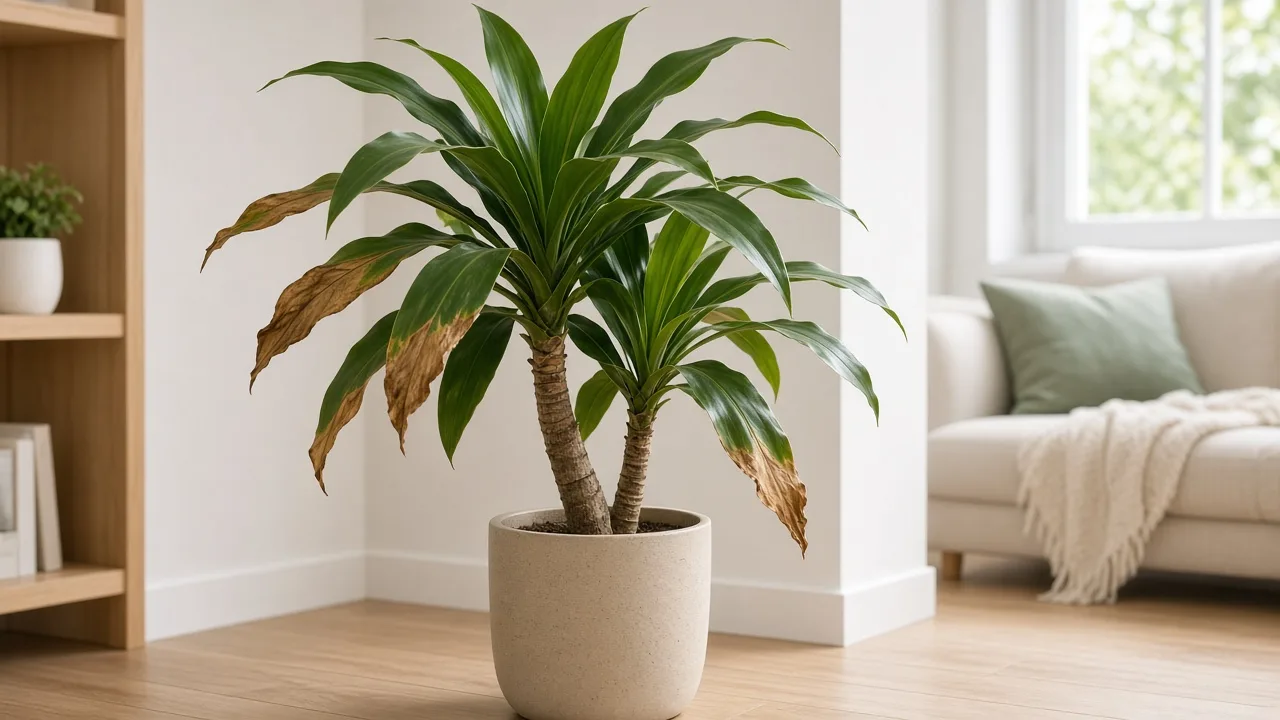
Brown Leaves on Dracaena: Causes, Checks & Fixes
This guide covers brown leaves on Dracaena. See also the general Brown Leaves guide, watering, and light pages for this plant.
Brown Leaves on Dracaena: Causes, Checks & Fixes
Quick answer
Brown leaves on Dracaena—corn plant (Dracaena fragrans), dragon tree (Dracaena marginata), Janet Craig, Warneckii, and related woody cane types—mean tissue has died, whether from drought, root failure, sun scorch, fluoride and salt buildup, cold injury, leaf-spot disease, or normal aging of the lowest strap leaves on each rosette. For general whole-leaf browning mechanics, see our brown leaves guide. On Dracaena, texture and cane firmness matter more than color alone: crispy dry brown differs from soft dull brown on a heavy wet pot.
First step: pinch a browned strap leaf and press the cane where it enters the soil. Crispy, papery brown with a feather-light pot points to severe thirst, chronic low humidity on Dracaena, or fluoride salts concentrating as mix dries. Soft dark brown on cool wet mix with a squishy cane base points to overwatering on Dracaena or root stress. Tan patches only on the window-facing side of wide corn-plant blades point to direct sun—not a watering fix.
What brown leaves look like on Dracaena
Healthy Dracaena holds upright woody canes topped by rosettes of strap-shaped leaves. Browning breaks that pattern in distinct ways:
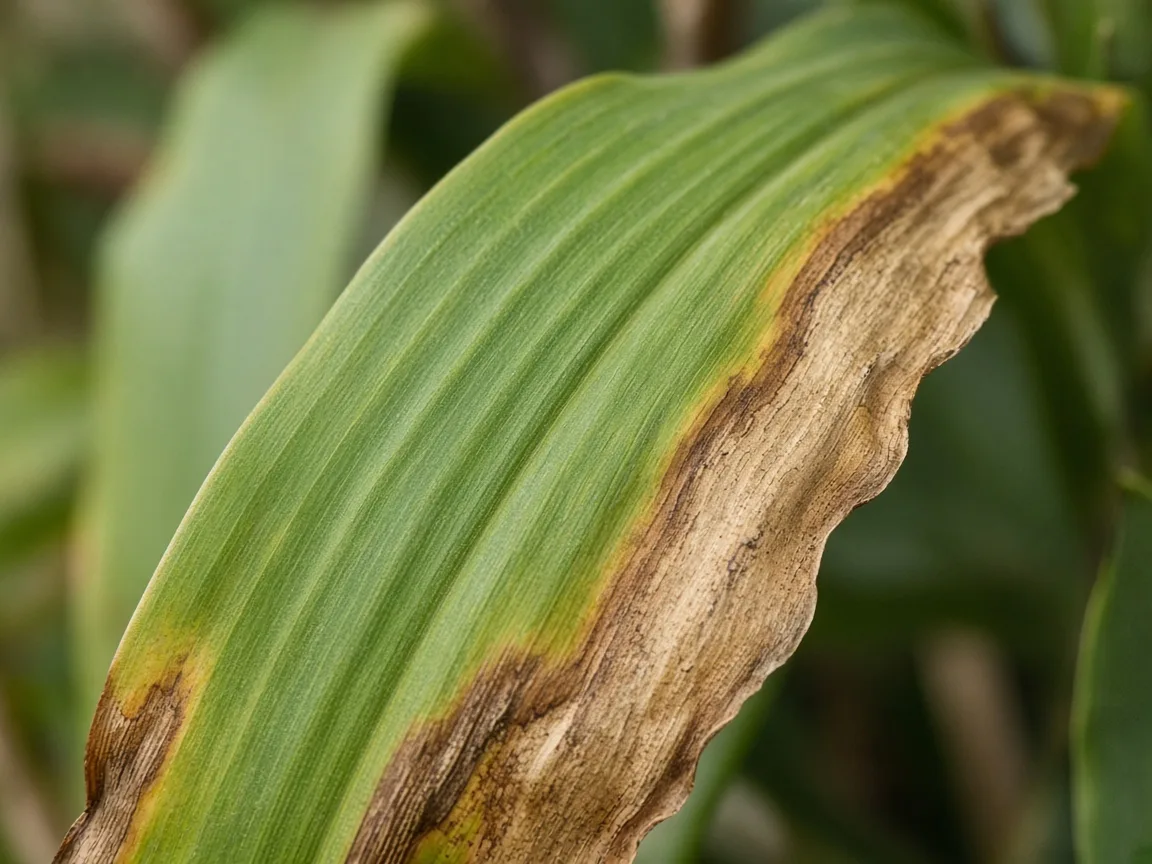
Brown leaf necrosis on Dracaena—compare crispy marginal brown spreading inward with intact green tissue on the same strap blade.
- Crispy brown margins or whole dry blades, light dry pot — Edges desiccate before the center; tissue feels like thick paper. Severe underwatering on Dracaena or winter dry air on long strap leaves.
- Soft dull brown lower leaves, wet heavy soil — Limp foliage even though mix feels damp. Root oxygen loss from chronic wet mix, especially on corn plant in dim corners.
- Tan or bleached patches on the window-facing side only — Papery areas where afternoon rays hit wide D. fragrans blades. Direct sun on shade-adapted foliage; see light guide.
- Brown patches with yellow halos or wet-looking centers — Small lesions merging on strap leaves. Fungal leaf spot—often after wet foliage or poor airflow.
- Whole blades browning while new top leaves stay stuck with brown edges — Classic fluoride or salt stress on sensitive Dracaena; often starts as brown tips before larger sections necrose.
- Single lowest strap leaf on one cane turning brown slowly — Often normal senescence while the cane stays firm and the top rosette stays green.
Always check the newest leaves at the top of each cane. Brown on fresh top growth is more urgent than one aging lower blade fading out.
Reading brown on strap-leaf cane rosettes
Dracaena’s diagnostic signature is woody bare cane with a terminal leaf crown, not a basal clump like ferns or prayer plants. That architecture changes how you read brown damage.
Cane-first check: Press the stem at the soil line. A firm woody cane with one browning bottom strap leaf usually means environmental stress or aging—not emergency rot. If the base feels hollow, squishy, or smells sour, wet-root failure is active; see root rot on Dracaena before cosmetic trimming.
Rosette position: Each cane carries its own leaf crown. Brown on only the lowest blade of a tall bare cane while the top stays green is often senescence. Brown climbing up the rosette toward new growth on multiple canes at once signals active stress now.
Whole-blade vs margin-only: On corn plant and Janet Craig types, uniform crispy margins on otherwise green blades more often track fluoride, dry air, or salt buildup—closer to the brown tips pattern. Large dull brown patches on lower leaves with wet soil track root failure, not water chemistry alone.
Multi-cane pots: Mass-cane and braided corn-plant specimens show independent patterns per stem. One cane with a single spent lower leaf while siblings stay glossy is low urgency. Several canes failing together after a cold night or watering change needs a whole-pot diagnosis.
When to use this page vs other Dracaena guides
| What you see | Start here | Better sibling page |
|---|---|---|
| Only outer margins or tips crispy; most of blade still green | Brown tips | This page (whole-blade brown) |
| Yellow-green fading before brown, wet pot | Yellow leaves | This page |
| Soft brown on heavy wet soil, limp lower leaves | Overwatering | This page |
| Crispy brown with bone-dry mix throughout | Underwatering | This page |
| Circular dark spots with yellow halos | Black spots | This page |
| Margins crisp in heated dry rooms | Low humidity | This page |
Why Dracaena gets brown leaves
Severe dehydration and dry winter air
Extended dryness on long strap leaves causes irreversible death before the whole blade browns. Dracaena tolerates missed water better than chronic sogginess, but a very light pot with dry mix throughout can crisp several blades at once—especially on dragon trees with narrow leaves far from the root zone. Gardening Know How notes that insufficient humidity, underwatering, and poor drainage can all contribute to Dracaena browning.
Root injury from overwatering
Compromised roots fail to supply water evenly. Lower strap leaves turn soft dark brown while mix stays damp—the wilt-on-wet-soil paradox common on corn plant kept in weak light. The Pacific Northwest Pest Management Handbooks note that D. fragrans is easily overwatered, while D. deremensis types prefer more even moisture. Weak growth in low light worsens the wet-soil cycle.
Fluoride and salt buildup advancing past tips
Dracaena deremensis and D. fragrans are very sensitive to fluoride toxicity. Municipal water often contains fluorine at about 1 ppm, and fluoride is an accumulative poison that concentrates at leaf margins through the transpiration stream. Symptoms usually start at tips and edges; chronic exposure can involve larger necrotic sections on sensitive cultivars. Missouri Extension notes that perlite contains fluorides and recommends perlite-free mix and rainwater or distilled water for sensitive plants. Bloomscape also links brown spots and edges to chlorine, fluoride, and salt buildup in tap water.
Sun scorch on wide corn-plant blades
D. fragrans strap leaves are broad and shade-adapted. Afternoon rays through glass bleach exposed tissue into tan necrotic patches that can spread across whole sections of a blade. Dragon tree narrow leaves scorch differently—often as streaks on the sun-facing side. Details: Dracaena light guide.
Cold temperature injury
A cold night below about 50°F (10°C) near a winter window can brown or drop several leaves at once even when watering was correct. Tissue may look water-soaked then tan, unlike slow fluoride burn. See yellow leaves on Dracaena when cold yellowing precedes brown.
Leaf spot disease
Small brown spots trimmed in yellow on strap leaves may indicate fungal leaf spot. Bloomscape describes this pattern and recommends isolating affected leaves. Untreated spots can merge into larger necrotic areas. Inspect for spreading halos before assuming environmental brown only.
Pests and disease progression
Spider mites on Dracaena stipple tissue until patches brown in dry heat. Inspect undersides and new growth before assuming environmental brown only.
How to confirm the cause
- Texture — Crispy = dry stress, sun, or salts. Soft = rot, disease, or wet-root failure.
- Soil moisture at top 2 inches — Dry throughout with light pot = thirst. Wet and heavy = pause watering.
- Cane firmness — Solid wood-like base = lower urgency. Squishy base = escalate.
- Position on the plant — Lowest leaf only, slowly = senescence. Multiple lower leaves on wet soil = roots. Top rosette browning = active stress.
- Leaf location on the blade — Window-facing patches = sun. Uniform margins vs circular lesions with halos.
- Water source — Recent months of straight tap on fluoride-sensitive cultivar? Mineral stress often hits new growth first.
- New growth — Firm green top blades = lower urgency. New leaves opening with brown sections = escalate.
The first fix to try
Run the texture-and-cane test, then make one matching correction:
- Crispy brown + dry top 2 inches + light pot: Water thoroughly with filtered, rain, or low-fluoride water until a little drains from the bottom. Empty the saucer. See Dracaena watering for species-specific dry-down timing.
- Soft brown + cold wet soil + limp lower leaves: Stop watering. Move to brighter indirect light (not sun) so the mix can dry. Do not fertilize. Recheck cane firmness in five to seven days before trimming.
- Tan patches on sun-facing side only: Move back from the window or add sheer curtain. No watering change needed if soil moisture is normal.
- Brown margins on firm canes with acceptable soil moisture: Switch to rain or filtered water for one month and flush the pot with plain water—see brown tips for the full water-quality protocol.
- Yellow-halo spots spreading: Isolate from other plants, remove affected blades with clean shears, improve airflow. Do not mist foliage while spots are active.
Change one variable, then watch new top growth for three to six weeks. Dracaena responds slowly compared with pothos.
Step-by-step recovery
After the first fix stabilizes the plant:
- Trim necrotic tissue — Remove blades more than half brown once the cause is under control. Follow the natural strap contour; leave a tiny margin of brown to avoid cutting living green. Pull spent lower leaves gently; snip if they resist.
- Flush salts if crust is visible — White deposits on the pot rim or soil surface suggest salt buildup. Run plain low-fluoride water through the pot at roughly three times its volume. See fertilizer guide before resuming feed.
- Match watering to species — Allow D. fragrans to dry further between drinks; keep D. deremensis types evenly moist but never soggy per PNW guidance.
- Raise humidity in winter — Target 40–60% if margins crisp while soil moisture looks normal.
- Repot only when roots demand it — Sour smell, chronic wet mix, or mushy roots—not cosmetic brown alone. Use well-draining mix; avoid high-perlite blends on fluoride-sensitive Dracaena.
Recovery timeline
Judge progress by firm cane tissue and clean new strap leaves from the top rosette—not by old blade color.
- Mild drought or humidity brown: New top growth should look healthier within two to four weeks after corrected watering.
- Fluoride or salt stress: Allow four to six weeks after switching water and flushing before deciding the fix failed. Existing brown tissue does not re-green.
- Overwatering with firm cane: Soil should dry to appropriate depth within one to two weeks; new leaves stay green if roots were not badly damaged.
- Cold injury: Recovery shows when temperatures hold in the 65–80°F (18–27°C) range and new blades emerge without water-soaked patches.
- Advanced root rot: Recovery may take months or require cane propagation if the base is compromised.
Lookalike symptoms to rule out
| Pattern | Likely cause | First direction |
|---|---|---|
| Crispy tips and margins only; firm cane | Fluoride or salt buildup | Water switch + flush; brown tips |
| Large dull brown lower leaves; heavy wet pot | Overwatering / root stress | Stop watering; check cane |
| Tan patch on window-facing side | Sun scorch | Light guide |
| Yellow halos around brown spots | Leaf spot disease | Isolate; remove affected blades |
| One lowest leaf browning slowly; firm cane | Normal senescence | Monitor; low urgency |
| Stippling with fine webbing | Spider mites | Spider mites guide |
Mistakes to avoid
Do not fertilize a stressed Dracaena before checking roots, water quality, and light. Missouri Extension warns that fertilizer salts concentrate as potting mix dries, mimicking overfeeding even when you applied a normal dose.
Do not stack repotting, heavy pruning, and pesticide on the same day—Dracaena needs boring stability while it recovers.
Do not assume standing tap water overnight removes fluoride; chlorine may dissipate, but fluoride does not. Use rain, distilled, or filtered water for sensitive cultivars.
Do not water with softened household water—it adds sodium to the root zone.
Never irrigate while soil is still wet from the last drink unless you have confirmed severe underwatering with a bone-dry pot throughout.
How to prevent brown leaves next time
Align watering, light, and water quality with this plant’s slow growth rhythm. Water when the top 2 inches are dry for corn plant types; keep Janet Craig types evenly moist but never waterlogged—see watering guide.
Use low-fluoride water and perlite-free or low-perlite mix for fluoride-sensitive cultivars. Flush salts periodically if you fertilize during the growing season.
Keep Dracaena in medium to bright indirect light without hot afternoon sun on wide blades. Avoid cold drafts below 50°F (10°C) near winter glass.
Inspect weekly while problems are still small—respond to brown tips before whole strap leaves necrose.
Related Dracaena guides
- Dracaena overview — Species differences, cane architecture, and fluoride sensitivity across cultivars.
- Brown tips — When only margins crisp while most of the blade stays green.
- Yellow leaves — When fading precedes brown, or cold injury yellows blades overnight.
- Overwatering — Soft brown on wet soil with limp lower leaves.
- Problems hub — Full list of Dracaena symptom guides.
Related tool
Use the Plant Problem Diagnosis Tool to narrow causes for brown leaves on this plant before changing multiple variables at once.