Black Spots on Dracaena: Causes, Checks & Fixes
Quick answer
Black spots on Dracaena are usually fungal or bacterial leaf spot on wet strap leaves, sooty mold from scale honeydew, or fixed necrosis from fluoride burn and overwatering—not normal aging on upper crown leaves. First step: stop misting and overhead watering, then wipe a spot with a damp cloth to see whether it smears (sooty mold) or stays fixed in the leaf (true necrosis).
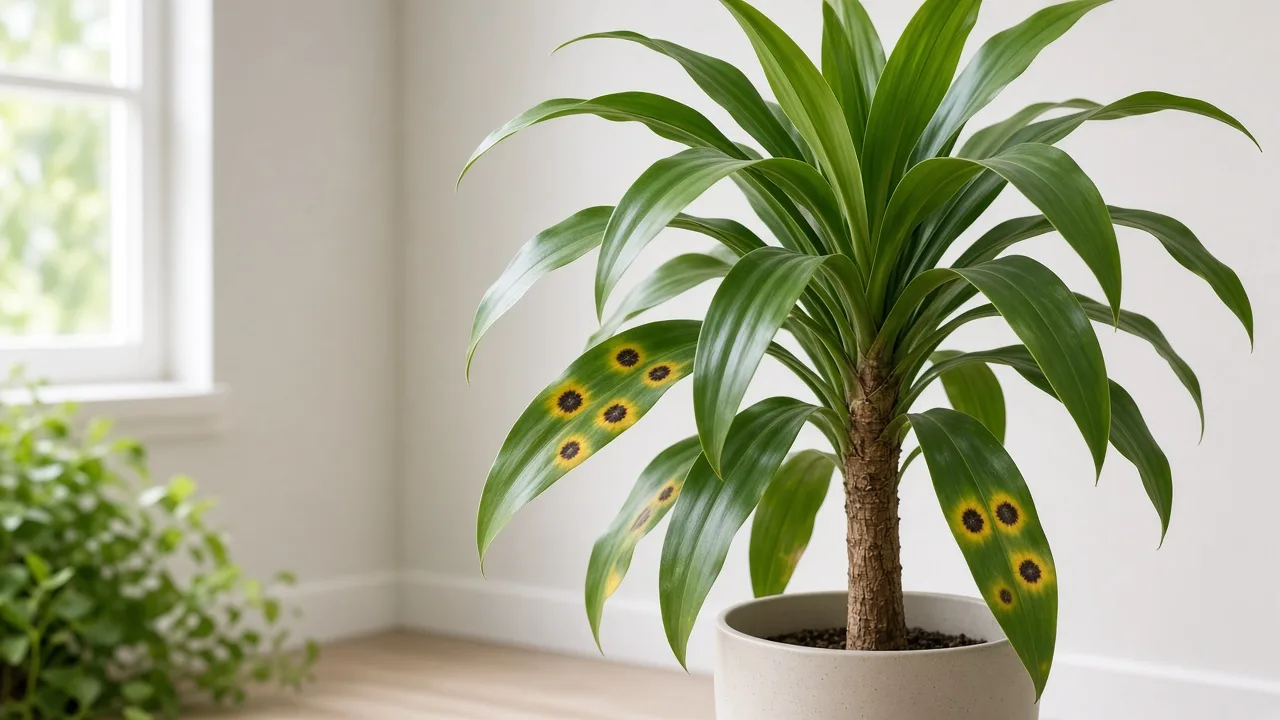
Black Spots on Dracaena: Causes, Checks & Fixes
This guide covers black spots on Dracaena. See also the general Black Spots guide, watering, and light pages for this plant.
Black Spots on Dracaena: Causes, Checks & Fixes
Quick answer
Black spots on Dracaena—corn plant (Dracaena fragrans), dragon tree (Dracaena marginata), Janet Craig, Warneckii, and related cane types—are localized tissue death or surface mold on long strap-shaped leaves. On this upright cane plant, the pattern usually splits four ways: black smear that wipes off points to sooty mold from scale or mealybug honeydew, wet circles with yellow halos on strap blades suggest fungal leaf spot after foliage stays damp, crisp black bands at leaf tips or margins often track fluoride and salt burn from tap water, and fixed dry patches on lower leaves may follow overwatering, cold drafts, or normal bottom-leaf senescence. For general spot-disease mechanics, see our black spots guide. On Dracaena, long arching strap leaves hang below the cane crown into the splash zone, clustered canes trap moisture between blades, and NC State notes that Dracaena is sensitive to fluorides and built-up salts—water quality and wet foliage cause most leaf damage, not mysterious cane diseases.
A few isolated dry black marks on one lower strap leaf are cosmetic. Spreading wet-looking spots on multiple crown leaves, black smear across strap blades, or a soft cane at the soil line need action the same week—not extra fertilizer.
First step: stop wetting foliage and wipe one spot with a damp cloth. Water at soil level only, improve airflow between canes, and note whether the mark smears away (sooty mold) or stays fixed in the leaf (true necrosis). Then press the cane base before you reach for fungicide.
When to use this page vs other Dracaena guides
| Your question | Best page |
|---|---|
| Dark spots on strap leaf blades | This page |
| Crispy tips or margins only, not round spots | Brown tips |
| Whole lower leaves yellowing on wet soil | Overwatering |
| Soft cane base, sour smell, wilt on damp mix | Root rot |
| Black smear that wipes off; bumps on cane | Scale insects |
| Uniform brown entire leaves, not round spots | Brown leaves |
What black spots look like on Dracaena
Healthy Dracaena strap leaves are firm, glossy, and arch from a woody cane. Black spotting breaks that pattern in recognizable ways:
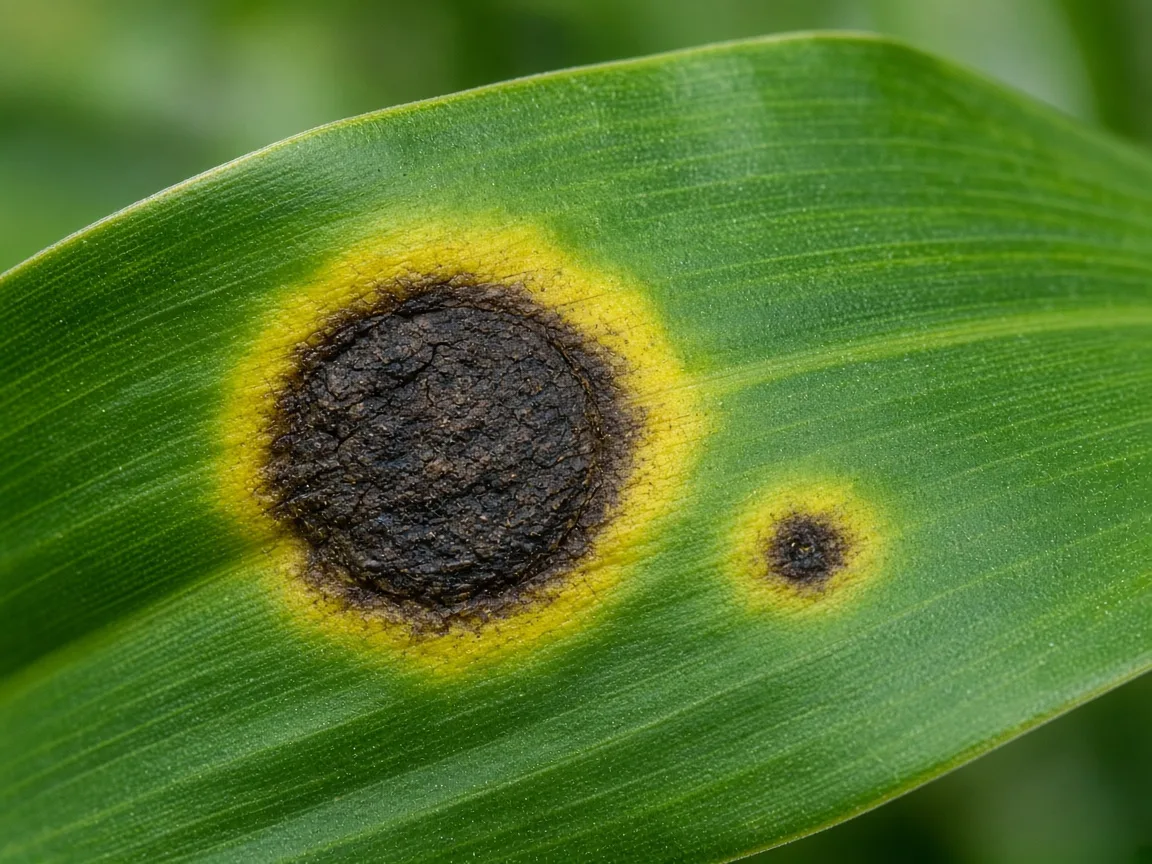
Black spot symptoms on Dracaena - compare with healthy green tissue on the same strap leaf.
- Small dark brown to black circles with yellow halos — Often start water-soaked, then crisp at center. Bloomscape describes small brown spots trimmed in yellow as classic leaf spot disease on Dracaena.
- Irregular black patches on lower strap leaves — Lesions coalesce when humidity stays high and long blades remain wet overnight, especially on leaves resting against the pot rim or a neighboring cane.
- Crisp black bands at tips or margins — NC State notes fluoride and salt sensitivity that browns leaf tips; margin bands differ from round center spots—route to brown tips when the pattern is edge-only.
- Single dry black mark, no halo, no spread — Bumping, pet damage, or a healed mechanical wound on one lower blade. Stable for months.
- Black smear that wipes off with a damp cloth — Sooty mold growing on scale or mealybug honeydew, not fixed necrosis inside the leaf.
- Black soft tissue at the soil line on wet mix — Cane or root failure, not superficial spotting. See root rot.
Spots on new strap leaves opening at the cane tip are more urgent than one old mark on the lowest arching leaf.
Why lower strap leaves on cane Dracaena get spots first
Dracaena is usually sold as one or more upright canes topped with a rosette of long strap leaves—not a trailing vine or compact rosette. That architecture changes where spots start:
Splash zone on arching straps. Lower leaves on corn plant and Janet Craig types hang well below the cane crown. Water running off dense peat, mold on soil debris, or overflow from a cachepot splashes onto strap blades and carries fungal spores from the surface.
Moisture trapped between clustered canes. Multi-stem Mass Cane pots pack several canes close together. Strap leaves from one cane rest against another, creating a humid pocket where leaf-spot fungi germinate on wet foliage.
Natural senescence on the lowest strap. Dracaena sheds older lower leaves as the cane grows taller. A single dry black patch on one bottom leaf with firm cane and appropriate soil moisture is often aging—not an epidemic. Compare with yellow leaves when whole lower blades yellow on wet soil instead.
Slow dry-down in dim corners. Dracaena tolerates moderate light but transpires slowly in north-facing rooms. Misting or shower-rinsing strap foliage in low light keeps blades wet long enough for pathogens to infect—while the owner still follows a reasonable watering schedule.
Fluoride margin burn vs round leaf spot on strap leaves
Dracaena is more fluoride-sensitive than most common houseplants, and that sensitivity creates a lookalike many generic spot articles miss.
Fluoride and salt burn concentrates at leaf margins and tips through the transpiration stream. You see narrow tan-to-black bands along edges or at the very tip on multiple leaves at once—often after months of tap-water watering or heavy fertilizing. The damage is dry and papery, not water-soaked, and rarely shows a yellow halo ring around a round center. Fix water quality first; see the full brown tips guide.
True fungal or bacterial leaf spot creates discrete round or irregular lesions on the leaf face—often with yellow margins where the pathogen feeds. Spots may appear mid-blade, not only at edges. They can spread to neighboring leaves when foliage stays wet.
Quick split: Edge-only crisp bands on many leaves = water chemistry. Round wet-looking spots with halos on leaf centers = leaf spot culture. Both can coexist on a stressed Dracaena—fix wet foliage first, then audit water source.
Press the cane before you treat the leaves
Black spots on strap leaves and black mushy cane tissue are different emergencies. Dracaena stores some water in its woody stem, so upper leaves can look acceptable while roots fail underground.
Before fungicide or aggressive pruning:
- Press the cane where it enters the soil. Firm wood-like texture supports a leaf-surface diagnosis. Soft, squishy, or blackening cane on wet mix routes to root rot—not leaf spot spray.
- Lift the pot weight. A heavy pot that never lightens between waterings plus lower yellow strap leaves suggests chronic wet mix weakening the plant and inviting secondary leaf necrosis.
- Smell the soil surface. Sour odor with spots on lower leaves often means root-zone failure; clean leaf-spot culture usually smells neutral.
Gardener’s Path notes that overwatering makes Dracaena roots vulnerable to fungal infections that show as black stem tissue—by then salvage may require cane cutting, not spot removal alone.
Why Dracaena gets black spots
Fungal and bacterial leaf spot
Fungal leaf spots appear as tan to brown local lesions with distinct borders and spread when above-ground parts stay wet. On Dracaena, overhead watering, misting for “humidity,” and stagnant air between clustered canes are the usual triggers. Splash from infected soil or shared watering cans moves spores between pots on a shelf.
Sooty mold from sap-feeding pests
NC State lists mealybugs and thrips as common Dracaena pests. Scale colonies on cane nodes and leaf bases exude sticky honeydew. Sooty mold grows on that residue as a black surface film that wipes off—different from fixed lesions inside strap tissue. Treat the insect source first; see scale insects and thrips.
Overwatering and margin necrosis
Chronically wet mix weakens roots and can produce dark patches on lower strap leaves while soil stays heavy. Bloomscape links inconsistent watering to brown tips and spots on Dracaena—both drought stress and chronic sogginess show on long leaves. Route to overwatering when yellow lower leaves, limp arching straps, and wet mix coincide with darkening tissue.
Fluoride and fertilizer salts
Built-up fluorides and salts in leaf margins can darken tips and edges on multiple leaves—a pattern that overlaps with but differs from round leaf spot. NC State recommends non-fluoridated water and monthly salt flushing when leaves brown. See fertilizer if white crust sits on the soil surface.
Cold and draft damage
NC State advises keeping Dracaena above 50°F (10°C). Cold snaps near winter windows can darken patches on exposed strap leaves—dry and crisp, often on the side facing the glass. Distinct from spreading wet halos after misting.
How to confirm the cause
Work through these checks before repotting or spraying:
- Wipe test — Damp cloth on the spot. Smears = sooty mold; inspect for pests. Fixed dark tissue = necrosis or leaf spot.
- Spot texture — Wet, greasy, or water-soaked margins suggest active disease. Dry, papery patches suggest sun, cold, fluoride, or old mechanical damage.
- Halo presence — Yellow ring around a dark center fits pathogen spotting per Missouri Botanical Garden leaf-spot guidance.
- Location on the cane — Spots clustered on lowest arching straps after top watering point to splash; random spots on mid-cane new growth with misting habit point to wet-blade culture.
- Cane firmness — Soft base on wet mix overrides a leaf-spot diagnosis until roots are inspected.
- Spread rate — New spots weekly on multiple leaves = disease or pest. One mark stable for months = mechanical or senescence.
- Soil moisture — Push your finger 2 inches into mix. Wet for days plus lower leaf darkening suggests overwatering; very dry mix with crisp spots may track drought stress per Bloomscape’s inconsistent-watering notes.
The first fix to try
Stop wetting foliage and improve airflow around the cane crown.
That single change addresses the most common indoor Dracaena black-spot triggers—leaf-spot fungi on wet straps, splash spread from soil, and stagnant pockets between clustered canes. Water at soil level only, empty saucers within 30 minutes, and space multi-cane pots so strap leaves do not rest against walls or neighboring plants.
After one week of dry-blade culture:
- If spots stop appearing on new leaves, continue monitoring. Trim badly affected lower straps with clean shears for appearance.
- If black smears when wiped, isolate the plant and treat scale or mealybugs before fungicide.
- If the cane base softens or lower leaves yellow on wet mix, stop watering and inspect roots per the root rot guide.
Do not fertilize a spotted Dracaena until new growth opens clean for several weeks.
Step-by-step recovery
Once you have stopped wetting foliage and confirmed firm cane tissue:
- Remove heavily spotted leaves — Cut at the base of the strap or trim only necrotic sections, leaving a thin margin of brown tissue to avoid damaging green cells. Discard debris; do not compost infected material indoors.
- Isolate from other houseplants — Leaf-spot pathogens and thrips spread on tools and splash. Keep Dracaena separate until new growth stays clean.
- Adjust watering to the 2-inch dry-down — Water when the top 2 inches of mix feel dry, per the Dracaena watering guide. Reduce frequency in winter and in dim rooms.
- Switch to low-fluoride water if margins also brown — Filtered, distilled, or rainwater reduces fluoride accumulation that weakens leaf tissue and invites secondary spotting.
- Treat pests if the wipe test smears — Insecticidal soap or horticultural oil on scale and mealybugs, following label rates. Sooty mold clears once honeydew stops.
- Consider fungicide only if spots keep spreading on dry foliage — Missouri Botanical Garden notes cultural control usually suffices for cosmetic leaf spot. If new wet halos appear weekly despite dry-blade culture, a labeled houseplant fungicide applied to dry leaves may help—never as the first step on a stressed plant.
Recovery timeline
Dracaena is a slow-growing cane plant. Necrotic black tissue on existing straps does not re-green.
- 1–2 weeks: New spot formation should slow once foliage stays dry and pests are controlled.
- 3–6 weeks: The next strap leaf at the cane tip should open with fewer or no fresh lesions if the cause was leaf spot or sooty mold.
- 2–3 months: Several clean new leaves justify calling the fix successful. Lower trimmed straps do not regrow from the same node—new foliage comes from the crown.
If spots keep appearing on emerging leaves despite dry culture, firm cane, and pest clearance, reassess for chronic wet roots, fluoride overload, or cold placement near windows.
Lookalike symptoms
| Pattern | Likely cause | First direction |
|---|---|---|
| Round wet spots with yellow halos on mid-blade | Fungal/bacterial leaf spot | Stop wetting foliage; isolate |
| Black smear that wipes off | Sooty mold from pests | Scale / mealybugs |
| Crisp black tips or margins on many leaves | Fluoride or salt burn | Filtered water; brown tips |
| Dark patches on lowest strap only; firm cane | Normal senescence or splash | Monitor; trim if cosmetic |
| Yellow lower cluster, wet soil, soft cane | Overwatering / root rot | Root rot guide |
| Stippling with fine webbing | Spider mites in dry winter air | Rinse; increase humidity modestly |
| Dry patches after cold window exposure | Cold damage below 50°F | Move to warmer light |
Mistakes to avoid
- Misting strap leaves for humidity — Creates the wet-blade conditions leaf-spot fungi need. Use a humidifier or pebble tray instead; see low humidity if margins crisp in winter.
- Shower-rinsing the whole plant weekly — Water runs down 2-foot straps and pools at the cane crown. Spot-treat pests on affected leaves only.
- Fungicide before the wipe test — Sooty mold and scale need insect control, not fungicide alone.
- Repotting on day one for leaf spots alone — Repot only when roots are mushy, mix is failing, or the pot is clearly oversized. Leaf-surface spots rarely require emergency repotting.
- Fertilizing to “strengthen” a spotted plant — Feed only after new growth looks healthy for several weeks; see fertilizer.
- Ignoring a soft cane — Leaf trimming cannot fix black mush climbing the stem from fungal root rot.
How to prevent black spots next time
Align care with how Dracaena actually grows indoors:
- Water at soil level when the top 2 inches of mix are dry—not on a fixed calendar.
- Use filtered or rainwater if tips and margins also brown; flush salts monthly on tap-water plants.
- Keep temperature above 50°F (10°C) and away from cold winter window panes.
- Wipe dust from strap leaves monthly with a damp cloth—also catches early scale.
- Quarantine new Dracaena before placing near existing cane plants.
- Provide medium to bright indirect light so the pot dries predictably between waterings—see the light guide.
- Avoid perlite-heavy mixes on fluoride-sensitive cultivars when tips are also a problem; see the soil guide.
Related Dracaena guides
Use this page when you see discrete dark spots or smears on strap leaf blades and need to split leaf spot, sooty mold, fluoride burn, and overwatering necrosis.
Route to brown tips when damage is edge-only without round center lesions. Use overwatering and root rot when the cane base softens or lower leaves yellow on wet mix. See scale insects when spots wipe off as black film. For routine moisture rhythm, start with the Dracaena overview and watering guide; browse all issues on the problems hub.
Use the Plant Problem Diagnosis Tool to narrow causes for black spots on this plant before changing multiple variables at once.