Scale insects on Dracaena: Causes, Checks & Fixes
Quick answer
Scale insects on Dracaena look like small tan or brown bumps glued to leaf bases, crown rosettes, and cane joints—often mistaken for normal stem texture until leaves turn sticky or yellow. First step: isolate the plant and scrape every visible bump with a cotton swab dipped in 70% isopropyl alcohol.
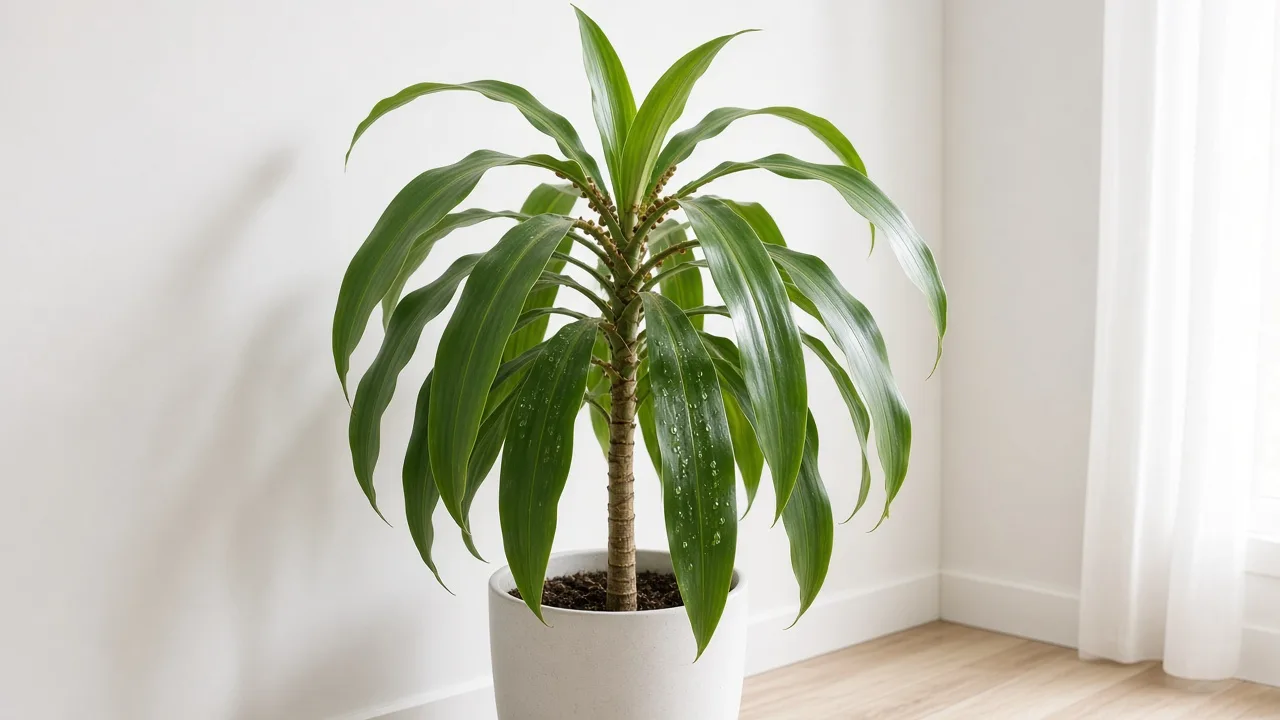
Scale insects on Dracaena: Causes, Checks & Fixes
This guide covers scale insects on Dracaena. See also the general Scale Insects guide, watering, and light pages for this plant.
Scale insects on Dracaena: Causes, Checks & Fixes
Quick answer
Scale insects on Dracaena—corn plant (Dracaena fragrans), dragon tree (D. marginata), Janet Craig, Warneckii, and related cane types—show up as small, immobile tan, brown, or bark-colored bumps on leaf bases where straps wrap the cane, inside crown rosettes at stem tips, and along lower arching leaves. They pierce tissue, drain sap, and on soft scale species excrete sticky honeydew that can lead to black sooty mold on foliage below.
First step: isolate the plant and scrape every visible bump with a cotton swab dipped in 70% isopropyl alcohol. Scale’s waxy covering protects nymphs from many sprays—manual removal plus repeat treatment is essential on slow-growing Dracaena where bumps hide on cane joints for months. For genus-wide care context, see the Dracaena overview.
Why Dracaena gets scale insects
Scale are not a watering mistake—they are sap-feeding insects that hitchhike on nursery stock and multiply slowly in warm indoor rooms. Indoor plants lack natural enemies that would control them outdoors.
Dracaena’s architecture hides scale for months:
Cane joints and leaf bases. Scale bumps blend with bark-colored cane tissue on D. marginata and tan leaf bases on corn plants—owners mistake them for normal texture until honeydew appears.
Stacked cane crowns. Each cane section has a rosette where straps meet the stem. Scale colonizes these tight junctions on every section of a multi-cane floor specimen.
Long-lived floor plants. Large corn plants sit undisturbed for years. Scale spreads section by section while the plant still looks healthy from across the room.
Crowded shelf placement. Crawlers walk between pots on shared watering days. A infested Dracaena on a shelf spreads scale to pothos and ficus within weeks.
Do not overwater in response. Honeydew sticky leaves are not cured by soggy soil. Increasing water invites overwatering and crown rot while scale persists.
What scale insects look like on Dracaena
On Dracaena strap foliage and cane tissue, scale damage has recognizable patterns once you inspect with a hand lens.
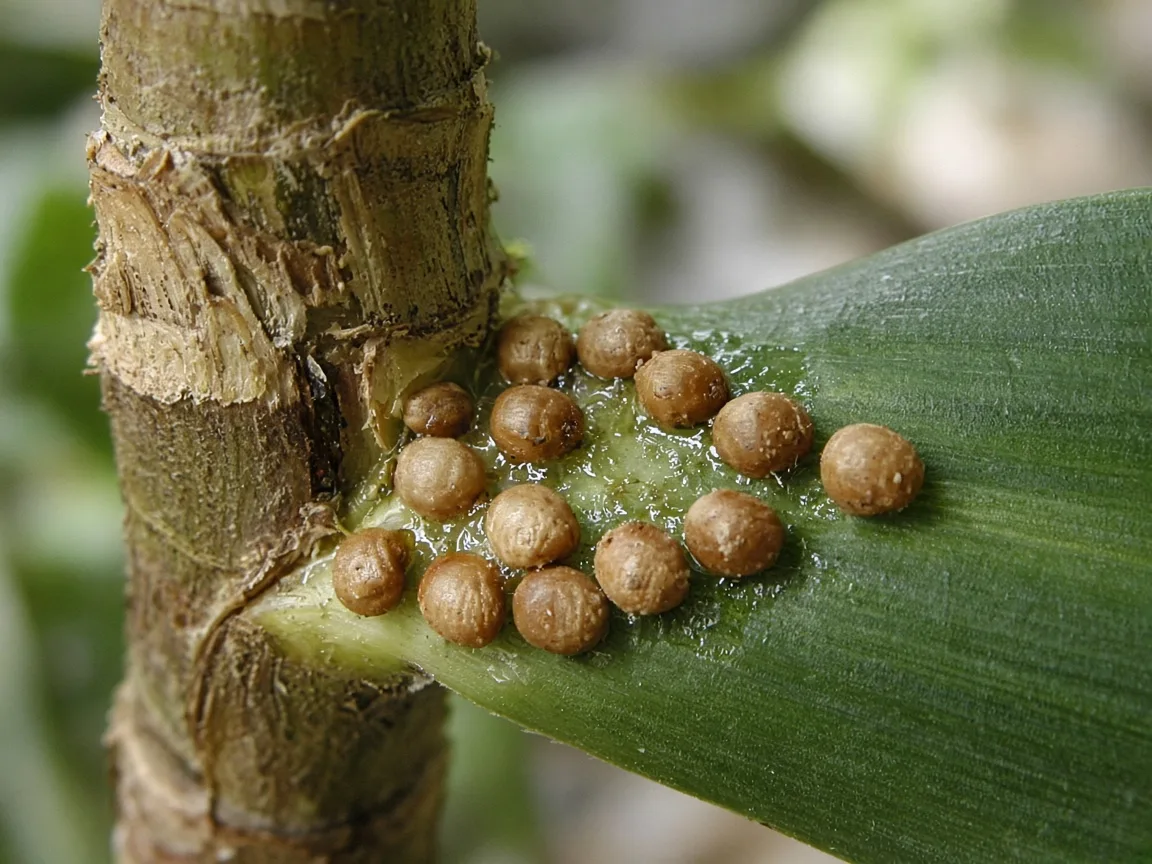
Immobile tan bumps at a strap leaf base—compare with clean cane tissue on the same plant.
Classic scale signature:
- Immobile tan, brown, gray, or bark-colored bumps on leaf bases, midribs, and cane joints
- Sticky honeydew on strap leaves, pot rim, and surfaces below (soft scale species)
- Black sooty mold growing on honeydew deposits
- Yellowing strap leaves near heavy feeding sites
- Ant activity on pot rim or soil surface farming honeydew
- No movement when touched—unlike mealybugs that may shift slightly or whiteflies that fly
On dragon tree (D. marginata): scale bumps match bark color on thin canes—inspect every joint with a hand lens. On corn plant types: bumps hide on wide strap bases where leaves arch downward from each crown.
What scale damage is not: cottony wax clusters (mealybugs); flying white adults (whiteflies); silvery scrape marks (thrips); fine stippling with webbing (spider mites).
Lookalikes to rule out on Dracaena
| Pattern | Likely cause | First direction |
|---|---|---|
| Immobile bumps + honeydew on leaf bases | Scale insects | Isolate, alcohol-wipe, repeat weekly |
| Cottony white wax in leaf axils | Mealybugs | Mealybugs guide |
| Flying white adults + flat nymph disks | Whiteflies | Whiteflies guide |
| Silvery surface streaks | Thrips | Thrips guide |
| Stippling + webbing | Spider mites | Spider mites guide |
| Normal cane texture; no honeydew | Healthy bark-like cane | No treatment—recheck with lens |
Mealybugs vs. scale: Mealybugs have cottony wax filaments and softer bodies. Scale are hard, immobile disks without wax tufts. Both produce honeydew on Dracaena.
Cane texture vs. scale: D. marginata cane naturally looks scaly and bark-like—honeydew and yellowing leaves near bumps confirm pest scale, not normal texture.
How to confirm the cause
- Hand lens inspection. Examine leaf bases and cane joints—immobile bumps with uniform waxy covering confirm scale.
- Honeydew test. Sticky residue on leaf surfaces or pot rim confirms active sap feeding.
- Scratch test. Gently lift a bump with a fingernail—scale separates from tissue; normal bark does not.
- Rule out mealybugs. Look for cottony wax—no wax means scale or whitefly nymphs, not mealybugs.
- Check all cane sections. Scale on one section often means bumps on others—inspect every crown and joint on multi-cane specimens.
- Scan neighboring plants. Scale crawlers spread between pots; check other plants within six feet.
Confirmed scale requires isolation and weekly manual removal plus follow-up sprays. Bumps without honeydew on bark-colored D. marginata cane may be normal texture—recheck in two weeks for spread.
First fix for Dracaena
Isolate the plant first—move it away from other houseplants.
Manual removal with alcohol. Dip a cotton swab in 70% isopropyl alcohol and wipe every visible bump on leaf bases, midribs, cane joints, and crown rosettes. Manual removal is essential because scale’s waxy covering protects nymphs from many sprays. Work systematically through every cane section—missing one bump restarts the infestation.
Follow with horticultural oil or insecticidal soap. Apply after alcohol wiping, covering every reachable surface. Oils smother crawlers that alcohol missed.
Repeat weekly for at least four weeks. Scale reproduce slowly but crawler emergence continues on a cycle—one treatment rarely clears a multi-cane Dracaena.
Address ants if present. Ants protect scale for honeydew—control ants on pot rims with barriers or bait so natural predators and treatments can work.
Step-by-step recovery
- Isolate before handling other plants.
- Inspect every cane section with a hand lens—mark bump locations mentally or with tape on the pot.
- Alcohol-wipe every bump on leaf bases, midribs, and cane joints.
- Apply horticultural oil or insecticidal soap after wiping.
- Repeat alcohol wipe + spray weekly for at least four weeks.
- Inspect neighboring pots on the same shelf.
- Three clean weeks—no new bumps, no fresh honeydew—before returning to a shared display.
Recovery timeline
Honeydew-coated and yellowed strap leaves do not fully recover. Success means no new bumps and clean new crown growth.
- After first alcohol wipe: Visible bumps on treated surfaces are dead—check for missed bumps on other cane sections within days.
- Weekly cycles: Plan four to eight weeks of weekly treatment on a multi-cane floor specimen with heavy infestation.
- New crown leaves: Dracaena grows slowly—a clean replacement leaf may take four to twelve weeks after scale control.
- Older sticky leaves: Can stay on the plant or be trimmed once new growth looks healthy.
If three consecutive weekly inspections find no new bumps and honeydew stops, consider the infestation controlled.
What not to do
- Do not spray without manual removal first—waxy scale covers block most contact sprays from reaching the insect beneath.
- Do not assume bark-colored cane bumps are normal without checking for honeydew and yellowing nearby leaves.
- Do not skip weekly repeats because visible bumps disappeared—crawlers hatch on a cycle for weeks.
- Do not increase watering—scale is unrelated to soil moisture; soggy soil adds overwatering stress.
- Do not ignore ants—they protect scale colonies on pot rims.
- Do not ignore pet safety—Dracaena is toxic to cats and dogs; wash hands after handling infested foliage.
How to prevent scale insects on Dracaena
- Inspect leaf bases and cane joints weekly with a hand lens on floor specimens.
- Quarantine new purchases for two to three weeks before placing beside established Dracaena.
- Wipe cane joints monthly on large multi-cane corn plants to catch early bumps.
- Avoid crowding pots on shared shelves.
- Treat neighboring plants if one Dracaena shows honeydew—scale crawlers walk between pots.
When to worry
Treat as urgent when honeydew covers most strap leaves, ants farm scale on multiple cane sections, new crown leaves yellow, scale appears on multiple plants in the same room, or sooty mold coats foliage—established scale on a slow-growing multi-cane Dracaena takes months to clear without consistent weekly treatment.
Lower urgency: a few bumps on one lower leaf base while the crown still pushes clean growth and neighboring plants test clean. Isolate, alcohol-wipe, and start weekly treatment before scale spreads to every cane joint.
Cultivar notes
Dragon tree (Dracaena marginata) has bark-colored cane where scale bumps camouflage easily—inspect every joint with a hand lens monthly. Corn plant (Dracaena fragrans) and Janet Craig types hide scale on wide strap bases at each crown—check lower arching leaves where honeydew drips onto leaves below.
Related Dracaena problems
- Dracaena overview — species differences and placement basics
- Mealybugs — cottony wax lookalike that also produces honeydew
- Whiteflies — flying sap feeders with honeydew
- Thrips — silvery streak lookalike without bumps
- Spider mites — stippling lookalike
- Dracaena problems hub — full symptom index
Conclusion
Scale on Dracaena is manageable when you isolate early, alcohol-wipe every bump weekly, and judge recovery by clean new crown growth—but bumps hide on cane joints and blend with bark-colored tissue for months before owners notice honeydew. Slow cane growth means heavy infestations take weeks of consistent manual removal. Quarantine new arrivals, inspect crown rosettes with a hand lens during weekly care, and cross-check lookalikes before treating the wrong problem.
When to use this page vs other Dracaena guides
- Mealybugs on Dracaena — Use when cottony wax clusters dominate, not hard immobile bumps.
- Whiteflies on Dracaena — Use when flying adults and flat nymph disks dominate.
- Dracaena problems hub — Browse all common issues on this species.